Your paper medical certificate is no longer a valid ticket to stay on the road in Florida. As of January 10, 2026, the FLHSMV has fully transitioned to an electronic-only system, which means your examiner must submit your results directly to the state. It's a major shift that adds another layer of pressure to an already stressful renewal process. Whether you're worried about hitting that 140/90 blood pressure threshold or you're confused about the latest FMCSA standards, getting your CDL medical exam South Florida shouldn't feel like a gamble with your career.
We understand that for professional drivers, a medical exam is a strategic regulatory event rather than a simple check-up. You need to know exactly what to expect so you don't face a license downgrade or unnecessary delays. This guide provides a clear roadmap to mastering the federal requirements and navigating the certification process with ease. We'll preview the specific 2026 medical standards, clarify the difference between a basic urinalysis and a DOT drug test, and provide actionable tips to help you arrive prepared for a successful, streamlined certification.
Key Takeaways
- Understand the latest 2026 FMCSA health standards, including specific vision and blood pressure thresholds required to maintain your commercial certification.
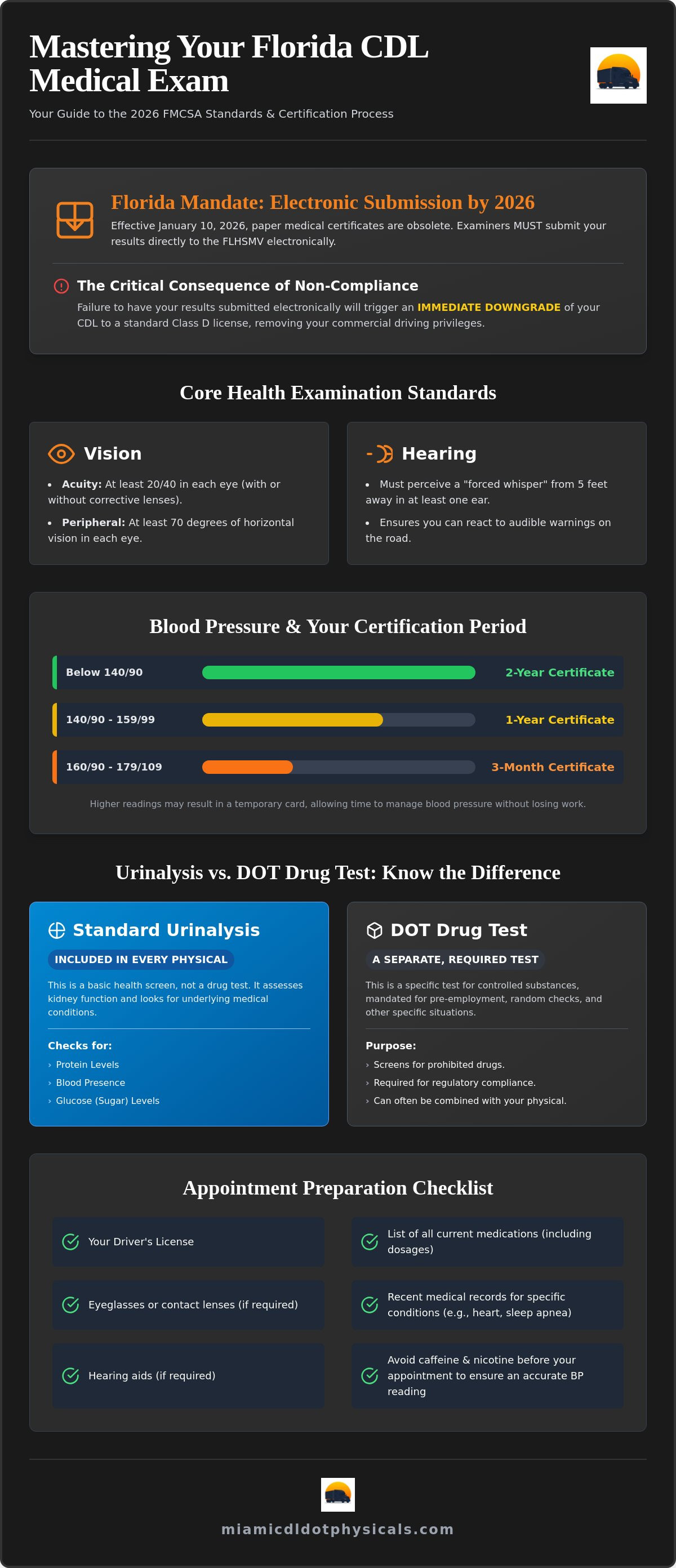
- Learn how the mandatory electronic submission process impacts your CDL medical exam South Florida and what you must do to prevent an automatic license downgrade.
- Discover exactly which documents and medical records you need to bring to your appointment to ensure a smooth, one-visit approval process.
- Identify why selecting an FMCSA-certified medical specialist provides superior regulatory compliance compared to general urgent care clinics.
- Explore the efficiency of integrated services that combine your DOT physical exam with required drug testing for a faster, more convenient renewal.
Understanding the CDL Medical Exam and Federal Standards
The DOT physical is more than a routine check-up; it's a federal safety requirement mandated by the Federal Motor Carrier Safety Administration (FMCSA). This exam ensures that every person behind the wheel of a heavy commercial vehicle is physically and mentally capable of handling the demands of the road. Because safety is the priority, these standards are uniform across the country. When you schedule a CDL medical exam South Florida, you're participating in a process designed to protect both your livelihood and the public.
To ensure high standards, the FMCSA established the National Registry of Certified Medical Examiners (NRCME). You can't simply visit your family physician for this certification unless they're specifically trained and registered. Certified examiners understand the unique stressors of long-haul driving and the specific health markers that indicate a driver is fit for duty. This medical card serves as the ultimate gatekeeper for your professional status. Without a valid certificate on file, your license is technically incomplete, regardless of your driving skills.
Regulatory bodies view the medical certification as a core component of Commercial Driver's License requirements. It bridges the gap between basic health and professional road safety. If you operate a vehicle for commerce, staying ahead of these federal standards is the only way to avoid administrative hurdles that could park your truck indefinitely.
Who is Required to Carry a Medical Examiner’s Certificate?
Federal law requires a medical certificate for several categories of drivers. If you operate a vehicle with a gross combination weight rating of over 10,001 pounds in interstate commerce, you must be certified. This also applies to any driver transporting hazardous materials in quantities that require placarding. Additionally, if your vehicle is designed to transport more than 15 passengers, or more than 8 passengers for compensation, you fall under these strict federal mandates. Even if you stay within state lines, Florida's intrastate rules often mirror these federal expectations to maintain high safety ratings.
The Consequences of an Expired Medical Card
Letting your certification lapse is a risk you can't afford to take. The moment your medical card expires, the state system triggers an immediate downgrade of your license to a Class D status. This means you lose your commercial driving privileges instantly. If you allow the lapse to continue for too long, you might be forced to retake all CDL written and skills tests from scratch. Beyond your own license, an expired card creates massive liability for your employer and can negatively impact their FMCSA safety rating. Scheduling your CDL medical exam South Florida before the deadline is the simplest way to protect your career and your company's reputation.
Core Health Components of the CDL Medical Exam
The actual physical examination is a comprehensive review of your body systems to ensure you meet the Federal medical standards for commercial drivers. During your CDL medical exam South Florida, the examiner will check several key thresholds. Vision is a primary focus; you must have at least 20/40 acuity in each eye, with or without corrective lenses, and at least 70 degrees of peripheral vision. Hearing is equally critical. You must be able to perceive a "forced whisper" from a distance of five feet in at least one ear. These standards ensure you can react to traffic signals and audible warnings on the road effectively.
The DOT Urinalysis vs. DOT Drug Testing
One of the most common points of confusion is the difference between a standard exam urinalysis and a DOT drug test. Every DOT physical includes a urinalysis, but this is not a drug screen. Instead, the examiner checks for protein, blood, and glucose levels to assess kidney function. Finding sugar in your urine can trigger further diabetes screening, as uncontrolled diabetes is a major safety concern. While a DOT drug test is a separate requirement often mandated by employers or the FMCSA Clearinghouse, it's not a default part of the medical certification itself. Understanding this distinction helps you prepare for what will actually happen during your clinic visit.
Cardiovascular Health and FMCSA Compliance
Heart health is a high priority for federal regulators. If you have a history of heart disease, heart attacks, or surgery like a bypass or stent placement, you'll need specific documentation. This often includes a recent stress test or a clearance letter from your cardiologist. Managing hypertension is possible while driving, but you must demonstrate that your condition is stable and controlled. If you're ready to update your certification, you can schedule your appointment with a specialist who understands these regulatory complexities.
Provider Roundup: Where to Book Your CDL Medical Exam
Choosing where to book your CDL medical exam South Florida is a strategic decision that directly impacts your schedule and your regulatory compliance. While many clinics claim to offer these services, the experience varies wildly between a general medical office and a specialist. You aren't just looking for a quick signature; you're looking for an examiner who understands the FMCSA regulations inside and out. Selecting the right provider ensures that your data is handled correctly and submitted to the state without errors.
The National Registry of Certified Medical Examiners (NRCME) is your first filter. Every examiner must be listed on this registry to perform a valid DOT physical. However, certification is only the baseline. Experience is what actually matters when you have a complex medical history or a tight deadline. Specialized centers often provide better support for drivers dealing with chronic conditions because they see these cases every day. They know exactly which documents will satisfy a federal auditor and which health markers require additional monitoring.
Urgent Care Clinics: Pros and Cons
Walk-in availability is the primary draw for general urgent care clinics. They are easy to find and often have multiple locations across the region. However, these clinics are designed for general triage. In these settings, you're often seated alongside patients with the flu or minor injuries. Triage rules mean a sick child or an urgent injury will always take priority over a driver who just needs a physical. This can turn a "quick" appointment into a three-hour wait. Additionally, general practitioners might not be fully versed in the latest 2026 electronic submission requirements, increasing the risk of administrative delays at the FLHSMV.
Dedicated CDL Physical Centers: The Professional Choice
Specialized centers prioritize the commercial driver above all else. Since these facilities don't treat general illnesses, the environment is cleaner and the process is significantly faster. These examiners are experts in handling FMCSA variances and exemptions. If you have a history of sleep apnea or cardiovascular issues, a specialist knows exactly how to navigate the paperwork to keep you on the road. Most dedicated centers also offer integrated services. You can often complete your DOT Physical Exam and a required DOT Drug Test in a single visit. This streamlined approach respects your time and ensures that all your compliance needs are met in one professional setting. When you choose a specialist, you're partnering with someone who values your livelihood as much as you do.
How to Prepare for Your Certification Appointment
Preparation starts long before you walk through the clinic doors. Arriving unprepared is the primary reason drivers face delays or a "determination pending" status. To ensure your CDL medical exam South Florida goes smoothly, you must manage your health and your paperwork simultaneously. A few simple adjustments on the day of your visit can be the difference between a two-year card and a stressful follow-up appointment.
Your choices on the morning of the exam matter. Avoid excessive caffeine and nicotine, as these stimulants can temporarily spike your blood pressure and heart rate. Drink plenty of water to ensure you can provide a urine sample for the kidney function screen. If you're feeling stressed about the appointment, arrive 15 minutes early. This gives your body time to settle before the examiner takes your vitals. Managing these small variables helps you present the most accurate picture of your health.
Required Documentation and Medical Records
You must present a valid government-issued photo ID, such as your current driver's license or a passport. Beyond identification, the examiner needs a complete picture of your health history. Bring a typed list of all current medications. This list should include the exact dosages and the names of the prescribing physicians. If you've had recent surgeries, heart-related events, or are managing a condition like diabetes, bring a clearance letter from your specialist. This letter should state that your condition is stable and you're fit to operate a commercial vehicle. Having these records ready prevents the examiner from having to put your certification on hold while waiting for faxes from other offices.
Managing Sleep Apnea and CPAP Compliance
If you've been diagnosed with obstructive sleep apnea, your CPAP machine data is the most critical part of your appointment. Examiners require a compliance report showing your usage for at least the last 30 to 90 days. This report must demonstrate that you use the machine for at least four hours per night on at least 70% of those nights. If your machine data is inaccessible or you haven't used it consistently, you may only receive a short-term certificate. In some cases, you could be denied until compliance is proven. Ensure your machine's data cloud is updated or bring the physical data card with you to the clinic.
Taking these steps ensures you're treated as a professional who respects the regulatory process. If you have all your records ready, book your DOT physical today to get back on the road without the headache of avoidable delays.
The Advantage of a Professional CDL Medical Exam Center
Choosing a specialized facility for your CDL medical exam South Florida provides a level of regulatory security that general clinics simply cannot match. Centers like the Miami CDL/DOT Physical Exam Center focus exclusively on the needs of the transportation industry. This specialization means the staff is intimately familiar with the nuances of 49 CFR 391.41 and the latest 2026 digital submission protocols. When your livelihood depends on a single certificate, working with an expert who understands the high stakes of your profession is a strategic advantage.
Efficiency is a core benefit of a dedicated center. Unlike general practitioners, these facilities offer integrated services that cover every aspect of driver compliance. You can often complete your required DOT Physical Exam and a DOT Drug Test or Non-DOT Drug Test during the same visit. This "one-stop" approach eliminates the need to coordinate between multiple offices, saving you hours of downtime. For fleet managers, this integration ensures that all records are consistent, making it much easier to pass a carrier audit or state inspection.
FMCSA Clearinghouse Consortium and Compliance
The FMCSA Clearinghouse is a critical component of your ability to work in 2026. This federal database tracks drug and alcohol violations, and employers must query it before you can ever get behind the wheel. Navigating these requirements can be overwhelming for individual drivers. Joining an FMCSA Clearinghouse Consortium is the most effective way for owner-operators to stay compliant. A professional center acts as your partner, managing the random drug testing pools and ensuring all reporting is handled accurately. This service automates the complex administrative tasks of fleet management, allowing you to focus on the road instead of paperwork.
Streamlined Results and Record Keeping
Modern regulatory standards require a move away from paper. Our specialized center ensures that your results are reported digitally to the FMCSA and the state licensing agency immediately. This instant synchronization prevents the common delays that lead to license downgrades. Beyond the initial submission, professional centers maintain secure, accessible records of your medical history and test results. This long-term record-keeping is invaluable for future renewals and provides a clear audit trail if your health status is ever questioned. Schedule your CDL medical exam with our experts today.
Secure Your Career with Expert Certification
Navigating the updated 2026 federal standards doesn't have to be a source of stress. By understanding the shift toward electronic submission and arriving with your documentation ready, you're already ahead of the curve. Your career depends on a valid medical status; choosing a specialist who understands these high stakes is the most effective way to avoid a license downgrade. Whether you're managing a chronic condition or simply need a quick renewal, a professional CDL medical exam South Florida ensures you stay compliant without the typical wait times of a general clinic.
Our facility provides the reliability you need with FMCSA-Certified Medical Examiners and same-day medical card issuance. We offer a complete compliance solution through integrated drug testing and our Clearinghouse Consortium services. Don't let administrative hurdles park your truck. Take control of your certification today to keep your professional journey moving forward.
Book Your FMCSA-Certified CDL Medical Exam Now
Drive with confidence knowing your health and your paperwork are in expert hands. We're here to support your success on the road.
Frequently Asked Questions
Do I need a separate drug test with my DOT physical?
A standard DOT physical does not automatically include a drug screen. The mandatory urinalysis performed during the exam only checks for glucose, protein, and blood to assess kidney health. However, many employers require a separate DOT Drug Test as part of their hiring or random testing protocols. You should clarify with your company whether you need both services during your visit to ensure full compliance with their specific safety policies.
What happens if I fail the vision portion of the CDL medical exam?
You won't receive your medical certificate immediately if you fail to meet the 20/40 acuity or peripheral vision standards. The examiner will typically pause the process so you can visit an eye specialist for a new prescription or corrective lenses. Once you have the proper eyewear, you can return to the clinic for a re-test. In some cases, drivers with vision in only one eye may apply for a federal vision waiver.
Can I get a CDL medical card if I take high blood pressure medication?
Yes, taking blood pressure medication does not disqualify you from driving. As long as your medication effectively keeps your blood pressure below the 140/90 threshold, you can be certified. However, the FMCSA typically limits these certifications to one year instead of two. This shorter duration allows the medical examiner to monitor your condition more frequently and ensure your blood pressure remains stable while you are operating a commercial vehicle.
How long is a DOT medical examiner’s certificate valid for in 2026?
A certificate is valid for a maximum of 24 months if you are in excellent health. Many drivers receive shorter certifications, such as six months or one year, if they have managed conditions like diabetes or hypertension. These frequent check-ins are a safety measure to ensure your health hasn't changed. Always check the expiration date on your card to avoid a license downgrade, as the state no longer accepts paper grace periods.
What are the disqualifying medical conditions for a CDL?
Disqualifying conditions include uncontrolled seizures, certain inner ear disorders that affect equilibrium, and severe respiratory dysfunction. Vision or hearing loss that cannot be corrected to federal minimums will also prevent certification. Some conditions, like certain types of limb impairment or vision loss, may be eligible for a federal variance or waiver. For drivers working to overcome physical limitations after a crash, an auto injury chiropractor fort lauderdale can assist in restoring the function required to satisfy these health standards. Your examiner will review your specific history against the 49 CFR 391.41 standards to determine your fitness for duty.
Do I need to bring my CPAP machine to the medical exam?
You don't need to bring the physical machine to your appointment. Instead, you must provide a compliance report covering the last 30 to 90 days of usage. This report must prove you use the device for at least four hours per night on 70% of the nights. Most modern machines allow you to download this data to a smartphone app or a USB drive. Presenting this data is essential for completing a CDL medical exam South Florida.
Can my primary care doctor perform my DOT physical exam?
Your primary care doctor can only perform the exam if they are currently listed on the National Registry of Certified Medical Examiners. Most family physicians haven't completed the specific training required by the FMCSA. It is usually more efficient to visit a specialized CDL medical exam South Florida center. These facilities focus on driver regulations and have the systems in place to submit your results electronically to the FLHSMV without administrative errors.
How do I self-certify my medical card with the DMV?
Florida drivers must self-certify their tier of operation through the FLHSMV online portal. While your medical examiner electronically submits your physical results, you are responsible for telling the state whether you operate in interstate or intrastate commerce. You must complete this step every time you renew your medical certificate. Failing to self-certify can result in an automatic downgrade of your commercial driving privileges, even if your medical exam was successful and submitted correctly.


