

Your CDL medical card is the only thing standing between you and the open road, yet many drivers walk into their exam with unnecessary anxiety. You shouldn't have to worry about losing your livelihood because of a high blood pressure reading or a confusing list of medications. It is completely natural to feel stressed when your career depends on a single medical appointment, especially as federal standards continue to evolve. Understanding the specific DOT physical requirements 2024 is the best way to replace that fear with a solid plan of action.
We're here to help you master these current standards so you can pass your exam and secure your medical card without the stress. The 2024 guidelines from the FMCSA emphasize proactive health management and individualized assessments, meaning your preparation is now the most critical factor for certification. This guide provides a clear breakdown of the vision and hearing thresholds you must meet. We will also cover the latest blood pressure stages and provide a checklist of essential items to bring to your appointment. You'll finish this article with a clear path forward and the confidence that you meet every federal requirement to keep your career moving.
Key Takeaways
- Learn how the latest FMCSA updates affect your exam and how to stay compliant with the DOT physical requirements 2024.
- Get clear details on the 20/40 vision standard and the "forced whisper" hearing test to ensure you meet core health benchmarks.
- Understand the difference between disqualifying medications and those that are conditionally allowed to avoid surprises during your evaluation.
- Use our comprehensive preparation checklist to gather your medical records and ID, ensuring a smooth and efficient exam process.
- Discover the four possible outcomes of your medical evaluation and how your results are now transmitted electronically to the FMCSA National Registry.
Understanding the 2024 FMCSA Medical Examiner’s Handbook Updates
A DOT physical is far more than a standard doctor's visit. It is a safety-sensitive medical evaluation designed to ensure that every driver behind the wheel of a heavy commercial vehicle is physically and mentally capable of handling the job. The Federal Motor Carrier Safety Administration (FMCSA) recently released the January 2024 edition of the Medical Examiner’s Handbook. This document serves as the primary tool for standardizing exams across the country. Before this update, drivers often experienced inconsistent results depending on which clinic they visited. The 2024 edition aims to fix that by providing examiners with a unified set of instructions for the DOT physical requirements 2024.
The legal weight behind these exams comes from 49 CFR Part 391.41. This regulation dictates the specific physical qualification standards that every person holding a Commercial driver's license (CDL) must meet. By following these rules, the FMCSA maintains a high level of safety on public highways. The 2024 handbook clarifies how examiners should interpret these regulations, making the process more transparent for everyone involved. It is a vital resource that bridges the gap between complex legal requirements and the practical medical exam you undergo.
The Goal of the 2024 Regulatory Shift
The primary focus of the latest regulatory shift is proactive health management. The FMCSA wants to identify "at-risk" drivers before a medical emergency occurs in traffic. To achieve this, the 2024 guidelines move away from subjective opinions and toward objective data. For example, the evaluation of chronic conditions like obstructive sleep apnea is now more standardized. Examiners are encouraged to look at measurable health markers and clinical history. This shift toward data-driven decisions helps ensure that the DOT physical requirements 2024 are applied fairly to every driver, regardless of where they take their exam. It replaces guesswork with clear, actionable medical standards.
Who Is Required to Have a DOT Physical?
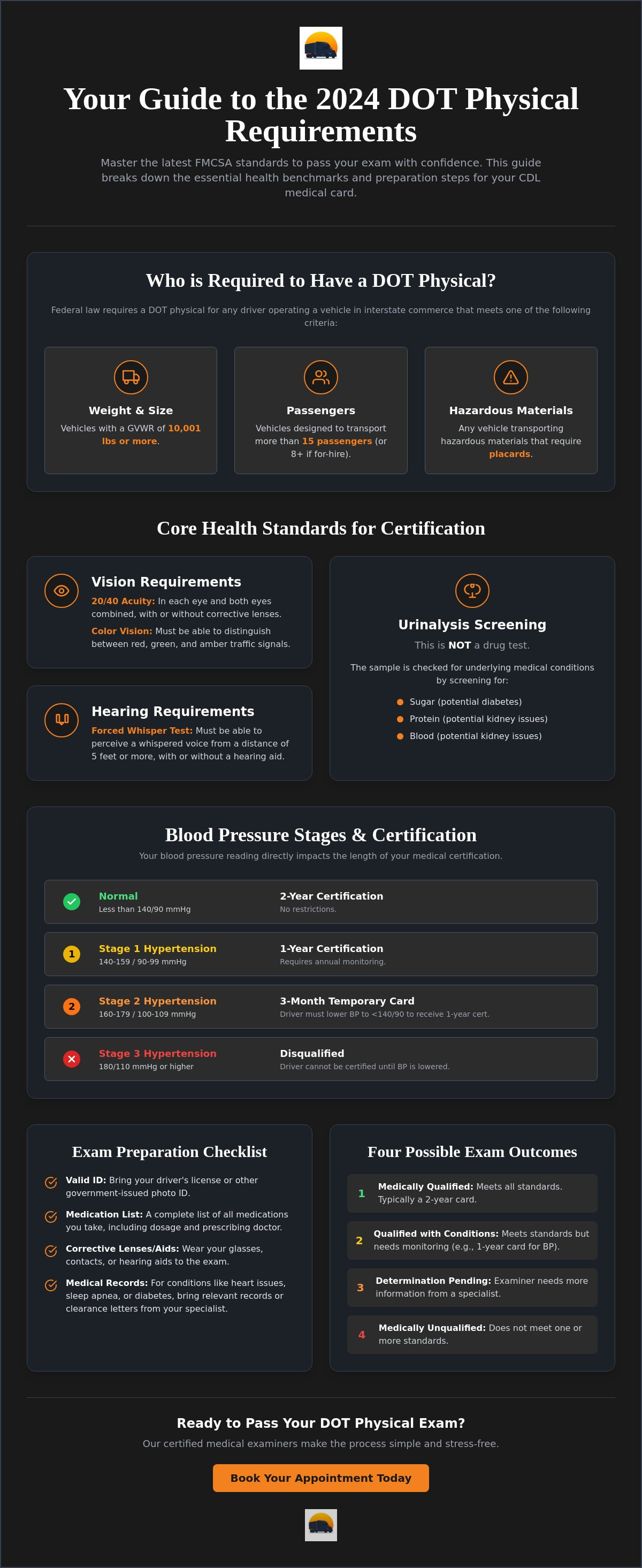
Understanding whether you need a medical card is the first step in staying compliant. Federal law requires a DOT physical for any driver operating a vehicle in interstate commerce that fits the following descriptions:
- Vehicles with a gross vehicle weight rating (GVWR) or gross combination weight rating of 10,001 pounds or more.
- Vehicles designed to transport more than 15 passengers, or more than 8 passengers if you are being paid for the service.
- Any vehicle transporting hazardous materials in quantities that require the use of placards.
While these are the federal standards for interstate commerce, most states have adopted similar rules for intrastate drivers. It's vital to check your local state regulations, as many jurisdictions apply these same rigorous standards to all commercial drivers to maintain safety. Staying current with these requirements is essential for protecting your livelihood and keeping the roads safe for everyone. The process is designed to be efficient, but knowing the rules before you arrive is the best way to ensure success.
Core Health Standards: Vision, Hearing, and Blood Pressure
The actual clinical portion of your exam focuses on several key physical benchmarks. These standards ensure you can safely operate a commercial vehicle under various conditions, from night driving to heavy traffic. During the DOT Medical Exam, the examiner will perform a series of tests to validate your vision, hearing, and cardiovascular health. They will also collect a urine sample. This urinalysis is not a drug test; instead, the examiner looks for sugar, protein, and blood. These markers can indicate underlying issues like diabetes or kidney disease that might affect your long-term fitness for duty.
Vision and Hearing Thresholds
To meet the DOT physical requirements 2024, you must have at least 20/40 acuity in each eye and both eyes combined. This standard applies whether you use corrective lenses or not. If you wear glasses or contacts, be sure to wear them during the test. Your color vision is also evaluated. You don't need perfect color perception, but you must be able to distinguish between red, green, and amber traffic signals. If you fail the vision test in one eye, you may still qualify through a federal vision waiver process, though this requires additional documentation.
Hearing requirements are equally specific. The examiner typically uses the "forced whisper" test. You must be able to perceive a whispered voice from a distance of five feet in at least one ear. If you use a hearing aid to pass this test, you must wear it whenever you are operating a commercial vehicle. These simple checks ensure you can hear sirens, horns, and shifting engine sounds while on the road.
The 2024 Blood Pressure Certification Matrix
Blood pressure is often the biggest source of stress for drivers, but the 2024 standards provide a clear path for management. The examiner uses a specific matrix to determine your certification length based on your readings:
- Stage 1 (140/90 to 159/99): You can be certified for one year. If you already have a one-year certificate for high blood pressure, you must lower your readings to stay compliant.
- Stage 2 (160/100 to 179/109): This results in a one-time, three-month temporary certificate. This period allows you to work with a doctor to lower your pressure. If it drops below 140/90 at your follow-up, you can receive a one-year certificate.
- Stage 3 (180/110 or higher): This is considered a disqualifying level. You won't be able to drive until your blood pressure is brought under control and reaches a safe level. Once stabilized, you may be eligible for six-month certifications.
Maintaining these health standards is the best way to protect your CDL and your career. If you're ready to complete your evaluation, you can schedule your exam today with a certified professional. Understanding these thresholds ahead of time helps you walk into the clinic prepared and confident.
Disqualifying Medications and Medical Conditions
Navigating the list of allowed medications is often the most confusing part of the certification process. The DOT physical requirements 2024 differentiate between medications that are strictly disqualifying and those that are conditionally allowed. A disqualifying medication is one that federal law prohibits because it compromises your ability to operate a vehicle safely. Conditionally allowed medications require additional documentation from your prescribing physician to prove they don't interfere with your driving performance. Your doctor plays a vital role here. They must provide a letter stating you can safely perform safety-sensitive duties while using the prescribed medication.
Certain classes of drugs are considered high-risk and often lead to immediate disqualification. These include most narcotics, amphetamines, and habit-forming substances. The examiner must follow strict FMCSA medical requirements when reviewing your records. If you take a medication for a condition like ADHD or chronic pain, you must bring a detailed note from your treating physician. This note should list the dosage, the reason for the prescription, and a clear statement about your fitness for duty. Without this paperwork, your certification will likely be delayed or denied.
Red Flag Medications for CDL Drivers
Anti-seizure medications are generally disqualifying because they indicate a history of epilepsy or other seizure disorders. While the FMCSA has a waiver process for certain seizure-free periods, the medication itself is a major hurdle. Methadone and other opioid replacement therapies are also strictly prohibited for commercial drivers. One of the most common points of confusion is medical marijuana. Even if marijuana is legal in your state for medical or recreational use, it remains a Schedule I substance under federal law. Using it will result in a failed physical and can jeopardize your entire career.
Managing Chronic Conditions
Chronic conditions don't have to end your career, but they do require careful management. For drivers with diabetes, the 2024 standards utilize the Insulin-Treated Diabetes Mellitus (ITDM) Assessment Form. Your treating clinician must complete this form to verify that your condition is stable before the DOT examiner can certify you. If you have sleep apnea, you must provide CPAP compliance data. For 2024, examiners typically look for at least 30 days of recent data showing you use the device for at least four hours per night on 70 percent of those nights.
Heart disease also involves specific wait periods. For example, you must wait at least two months after a heart attack or bypass surgery before seeking re-certification. These periods ensure you have fully recovered and are ready for the physical demands of the road. Staying ahead of these requirements by gathering your medical records early will help you avoid unnecessary downtime.
Walking into your exam without the right paperwork is the fastest way to receive a "Pending" status. Proper preparation is the most effective way to meet the DOT physical requirements 2024 without needing multiple trips to the clinic. Start by gathering your essentials. You must present a valid government-issued photo ID, typically your driver's license, to begin the process. If you take any prescriptions, bring a complete list that includes the exact dosages and the names of your prescribing doctors. If you rely on glasses, contacts, or hearing aids to perform your duties, you must have them with you. The examiner needs to verify that you meet federal safety standards while using these corrective aids.
Drivers with a history of heart, lung, or neurological conditions should take an extra step. Obtain specialist clearance letters before your appointment. These letters must explicitly state that your condition is stable and that you're cleared to operate a commercial vehicle safely. This proactive approach prevents the examiner from having to pause your certification while waiting for outside records. It's a simple way to respect your own schedule and keep your career moving forward.
Specific Documentation for Chronic Issues
If you manage chronic health issues, specific data is mandatory for a successful exam. Diabetics need to provide their latest Hemoglobin A1C (HgA1C) results from within the last three months. For those with sleep apnea, a 90-day compliance report from your CPAP machine is required. This report proves you're using the device consistently as prescribed. Heart patients should bring their most recent stress test results or a formal clearance letter from their cardiologist. Having these documents ready ensures your evaluation stays on track and reduces the chance of delays.
Tips for the Day of the Exam
Your habits on the morning of your appointment can influence your clinical readings. Avoid caffeine and nicotine for at least two hours before your exam. These substances can temporarily spike your blood pressure, which might lead to a shorter certification period or a temporary disqualification. Drink plenty of water throughout the morning. You'll be asked to provide a urine sample, and being well-hydrated makes this part of the process much faster. Finally, wear loose-fitting clothing. This makes it easier for the examiner to perform the physical assessment and check your blood pressure accurately.
Following this checklist is the best way to ensure a smooth, stress-free experience. If you have your paperwork and aids ready, book your DOT physical exam today to secure your medical card with confidence.
Exam Outcomes and the FMCSA Clearinghouse
The moment your exam concludes, the examiner will assign one of four specific outcomes. A "Certified" status means you've successfully met all DOT physical requirements 2024 and will receive a medical certificate, usually valid for 24 months. If you have a condition that requires monitoring, like stage 1 hypertension, you might receive a "Temporarily Certified" status for a shorter duration. "Pending" is essentially a pause in the process. This outcome gives you up to 45 days to provide missing information, such as a specialist's clearance letter, without starting a new exam. Finally, "Disqualified" means you do not currently meet the federal safety standards required to operate a commercial vehicle.
Once the decision is made, the examiner must submit your results electronically. The implementation of the National Registry II system has changed how this data moves. Examiners now transmit your results directly to the FMCSA National Registry. This information then flows to your state's driver licensing agency to update your record. While many drivers still receive a paper copy of their Medical Examiner’s Certificate for their personal files, the electronic record is the primary source of truth for the DMV. Keeping your medical certification current is the only way to prevent your CDL from being downgraded to a non-commercial status.
Navigating a Medical Disqualification
Receiving a disqualification can be a major setback, but it isn't always the end of your career. You have the right to seek a second opinion from a different medical examiner. However, you must be completely transparent about your previous exam and the reasons for the initial disqualification. Providing false information or hiding a previous failure is a serious federal offense that can lead to permanent loss of your driving privileges. If your disqualification is due to a condition like vision loss or a seizure disorder, you may be eligible to apply for a federal medical variance or waiver. These programs allow the FMCSA to evaluate your specific situation and potentially grant an exemption if you can prove you operate safely.
Staying Compliant with the Clearinghouse
The FMCSA Clearinghouse works alongside your medical certification to maintain road safety. This online database tracks drug and alcohol violations in real time, ensuring that drivers cannot hide violations by moving between states or changing employers. It's a transparent system that holds every driver to the same high standard. Employers are required to query this system annually for all drivers they employ. For owner-operators, the rules are even more specific. You are required by law to belong to a drug testing consortium to manage your testing and reporting requirements. This ensures you stay compliant with federal law without the administrative burden of managing it yourself. You can ensure your compliance with our FMCSA Clearinghouse Consortium services and keep your focus where it belongs: on the road.
Secure Your Professional Future on the Road
Mastery of the current FMCSA standards is about more than just a single appointment; it is about protecting your livelihood. You now have the tools to navigate the vision and blood pressure thresholds and the specific documentation needed for a successful exam. Staying informed about the DOT physical requirements 2024 ensures you remain compliant with federal law while eliminating the anxiety of the unknown. By preparing your records and managing your health proactively, you can avoid the "Pending" status and keep your career moving forward.
Our team of FMCSA-certified medical examiners provides a streamlined evaluation process designed for your busy schedule. We offer same-day CDL medical card processing alongside integrated drug testing and Clearinghouse consortium services to handle all your regulatory needs in one visit. Don't let compliance stress slow you down or keep you off the road. Schedule your FMCSA-certified DOT physical today and move forward with the confidence that your certification is in expert hands. We are here to support your success every mile of the way.
Frequently Asked Questions
Can I pass a DOT physical with high blood pressure?
Yes, you can pass with high blood pressure, but your certification length will be restricted. If your reading is between 140/90 and 159/99, you'll receive a one-year certificate. Readings between 160/100 and 179/109 result in a one-time, three-month temporary card. Once you lower your pressure below 140/90, you can qualify for a longer certification period and get back to your regular schedule.
What medications will automatically disqualify me from a CDL?
Schedule I substances, methadone, and most anti-seizure medications will automatically disqualify you from driving. Federal regulations are very strict about drugs that cause drowsiness or impair motor skills. Even if medical marijuana is legal in your state, it remains a disqualifying substance under federal law. Always bring a list of your current prescriptions so the examiner can check them against the DOT physical requirements 2024.
Does a DOT physical include a drug test?
No, a standard DOT physical does not include a drug test, but it does require a urinalysis. The urine sample collected during the physical screens for medical markers like sugar, protein, and blood to identify underlying health issues. A DOT drug test is a separate requirement that specifically looks for controlled substances. While many drivers complete both at the same time, they are distinct procedures with different reporting rules.
How long is a DOT medical card valid in 2024?
A DOT medical card is valid for a maximum of 24 months if you are in good health. This two-year period is the standard for drivers with no significant health issues. However, if you have conditions like diabetes or heart disease, your card may only be valid for one year or six months. These shorter periods allow medical examiners to monitor your status and ensure you continue to meet the DOT physical requirements 2024.
What happens if my DOT medical card expires?
You lose your legal authority to drive a commercial vehicle the moment your medical card expires. Your state's DMV will receive electronic notification and will likely downgrade your CDL to a standard license within a few days. Operating a commercial vehicle with an expired card can lead to heavy fines and company penalties. You must pass a new physical to reinstate your commercial status and resume your driving duties.
Can I get a DOT physical if I have sleep apnea?
Yes, you can be certified with sleep apnea as long as you prove you are following your treatment plan. You'll need to bring a compliance report from your CPAP machine covering at least the last 30 to 90 days. This report must show consistent use for at least four hours per night on 70 percent of those nights. If you show proper compliance, you can successfully maintain your medical card.
Is a hernia a disqualifying condition for a CDL?
A hernia is only disqualifying if it is "non-reducible" or causes enough pain to interfere with your driving duties. The medical examiner will check the severity of the hernia during your physical assessment to ensure it isn't a safety risk. If the hernia is large or at risk of becoming a medical emergency while you're on the road, you may be disqualified until you have it surgically repaired.
What is the forced whisper test for hearing?
The forced whisper test is the standard method used to check your hearing during a DOT exam. The examiner stands five feet away and whispers a sequence of numbers or letters while you cover one ear. You must correctly repeat the sequence in at least one ear to pass the evaluation. If you use a hearing aid to pass this test, you must wear it whenever you are operating your vehicle.


