

Over 190,000 CDL drivers currently sit in prohibited status within the FMCSA Clearinghouse, often because of avoidable compliance gaps. It's a high-stakes environment where a single health marker or a paperwork error can sideline your career. If you're preparing for a DOT physical, perhaps searching for 'DOT physical Miami,' you probably feel the weight of these regulations. We at Miami CDL/DOT Physical Exam Center know the stress of worrying about high blood pressure or the confusion surrounding the National Registry II electronic submission system, which has a significant implementation date of December 16, 2025. You shouldn't have to waste time at clinics that don't understand the specific demands of the trucking industry.
Your livelihood depends on staying compliant, and we're here to make that process efficient and predictable. This guide will help you master the latest FMCSA medical requirements and show you exactly how to prepare for a successful exam. We'll break down the current health standards and explain how to use the temporary paper certificate waiver, which remains in effect through October 11, 2026. By the end of this article, you'll have a clear plan to secure your two-year medical card with minimal downtime and total confidence in your compliance status.
Key Takeaways
- Identify if you meet the 10,001 lbs GVWR threshold that makes FMCSA medical certification a mandatory requirement for your vehicle.
- Understand the specific health benchmarks examiners evaluate, including the critical 140/90 blood pressure threshold, to ensure you pass without complications.
- Follow our definitive preparation checklist for your DOT physical Miami to avoid common exam-day mistakes like consuming caffeine or nicotine.
- Navigate the essential connection between your medical exam and the FMCSA Clearinghouse to maintain a clean and compliant driving record.
- Learn how to streamline your appointment and secure your valid medical card on the same day you pass your physical exam.
What is a DOT Physical Exam and Who Needs One?
A DOT physical exam is a specialized health screening mandated by the Federal Motor Carrier Safety Administration (FMCSA). It serves as a legal gatekeeper to ensure that commercial drivers are physically and mentally capable of operating large vehicles safely on public roads. This isn't just a routine check-up; it's a rigorous assessment designed to protect both the driver and the general public. If you are scheduling a DOT physical Miami drivers trust, you need to recognize that this exam focuses specifically on regulatory compliance rather than general wellness. While a standard physical with your family doctor might prioritize long-term lifestyle goals, a CDL medical exam evaluates your immediate fitness for duty.
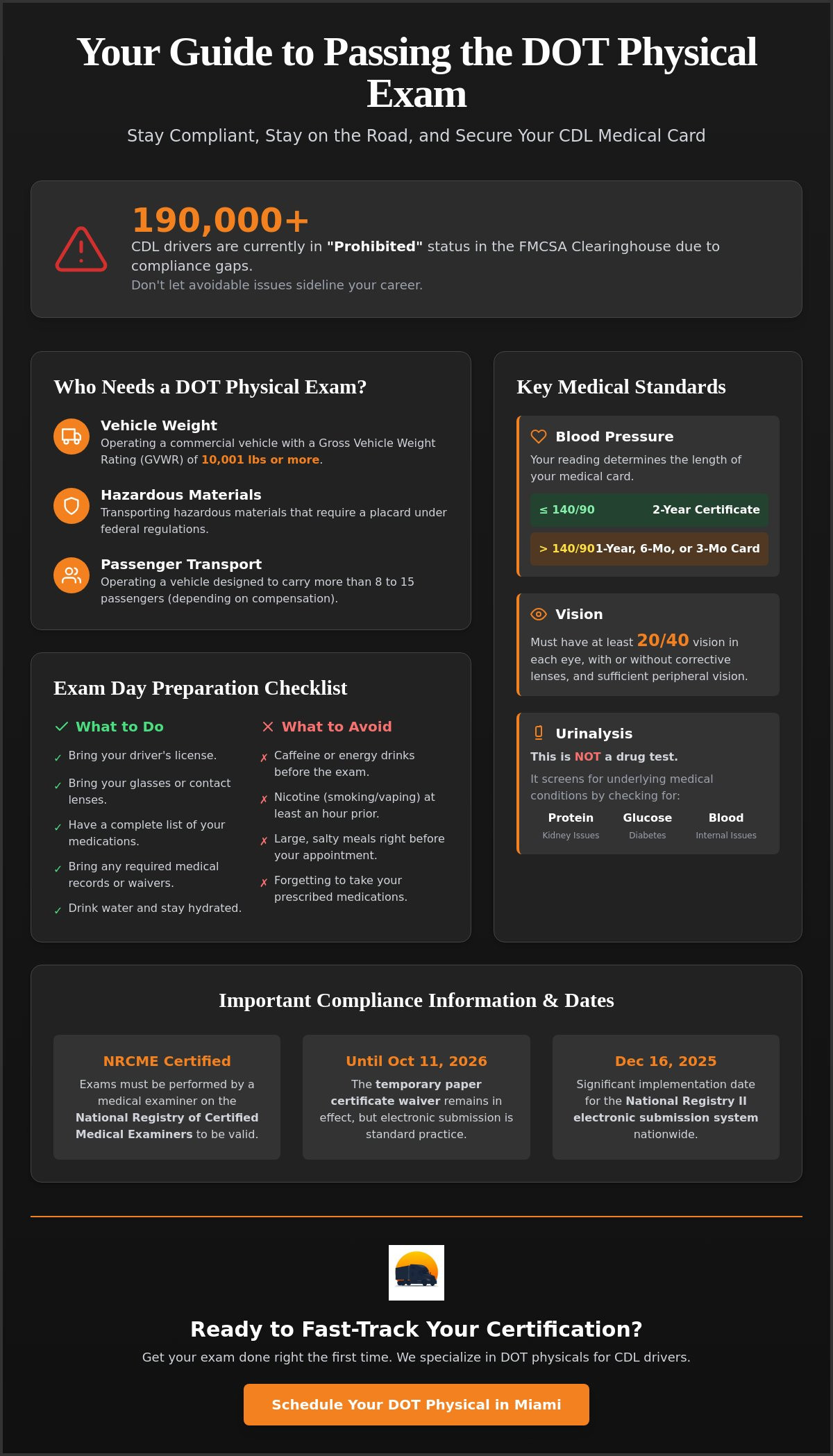
Federal law requires this certification for any driver operating a vehicle with a Gross Vehicle Weight Rating (GVWR) of 10,001 pounds or more. This weight threshold applies even if you aren't driving a traditional semi-truck; many large delivery vans and box trucks fall into this category. You also need this exam if you transport hazardous materials requiring a placard or if you operate a vehicle designed to carry more than 8 to 15 passengers, depending on the nature of your work. It's a fundamental part of CDL medical certification requirements. Only medical examiners listed on the National Registry of Certified Medical Examiners (NRCME) have the legal authority to perform these evaluations and issue medical cards.
The Role of the National Registry of Certified Medical Examiners
The NRCME was established to create a uniform standard for driver healthcare across the United States. Before this registry existed, the quality and consistency of exams varied significantly between different clinics. Now, every certified examiner must undergo specific training and pass a certification test to ensure they understand the complex FMCSA regulations. When you complete your DOT physical Miami, your examiner must electronically transmit your results directly to the FMCSA. Since Florida successfully implemented electronic integration with National Registry II on December 16, 2025, this data transfer is more efficient than ever. Always confirm your examiner's credentials on the official registry website to ensure your medical card is valid and recognized by the state.
Frequency of Certification: 2-Year vs. Short-Term Cards
Most drivers who meet all health standards receive a medical certificate valid for the standard 24-month period. However, this two-year duration is not a guarantee for everyone. The medical examiner has the professional discretion to issue short-term cards if you have specific health conditions that require more frequent monitoring. It's common for drivers with managed hypertension or diabetes to receive a 3-month, 6-month, or 1-year certificate instead of the full two-year card. These shorter intervals allow medical professionals to verify that your condition remains stable and doesn't pose a risk while you're behind the wheel. Once you demonstrate consistent control over these health markers, you can often return to the standard renewal cycle.
FMCSA Medical Standards: What the Examiner Evaluates
When you step into a clinic for a DOT physical Miami, the examiner isn't just checking your reflexes. They are conducting a systematic review of your health against strict FMCSA Medical Standards. This evaluation focuses on identifying any medical condition that could interfere with your ability to safely operate a commercial motor vehicle. The examiner reviews your medical history and performs a head-to-toe assessment of your neurological, cardiovascular, and respiratory systems.
Blood pressure is the most common concern for drivers. To secure a standard two-year card, your reading must be 140/90 or lower. High blood pressure doesn't always mean an automatic failure. If your reading is elevated, the examiner may issue a shorter certificate while you work with your doctor to manage the condition. Another standard part of the exam is the urinalysis. It's vital to understand that this is not a drug test. The examiner checks your urine for protein, blood, and glucose. These markers help detect underlying issues like kidney disease or undiagnosed diabetes that could pose a risk on the road.
Vision and Hearing Requirements for Commercial Drivers
Safe driving requires sharp senses. You must have at least 20/40 vision in each eye, with or without corrective lenses. The examiner also checks your peripheral vision to ensure you have at least a 70-degree field of vision in each eye. Hearing is equally important. You must be able to pass a "whisper test," where you perceive a forced whisper from five feet away in at least one ear. If you use hearing aids or glasses to meet these standards, you can still pass. The examiner will simply note on your medical card that you are required to wear them while driving.
Managing Disqualifying Conditions and Exemptions
Certain conditions are considered "hard disqualifiers" because they pose an immediate safety risk. For example, active seizure disorders or the use of specific anti-seizure medications generally prevent certification. However, the FMCSA recognizes that many drivers manage chronic conditions effectively. There are waiver programs and exemptions available for vision, hearing, and physical impairments. A helpful pro-tip is to bring a clearance letter from your specialist if you have an existing condition like heart disease or sleep apnea. This documentation proves your condition is stable and helps the examiner approve your certification without unnecessary delays. If you're unsure how your health history impacts your eligibility, you can consult with our team to clarify your status before your appointment.
How to Prepare: Your DOT Physical Miami Checklist
Arriving prepared is the best way to ensure a smooth DOT physical Miami experience. Many drivers find their certification delayed not because of health issues, but because they lacked the necessary documentation. You should treat this appointment like a professional audit of your health. Bring a comprehensive list of all current medications, including the exact dosages and the names of the prescribing physicians. If you've been diagnosed with sleep apnea, you must bring a compliance report from your CPAP machine covering the last 90 days. This data proves you're managing the condition effectively and are safe to operate a commercial vehicle. Don't forget to include over-the-counter supplements or medications that could potentially cause drowsiness, as the examiner needs a complete picture of your daily intake.
Documentation and Medical Records to Bring
You need a valid government-issued photo ID, such as your driver's license, to verify your identity before the exam begins. Bring your most recent medical examiner's certificate if you have one. This helps the examiner understand your health history, especially if you were previously issued a short-term card for monitoring. For drivers with a history of heart conditions, stents, or recent surgeries, you must provide a clearance letter from your cardiologist or surgeon. This letter should state that you're stable and fit to perform the demanding tasks of commercial driving. Having these records ready prevents the examiner from having to "pend" your application while waiting for outside paperwork from your primary care provider.
Health Tips to Pass Your Exam the First Time
Your choices in the 24 hours leading up to the exam significantly impact your results. Avoid caffeine, energy drinks, and nicotine on the morning of your appointment. These stimulants can artificially inflate your blood pressure, potentially pushing you over the 140/90 threshold discussed in the previous section. Drink plenty of water to stay hydrated. Proper hydration ensures your urinalysis doesn't show high protein or specific gravity levels, which can trigger further testing. If you suffer from "white coat syndrome," where your blood pressure spikes in a clinical setting, arrive 15 minutes early to sit quietly and practice deep breathing. Getting a full night's rest before your DOT physical Miami is essential to ensure your blood pressure and neurological responses are at their baseline levels. These simple steps can be the difference between a two-year card and a temporary certification.
FMCSA Clearinghouse and Drug Testing Compliance
While your DOT physical Miami ensures you're medically fit, maintaining your CDL also requires strict adherence to federal drug and alcohol regulations. It's a common misconception that the urinalysis performed during your medical exam satisfies your drug testing requirements. It doesn't. The physical exam urinalysis checks for underlying health issues like glucose or protein levels. In contrast, a separate DOT drug test looks for controlled substances. As of November 2, 2025, over 190,000 drivers were in "prohibited status" in the FMCSA Clearinghouse. This high number highlights how critical these compliance steps are to your career and livelihood.
The Clearinghouse acts as a central database to track violations and ensure that drivers with active drug or alcohol issues aren't operating commercial vehicles. Recent updates have tightened the reporting window. Employers must now report positive results or refusals to test within 24 hours. This leaves no room for error or delay in your compliance paperwork. Many drivers choose to coordinate their testing with their DOT physical Miami to ensure all their certifications are updated at once.
Owner-Operator Requirements for Drug & Alcohol Consortiums
Solo drivers and owner-operators face unique challenges in staying compliant. Federal law prohibits you from managing your own random testing pool. Instead, you must join an FMCSA Clearinghouse Consortium. This third-party administrator manages the random selection process on your behalf. They ensure you meet the annual testing percentages required by law. Automated consortium management services take the guesswork out of compliance. They notify you immediately when a selection occurs and maintain the necessary records for your safety file. This partnership is essential for avoiding the 7,000 annual violations typically reported for failing to run required queries.
Navigating the FMCSA Clearinghouse Queries
The Clearinghouse requires regular check-ins to verify a driver's eligibility. Employers must conduct two types of queries to remain compliant. Limited queries are conducted at least once every 12 months for current employees. These check for the presence of information without revealing specifics. Full queries are required for all pre-employment screenings. They're also necessary if a limited query shows that information exists. Drivers must provide electronic consent within the Clearinghouse portal for these full queries.
Identity verification standards are also increasing. Starting April 27, 2026, new users registering for Clearinghouse accounts must verify their identity through a secure web application. To maintain compliance, follow this checklist:
- Register your company and all drivers in the Clearinghouse portal.
- Designate a Consortium/Third-Party Administrator (C/TPA) if you're an owner-operator.
- Conduct a full query for every new hire before they get behind the wheel.
- Perform annual limited queries for every driver on your roster.
- Report any drug or alcohol program violations within the 24-hour window.
To stay ahead of these shifting regulations, you can join our FMCSA Clearinghouse Consortium today. We handle the administrative burden of your random testing and query requirements so you can stay focused on the road.
Fast-Track Your Certification at Miami CDL/DOT Physical Exam Center
Securing your medical certification shouldn't be a source of anxiety. At our center, we view ourselves as your professional partner in maintaining your career. When you book a DOT physical Miami drivers trust, you're choosing a team that respects your time and your livelihood. We understand that every hour you spend in a waiting room is an hour you aren't on the road earning. That's why we've optimized our process to be as lean and efficient as possible. Upon successfully passing your exam, we provide your medical card on the same day. This eliminates the stress of waiting for mail or digital processing errors that can lead to costly downtime.
Our examiners are trained to handle more than just the basics. We provide a supportive environment where drivers are treated with the respect they deserve. Whether you're managing a chronic condition like the hypertension thresholds we discussed earlier or navigating the new electronic submission requirements in Florida, we have the expertise to guide you through the process without unnecessary hurdles. We focus on getting you certified correctly the first time so you can stay focused on your route.
Why Drivers Choose Our FMCSA-Certified Examiners
Efficiency is the core of our service model. We know that commercial drivers operate on tight schedules, so we prioritize getting you in and out quickly while maintaining total regulatory compliance. Our examiners have deep experience with complex medical histories, helping you understand how to document your health status correctly for the FMCSA. We don't just check boxes; we help you stay road-ready. Schedule your DOT physical today to experience a professional, driver-focused medical exam.
Full-Service Compliance for Fleets and Owner-Operators
Maintaining a fleet or operating as a solo driver requires more than just a medical card. We offer a comprehensive suite of compliance services to keep your operations running smoothly. This includes both the mandatory DOT drug test and non-DOT drug test options to support your workplace safety programs. By housing your DOT physical Miami and drug testing in one location, we reduce the administrative burden on your business and minimize your time off the road.
We also provide FMCSA Clearinghouse Consortium management. This is vital for owner-operators who must comply with random testing pools and annual query requirements. Our goal is to provide a single, reliable point of contact for all your regulatory needs. Whether you're a local driver or managing a regional fleet, our commitment to safety and compliance ensures you can focus on your destination while we handle the paperwork. We're here to ensure you remain a safe, compliant, and productive member of the professional driving community.
Maintain Your Professional Edge on the Road
Navigating FMCSA regulations doesn't have to be a burden on your schedule or your stress levels. By arriving prepared with your medical records and understanding the current health standards, you can secure your certification with total confidence. Remember that staying compliant involves more than just the exam; it requires active participation in the Clearinghouse and, for owner-operators, enrollment in a drug testing consortium. These steps protect your livelihood and keep you moving forward in a high-stakes industry.
When you're ready to schedule your DOT physical Miami, choose a partner that values your time as much as you do. Our FMCSA-certified medical examiners provide a streamlined experience designed specifically for the busy professional. We offer same-day results and medical card issuance, along with comprehensive Clearinghouse Consortium services to handle your administrative requirements in one place. Don't let paperwork or health anxiety sideline your career. Get Your Same-Day CDL Medical Card Now and stay focused on the miles ahead. You've done the work to build your career, and we're here to help you keep it on track.
Frequently Asked Questions
How much does a DOT physical cost in Miami?
Prices for a DOT physical Miami area clinics charge vary depending on the provider and the complexity of the exam. You'll find that rates are generally competitive across the region. It's best to contact a clinic directly to confirm their current fees and whether they include the cost of the required urinalysis in their base price.
Can I pass a DOT physical if I have high blood pressure?
Yes, you can pass with high blood pressure, but the duration of your medical card will depend on your specific readings. If your blood pressure is 140/90 or lower, you qualify for the standard two-year certificate. Readings above this threshold may result in a shorter-term card, such as a one-year or six-month certificate, to ensure you are managing the condition effectively with your primary doctor.
What happens if I fail my CDL medical exam?
If you don't meet the FMCSA standards, the examiner might "pend" your application for up to 45 days while you gather more medical information or clearance from a specialist. If you are disqualified, you aren't necessarily barred from driving forever. You can often seek a second opinion or apply for an FMCSA waiver if you have specific impairments that are otherwise stable.
Do I need a drug test as part of my DOT physical?
A DOT drug test is not a standard part of the physical exam itself, though many employers require both at the same time. The urinalysis performed during the physical is a health screening to check for protein, blood, and sugar levels in your system. If you need a drug screen for pre-employment or random compliance, you must request it as a separate service.
How long is a CDL medical card valid?
A standard CDL medical card is valid for 24 months if you are in good health. However, certain medical conditions like diabetes, heart disease, or hypertension often require more frequent monitoring. In these cases, an examiner may issue a certificate valid for one year, six months, or even three months to ensure you remain safe for duty.
What medications are not allowed for a DOT physical?
The FMCSA prohibits the use of Schedule I controlled substances, methadone, and certain anti-seizure medications. Some habit-forming drugs or narcotics may be allowed if your prescribing physician provides a letter stating the medication doesn't interfere with your ability to operate a commercial vehicle. Always bring a complete list of your prescriptions to your DOT physical Miami appointment to avoid delays.
Can I get my CDL medical card on the same day as my exam?
Yes, you can receive your medical card immediately after passing your exam. Our process is designed for efficiency, allowing you to walk out with your valid certificate in hand. Since Florida implemented electronic integration with the National Registry II on December 16, 2025, we also transmit your results directly to the FMCSA to keep your records current.
Is a sleep apnea test required for a DOT physical?
A sleep apnea test isn't mandatory for every driver. The medical examiner will evaluate risk factors such as a high Body Mass Index (BMI), large neck size, or reports of chronic fatigue. If these indicators suggest you're at risk for obstructive sleep apnea, the examiner may require a sleep study before issuing a long-term medical certificate.


