

Hypertension is the most common medical reason for commercial drivers to receive a short-term medical certificate or face disqualification. It's a high-stakes moment, and it's completely normal to feel anxious about how your numbers will look on the examiner's screen. You’ve likely heard conflicting stories about what counts as a "pass," especially with the 2026 emphasis on long-term stability rather than just a single lucky reading. Understanding the specific DOT physical blood pressure requirements is the first step to staying on the road and keeping your livelihood secure.
We know the stress that comes with clinical visits, especially if "white coat syndrome" tends to spike your heart rate. This guide provides the clarity you need to walk into your appointment with confidence. You'll learn the exact FMCSA limits for a full two-year card, how to manage Stage 1 or Stage 2 readings, and what to do if you're currently taking medication. We'll also cover how electronic submissions to the National Registry affect you and provide a clear path to passing your physical on the first try.
Key Takeaways
- Aim for a reading below 140/90 mmHg to qualify for a full two-year medical certificate and avoid the hassle of frequent recertification.
- Learn how the 2026 DOT physical blood pressure requirements focus on your long-term stability and treatment history rather than just a single snapshot reading.
- Identify the differences between Stage 1 and Stage 2 hypertension to understand if you will receive a one-year or a temporary three-month medical card.
- Use specific preparation techniques, like avoiding caffeine and high-sodium foods starting 72 hours before your appointment, to lower your risk of an elevated reading.
- Get actionable advice on managing "white coat syndrome" and providing the medical examiner with the documentation needed to keep your CDL active.
What Are the DOT Physical Blood Pressure Requirements?
The Federal Motor Carrier Safety Administration (FMCSA) identifies blood pressure as a core component of the medical examination. This isn't just a formality. It's a critical safety check designed to ensure that anyone holding a Commercial driver's license can safely operate heavy machinery without the risk of a sudden cardiovascular event. The standard for a full two-year certification is a reading of 140/90 mmHg or lower. If your numbers exceed this threshold, the length of your medical card will change based on the severity of the reading.
The DOT physical blood pressure requirements focus on two specific numbers: systolic and diastolic. The systolic pressure, or the top number, measures the force your heart exerts on artery walls each time it beats. The diastolic pressure, the bottom number, measures the force when your heart rests between beats. Examiners look at both figures closely. Even if only one of these numbers is high, it can impact your certification status. Maintaining these levels is vital for your health and your career longevity. Consistent monitoring helps you stay ahead of potential issues before you ever step into the clinic.
Why Blood Pressure Matters for CDL Holders
High blood pressure is often called a silent killer because it rarely shows symptoms until significant damage is already done. For a professional driver, an undiagnosed spike can lead to sudden medical emergencies like heart attacks or strokes while behind the wheel. These events are dangerous for the driver and everyone else on the road. Beyond immediate risks, untreated hypertension causes long-term organ damage that can impair your vision and slow your reaction times. In the context of FMCSA safety standards, hypertension is defined as a persistent clinical condition where elevated blood pressure levels pose a significant risk to the driver's health and public safety on the road.
The Role of the Certified Medical Examiner (CME)
You cannot go to just any doctor for this exam. Only FMCSA-certified examiners have the authority to validate your blood pressure and issue a medical card. These professionals understand the specific pressures of the trucking industry and follow the DOT physical requirements 2024 guidelines to ensure every driver is fit for duty.
CMEs have a degree of discretion during the exam. If your first reading is high due to stress or "white coat syndrome," the examiner can perform multiple readings to get a more accurate average. They want to see you succeed, but their primary job is to verify that you meet the DOT physical blood pressure requirements to keep the highways safe for everyone. They will often suggest a few minutes of quiet rest before retesting to ensure the most stable result possible.
The Four Stages of DOT Blood Pressure Certification
Your certification length depends entirely on which stage your blood pressure falls into on the day of your exam. The FMCSA medical standards provide a clear roadmap for examiners to follow. This system ensures that drivers with elevated readings are monitored more frequently to prevent sudden health issues on the road. It's not a simple pass or fail system, but rather a tiered approach to safety.
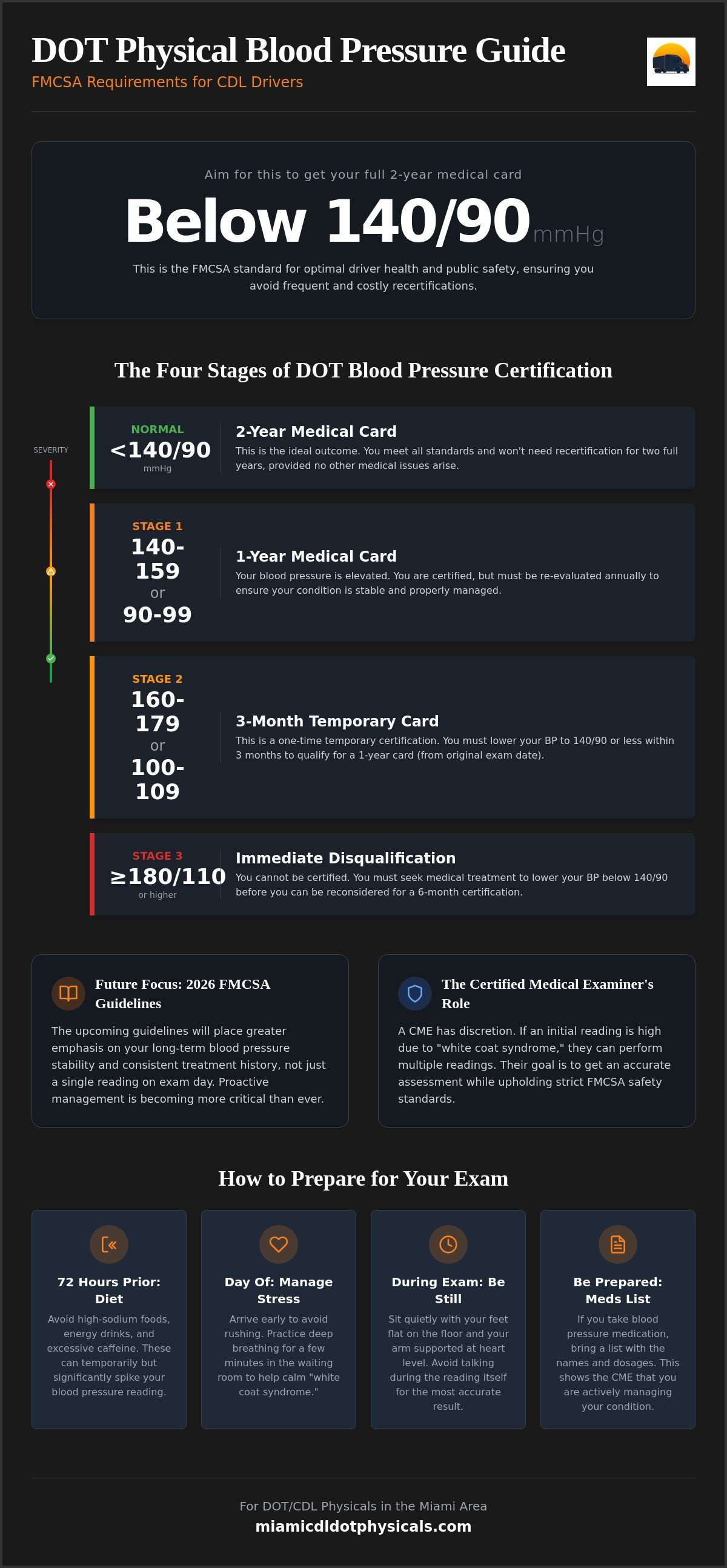
- Normal: A reading below 140/90 mmHg qualifies you for a full two-year medical card, provided you have no existing history of hypertension.
- Stage 1 Hypertension: If your reading falls between 140-159 systolic or 90-99 diastolic, you'll receive a one-year medical card. This requires annual recertification to ensure your levels remain stable.
- Stage 2 Hypertension: Readings from 160-179 systolic or 100-109 diastolic result in a one-time, three-month temporary certificate. This window gives you time to lower your numbers through lifestyle changes or medical intervention.
- Stage 3 Hypertension: A reading of 180/110 or higher is an immediate disqualification. You cannot be certified until your levels are brought below 140/90.
Stage 2 and Stage 3 require immediate attention to keep your career moving. If you receive a three-month card for Stage 2, you must lower your blood pressure to 140/90 within that timeframe. If you succeed, you can then be certified for one year from the date of the original exam. For those who have reached Stage 3, the process is stricter. Once you bring your levels down, you're typically limited to a six-month certification cycle to ensure extremely close monitoring of the DOT physical blood pressure requirements.
Rules for Drivers on Blood Pressure Medication
Many drivers worry that taking prescription medication will automatically disqualify them. This isn't the case. However, drivers who use medication to meet the DOT physical blood pressure requirements are generally capped at a one-year certification. This allows the medical examiner to verify that the medication is working effectively and that you aren't experiencing side effects like dizziness or fatigue that could impair your driving.
Documentation is your best friend when you're on medication. Bring a note from your primary care physician that lists your medications, dosages, and a statement that the treatment is well-tolerated. In 2026, examiners are looking for consistent treatment records rather than just a single good day. If you're concerned about how your medication might affect your status, you can schedule a consultation to discuss your situation before your official exam starts.
How 2026 FMCSA Guidelines Affect Your Medical Card
The 2026 guidelines represent a significant change in how examiners approach your certification. The FMCSA has moved away from "snapshot" evaluations where a single good reading could secure a long-term card. Instead, examiners are looking for a pattern of stability over time. This means meeting the DOT physical blood pressure requirements is now about proving you have a handle on your health every day, not just on exam day. If your medical records show a history of hypertension, a single low reading on the day of your exam may not be enough to override that pattern. Consistency is the new benchmark for maintaining your CDL medical card and avoiding frequent trips back to the clinic.
Examiners in 2026 are more likely to request treatment records if they see any history of high readings in your file. This proactive approach aims to reduce medical emergencies on the road by ensuring that blood pressure is managed through long-term lifestyle choices or medication. While this might feel like extra work, it's designed to protect your livelihood and your health. Being prepared with your history shows the examiner that you are a professional who takes their regulatory responsibilities seriously.
The Shift Toward Longitudinal Health Data
CMEs are increasingly looking at historical blood pressure trends to assess cardiovascular risk. This shift toward longitudinal health data helps identify drivers who might be at risk even if they manage to lower their numbers temporarily for their appointment. If you've been diagnosed with high blood pressure, it's vital to bring recent logs that show your daily or weekly readings. Digital health records are now more accessible to examiners, allowing them to see if your blood pressure stays within a safe range over several months. Showing that you manage your health year-round is the best way to secure a full certification and keep your career on track.
Documentation Requirements for 2026
Preparation for your 2026 physical involves more than just watching your salt intake the week before. You need to gather specific documentation to prove your stability. This is especially true if you've recently changed your medication type or adjusted your dosage. Bring a complete medication list, clearance letters from your primary doctor, and a detailed summary of your treatment plan. Drivers who have a history of Stage 2 hypertension must provide a documented medical record showing at least three months of consistent blood pressure readings at or below 140/90 mmHg to demonstrate effective control. This level of detail shows the examiner that you're a responsible professional who prioritizes safety. Having these papers ready ensures a smooth process and reduces the chance of a DOT physical blood pressure requirements delay.
Immediate Steps to Manage Blood Pressure Before Your Exam
Preparation for your medical exam starts long before you pull into the clinic parking lot. If you want to meet the DOT physical blood pressure requirements on your first attempt, begin your routine 48 to 72 hours in advance. This window is critical for flushing excess sodium and stabilizing your heart rate. Small, intentional choices during these three days can be the difference between a two-year certificate and a temporary three-month card.
Avoid high-sodium foods like deli meats, canned soups, or fast food for at least 24 hours before your visit. Sodium causes your body to retain fluid, which increases the volume of blood and puts more pressure on your artery walls. Caffeine and nicotine are also powerful stimulants that cause immediate spikes in readings. Skip the morning coffee or cigarettes on the day of your appointment. While staying hydrated is essential, reach for plain water instead of sugary energy drinks that act as stimulants and can negatively impact your results.
Sleep is another heavy hitter. Drivers who are sleep-deprived often see a significant spike in their systolic pressure. Aim for at least seven to eight hours of rest the night before your exam to give your cardiovascular system a chance to reset. If you've been driving through the night, try to schedule your appointment for a time when you've had a chance to rest and recover. A tired body is a stressed body, and stress shows up immediately on the blood pressure cuff.
Dealing with White Coat Syndrome
Many drivers experience "white coat syndrome," where the stress of being in a clinical setting causes their numbers to climb. If you feel your heart racing, don't be afraid to speak up. Practice deep breathing exercises in the waiting room to lower your heart rate naturally. Ask the examiner to wait 5-10 minutes before taking your reading if you feel rushed or flustered from your commute. If the first reading is high, request that the examiner check both arms. Sometimes a simple change in position or arm can reveal a reading that meets the DOT physical blood pressure requirements.
Lifestyle Adjustments for Long-Term Compliance
For long-term compliance, look into the DASH diet, which stands for Dietary Approaches to Stop Hypertension. It emphasizes fruits, vegetables, and lean proteins while cutting out the processed snacks common at truck stops. Incorporating small bursts of activity, like a 15-minute walk around the rest area during your breaks, can also make a massive difference over time. Remember that blood pressure is just one part of the puzzle. Stay informed about DOT physical vision requirements 2026 to ensure your overall health profile is ready for the road.
Ready to secure your medical card? Schedule your DOT physical exam today to work with examiners who understand the unique challenges drivers face and want to help you stay on the road.
Navigating Recertification and DOT Compliance
Failing the blood pressure check isn't the end of your career. It's a signal that your health needs immediate attention to meet the DOT physical blood pressure requirements. If you receive a three-month temporary card, the clock starts immediately. You must show improvement to 140/90 or lower within that 90-day window to secure a longer certification. Once a driver is diagnosed with hypertension or starts medication, they typically move to an annual certification cycle. This change is a standard safety measure to ensure your cardiovascular health remains stable while you're on the road. It helps prevent sudden emergencies and keeps your medical history consistent in the FMCSA National Registry.
Professional medical examiners are your allies in this process. They understand the regulations and can help you map out the path back to full compliance. Navigating these rules requires a proactive mindset and clear communication with both your primary doctor and your CME. Staying ahead of your recertification date gives you the time needed to address any spikes without risking a gap in your driving status.
What Happens if You Fail the BP Test?
There is a major difference between being "disqualified" and "temporarily certified." Disqualification happens with Stage 3 hypertension, meaning you cannot drive until your blood pressure is under control. Temporary certification allows you to keep working for 90 days while you seek treatment. Your first step should be a visit to your primary care physician. Work with them to find a treatment plan that fits your long-haul lifestyle. Ask for a formal clearance letter that details your medication and confirms your blood pressure is stable. Once your levels are consistently below 140/90, you can schedule a re-test at the clinic to update your medical card and extend your certification for the remainder of the year.
Choosing the Right FMCSA Professional
Experience matters when you're dealing with blood pressure issues. A seasoned examiner knows how to create a calm environment that minimizes exam-day anxiety. They understand that a high reading might be a temporary spike rather than a chronic issue. Choosing a clinic that values your time and livelihood makes the recertification process much smoother. A supportive professional will guide you through the DOT physical blood pressure requirements and help you understand exactly what documentation you need to stay on the road. Don't leave your livelihood to chance with an examiner who doesn't understand the trucking industry's unique pressures.
Schedule your professional DOT physical today to work with a team that prioritizes your health and your career.
Stay Road-Ready with Proactive Health Management
Meeting the DOT physical blood pressure requirements is about more than just a single day at the clinic. It's a commitment to your health and your professional longevity. By understanding the four stages of certification and preparing your body in the days leading up to your exam, you can avoid the stress of temporary cards. Focus on maintaining a reading below 140/90 mmHg to secure your full two-year medical certificate. Remember that 2026 guidelines prioritize your long-term stability, so keeping consistent logs is your best strategy. Don't leave your certification to chance when your livelihood is on the line.
Our team specializes in DOT compliance and drug testing, providing the expert guidance you need to navigate these regulations. We offer fast, efficient processing for CDL drivers because we respect your busy schedule. Our FMCSA-certified medical examiners are here to act as your partners in health, ensuring you have a smooth and stress-free experience from start to finish. We are dedicated to helping you maintain your livelihood with ease and reliability.
Book Your FMCSA-Certified DOT Physical Exam Now and take the next step toward a successful recertification. We look forward to helping you stay safe and compliant while you keep our country moving.
Frequently Asked Questions
Can I pass a DOT physical with blood pressure medication?
Yes, you can absolutely pass while taking blood pressure medication. The FMCSA allows drivers to use prescription treatments as long as the medication is well-tolerated and doesn't cause side effects like dizziness. You should be aware that drivers using medication to control their levels are typically limited to a one-year medical certificate to ensure ongoing monitoring and stability.
What is the highest blood pressure allowed for a 2-year DOT medical card?
To qualify for a full two-year medical certificate, your blood pressure must be below 140/90 mmHg. If either your systolic or diastolic number meets or exceeds this threshold, you'll fall into a hypertension stage that requires more frequent recertification. Keeping your numbers in the normal range is the only way to secure the maximum certification length allowed by the FMCSA.
What happens if my blood pressure is high during the exam due to nerves?
Certified medical examiners understand that "white coat syndrome" can cause temporary spikes in your reading. If your first measurement is high, the examiner will often allow you to rest for several minutes before performing a second or third check. You can also provide a log of home blood pressure readings to show the examiner that your typical baseline meets the DOT physical blood pressure requirements.
How long is a DOT medical card valid if I have Stage 1 hypertension?
A diagnosis of Stage 1 hypertension, which is a reading between 140/90 and 159/99 mmHg, results in a one-year medical card. This annual renewal cycle allows the examiner to verify that your blood pressure isn't worsening. If you're able to lower your blood pressure below 140/90 by your next exam without medication, you may be eligible to return to a two-year certification cycle.
Can a DOT medical examiner disqualify me for a single high blood pressure reading?
Disqualification usually only occurs if your reading reaches Stage 3 levels, which is 180/110 mmHg or higher. At this level, the risk of a sudden medical event is considered too high for immediate certification. For readings that are elevated but below Stage 3, examiners typically issue a shorter-term certificate, such as a three-month or one-year card, rather than a disqualification.
Do I need a clearance letter from my doctor if I take blood pressure pills?
While not strictly required for every exam, bringing a clearance letter from your primary care physician is highly recommended. This letter should list your current medications and dosages while confirming that the treatment is effective and well-tolerated. Having this documentation ready helps the examiner confirm you meet the DOT physical blood pressure requirements and speeds up the certification process.
What should I avoid eating or drinking before my DOT physical blood pressure check?
Avoid caffeine, nicotine, and high-sodium foods for at least 24 hours before your appointment. Stimulants like coffee and energy drinks can cause immediate, temporary spikes in your heart rate and blood pressure. Similarly, salty meals can lead to fluid retention that elevates your numbers. Stick to plain water and light, unprocessed meals to ensure your reading is as accurate as possible.
Is 145/95 too high to pass a DOT physical?
A reading of 145/95 is not too high to pass, but it will prevent you from getting a two-year card. This reading falls into the Stage 1 hypertension category. You'll likely receive a one-year medical certificate and be advised to monitor your blood pressure closely. To return to a two-year card in the future, you'll need to work on bringing both numbers below the 140/90 threshold.


