

A last-minute food fix won’t guarantee a smooth DOT physical. If you’re searching for food to avoid before DOT physical exams, focus on steady, familiar choices rather than fasting or making extreme changes the day before. A very salty meal, sugary drink, or extra coffee shortly before your appointment may temporarily affect some readings, but no single food determines whether you’ll be certified.
It’s reasonable to want clear guidance when your certification affects your work. This checklist explains what to limit, what you can generally eat and drink as usual, and how to approach fasting, hydration, caffeine, and everyday medications. You’ll also learn what to bring and how to discuss health concerns honestly with the medical examiner.
The DOT physical includes a urine screening for health indicators such as sugar and protein. This is separate from a DOT drug test. Preparation doesn’t need to be complicated: keep your routine steady, follow specific instructions you’ve received, and don’t skip prescribed medication or try to alter a result with a last-minute change. A certified medical examiner evaluates your health and determines certification.
Key Takeaways
- Use the food to avoid before DOT physical checklist to identify choices worth limiting, then choose familiar alternatives instead of making drastic changes.
- Keep your normal eating and hydration routine. Don’t turn exam preparation into an unnecessary fast.
- Gather relevant health records and a current medication list. Take prescribed medication as directed unless your prescribing clinician advises otherwise.
- Share health concerns and treatment information honestly so the FMCSA-certified medical examiner can assess your overall health.
Food to Avoid Before a DOT Physical: What Actually Matters?
Avoid unusual extremes, not ordinary meals or entire food groups. There’s no general DOT physical food-ban list, and you don’t need to fast, detox, or overhaul your diet to prepare. A familiar meal and your usual routine are more sensible than trying to change your readings at the last minute.
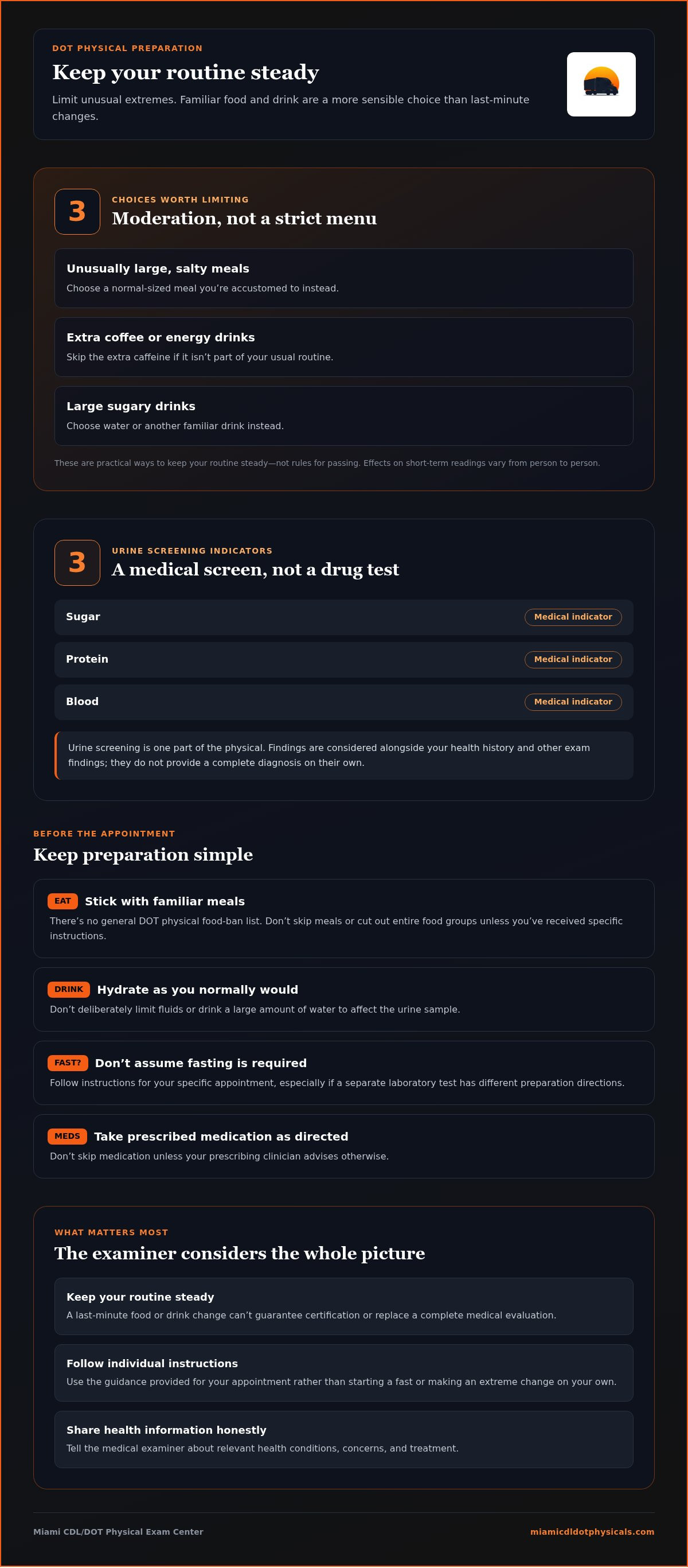
Consider limiting unusually large, salty meals, extra caffeine, energy drinks, and large sugary drinks shortly before your appointment. These choices may affect some short-term measurements, but the effect varies from person to person. They aren’t automatically prohibited, and having one won’t automatically disqualify you. When deciding on food to avoid before DOT physical exams, think moderation, not a strict menu.
DOT physical preparation is not a pass-guarantee diet. No last-minute food choice can replace a complete medical evaluation. The examiner considers your health history, reported conditions, and measurements during the exam. One meal can’t guarantee a pass or determine the full assessment.
Do you need to avoid specific foods before the exam?
There’s no universal list of foods drivers must avoid before a DOT physical. Unless you’ve received specific instructions for your appointment, keep your usual eating pattern rather than skipping meals or cutting out entire food groups. Sudden dietary changes and “detox” plans aren’t a substitute for managing an existing health condition. Follow any individual instructions you’ve been given.
Can a meal or drink affect exam readings?
Recent choices may temporarily influence some measurements. Caffeine may affect blood pressure in some people, while a heavy meal or high-sodium choice may affect how you feel or influence a short-term reading. Large sugary drinks can also matter for some people’s blood sugar. These effects aren’t automatic, and they don’t by themselves determine certification.
The medical examiner reviews your health history and considers relevant measurements as part of the full examination. If a reading raises a question, the examiner evaluates it in context rather than judging your fitness based on a single meal. Don’t try to manipulate a result by changing what you eat or drink immediately before the appointment.
- Choose a normal-sized meal you’re accustomed to instead of an unusually heavy one.
- Skip extra coffee or energy drinks if they’re not part of your usual routine.
- Choose water or a familiar drink instead of a large sugary beverage.
These are practical ways to keep your routine steady, not rules for passing. If you have a medical condition that affects your diet or blood pressure, follow your clinician’s advice and the appointment-specific instructions you’ve received. Be ready to discuss your health honestly with the examiner.
How Food, Drinks, and Urinalysis Fit Into a DOT Physical
Food to avoid before DOT physical appointments is only one part of preparation. A DOT physical is a medical examination, not a test of what you ate the day before. The medical examiner considers your health history and findings from the exam, including relevant measurements. Urine screening is one part of that broader picture, and it serves a different purpose from workplace drug testing.
During the physical, a urine sample is checked for medical indicators. FMCSA examination materials include screening for sugar, protein, and blood in the urine. These findings can point to issues that may need medical attention, but they don’t provide a complete diagnosis on their own.
The urine screening during a DOT physical checks for medical indicators such as sugar, protein, and blood. It is not a drug test. The medical examiner interprets the results alongside your health history and other exam findings.
Does the DOT physical urine test check for drugs?
No. The urine screening that’s part of the medical examination is separate from a DOT drug test. A drug test is a distinct testing process with its own procedures. Don’t confuse a request for a urine sample during a physical with a drug screen. For a closer look at how the separate process works, see this DOT drug testing guide.
Should you fast or drink extra water beforehand?
Don’t assume fasting is required for a DOT physical. Follow any appointment-specific instructions, especially if a separate laboratory test has been arranged with different preparation directions. If you’re unsure which instructions apply, rely on the guidance provided for your appointment rather than starting a fast on your own.
Keep hydration ordinary, too. Drink as you normally would rather than deliberately limiting fluids or consuming a large amount of water to affect the urine sample. Neither approach is a sensible shortcut. Your goal is to arrive ready for the examination, not to manipulate a screening result.
- Follow the instructions for your specific appointment.
- Continue your usual food and drink routine unless you’ve been told otherwise.
- Tell the examiner about relevant health conditions and concerns.
Urine findings aren’t interpreted in isolation, and a single result doesn’t tell the whole story. The examiner considers the overall examination and may discuss a finding with you as part of the assessment. Be straightforward about your health history and any treatment you receive.
For a required commercial-driver medical examination, schedule a DOT physical exam with our center. Bring any appointment instructions and follow them closely.
Before Your DOT Physical: Choices to Limit and Better Alternatives
Use moderation, not a last-minute diet overhaul. If you’re deciding what food to avoid before DOT physical appointments, focus on unusually large portions, extra caffeine, and oversized sugary drinks rather than banning ordinary foods. A familiar meal and routine hydration are practical choices, but no substitution guarantees a particular reading or certification outcome.
| Choice to limit | Familiar alternative |
|---|---|
| Several coffees or an energy drink beyond your usual intake | Your usual amount of coffee, or water if you’d prefer |
| An unusually salty, heavy takeout meal | A regular portion of a meal you know and tolerate well |
| A large sugary soda or sweetened drink | Water or your usual unsweetened drink |
What should you limit the day before?
Keep dinner familiar. If you usually eat a moderate meal, there’s no need to replace it with restrictive foods. Simply avoid making the evening meal unusually heavy or high in sodium. Caffeine can temporarily affect blood pressure in some people, so avoid adding extra coffee or energy drinks beyond your normal routine. These are cautious choices, not rules that determine your exam result.
Don’t use alcohol, supplements, or “detox” products to try to change a reading or urine result. They aren’t reliable exam-preparation tools and may conflict with your health needs or medications. Follow your clinician’s advice about any supplement you already take rather than starting or stopping it for the appointment.
What is a sensible choice on exam morning?
If you usually eat breakfast, have a normal, familiar meal at your usual time. For example, choose your regular breakfast rather than skipping it or trying a new food. Drink water according to your usual needs. Don’t force extra fluids to alter a urine sample, and don’t deliberately restrict fluids either.
Personal instructions take priority. Follow any directions provided for your appointment, as well as separate laboratory instructions if another test is scheduled. If you have a medical condition that affects your diet or fluid intake, keep following the advice you’ve been given rather than changing your routine for the physical.
Think of these alternatives as ways to keep the day predictable, not as tricks to lower a measurement. Your examiner evaluates your health and exam findings. Food choices can’t guarantee a pass or replace that assessment. Schedule a professional commercial-driver medical examination with our center through this DOT physical exam link.
DOT Physical Preparation Checklist for the Day Before and Exam Day
A simple plan keeps your appointment focused on the medical examination, not last-minute fixes. Keep meals and hydration familiar, gather useful health information, and follow the instructions for your visit. The goal isn’t to manipulate a reading. It’s to give the medical examiner an accurate picture of your health and treatment.
The day before the appointment
Stick with your usual routine. Choose familiar meals and your normal fluid intake instead of making drastic dietary changes or trying unverified supplements. If you’re still considering food to avoid before DOT physical appointments, focus on avoiding unusual extremes rather than replacing your regular diet.
Set aside relevant medical records and write down your medications, including their names and doses if you know them. Prioritize your usual rest, too. A good night’s sleep can help you feel prepared, but sleep alone doesn’t determine certification. For more preparation tips, use this DOT physical preparation guide.
The morning of the appointment
Eat normally if breakfast is part of your routine, unless you’ve received different instructions for the visit. Drink according to your usual needs. Don’t deliberately change your food, medication, or water intake to try to affect a measurement or urine sample. Take prescribed medication as directed unless your prescribing clinician has advised otherwise.
Arrive with the information the examiner needs to understand your health history. Be accurate and direct about diagnoses, current symptoms, and treatment, including medications. A clear account helps the examiner assess your situation rather than relying on incomplete information.
Before you leave, gather:
- Identification and appointment instructions
- A current medication list, including relevant doses
- Relevant medical records and any requested medical documentation
- Information about diagnoses, symptoms, and current treatment
Use the checklist so you’re not scrambling on exam day. If you take medication for an ongoing condition, don’t stop or change it just to prepare for the physical. Follow the advice of the clinician who prescribed it, and bring enough information to explain your treatment clearly. If you’re unsure whether an instruction applies to your appointment, use the specific guidance you were given rather than relying on a general checklist.
When you’re ready to complete this required step, schedule your DOT physical exam with our center.
If You Have a Health Concern, Get a DOT Physical Evaluation
If you have high blood pressure, diabetes, or another ongoing health concern, don’t rely on a last-minute menu change to address it. Food choices can’t replace an evaluation by an FMCSA-certified medical examiner. Be open about your diagnoses, symptoms, treatment, and relevant changes in your health so the examiner can assess your situation using the full picture.
What if you are concerned about blood pressure or blood sugar?
Share your concern during the examination, even if you feel well that day. Explain what you know about your condition and how it’s being managed. Continue prescribed medication as directed unless the clinician who prescribed it advises otherwise. Changing treatment or skipping medication to influence an exam result can disrupt your care and won’t replace an honest medical assessment.
If blood pressure is your main concern, this DOT physical blood-pressure guide explains the topic in more detail.
How can a professional DOT physical help?
A professional examination gives a medical examiner the opportunity to review your health information and findings under applicable FMCSA requirements. Our center provides FMCSA-certified medical examinations for commercial drivers. The examiner makes the certification decision based on your individual circumstances. No particular food, drink, or preparation routine can promise an outcome.
Help the evaluation by giving clear, accurate information. Bring relevant records and a current medication list, and describe symptoms plainly. For example, share when a symptom began, whether it has changed, and what treatment you’re following. If you don’t know a detail, say so rather than guessing. This gives the examiner useful context and helps avoid confusion about your health history.
A single exam-day measurement is only one part of the assessment. If you’ve been monitoring a condition or have recent records that explain your treatment, bring them so the examiner can consider that information. Don’t try to improve a reading by stopping medication, changing your diet abruptly, or using supplements. Those steps don’t replace ongoing care or the examiner’s evaluation.
It’s normal to feel concerned when your ability to drive depends on a medical examination. Be honest, ask questions about findings you don’t understand, and follow the treatment advice you’ve received. A shorter certification period, if determined by the examiner, is not the same as an automatic failure. The decision depends on your individual medical assessment.
Preparing sensibly is more useful than searching for a special food to avoid before DOT physical appointments. If you’re ready for a professional evaluation, schedule your DOT physical examination with our center. The exam assesses your health under applicable requirements, without promising certification in advance.
Take the Next Step With Confidence
Use your appointment as a chance to get a clear, professional assessment, not as a test you can prepare for with a special menu. Searching for food to avoid before DOT physical appointments can leave drivers focused on the wrong detail. Show up ready to discuss your health and receive an evaluation based on your individual circumstances.
Our center provides FMCSA-certified medical examinations for commercial drivers, along with DOT and non-DOT drug testing and FMCSA Clearinghouse Consortium support for drivers and fleets. Whether you’re arranging an exam or managing another compliance need, taking action early can help you plan with greater confidence.
Schedule a DOT physical examination with our center and move forward with a professional assessment. Prepare honestly, bring information relevant to your health, and take the next step in your driving career with confidence.
Frequently Asked Questions
What foods should I avoid before a DOT physical?
There’s no universal list of banned foods before a DOT physical. If you’re deciding on food to avoid before DOT physical appointments, consider limiting unusually large, salty meals and large sugary drinks, especially if they’re unlike your normal routine. You don’t need to cut out entire food groups or try a new diet. Choose familiar portions and follow any specific instructions provided for your appointment.
Should I fast before a DOT physical?
Don’t fast unless you’ve received instructions to do so. A routine DOT physical doesn’t automatically mean you need to arrive without eating. If a separate lab test is scheduled, its preparation instructions may differ, so follow the directions for that appointment. If instructions aren’t clear, use the guidance provided by the clinic rather than guessing or starting a fast on your own.
Can coffee affect a DOT physical blood pressure reading?
Coffee can temporarily affect some people’s blood pressure, though the response varies. If you normally drink coffee, avoid adding extra cups or switching to energy drinks just before the exam. You don’t have to assume that your usual coffee will change the outcome. If you’re concerned about a reading, tell the examiner about your caffeine intake and any blood-pressure history.
Can drinking extra water help me pass a DOT physical?
No. Drinking extra water isn’t a way to pass or change the medical examiner’s decision. Drink according to your usual needs, and don’t deliberately overhydrate or restrict fluids to influence a urine sample. If you have a condition that affects how much fluid you should drink, follow your clinician’s advice. Tell the examiner about relevant health concerns rather than trying to alter a result.
Should I take my regular medication before a DOT physical?
Take prescribed medication as directed unless the clinician who prescribed it advises otherwise. Don’t skip a dose or change your treatment to try to affect an exam reading. Bring a current medication list, including doses when available, and explain what each medication treats. If you’re unsure how a medicine fits into your care, discuss it with your prescribing clinician instead of making a last-minute change.
Can one salty meal make me fail a DOT physical?
One salty meal doesn’t automatically mean you’ll fail. Its effect on an individual reading can vary, and the medical examiner considers your overall health information and examination findings. If you ate an unusually salty meal, don’t try to compensate by fasting or changing your fluid intake. Keep your routine steady, and answer questions about your health and treatment honestly.


