

Could the prescription bottle sitting in your truck's cup holder be more dangerous to your career than a speeding ticket? For many commercial drivers, the answer is a quiet but firm yes. You work hard to manage your health, but federal regulations don't always see eye-to-eye with a standard doctor's visit. It's frustrating to feel like your livelihood is at risk just because you're following medical advice, especially when the line between a safe medication and a disqualifying one feels so thin.
Understanding the medications that disqualify CDL medical card status is essential for staying compliant and confident during your DOT physical. This 2026 guide breaks down the specific prescriptions and over-the-counter drugs that act as automatic disqualifiers, while also highlighting the discretionary choices left to your medical examiner. You'll learn how to identify high-risk substances like certain opioids and sleep aids, and more importantly, how to find safe alternatives that won't trigger a "failed" status. We will also walk through the exact steps for securing medical waivers and the documentation required for managed conditions like insulin-treated diabetes. By the end of this article, you'll have a clear roadmap to pass your exam and keep your career moving forward.
Key Takeaways
- Learn how 49 CFR 391.41 standards empower your medical examiner to evaluate how your current prescriptions impact safety-sensitive driving duties.
- Identify the specific Schedule I substances and stimulants that act as medications that disqualify CDL medical card status to prevent an immediate loss of certification.
- Understand the difference between hard disqualifiers and medications subject to examiner discretion, including certain antidepressants and blood pressure treatments.
- Find out how to collaborate with your doctor to secure safe, non-drowsy alternatives that satisfy federal requirements without compromising your health.
- Prepare for your exam by gathering necessary specialist clearance letters and detailed medication logs to ensure a smooth, stress-free certification process.
Understanding the FMCSA Medication Standards (49 CFR 391.41)
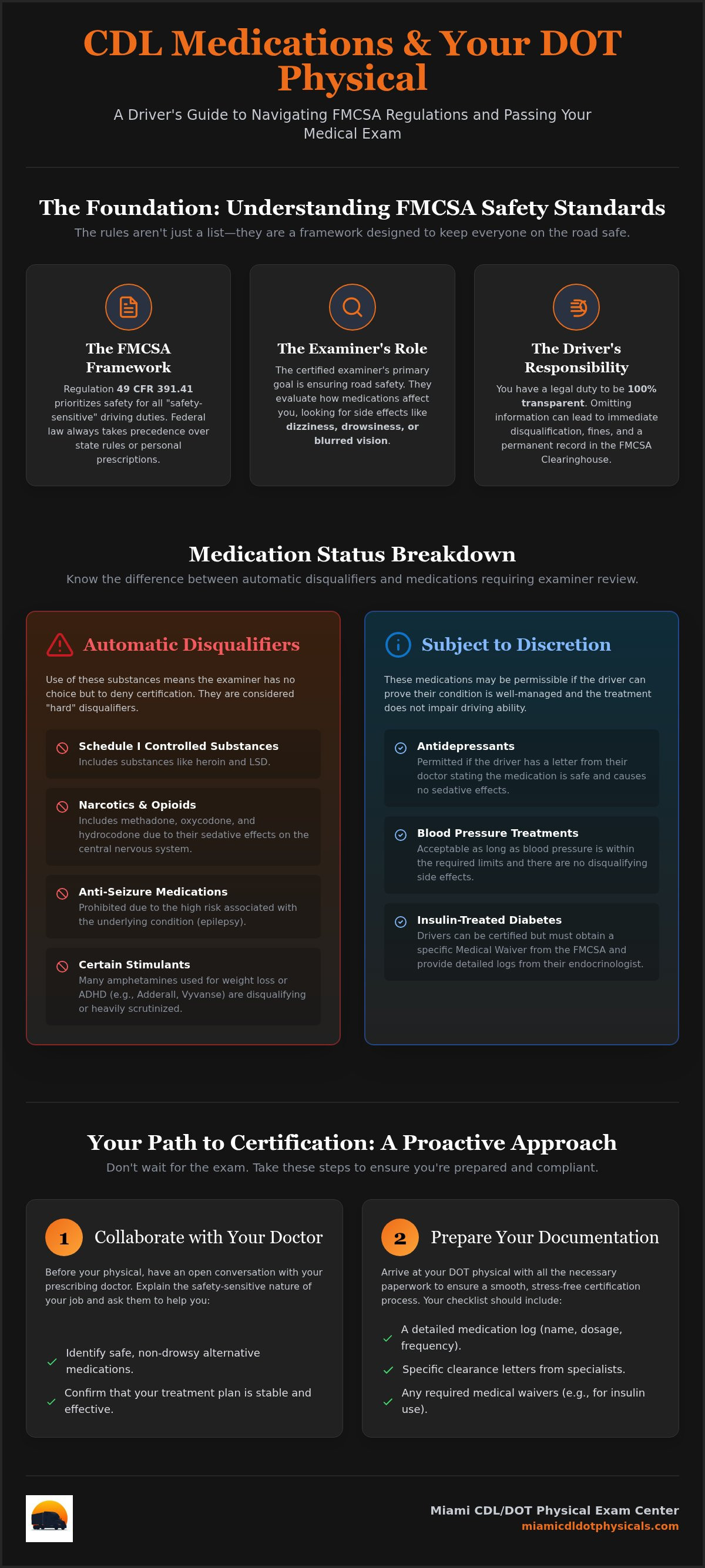
The Federal Motor Carrier Safety Administration (FMCSA) sets the foundation for driver health through 49 CFR 391.41. This regulation isn't just a list of rules; it's a safety framework designed to protect you and everyone else on the road. It focuses on safety-sensitive functions, which include any task where you're responsible for a commercial motor vehicle, from driving and loading to inspecting equipment. Because these tasks require total focus and quick physical reactions, any substance that slows your brain or body is heavily scrutinized. Understanding the medications that disqualify CDL medical card status starts with recognizing that federal law always takes precedence over state rules or personal prescriptions.
Your FMCSA-certified medical examiner acts as the gatekeeper for these standards. They don't just look at a drug's name; they evaluate how that specific medication interacts with your unique physiology. Federal standards generally fall into two categories. Hard disqualifications are non-negotiable, meaning the examiner cannot legally certify you if you use those substances. Discretionary medications allow the examiner to make a judgment call based on your stability, dosage, and side effects. Adhering to Commercial Driver's License requirements means proving that your treatment plan won't interfere with your ability to command a heavy vehicle safely.
The Examiner’s Primary Goal: Ensuring Road Safety
When an examiner reviews your medical history, they're looking for side effects like dizziness, blurred vision, or extreme drowsiness. These symptoms can turn a routine haul into a high-stakes emergency. A single second of delayed reaction time can be the difference between a safe stop and a collision. The examiner’s job is to partner with you to ensure your treatment doesn't create new risks. A safety-sensitive threshold for 2026 drivers is defined as any task where impairment could cause an immediate and disastrous risk to the driver, the cargo, or the public.
The Legal Responsibility of the Commercial Driver
You have a legal duty to be 100 percent honest during your DOT physical. Omitting a prescription might seem like a way to protect your job, but it often leads to the opposite result. If an examiner discovers you've withheld information, they can immediately disqualify you for making a false statement. This can lead to fines and a permanent mark on your record. Today, the FMCSA Clearinghouse tracks drug-related violations and positive test results across the country. This digital database makes it easier for authorities to spot inconsistencies, so staying transparent is the only way to safeguard your career long-term.
Common Medications That Automatically Disqualify CDL Drivers
Certain substances are "hard" disqualifiers. This means a medical examiner has no choice but to deny certification if these drugs are present in your system or your medical history. Schedule I controlled substances, including heroin and LSD, are the most obvious examples. However, the list of medications that disqualify CDL medical card status also includes many common prescriptions. For instance, methadone is an automatic disqualifier because it's used in addiction treatment and can cause significant sedation. Anti-seizure medications are also prohibited because the underlying condition, epilepsy, presents a high risk for loss of consciousness. Even if your seizures are controlled, taking these meds usually prevents you from holding a medical card.
Amphetamines and stimulants used for weight loss or ADHD, such as Adderall or Vyvanse, are heavily scrutinized. While some may be allowed with a specific medical clearance, many formulations are viewed as high-risk due to their potential to cause heart palpitations or sudden crashes in energy. If you're concerned about how your current treatment affects your eligibility, it's a good idea to schedule a DOT Physical Exam to discuss your specific case with a certified professional. Our examiners can help you understand which prescriptions require extra documentation before you arrive for your official test.
Narcotics and Opioid Painkillers
Narcotics are generally incompatible with commercial driving because they affect the central nervous system. This category includes potent painkillers like oxycodone or hydrocodone. The primary concern is that these drugs cause drowsiness and slow reaction times, which are dangerous when operating heavy machinery. There is a narrow exception for some Schedule II medications if your treating physician provides a formal letter. This letter must state that you've been on the medication long enough to prove you don't experience side effects and that the underlying condition won't interfere with safety. You can find more details on these specific FMCSA medical requirements to see how they apply to your prescription.
Marijuana, CBD, and Federal Compliance in 2026
One of the biggest points of confusion for drivers in 2026 is the legal status of cannabinoids. Even if marijuana is legal for medical or recreational use in your state, it remains a Schedule I substance at the federal level. This makes any use of marijuana an automatic disqualifier for a CDL. CBD products also carry significant risk. Because the CBD industry is largely unregulated, many oils and gummies contain trace amounts of THC. If this THC shows up on a drug test, "I only used CBD" is not a valid defense. Federal law currently treats hemp-derived cannabinoids with the same strictness as other medications that disqualify CDL medical card status if they result in a positive screening.
Medications Subject to Medical Examiner Discretion
Discretionary medications represent the "gray area" of the DOT physical. Unlike the hard disqualifiers covered in the previous section, these drugs depend on your stability and the examiner's assessment of your risk level. Blood pressure medications are a common example. While they aren't medications that disqualify CDL medical card eligibility on their own, their side effects are closely monitored. If a drug causes you to feel lightheaded or faint, an examiner may limit your certificate to six months or require a different prescription. Similarly, sleep aids like Ambien or Lunesta are permitted only if you strictly follow the 12-hour rule. You cannot legally operate a vehicle until a full 12 hours have passed since your last dose to prevent cognitive fog or "sleep-driving" episodes.
Psychotropic Medications and Mental Health
Mental health is a major priority for road safety, and examiners focus on whether your treatment creates a distraction. SSRIs used for anxiety or depression are generally acceptable, provided you've completed a 30-day stability period on a consistent dose without adverse reactions. However, Benzodiazepines like Xanax or Valium are rarely approved for active duty. These are classified as habit-forming and carry a high risk of sedation. According to FMCSA medication regulations, any drug that causes impairment is prohibited unless a doctor can prove it's safe for safety-sensitive work. In most cases, the risk of drowsiness makes these a poor choice for commercial drivers.
Diabetes and the 2026 Insulin Waiver Process
The 2026 process for insulin-treated drivers is more streamlined than it used to be. You don't need to apply for a long-term federal exemption anymore. Instead, you must use the Insulin-Treated Diabetes Mellitus (ITDM) Assessment Form, MCSA-5870. Your treating physician must complete this form to verify that you've maintained stable blood sugar levels and haven't had a severe hypoglycemic episode in the last year. Passing your physical while using insulin requires you to provide:
- At least three months of electronic glucose monitoring logs.
- A signed statement from your doctor confirming your condition is well-managed.
- A clear record showing no loss of consciousness or seizures related to your diabetes.
If your examiner is satisfied with these logs and your overall health, you can be qualified for up to 12 months. Metformin and other oral medications are much simpler to clear, as they don't carry the same immediate risk of a "crash" as insulin, but they still require a baseline of stability to ensure you won't experience sudden dizziness behind the wheel.
How to Switch to DOT-Compliant Medication
Finding out you're taking medications that disqualify CDL medical card status is stressful, but it's usually a hurdle you can clear with the right strategy. Most health conditions have multiple treatment paths. Your goal is to work with your primary care physician (PCP) to transition from a high-risk drug to a "safety-sensitive" alternative. Many doctors outside the trucking industry aren't familiar with specific FMCSA standards, so you must be your own advocate. Clear communication about your daily job duties is the first step toward staying compliant and keeping your career on track.
Always test new medications during your home time. Never start a new prescription the night before a long haul. You need at least a few days to see how your body reacts in a controlled environment. This allows you to monitor for side effects like brain fog or slowed reaction times without putting yourself or others at risk. If you're unsure if your current or new prescription fits federal standards, you should book a DOT Physical Exam to get an expert opinion. An FMCSA-certified examiner can review your doctor's notes and confirm if your new regimen keeps you road-ready.
The "Treating Physician" Letter Protocol
A simple note from your doctor saying you're "cleared for work" won't pass a DOT physical. The medical examiner needs a specific statement that addresses the medication's impact on your ability to drive. The letter must confirm you've been on the drug long enough to ensure no side effects like drowsiness or dizziness occur. For example, a doctor should write: "I have reviewed the patient's job duties as a commercial driver and certify that their use of [Medication Name] at the prescribed dosage does not interfere with the safe operation of a commercial motor vehicle." This level of detail gives the examiner the confidence they need to sign off on your medical card.
Common Compliant Alternatives for Top Conditions
If you struggle with seasonal allergies, swap sedating antihistamines for non-drowsy options like loratadine or cetirizine. These are widely accepted because they don't cross the blood-brain barrier in the same way older allergy meds do. For chronic pain, many drivers find success moving away from opioids toward physical therapy or non-narcotic nerve medications, provided those alternatives don't cause impairment. Hypertension is another area where choice matters. While some older blood pressure meds cause fatigue, newer classes often provide the same control without the "heavy" feeling that worries examiners. Discussing these specific "safety-sensitive" options with your PCP ensures your health is managed without triggering a disqualification.
Preparing for Your DOT Physical with Prescriptions
Preparation is the difference between walking out with a two-year certificate and leaving the clinic empty-handed. When you're managing chronic conditions, being proactive is your best defense against certification delays. Start by creating a comprehensive list of every medication you take. This list must include the exact dosage, the frequency of use, and the contact information for the prescribing doctor. Don't overlook over-the-counter supplements or herbal remedies. Some of these can interact with medications that disqualify CDL medical card status or inadvertently trigger concerns during a drug screening.
Bring your most recent lab results or specialist clearance letters to the appointment. If you manage a condition like heart disease or a neurological disorder, a medical examiner cannot clear you without specific documentation from your specialist. Having these papers ready shows the examiner that you're responsible and that your condition is stable. At miamicdldotphysicals.com, we prioritize this collaborative approach. We help you understand exactly what the FMCSA requires so you don't waste time on multiple office visits.
What Happens if You Are Disqualified?
A disqualification doesn't always mean your driving career is over. It's important to understand the difference between being temporarily and permanently disqualified. A temporary status usually means the examiner needs more information, such as a follow-up test or a more detailed letter from your physician. Once you provide the missing data or switch to a compliant treatment plan, you can often be cleared for duty. The FMCSA Clearinghouse tracks these statuses to ensure all drivers meet safety standards. If you're facing a permanent disqualification due to a "hard" disqualifier, you may still have options to appeal or seek a federal waiver, though these processes are rigorous and require extensive medical proof.
Schedule Your Exam with a Compliance Expert
Choosing an experienced examiner prevents unnecessary delays and reduces the stress of the physical. A provider who specializes in commercial driver compliance knows the regulations inside and out. They won't guess about which drugs are permitted; they'll give you clear, actionable answers. Our center offers professional DOT Physical and Drug Testing services tailored to the needs of busy drivers. We act as your partner in the certification process, ensuring you meet every federal requirement with ease. We understand the high stakes of your profession and work to ensure your medical exam is as straightforward as possible.
Schedule your professional DOT physical exam today to ensure you stay legal and on the road.
Secure Your Career with Proactive Compliance
Your commercial driving career depends on more than just your skills behind the wheel; it requires a health profile that meets strict federal safety standards. Navigating the specific medications that disqualify CDL medical card status doesn't have to be a solo mission. By identifying potential red flags early, consulting with your doctor for non-drowsy alternatives, and gathering the necessary specialist letters, you can approach your medical exam with complete confidence. Transparency remains your best tool for ensuring long-term success and road safety.
Our FMCSA-certified medical examiners provide the expert guidance and fast, compliant drug testing services you need to stay on the road. We understand the high stakes of your profession and offer an efficient process to help you manage medication compliance without unnecessary stress. Don't leave your certification to chance. Book Your FMCSA-Certified DOT Physical Exam Now to protect your livelihood. You've worked hard for your CDL, and we're here to serve as your dependable ally in meeting every professional requirement.
Frequently Asked Questions
Can I take Benadryl while driving a commercial vehicle?
No, you should not take Benadryl or any diphenhydramine-based medication while operating a commercial vehicle. These antihistamines are known to cause significant drowsiness and slowed reaction times, which are dangerous on the road. The FMCSA recommends waiting at least 12 hours after taking such a medication before performing safety-sensitive duties. Using sedating over-the-counter drugs can lead to accidents or failed roadside inspections if impairment is detected by law enforcement during a stop.
Do I have to tell the DOT examiner about my antidepressants?
Yes, you must disclose all antidepressants to your medical examiner during the physical exam. While most modern SSRIs are not considered medications that disqualify CDL medical card status, the examiner needs to verify that your condition is stable. They also check that the medication doesn't cause side effects like dizziness or fatigue. Honesty is critical; failing to report these prescriptions can result in immediate disqualification for making false statements on your medical history form.
Will high blood pressure medication disqualify me from getting a CDL?
High blood pressure medication will not automatically disqualify you, but it does impact the length of your medical certificate. If your blood pressure is controlled with medication, you are typically eligible for a one-year certificate rather than the standard two-year version. The examiner will check for side effects like fatigue or lightheadedness that could interfere with your ability to safely command a heavy vehicle. They prioritize ensuring your blood pressure stays within the acceptable FMCSA range.
Is medical marijuana legal for CDL drivers if I have a prescription?
No, medical marijuana is not legal for CDL holders, even if you have a valid state-level prescription. The FMCSA follows federal law, which classifies marijuana as a Schedule I controlled substance. Because federal regulations govern commercial licenses, any use of marijuana is a "hard" disqualifier. A positive drug test for THC will result in your immediate removal from safety-sensitive duties and a mandatory return-to-duty process through the Clearinghouse, regardless of state-level legalization.
What happens if a DOT drug test finds a prescription medication I didn’t disclose?
If a DOT drug test reveals a controlled substance you didn't disclose, it can be treated as a drug screen failure. Even if the medication is a legal prescription, failing to report it on your medical history form is considered falsification. This often leads to an immediate revocation of your medical card. The violation is recorded in the FMCSA Clearinghouse, which prevents you from driving until you complete a formal return-to-duty process with a substance abuse professional.
Can I drive a truck while taking Ozempic or other weight-loss medications?
You can generally drive while taking Ozempic or similar GLP-1 medications, but you must report them to your examiner. These drugs are not on the list of medications that disqualify CDL medical card status, yet they can cause side effects like severe nausea or hypoglycemia. Your examiner will evaluate your stability on the medication to ensure you won't experience a sudden health crisis while behind the wheel. They may request a letter from your prescribing physician for verification.
How long does a disqualifying medication stay in my system for a drug test?
The time a drug stays in your system varies significantly based on the substance, dosage, and your personal metabolism. Some narcotics clear within 48 hours, while others like marijuana can remain detectable for 30 days or more. However, the medical examiner is more focused on whether you are actively using a prohibited substance to manage a chronic condition. They look for long-term stability and compliance with federal safety regulations rather than just a single clean test result.
What is the "Alternative Medication" rule in FMCSA guidelines?
This rule allows a medical examiner to qualify a driver who takes a potentially disqualifying medication if the prescribing doctor switches them to a safer alternative. Under 49 CFR 391.41, the examiner can work with your primary physician to find a "non-impairing" version of a drug. This ensures your medical condition is treated without using substances that compromise your reaction time or cognitive focus. It bridges the gap between your personal health needs and federal road safety requirements.


