

Imagine checking your calendar and realizing your medical certificate expires in less than forty eight hours. For a commercial driver, that realization is a direct threat to your livelihood. Finding a reliable walk-in DOT physical center is the difference between staying on the road and facing an expensive period of forced downtime. You need a medical process that respects your schedule and understands the high stakes of FMCSA compliance.
We understand that the pressure to maintain a clean driving record is higher than ever, especially with the 2026 transition to full electronic reporting through the National Registry II system. This guide will show you exactly how to secure your CDL medical certification in a single visit, ensuring you walk out with your MCSA-5876 form in hand. We will cover the specific documentation required for chronic conditions, the latest vision and hearing standards, and how to utilize the current 60 day paper certificate waiver effectively. By following these steps, you can turn a potential compliance hurdle into a quick, professional, and seamless experience.
Key Takeaways
- Learn how to prepare for a walk-in DOT physical Miami visit to ensure your medical examiner certificate is issued immediately after your exam.
- Identify the critical documentation, such as medication lists and CPAP compliance reports, needed to prevent common certification delays.
- Understand the 2026 electronic reporting requirements and how the National Registry II system affects your medical status updates.
- Discover practical strategies to manage "White Coat Syndrome" and other medical hurdles that could impact your blood pressure readings.
- Explore the benefits of combining your physical with DOT drug testing to maintain full FMCSA compliance in one streamlined appointment.
Understanding the Walk-In DOT Physical and Same-Day Certification
A same-day medical card means you walk out with your certification immediately after your exam. It is that simple. When you seek a walk-in DOT physical Miami, you're looking for the immediate issuance of the Medical Examiner's Certificate, Form MCSA-5876. This document is your legal proof of fitness. It's different from the physical exam itself, which is the clinical evaluation of your health. The exam is the process, while the certificate is the legal authorization you need to stay behind the wheel. Commercial drivers cannot afford to wait for a clinic to mail results or process paperwork days later because an expired certificate triggers an automatic suspension of driving privileges by state licensing agencies.
Understanding the Walk-In DOT Physical involves recognizing that the examiner acts as a vital gatekeeper for public safety. Every examiner must be certified and listed on the FMCSA National Registry of Certified Medical Examiners. In 2026, the process is more integrated than ever. Results are now submitted electronically through the National Registry II (NRII) system. This digital shift ensures that your medical status is updated with state driver licensing agencies (SDLA) quickly, reducing the risk of clerical errors that could jeopardize your commercial status.
The Timeline of a Standard Commercial Driver Exam
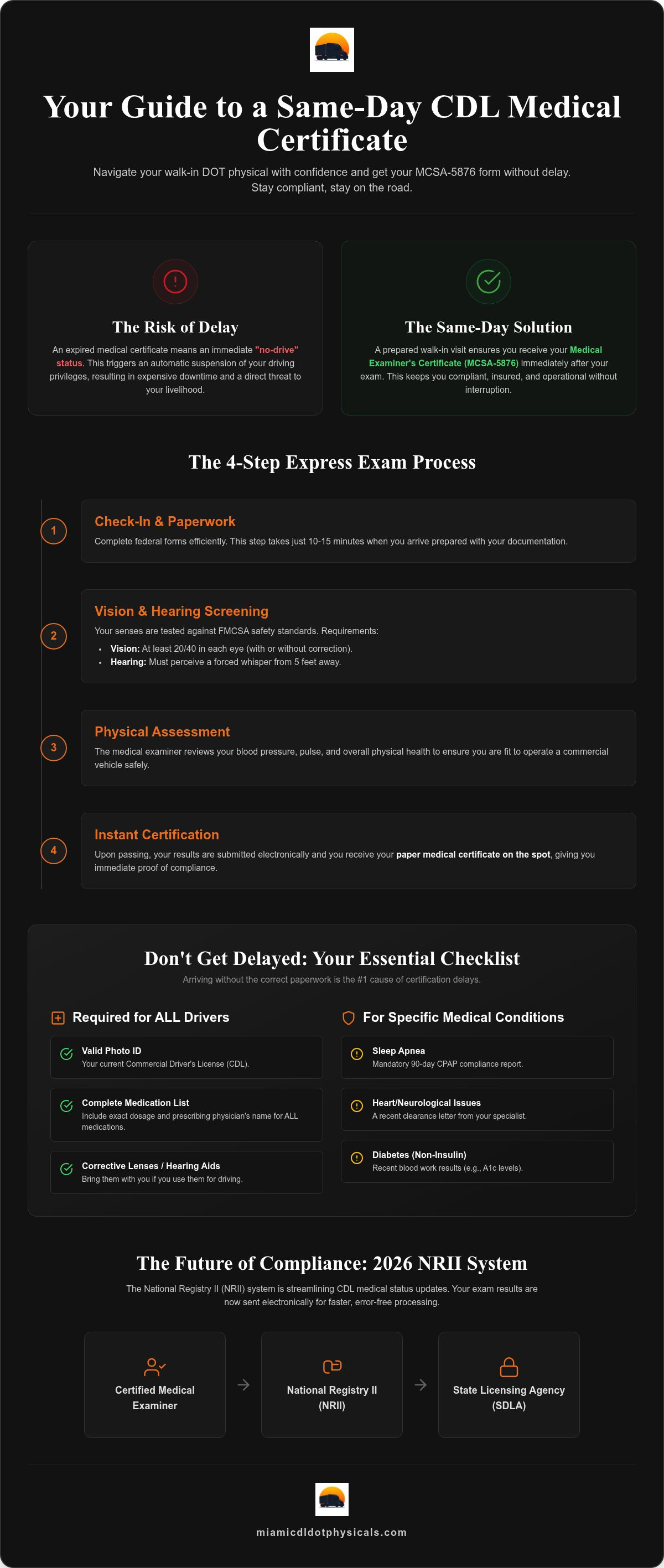
Efficiency is the hallmark of a professional clinic. Your visit begins with check-in and federal paperwork, which typically takes about 10 to 15 minutes if you have your information ready. The clinical portion follows, focusing on specific FMCSA standards:
- Vision Screening: You must have at least 20/40 vision in each eye, with or without corrective lenses.
- Hearing Test: You must perceive a forced whisper from five feet away in your better ear.
- Physical Assessment: The examiner reviews your pulse, blood pressure, and overall physical systems.
Once the examiner confirms you meet the standards, they enter the data into the federal system. You receive your paper certificate on the spot, providing immediate peace of mind while the electronic record processes through the national system.
Why Speed Matters for Commercial Compliance
Time is literally money for owner-operators and fleet drivers. An expired medical card creates a "no-drive" status that can be seen by dispatchers and enforcement officers instantly. This status isn't just a warning; it is a disqualification. Because state agencies are fully compliant with the NRII system, your certification must be on file electronically for your CDL to remain valid. A walk-in DOT physical Miami allows you to handle this requirement during a break or between hauls, minimizing operational downtime. Rapid turnaround ensures you stay compliant, your insurance remains valid, and your truck stays on the road where it belongs.
Essential Requirements for Immediate CDL Medical Card Issuance
Walking into a clinic without the right paperwork is the fastest way to delay your certification. Preparation is the key to ensuring your visit results in a same-day medical card. Your examiner needs specific data to verify that you meet federal safety standards. If you are missing critical information, the examiner may be forced to place your application in a "pending" status, which keeps you off the road and adds unnecessary stress to your schedule.
First, you must present a valid government-issued photo ID, typically your current Commercial Driver License. Next, provide a complete list of every medication you currently take. This list must include the exact dosage and the name of the prescribing physician. It's helpful to bring the actual prescription bottles if you are unsure of the details. If you use corrective lenses or hearing aids, you must have them with you for the clinical portion of the exam. The examiner will test your abilities with these devices to ensure you meet the safety thresholds required by the Finding and Verifying FMCSA-Certified Medical Examiners regulations.
Documentation for Chronic Conditions
Drivers managing chronic health issues need to bring specific medical records to their walk-in DOT physical Miami appointment. If you have a history of heart issues or neurological conditions, bring a recent clearance letter from your specialist. For those diagnosed with obstructive sleep apnea, a CPAP compliance report covering the last 90 days is mandatory. This report proves you are using the device as prescribed. Drivers with diabetes who do not use insulin should bring recent blood sugar logs or an A1C test result from within the last three to six months. Having these documents ready prevents the examiner from having to wait for faxed records from your primary care doctor.
Preparing for the Clinical Exam Components
The clinical exam focuses on vision, hearing, and cardiovascular health. You must meet the 20/40 vision requirement in each eye and both eyes combined. If your vision has changed, visit an eye doctor before your physical to update your prescription. For the hearing portion, you must perceive a forced whisper from five feet away. Blood pressure is often the biggest hurdle for drivers. A reading below 140/90 mmHg qualifies you for a standard two-year certificate. If your pressure is between 140/90 and 159/99, you will likely receive a one-year certificate. Readings higher than this may result in a shorter "provisional" card or temporary disqualification until the condition is managed. To stay ahead of these requirements, you can schedule your exam today and ensure your documentation is in order before you arrive.
Navigating Medical Hurdles and Avoiding Certification Delays
Missing medical records are the number one reason drivers leave a clinic without a certificate. If you have a known condition, the examiner cannot simply take your word that you are fit for duty. They require clinical proof that your condition is stable and controlled. This process is governed by the FMCSA National Registry standards, which dictate exactly what an examiner must verify. Incomplete FMCSA forms also cause unnecessary friction. Ensure every section of your driver history is filled out accurately before the clinical portion begins. Even a single skipped box regarding past surgeries or hospitalizations can stop the process in its tracks.
Managing the transition between temporary and long-term certifications requires a clear understanding of the rules. If you are issued a short-term card due to a health issue, you must return before that card expires to provide updated clinical data. Failing to do so will result in a lapse of your medical status. When you arrive for a walk-in DOT physical Miami, bring your most recent certificate so the examiner can see your history and work toward getting you back on a standard two-year cycle.
Blood Pressure Management During the Exam
Many drivers experience "White Coat Syndrome," where blood pressure spikes simply due to the stress of being in a medical environment. If your reading hits the 140/90 mmHg threshold, it changes your certification length. A reading between 140/90 and 159/99 typically results in a one-year certificate rather than the standard two-year version. If your pressure is higher, specifically between 160/100 and 179/109, you might only receive a one-time, three-month certificate. To maintain stable readings, avoid caffeine, nicotine, and heavy meals for at least two hours before your walk-in DOT physical Miami. Arrive early to sit quietly for ten minutes. This small step often helps drivers stay within the healthy range.
Handling Disqualifying Medications
Certain medications are incompatible with commercial driving because they cause drowsiness or impair judgment. Narcotics, certain anti-seizure medications, and some sleep aids are common examples. The examiner's role is to verify that your treatment plan doesn't compromise road safety. If you take a restricted medication, you may need a formal waiver or a letter from your prescribing doctor suggesting a safer alternative. Don't wait until the day of the exam to address these issues. For a deeper dive into managing your health profile, read How to Pass Your DOT Physical in 2026: The Ultimate Driver’s Preparation Guide. Being proactive about your medications is the best way to avoid a "temporarily disqualified" status.
Finding and Verifying FMCSA-Certified Medical Examiners
Selecting the right clinic is more than a matter of convenience; it's a critical step in protecting your commercial driving career. Not every medical professional is authorized to perform these exams. To receive a valid certificate, you must visit a provider listed on the National Registry of Certified Medical Examiners. If you obtain a card from an uncertified individual, the FMCSA won't recognize it, and your CDL status will be downgraded immediately. When searching for a walk-in DOT physical Miami, your first priority is verifying that the examiner has a current registry number and understands the 2026 digital reporting protocols.
The Importance of National Registry Certification
The National Registry ensures that all medical examiners are trained in FMCSA physical qualification standards and guidelines. These professionals have a legal duty to uphold federal safety regulations while supporting your ability to work. Before your appointment, you can search the official registry website to confirm your examiner's status. When you receive your paper certificate, check that the examiner's National Registry number is clearly printed and matches the online data. This verification prevents administrative errors that could lead to a "no-drive" status during a roadside inspection or a license renewal. An experienced examiner also knows how to navigate complex cases involving past surgeries or managed chronic conditions, ensuring that your certification is handled correctly the first time.
Evaluating Clinic Efficiency and Support
A high-quality facility does more than just check your pulse. It acts as a partner in your professional compliance. Look for centers that offer integrated services, such as combining your walk-in DOT physical Miami with a mandatory DOT drug test or alcohol screening. This integration minimizes your downtime and ensures all your records are in one place. Additionally, verify that the facility is equipped for digital reporting. With the 2026 system requirements, examiners must submit results electronically to ensure your state driver licensing agency has your most current information. For a full breakdown of these requirements, see our DOT Physical Miami: The Complete Guide to CDL Medical Compliance. Choosing a clinic that supports FMCSA Clearinghouse reporting provides an extra layer of security for your employment eligibility. If you are ready to secure your certification, contact our FMCSA-certified examiners today for a streamlined and professional experience.
Professional Medical Certifications and Driver Compliance Services
Maintaining your CDL status requires more than just a passing grade on a medical exam; it demands a consistent approach to regulatory compliance. When you choose a provider for a walk-in DOT physical Miami, you are selecting a partner who understands the intricacies of FMCSA standards. Our process is designed to be streamlined, moving you from the waiting room to the examination room with minimal friction. This efficiency ensures that you spend less time in a clinic and more time earning your living on the road. Professionalism in this field means more than just checking boxes. It means providing a supportive environment where drivers feel respected and understood.
Comprehensive Driver Screening Solutions
Our center offers a full suite of services tailored to the needs of the transportation industry. Standard DOT physical exams are available for both initial certifications and renewals, ensuring you always meet the federal fitness requirements. For many drivers, workplace safety also involves DOT and non-DOT drug testing. Integrating these services into a single visit is a logical choice for busy professionals. By handling your physical and your drug screening simultaneously, you eliminate the need for multiple appointments and reduce the administrative burden on yourself or your employer. We prioritize rapid results because we know that any delay in paperwork can lead to a direct interruption in your service. Whether you are a local driver or just passing through, our goal is to provide a comprehensive screening that keeps you in service without unnecessary downtime.
Compliance Management for Modern Fleets
Fleets and owner-operators face unique challenges with the FMCSA Clearinghouse. Staying compliant with random drug and alcohol testing pools is a mandatory part of the job that can quickly become overwhelming. Our FMCSA Clearinghouse Consortium management takes this weight off your shoulders. We provide automated solutions that track requirements and ensure your records are always audit-ready. This is particularly beneficial for owner-operators who must belong to a consortium to meet federal random testing mandates. Our services include:
- Consortium Management: Seamlessly managing random testing pools for drivers and small fleets.
- Clearinghouse Reporting: Ensuring all required data is submitted accurately and on time to the federal database.
- Long-term Health Monitoring: Helping drivers understand their health trends to ensure they remain qualified for years to come.
Regulatory adherence isn't just about passing today's test. It's about building a foundation for a safe and successful career. By choosing a specialized center for your walk-in DOT physical Miami, you gain access to experts who prioritize your livelihood. We are committed to professional, efficient, and regulatory-compliant certifications that support the entire professional driving community.
Secure Your Commercial Future Today
Staying compliant with federal regulations doesn't have to be a source of stress or lost income. By arriving prepared with your medical history, current medications, and required specialist clearances, you ensure a smooth examination process. The transition to the National Registry II system in 2026 makes it even more vital to work with experts who understand digital reporting and FMCSA standards. Securing a walk-in DOT physical Miami allows you to handle your certification and mandatory drug testing in a single, efficient visit.
Our FMCSA-certified medical examiners focus on providing same-day results for qualified drivers, backed by comprehensive Clearinghouse Consortium support. We are dedicated to helping you maintain your livelihood with minimal downtime and professional care. Don't wait for your current certificate to expire and risk a license downgrade. Schedule your same-day CDL medical exam and stay compliant today. We are here to support your success on the road and ensure you remain a vital part of the professional driving community.
Frequently Asked Questions
Can I get my CDL medical card on the same day as my appointment?
Yes, you can receive your medical certificate on the same day you pass your examination. If you meet all FMCSA physical standards and provide the necessary documentation for any chronic conditions, the examiner will issue Form MCSA-5876 immediately. This is the primary goal for most drivers seeking a walk-in DOT physical Miami service. Having this document in hand ensures you stay legally qualified to operate commercial vehicles without any gap in your driving status.
What should I do if I forget my medical records for a walk-in exam?
If you forget your medical records, the examiner may be unable to complete your certification during that visit. You should immediately contact your primary physician or specialist to have the required documents faxed or emailed to the clinic. Without proof of stability for conditions like sleep apnea or heart issues, your application will likely be placed in a pending status. It's best to keep a digital copy of your records on your phone for emergencies.
Will high blood pressure prevent me from getting a same-day card?
High blood pressure doesn't always result in disqualification, but it can limit the duration of your certificate. If your reading is below 140/90, you typically qualify for a full two year card. Readings between 140/90 and 159/99 usually result in a one year certificate. If your pressure is higher, you might receive a temporary three month card to allow time for treatment. Maintaining a healthy range is essential for a standard walk-in DOT physical Miami experience.
Does the medical examiner send my results to the DMV automatically?
Medical examiners submit your results to the FMCSA National Registry, which then shares that data with state licensing agencies. While this process is digital, it isn't always instantaneous. You should carry your paper Medical Examiner's Certificate for at least fifteen days after your exam to ensure your record is updated. It's your responsibility to verify that your state's driver licensing agency has received the electronic notification and updated your CDL status accordingly.
What happens if I fail the vision test during my physical?
If you fail the vision test, the examiner cannot issue a medical certificate until the issue is corrected. You must meet the 20/40 standard in each eye and both eyes combined. If you don't meet this threshold, you'll need to visit an eye doctor for a new prescription or corrective lenses. Once you have the proper eyewear, you can return to the clinic to complete the vision screening and receive your medical card.
Can I renew my medical card before it expires to avoid downtime?
You can and should renew your medical card before it expires to prevent any lapse in your driving privileges. Renewing early doesn't penalize you; it simply ensures that your new certification is on file before the old one becomes invalid. Most professionals recommend seeking an exam at least two weeks before your expiration date. This provides a buffer in case you need to gather additional medical records or address borderline blood pressure readings during your visit.
Are drug tests required as part of a same-day DOT physical?
A drug test isn't a standard part of the DOT physical examination, but many employers require them to be performed at the same time. The physical focuses on your clinical health, while a DOT drug test specifically screens for controlled substances as required by FMCSA part 382. Many clinics offer both services during a single visit for convenience. It's important to clarify with your company whether you need both a physical and a drug screening.
What medications will disqualify me from getting a medical card today?
Certain medications that impair your ability to safely operate a commercial vehicle will disqualify you. These include narcotics, methadone, and anti-seizure medications used for epilepsy. Some sleep aids and high doses of benzodiazepines are also restricted. If you take a potentially disqualifying medication, your examiner will need a letter from your prescribing doctor explaining why the treatment is safe for driving. Always provide a full list of medications to avoid delays or unexpected disqualifications.


