

Imagine sitting in the exam room, watching the blood pressure cuff tighten, and feeling your heart race because you know your entire career depends on the next thirty seconds. It's a high-stakes moment that every driver faces, and it's natural to feel anxious about whether a single high reading or a misunderstood medication might sideline your CDL. Learning how to pass DOT physical exams isn't just about being healthy; it's about being prepared so a medical deferral doesn't stand between you and the road.
You don't have to walk into your appointment feeling like you're gambling with your livelihood. This guide will show you how to master your preparation, organize your paperwork, and manage your health habits before you ever step into the clinic. We'll break down the 2026 electronic reporting rules under the National Registry II system and provide a clear documentation checklist. From tips on passing the vision test to strategies for managing blood pressure, you'll gain the confidence needed to secure your medical card and stay compliant for the long haul.
Key Takeaways
- Prepare your documentation, including your ID and current medical card, to prevent administrative delays before the exam begins.
- Discover how to pass DOT physical requirements by managing your diet and avoiding caffeine or high-sodium foods in the 24 hours before your appointment.
- Understand the 2026 blood pressure and vision standards to ensure you meet the criteria for a full two-year certification.
- Learn how the National Registry II system handles your results electronically to automatically update your CDL record with the state.
- Identify the specific records needed for chronic conditions or medications to avoid a medical deferral that could sideline your career.
The FMCSA Standards: What it Actually Takes to Pass in 2026
The DOT physical is more than a routine visit to the doctor. It's a federally mandated safety evaluation designed to protect you and everyone else on the road. The Federal Motor Carrier Safety Administration (FMCSA) sets these standards to ensure that every driver behind the wheel of a heavy vehicle is physically capable of handling the job's demands. Because this exam is tied directly to Commercial Driver's License (CDL) requirements, you must see a provider listed on the National Registry of Certified Medical Examiners (NRCME). These professionals are specifically trained to understand the rigors of commercial driving and the medical conditions that could impact safety.
Understanding the possible outcomes is the first step in learning how to pass DOT physical exams. Most drivers receive a "Pass" and a standard two-year medical certificate. However, if you have a condition like high blood pressure that requires monitoring, you might receive a "Short-term Certification" lasting six months or a year. A "Disqualification" occurs when a medical condition poses an immediate safety risk. Many disqualifications are temporary and can be resolved with proper treatment or documentation from your primary physician.
Essential Physical Requirements for CDL Drivers
The exam focuses on four core areas: vision, hearing, blood pressure, and overall physical stamina. These benchmarks are non-negotiable for maintaining your medical card. For the vision portion, you must have at least 20/40 acuity in each eye, with or without corrective lenses. Hearing is typically measured using a "forced whisper test" where you must hear a whisper from five feet away in at least one ear. Blood pressure is another critical metric; a reading of 140/90 or lower is necessary for a full two-year certification. If your numbers are higher, the examiner may issue a shorter certificate while you work with a doctor to manage it.
Common Disqualifying Medical Conditions
Certain health issues act as immediate "red flags" during the exam. These include uncontrolled epilepsy, severe respiratory dysfunction, and inner ear disorders that affect balance or cause vertigo. Remember that most conditions don't lead to a permanent medical bar. Many drivers with chronic illnesses successfully maintain their CDL by providing thorough documentation from their specialists. The goal of the NRCME examiner is to verify that your condition is stable and your treatment doesn't interfere with your ability to operate a vehicle safely. If a condition is currently uncontrolled, you may face a temporary disqualification until you can prove it's under medical management. Learning how to pass DOT physical requirements often comes down to how well you and your doctor have documented your health journey.
Pre-Appointment Checklist: Documentation and Paperwork Readiness
Paperwork delays are the most common reason drivers leave a clinic without a medical card. It's frustrating to wait weeks for an appointment only to be turned away because of a missing form or an outdated record. If you want to know how to pass DOT physical exams on the first try, you must treat your documentation like a pre-trip inspection. Start by gathering your driver's license, your current medical card, and any corrective lenses or hearing aids you use while driving. Having these items physically present prevents the examiner from having to pause the process.
Reviewing the DOT physical requirements 2024 helps establish a baseline for long-term compliance, but you must also bring a comprehensive list of all current medications. This list should include the exact dosage, the frequency of use, and the name of the prescribing physician. This transparency ensures the examiner can verify your health status against the Official FMCSA Medical Standards without unnecessary phone calls or delays. Preparation is the best way to reduce stress during the visit.
Medical History and Chronic Condition Records
Drivers with chronic conditions require specific evidence of stability to maintain their certification. If you're diabetic, bring your most recent A1C results and blood sugar logs if your doctor requires them. Heart patients must provide recent stress test results or a clearance letter for a pacemaker or stent. A "release to work" letter from your specialist is non-negotiable for anyone recovering from a major surgery or illness. It proves that a doctor who knows your history believes you can safely manage the physical rigors of the job. You can book your appointment once you have these documents in hand.
Medication Lists and Specialist Clearances
Don't assume a medication is safe just because it's legal or prescribed by a doctor. Some sleep aids or muscle relaxants can be disqualifying for CMV operation because of their sedative effects. Verify every prescription with your treating physician to ensure it doesn't conflict with federal safety standards. For those diagnosed with sleep apnea, you must bring a CPAP compliance log showing at least 90 days of consistent use. Organizing these details in advance makes the process efficient and keeps your career moving forward. The examiner's job is to validate your fitness, and clear records make that task much easier.
Managing Key Health Metrics: Blood Pressure, Vision, and Hearing
The moment the blood pressure cuff begins to tighten is often the most stressful part of the entire appointment. For many drivers, this anxiety alone causes their numbers to spike, a phenomenon known as "White Coat Syndrome." To understand how to pass DOT physical exams, you must recognize that your blood pressure reading is a primary factor in determining the length of your medical certificate. According to the FMCSA medical standards, a reading of 140/90 or lower is required for a standard two-year certification. If your blood pressure falls between 140/90 and 159/99, you may only receive a one-year certificate. Readings higher than this can lead to even shorter durations or immediate disqualification, so knowing the DOT physical blood pressure requirements 2026 is essential for managing your expectations.
Removing the "fear of the unknown" is the best way to keep your heart rate steady. The vision and hearing portions are not designed to "trick" you; they are simple checks to ensure you can see hazards and hear sirens or horns on the road. By preparing for these specific tests, you can walk into the clinic with a clear plan. Mastering how to pass DOT physical benchmarks is about consistency and knowing exactly what the examiner is looking for before they even begin the evaluation.
Strategies for Stable Blood Pressure
Controlling your blood pressure starts long before you sit in the exam chair. If you've been prescribed blood pressure medication, take it exactly as directed on the morning of your exam. Avoid caffeine and nicotine for at least two hours before your reading, as these stimulants can cause temporary spikes in your numbers. If you feel your heart racing when you enter the clinic, inform the examiner. Most certified medical examiners understand "White Coat Syndrome" and will allow you to rest quietly for a few minutes before performing a re-test. This simple pause can be the difference between a two-year card and a three-month temporary certificate.
Vision and Hearing Standards
The vision and hearing portions of the exam are straightforward, but they require proper preparation. You must have at least 20/40 vision in each eye, either naturally or with corrective lenses. Always bring your most current prescription glasses or contacts to the appointment. You can find more detail on peripheral vision and color blindness in our guide to DOT physical vision requirements 2026. For the hearing test, examiners typically use the "forced whisper test." They will stand five feet away and whisper a series of numbers or words while you face the other direction. You only need to pass in one ear to meet the requirement; hearing aids are permitted as long as you wear them during the test and while driving.
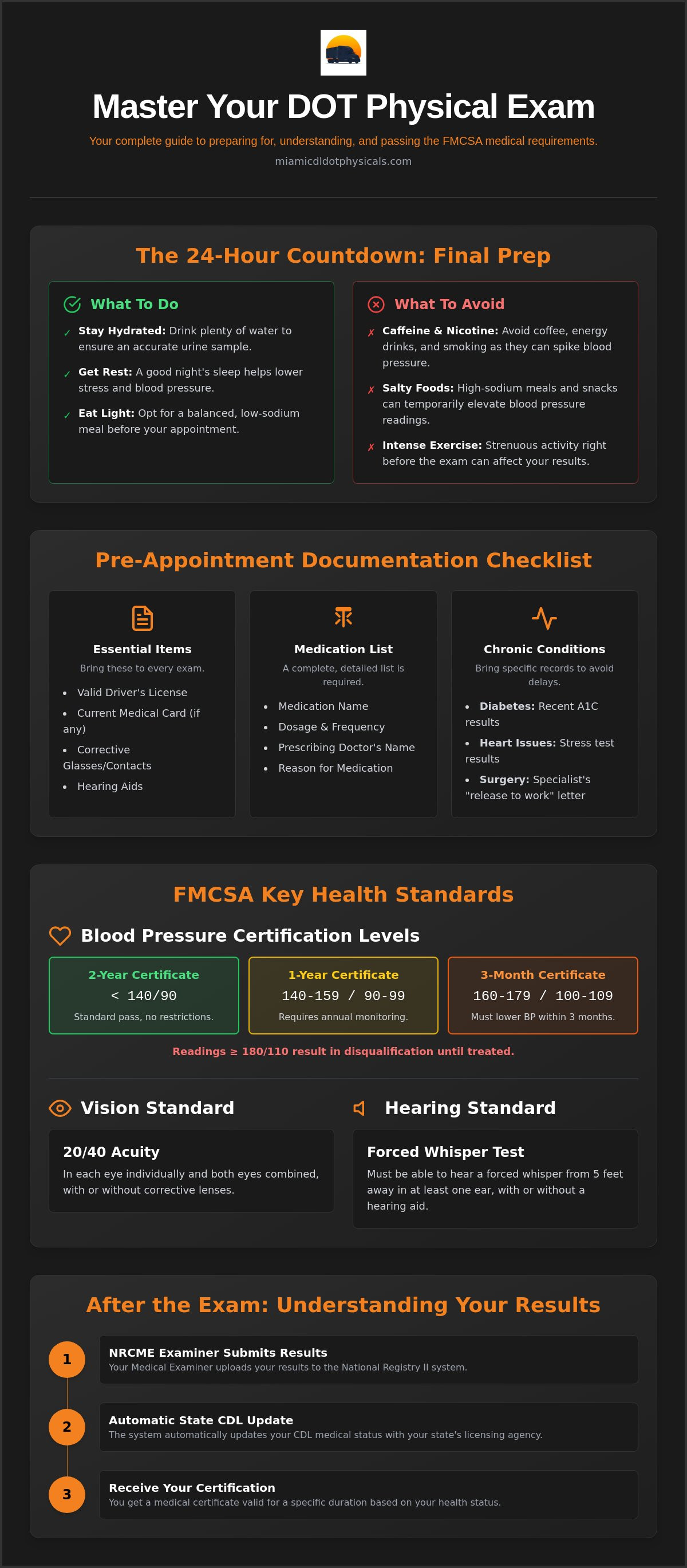
The 24-Hour Countdown: Immediate Steps Before Your Appointment
The final day before your exam is your "body prep" window. Just as you wouldn't take a truck on a long haul without checking the fluids and tires, you shouldn't walk into a clinic without preparing your system. Success often comes down to the choices you make in these final hours. If you're concerned about how to pass DOT physical requirements, focus on stability. Your goal is to present your body in its most balanced state, avoiding temporary spikes in sugar or blood pressure that could trigger a medical deferral.
Consistency is your best friend during this countdown. Small, disciplined choices can prevent unnecessary "red flags" during the physical. By following a strict routine, you ensure that the examiner sees an accurate picture of your health rather than a snapshot of a stressful, caffeine-fueled morning. If you're ready to get your certification handled efficiently, schedule your DOT physical today and put these preparation steps into action.
Dietary Choices and Hydration
What you eat and drink in the 24 hours leading up to your appointment directly impacts your results. Avoid "No-No" items like energy drinks, high-sodium meals, and excessive sugar. Large amounts of salt can cause your body to retain water and temporarily raise your blood pressure; sugary snacks can lead to a "sugar crash" or abnormal levels in your urine. On the morning of your exam, choose a light, low-sodium breakfast like oatmeal or fruit.
Hydration is equally important for the required urinalysis. This test is a kidney screen that checks for the presence of sugar, protein, or blood; it's not the same as a DOT drug test. While both tests may be performed during the same visit, the physical's urine sample is strictly for health monitoring. Drinking plenty of water ensures you can provide a sample easily and helps flush your system to provide a clear reading of your kidney function.
Managing Stress and Anxiety
Waiting room anxiety is a real hurdle for many drivers. To keep your heart rate and blood pressure steady, try the 4-7-8 breathing technique while you wait. Inhale through your nose for four seconds, hold your breath for seven seconds, and exhale slowly through your mouth for eight seconds. This simple exercise signals your nervous system to calm down. Arriving at least 15 minutes early also helps by removing the stress of rushing through traffic or searching for a parking spot.
Remember that the medical examiner is your ally in this process. Their primary objective is to verify that you're safe to operate a vehicle, not to find reasons to take you off the road. Approaching the appointment with a calm, cooperative mindset makes the evaluation smoother for everyone involved. When you're prepared and relaxed, you're much more likely to master how to pass DOT physical benchmarks with ease.
What Happens After the Exam: Understanding Your Results
Once the clinical portion of the exam concludes, the examiner will finalize your status and issue your results. If you meet the safety standards, you'll receive the Medical Examiner’s Certificate (Form MCSA-5876). This document is the physical proof that you're medically qualified to operate a commercial motor vehicle. In 2026, the process is more streamlined than ever. Your examiner is required to submit your results electronically to the FMCSA National Registry by the next calendar day. This data then transmits to your state's driver licensing agency to update your CDL record automatically. While this digital system reduces paperwork, you should still keep a copy of your certificate in your cab as a backup.
Sometimes, the result isn't an immediate pass. If an examiner tells you "not today," it's usually a temporary disqualification rather than a permanent career end. Understanding the next steps is a vital part of learning how to pass DOT physical requirements in the long term. A disqualification is often a "not yet" that gives you time to work with a specialist to manage a specific health issue. Your examiner acts as a professional partner in this process, helping you navigate federal regulations so you can return to the driver's seat safely and legally.
Passing with Restrictions vs. Disqualification
Many drivers pass their physical with specific restrictions noted on their certificate. Common examples include "Must wear corrective lenses" or "Qualified only when wearing a hearing aid." These aren't failures; they're simply safety requirements you must follow while on duty. If the examiner needs more information from your primary doctor, they may place your application in a "determination pending" status. This status can last for a set period, such as three months, allowing you to gather the necessary data without starting the entire process over. A disqualification only happens if a condition poses an immediate risk that cannot be mitigated by treatment or equipment.
The Role of a Certified Medical Examiner
Choosing an FMCSA-certified professional is essential because they understand the unique pressures of the trucking industry. These examiners don't just check boxes; they apply federal law while offering practical guidance on how to meet those standards. They know that your medical card is your livelihood. A good examiner will explain their findings clearly and help you understand how to pass DOT physical benchmarks in the future if your current health needs improvement. Their goal is the same as yours: keeping you healthy and keeping the nation's freight moving. When you're ready for your next certification, schedule your professional DOT physical exam today to stay compliant and on the road.
Secure Your Career with Proactive Preparation
Your medical certification is the foundation of your professional driving career. By organizing your specialist records, managing your diet in the final 24-hour countdown, and understanding the 2026 electronic reporting standards, you've already done the heavy lifting. You now have a clear, actionable roadmap for how to pass DOT physical exams with confidence and minimal stress. Don't let a missing document or a temporary spike in blood pressure keep you off the road and away from your next haul.
Our FMCSA-certified medical examiners provide the expert guidance on driver compliance you need to stay on schedule. We focus on efficiency and accuracy, issuing same-day CDL medical cards to qualified drivers so you can get back to work without delay. This partnership ensures that you meet federal safety standards while protecting your livelihood through a streamlined and professional evaluation process. We understand the high stakes of your profession and aim to make your compliance as simple as possible.
Book Your FMCSA-Certified DOT Physical Exam Now and take the final step toward a successful certification. We're here to help you navigate the regulations and keep your career moving forward with ease. Safe travels and we'll see you on the road.
Frequently Asked Questions
Can I pass a DOT physical with high blood pressure?
Yes, you can pass with elevated blood pressure, but your certification period will likely be shortened to ensure regular monitoring. A reading below 140/90 qualifies you for a full two-year card. If your reading is between 140/90 and 159/99, you will likely receive a one-year certificate. Readings above 160/100 may result in a temporary three-month card to allow time for medical treatment and stabilization with your primary physician.
What medications will disqualify me from getting a CDL medical card?
Disqualifying medications include any Schedule I controlled substances, methadone, and anti-seizure medications. Certain habit-forming drugs, such as specific narcotics or sleep aids, may also prevent you from obtaining a CDL medical card if they impair your ability to drive safely. Always bring a complete list of your prescriptions so the examiner can verify them against federal safety standards and ensure your current treatment is fully compliant.
Do I need a drug test during my DOT physical?
A standard DOT physical does not include a drug test; however, many employers request one during the same appointment window. The urinalysis performed as part of the physical is a kidney screen used to check for sugar, protein, and blood. If your company requires a DOT drug test for pre-employment or random screening, it is a separate laboratory procedure with its own set of federal reporting requirements and collection protocols.
How long is a DOT medical card valid?
A DOT medical card is typically valid for 24 months if you meet all health standards without requiring frequent monitoring. Drivers with chronic conditions like hypertension or diabetes may receive a shorter certification for 12, 6, or 3 months. This ensures regular oversight of your health status by a certified examiner. Understanding how to pass DOT physical exams consistently involves managing these conditions year-round to maintain the longest possible certification period.
What happens if I fail my DOT physical?
Failing the exam usually leads to a temporary disqualification rather than a permanent loss of your CDL. The examiner will identify the specific health issue, such as uncontrolled high blood pressure or vision impairment, that needs correction. You must then work with your primary doctor or a specialist to resolve the issue. Once the condition is stable and documented, you can return to complete your evaluation and secure your medical card.
Can I take a DOT physical if I have sleep apnea?
Yes, you can maintain your medical certification with sleep apnea if you demonstrate consistent treatment and stability. You must bring a CPAP compliance log showing at least 90 days of usage data to your appointment. The examiner needs to see that you are using the device as prescribed and that your condition is under control. This documentation is essential for proving you are rested and safe to operate a commercial vehicle.
What should I eat before my DOT physical exam?
Eat a light, low-sodium meal and drink plenty of water before your appointment to keep your vital signs stable. Avoid caffeine, energy drinks, and high-sugar foods for at least 24 hours, as these can temporarily spike your blood pressure and blood sugar levels. Staying well-hydrated also helps you provide the required urine sample for the kidney screen. Proper nutrition on the day of the exam is a key strategy for how to pass DOT physical benchmarks.
Does the DOT physical check for hernia or other physical issues?
Yes, the physical evaluation includes a check for hernias, spinal issues, and limb impairment. The examiner must ensure you have the physical strength and range of motion required to perform daily tasks like pre-trip inspections or securing cargo. If a hernia is found, you may need a specialist's clearance to prove it doesn't interfere with your safe operation of a commercial motor vehicle before your medical certificate can be issued.


