

A mental health diagnosis does not automatically disqualify someone from commercial driving. The rules for mental health and CDL drivers call for a case-by-case assessment: medical examiners consider the condition and its symptoms, how well treatment works, medication side effects, and the driver’s ability to operate a commercial motor vehicle safely.
That distinction matters in a field where stigma can make drivers fear that seeking care will cost them their livelihood. A diagnosis alone does not tell the whole story. What matters is how the condition affects safe driving and whether treatment works without impairing essential abilities. This article explains how examiners assess mental health, treatment plans, and medication, and which records can clarify your current fitness to drive. You’ll also learn how lingering symptoms after an episode may affect certification, so you can better understand the medical exam and prepare to discuss your health clearly.
Key Takeaways
- A mental health diagnosis alone doesn’t automatically end a commercial driving career; its effects on safe driving matter.
- Organize records about your diagnosis, treatment plan, and medications so the examiner can assess your current condition.
- Be prepared to explain how treatment is working and whether symptoms or medication affect alertness, judgment, or other driving abilities.
- Seeking support is a practical step, not a failure. A DOT physical exam helps assess medical fitness for commercial driving.
Commercial Driving and Mental Illness: What Are the Rules?
FMCSA medical qualification is a federal standard; state CDL administration and employer policies are separate processes. A diagnosis alone does not automatically disqualify a driver. Its effects on safe driving matter.
Mental Health Conditions and Substance Use
Mental health conditions include disorders such as depression and anxiety, while substance use can affect judgment and alertness. These concerns matter because commercial driving demands sustained attention. In the United States, 22% of truck drivers report a depression diagnosis, and 27.6% admit consuming drugs.
Those figures describe reported experiences, not an individual driver’s fitness. Examiners consider how symptoms affect safe operation, and may also consider treatment and medication. For example, a driver managing depression should be prepared to explain current symptoms and treatment during a medical assessment.
Therapy, Medical Leave, and CDL Status
Seeing a therapist or psychiatrist does not, by itself, disqualify a CDL driver. Medical qualification depends on the condition’s effects and the driver’s ability to operate safely, not simply on receiving mental health care.
Mental health leave does not automatically determine CDL status or job eligibility. Medical fitness and an employer’s workplace decisions are separate matters, and employers may have their own leave and return-to-work policies. If symptoms affect safe operation, seek care and do not drive until you can do so safely.
State CDL administration may involve licensing steps that differ from federal medical qualification, while employer policies govern workplace decisions. A trucking company concerned about a driver’s condition may seek an evaluation and recommended treatment before the driver resumes work.
Mental Health Stigma in Trucking
Stigma is the fear that disclosing a mental health concern will lead to judgment or threaten employment. That fear can discourage truck drivers from seeking support, even when symptoms interfere with sleep, focus, or daily routines.
Simple routines can support well-being: keep a consistent sleep schedule, including on days off, and build regular time to reconnect with loved ones. Drivers can also use telehealth to speak with therapists. For treatment referrals and support, contact the SAMHSA National Helpline at 1-800-662-HELP (4357). Seeking help gives drivers a practical way to address concerns rather than facing them alone.
Case-by-case assessment by a medical examiner
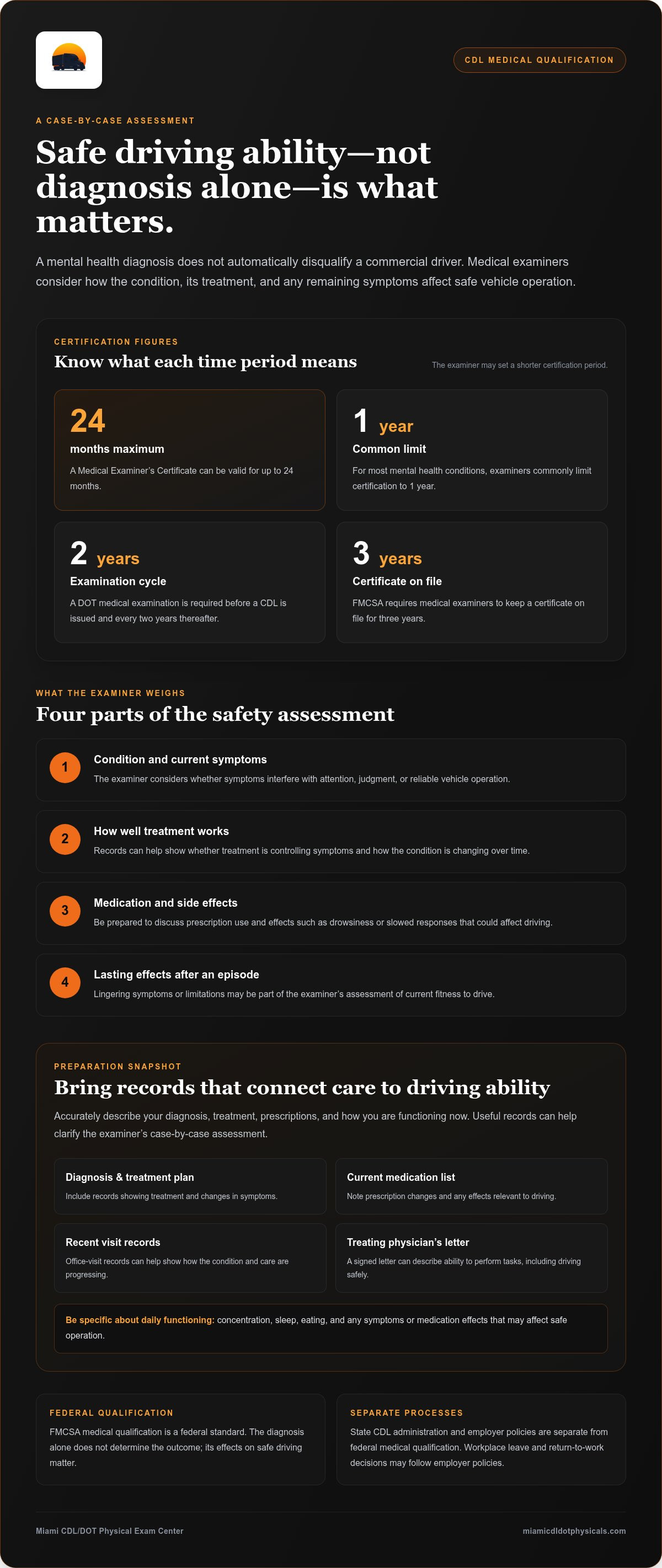
For mental health and CDL drivers, medical qualification depends on how a condition affects safe commercial driving, not on the diagnosis alone. The examiner considers symptoms, treatment effectiveness, medication side effects, and any lasting effects after an episode.
This case-by-case approach means depression or anxiety does not automatically end a driver’s qualification. Examiners consider whether symptoms interfere with attention, judgment, or reliable vehicle operation. A driver whose condition is stable can bring recent office-visit records and a signed physician’s letter describing their ability to perform tasks, including driving safely.
Prepare for the examination by accurately describing diagnoses, treatment, and prescriptions. Bring records showing changes in symptoms and how treatment is working. Be ready to discuss specific effects on daily functioning, such as concentration, sleep, or eating. These details help the examiner assess fitness under motor carrier safety regulations.
A Medical Examiner’s Certificate can be valid for up to 24 months. For most mental health conditions, examiners commonly limit certification to 1 year. A DOT medical examination is required before a CDL is issued and every two years thereafter, though the examiner may set a shorter certification period. The Federal Motor Carrier Safety Administration requires medical examiners to keep a certificate on file for three years.
To seek certification after treatment, arrange a new medical assessment and bring updated treatment records and a physician’s letter addressing safe driving ability. These documents give the examiner information to evaluate current symptoms, treatment response, and remaining limitations. They can also clarify whether further evaluation is needed.
For your next evaluation, a DOT medical examination can assess your current medical fitness for commercial driving.
Treatment plans, medication, and accommodations
Treatment records connect a diagnosis with current symptoms and driving ability. Medical qualification focuses on whether a condition or its treatment affects safe commercial vehicle operation.
Mental Health Disclosure on the DOT Exam
Disclosure means accurately reporting relevant mental health history and prescription drug use during the DOT medical exam. This information helps the examiner assess symptoms, treatment, and possible effects on driving.
Bring a current medication list and records explaining your diagnosis and treatment plan. For example, note when a prescription changed and whether you experienced drowsiness, slowed responses, or other effects while driving. Include your treating physician’s information when available, so the examiner can understand how your care relates to highway driving and daily functioning.
Medical Qualification and Mental Fitness
Mental fitness for CDL certification concerns the ability to operate a commercial motor vehicle safely despite a diagnosis or symptoms. 49 CFR § 391.43 addresses FMCSA medical qualification requirements for commercial drivers, according to the Electronic Code of Federal Regulations.
The examiner considers the disorder, symptoms that could create driving risks, treatment effectiveness, and lasting effects after an episode. A treatment plan that controls symptoms may support an assessment, while unresolved symptoms affecting attention or judgment require careful consideration. Explain how your condition affects routine tasks, not only how you feel during an appointment.
Psychotropic Medication and Driving Fitness
Psychotropic medication is assessed by its effects on the driver, not simply its category. Depending on the circumstances, a driver may be approved when medication controls a condition without impairing other faculties.
Report each prescription, dose change, and side effect, and follow up with your treating doctor to monitor treatment. If medication causes drowsiness or slower reactions, describe when those effects occur and whether they interfere with driving. Wellness routines, including consistent sleep and time with loved ones, can support care, but do not replace assessing medication’s effects on safe vehicle operation.
Mental health stigma among commercial drivers
Stigma is the fear that discussing mental health challenges will invite judgment or threaten a driving career. For a licensed commercial driver, that fear can make it harder to seek care early. But seeking help and assessing fitness are separate matters: a diagnosis alone does not establish whether someone can drive safely.
The demands of trucking can also make isolation harder to manage. A NIOSH study found that 28% of truck drivers reported loneliness. Long-haul drivers who spent more than 20 nights per month away from home faced a higher risk of depression and sleep disorders. These experiences are challenges to address, not personal failures.
Silence can leave symptoms unaddressed, while practical support can make it easier to act. A driver might start by telling a trusted loved one, making an appointment with a mental health professional, or exploring available support programs. If alcohol or another substance becomes part of coping, discuss it honestly with a qualified professional; substance use and mental health concerns can overlap.
Trucking companies can help reduce stigma by treating mental health as a safety and wellness concern, not a character flaw. Clear, respectful communication about available programs and leave policies helps drivers understand their options. When discussing concerns with a clinician, drivers can describe specific changes, such as persistent sleep problems or difficulty concentrating.
Pride Transportation reports that truck drivers rank fifth among occupations at highest risk for work-related suicide. That finding underscores why early support matters. If distress feels urgent or safety is at risk, reach out to a trusted person or qualified professional rather than facing it alone. Seeking care does not erase a driver’s abilities; it helps address challenges that may affect well-being and work.
If you need a commercial medical fitness assessment, book a DOT physical exam.
Miami CDL/DOT Physical Exam Center: DOT Physical Exam
Commercial drivers nationwide preparing for a medical qualification assessment or renewal can rely on comprehensive evaluations regarding **mental health and CDL drivers**. If mental health treatment or medication is part of your medical history, bring relevant records so the examiner can properly assess your current fitness to drive.
Professional driver medical facilities also offer an FMCSA Clearinghouse Consortium for owner-operators and fleets managing Clearinghouse compliance. These services address distinct needs: a DOT physical evaluates medical qualification, while consortium enrollment supports applicable drug and alcohol testing requirements.
For your next DOT Physical Exam or Clearinghouse Consortium support, visit miamicdldotphysicals.com.
Make Ongoing Well-Being Part of Your Driving Plan
The connection between mental health and CDL drivers deserves attention beyond a certification visit. Make follow-up part of your professional routine: note changes in sleep, concentration, or medication effects, then discuss them with your treating clinician. Keeping those details organized can make future conversations clearer and help you respond when your health needs change.
For owner-operators and fleets, organizing separate compliance needs can help prevent avoidable confusion. Miami CDL/DOT Physical Exam Center offers DOT Drug Tests and Non-DOT Drug Tests alongside medical examinations. Choose the service that fits the task, and keep care decisions focused on your health and safe driving.
Take the next step that fits your needs. Contact Miami CDL/DOT Physical Exam Center to learn about its services and move forward with confidence.
Frequently Asked Questions
What mental health conditions can disqualify someone from getting or keeping a CDL in the United States?
No diagnosis automatically disqualifies every driver, but a condition can affect qualification if it prevents safe commercial driving. Personality disorder is identified as a condition that may disqualify a driver. Depression or anxiety may also receive scrutiny when symptoms interfere with attention, judgment, or vehicle operation. The key question is how the condition affects the individual driver’s ability to drive safely.
What are the FMCSA mental health standards for commercial drivers?
FMCSA medical qualification considers whether a mental disorder or its symptoms create a risk while operating a commercial vehicle. The assessment accounts for current and residual symptoms, including those that remain after an initial episode. In practical terms, a driver should explain how symptoms affect work tasks, such as maintaining focus during a route. The examiner evaluates medical fitness, not diagnosis labels alone.
Can drivers with depression or anxiety take medication and keep a CDL?
Yes. Depending on the circumstances, a driver with depression or anxiety may qualify while taking medication if treatment controls the condition without impairing other faculties. Keep an up-to-date medication list and note recent changes or effects during daily activities. For example, tell the examiner if a dose change caused drowsiness or affected concentration, so those details can be considered.
How do psychiatric medications affect DOT medical certification for CDL drivers?
Psychiatric medication matters when its effects could interfere with safe driving, not simply because it is prescribed. The examiner considers the medication’s effects alongside the underlying condition and response to treatment. Bring prescription details and relevant medical records, and describe side effects that could affect alertness, coordination, or judgment. Discuss treatment changes with your doctor before operating a commercial vehicle.


