

A smooth DOT physical starts before you reach the exam room. The exam evaluates a commercial driver’s vision, hearing, blood pressure, and urine for signs of medical conditions. These DOT physical preparation tips can help you arrive ready and make the process more straightforward.
It’s understandable to feel pressure when an exam is tied to your ability to drive for work. Planning ahead helps you focus on the appointment instead of rushing to find paperwork or worrying about avoidable surprises. Learn what to bring, how sleep and everyday habits may affect exam day, and how to plan your trip and stay calm. These practical steps can help you prepare without making the process more complicated than it needs to be.
Key Takeaways
- Prepare for the blood pressure check by getting restful sleep and being mindful of habits that can affect your reading.
- Gather your photo ID, medication details, medical history, and any relevant test results before leaving home.
- Plan your route and give yourself enough time to arrive without rushing.
- Use simple calming steps, such as slow breathing and having your documents ready, to feel more settled on exam day.
1. Managing blood pressure before the exam
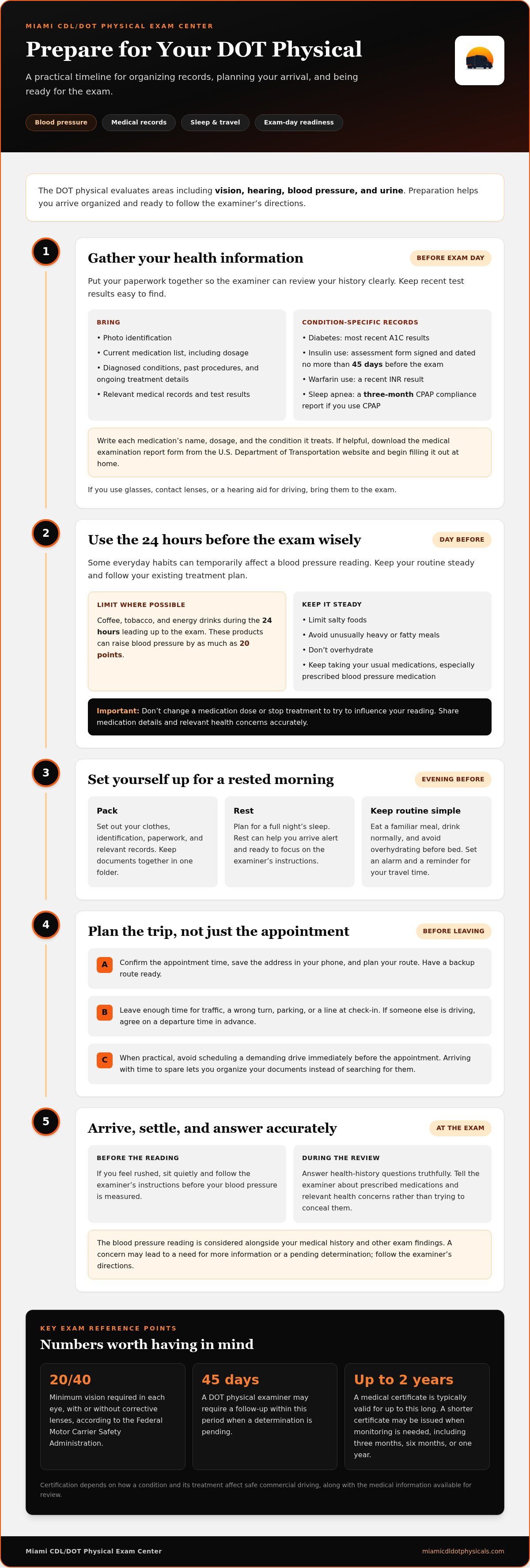
The DOT physical checks blood pressure as part of a broader medical exam. The reading is considered alongside your medical history and other exam findings, so preparation can help you arrive in a steady condition. There isn’t one reading that explains every possible outcome. Follow the examiner’s directions and share relevant health information accurately. For a DOT physical, a driver needs at least 20/40 vision in each eye, with or without corrective lenses, according to the Federal Motor Carrier Safety Administration. Vision and blood pressure are separate parts of the exam, but both can affect its outcome.
Use the day before your appointment to avoid habits that may temporarily raise blood pressure. Preparation guidance advises avoiding coffee, tobacco, and energy drinks as much as possible during the 24 hours leading up to the exam. These products can raise blood pressure by as much as 20 points. Limit salty foods, avoid unusually heavy or fatty meals, and don’t overhydrate. Keep taking your usual medications, especially prescribed blood pressure medication. Don’t change a dose or stop treatment just to influence your reading. A calm routine and a good night’s sleep can also support alertness and steadier exam-day habits.
On exam day, arrive with enough time to settle before the medical exam. If you feel rushed, sit quietly and follow the examiner’s instructions before the reading. Tell the examiner about prescribed medication and relevant health concerns rather than trying to conceal them. A reading that raises concern may affect the result, but an unsuccessful exam does not automatically mean every next step is the same. The examiner may need more information or may leave the determination pending. When a determination is pending, the Federal Motor Carrier Safety Administration says a DOT physical examiner may require a follow-up within 45 days.
If you’re concerned about a past reading, keep a record of your usual readings and medication details to discuss during the exam. Don’t rely on a last-minute change to produce a lasting result. Follow your clinician’s existing treatment plan, and bring medication questions to the appointment. The goal is an accurate assessment, not a temporarily altered number. These steps can help you feel more confident while the examiner evaluates your health and fitness for driving.
2. Medical history and medication documentation
Prepare your health information in advance so the examiner can review your medical history clearly. Bring photo identification, a current medication list with dosages, and details about diagnosed conditions, past procedures, or ongoing treatment. Answer the health-history questions truthfully. Accurate information helps the examiner assess your fitness to drive safely and whether a condition needs further review.
Include relevant records for conditions that may affect the exam. If you have diabetes, bring your most recent A1C results. Drivers using insulin should bring an assessment form signed and dated no more than 45 days before the exam. If you take warfarin, bring a recent INR result. For medication documentation, write each medicine’s name, dosage, and the condition it treats. This makes it easier to explain your treatment without relying on memory.
You can download the medical examination report form from the U.S. Department of Transportation website and begin filling it out at home. Review each answer before your appointment, then bring the completed information, identification, and medical records. If you use glasses, contact lenses, or a hearing aid for driving, bring them. Keep your paperwork together in one folder, with recent test results easy to find.
How long does a DOT physical and medical certificate last? A medical certificate is typically valid for up to two years, according to the Federal Motor Carrier Safety Administration. The examiner may issue a shorter certificate when periodic monitoring is needed, with common durations including three months, six months, or one year.
How can you find an FMCSA-certified medical examiner nearby? Search for an FMCSA-certified medical examiner in your city or ZIP code, then review the location and appointment information. For the exam itself, arrange a DOT physical exam with your records ready to support a clear review.
3. Getting adequate sleep and allowing time to travel
Plan your appointment after a full night’s sleep. Rest can help you arrive alert and ready to focus on the examiner’s instructions. Set out your clothes, identification, and paperwork the evening before. Confirm the appointment time and plan your route. If traffic, parking, or an unfamiliar address could delay you, account for that in your travel plan. When practical, avoid scheduling a demanding drive immediately before the appointment.
Rushing adds avoidable stress. Leave early enough to account for a wrong turn, a parking delay, or a line at check-in. Save the appointment address in your phone and have a backup route ready. If someone else is driving you, agree on a departure time in advance. Arriving calmly gives you time to organize your documents instead of searching through your vehicle.
Sleep apnea calls for specific preparation. If you use a CPAP machine, bring a three-month CPAP compliance report to the medical exam. Drivers with sleep apnea may need to use a CPAP machine or take a sleep apnea test for commercial motor vehicle certification. Keep the report accessible, along with any relevant equipment or records for your assessment. If you recently changed treatment, be ready to explain the change clearly.
What are the FMCSA medical certification rules for diabetes, sleep apnea, and heart conditions? Certification depends on how a condition and its treatment affect safe commercial driving, as well as the medical information available for review. Drivers with sleep apnea may need CPAP use or a sleep apnea test. Bring relevant records for diabetes or heart conditions.
Keep your evening routine simple. Eat a familiar meal, drink normally, and avoid overhydrating before bed. Pack a small snack or water for the trip if useful, while following any specific medical instructions you already have. Set an alarm and a reminder for your travel time. These steps can protect your sleep, reduce transportation stress, and help you arrive prepared.
4. Mental preparation and relaxation
Give your appointment a clear purpose: complete the medical exam honestly and understand the next step. Reviewing your identification, health-history answers, and medication list beforehand can prevent last-minute searching. If you feel tense, pause and take several slow breaths before check-in. Focus on the next task, such as handing over paperwork or listening to instructions.
Uncertainty can add stress, so learn the basic sequence of the exam. The examiner reviews your health information and conducts required assessments, including vision and hearing checks. If an instruction is unclear, ask for it to be repeated rather than guessing. Bring the glasses, contact lenses, or hearing aids you use for driving, and use them as directed. This helps you respond accurately without trying to predict the certification decision.
Use a simple reset while you wait. Plant both feet on the floor, relax your shoulders, and breathe slowly for a few moments. Then focus on a practical detail: confirm your name, appointment time, and documents. Avoid rehearsing worst-case scenarios. Another useful preparation step is writing down a question about a recent medication change, then raising it clearly with the examiner.
- Review the appointment details and paperwork before departing.
- Bring vision or hearing aids you rely on while driving.
- Write down one or two medical questions to discuss.
A calm approach doesn’t mean hiding symptoms or changing your answers. Be direct about your health history and follow the examiner’s instructions. If the result requires another step, ask what information or follow-up is needed, then note the details before leaving. For a straightforward next step, schedule a DOT physical exam and arrive ready to discuss your questions.
Miami CDL/DOT Physical Exam Center: DOT Physical Exam
Miami CDL/DOT Physical Exam Center provides comprehensive guidance and resources for commercial drivers preparing for certification or renewal examinations. When planning for your required medical evaluation, it is essential to arrive with your identification, medication details, and relevant health records properly organized. Bring any vision or hearing aids you use for driving, along with necessary medical documents related to ongoing health conditions. Sharing complete and accurate information helps the medical examiner thoroughly assess your fitness to drive and clearly explain any required next steps. The center also supports commercial drivers by offering an FMCSA Clearinghouse Consortium designed for owner-operators and fleet companies managing federal compliance requirements. Gather your paperwork carefully to ensure a smooth and efficient exam day experience.
Make your next step a confident one
Your exam is one step in keeping your commercial driving plans moving. Use the information you’ve prepared to approach the appointment with clear details and realistic expectations. If you still need the exam, arrange an appointment and keep your paperwork ready. A steady, organized approach can make the process easier to manage.
Miami CDL/DOT Physical Exam Center offers DOT physical exams, DOT drug tests, and non-DOT drug tests. If you’re ready to schedule an exam or need a related testing service, contact Miami CDL/DOT Physical Exam Center. Keep these DOT physical preparation tips in mind as you get ready, and take the next step with confidence.
Frequently Asked Questions
What is a DOT physical?
A DOT physical is a medical examination that assesses whether a commercial driver meets the health standards for driving. The examiner reviews health history and evaluates areas such as vision, hearing, and blood pressure. The visit also includes a urine sample to check for signs of medical conditions. It’s a health assessment, not simply a paperwork review or a drug test.
What does a DOT physical exam include?
A DOT physical includes checks of vision, hearing, blood pressure, and other health indicators. The vision evaluation requires at least 20/40 vision in each eye, with or without corrective lenses, according to the Federal Motor Carrier Safety Administration. For hearing, the driver must hear a forced whisper from a short distance. Urinalysis checks for signs such as sugar, protein, or blood, not drugs.
What documents should I bring to a DOT physical?
Bring photo identification, a current medication list with dosages, and relevant medical records. For example, a driver with diabetes can bring recent A1C results, while someone taking warfarin can bring a recent INR result. Include any needed glasses, contact lenses, or hearing aids. If you use a CPAP machine for sleep apnea, bring the three-month compliance report for review.
How should I prepare for the DOT physical blood pressure and vision tests?
Take prescribed medication as usual and bring corrective lenses you use for driving. The vision standard is at least 20/40 in each eye, with or without corrective lenses, according to the Federal Motor Carrier Safety Administration. For a more reliable blood pressure reading, avoid arriving flustered; sit quietly when instructed and tell the examiner about relevant medication or health concerns.
What medications and medical conditions should I disclose during a DOT physical?
Disclose every current medication, its dosage, and the condition it treats. Include relevant history such as diabetes, sleep apnea, heart conditions, or past procedures. For example, report CPAP use and bring supporting compliance information if you have sleep apnea. Complete the health-history report truthfully, and explain recent treatment changes so the examiner has clear context for the medical review.
Can I pass a DOT physical if I have high blood pressure or take medication?
Having high blood pressure or taking medication doesn’t alone determine the exam result. The examiner considers the blood pressure reading, treatment, medical history, and other findings together. Continue your usual prescribed medication rather than changing it to affect the reading. If more information is needed, the determination may remain pending, and the Federal Motor Carrier Safety Administration says a follow-up may be required within 45 days.


