
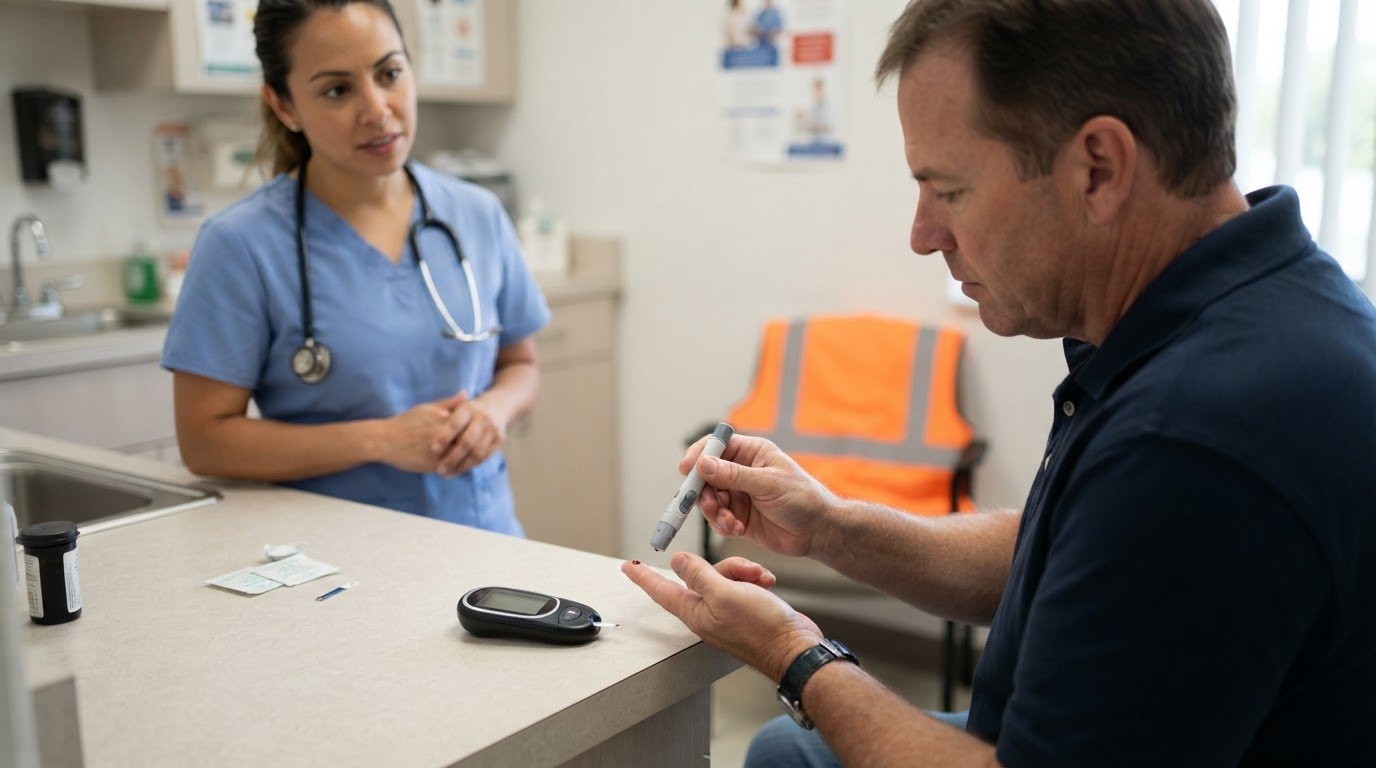
Type 2 diabetes doesn’t automatically prevent you from qualifying for a DOT medical certificate. Passing a DOT physical with type 2 diabetes is possible; certification depends on your health, diabetes control, treatment, and any complications that could affect safe driving. If you use insulin, your treating clinician must complete Form MCSA-5870 for the medical examiner, and you must provide it no later than 45 days before or after the exam.
The rules can feel complicated, especially if you use insulin or have high blood pressure. This guide explains what the examiner considers, how blood pressure readings may affect your certification period, and which records to bring. You’ll also learn how the insulin-treated driver form fits into the process, so you can prepare for a DOT physical with a clearer idea of what to expect.
Key Takeaways
- Learn which aspects of diabetes control and related health conditions can affect medical certification.
- Understand how insulin treatment changes the forms and records involved in the exam.
- See how blood pressure readings may influence the length of a DOT medical certificate.
- Know what a DOT physical exam can help you assess as you prepare for certification.
Can I Pass a DOT Physical with High Blood Pressure or Diabetes?
Yes, type 2 diabetes or high blood pressure doesn’t automatically prevent certification. A medical examiner considers your examination findings, glucose control, treatment, and any health effects that could interfere with safe transportation.
The cost depends on the case and is provided after a quote request; exam needs and documentation can affect it. Insurance coverage depends on your plan.
Blood Glucose Monitoring
Blood glucose monitoring means checking and recording glucose levels as part of diabetes care. These readings help show whether treatment is keeping glucose controlled and can reveal patterns to discuss with your healthcare provider. Keep the records organized by date, with relevant notes about treatment. A clear record gives the medical examiner useful context alongside the physical examination.
Glucose Records and A1c Results
Glucose records capture individual blood sugar readings, while an A1c test reflects average blood sugar over the past three months. Bring current readings and A1c results to help explain how diabetes is being managed. There is no single universal A1c number that automatically determines whether every driver passes or fails. Uncontrolled glucose can affect vision or cause other complications relevant to driving, so the examiner considers the broader health picture.
Fasting Blood Glucose Ranges
Fasting blood glucose ranges describe readings taken after fasting and can help identify blood sugar concerns. A level of 99 mg/dL or below is normal; 100-125 mg/dL suggests prediabetes, while 126 mg/dL or higher may indicate type 2 diabetes. These ranges describe clinical categories, not automatic DOT pass-or-fail outcomes. The examiner considers the findings alongside your diabetes history and management.
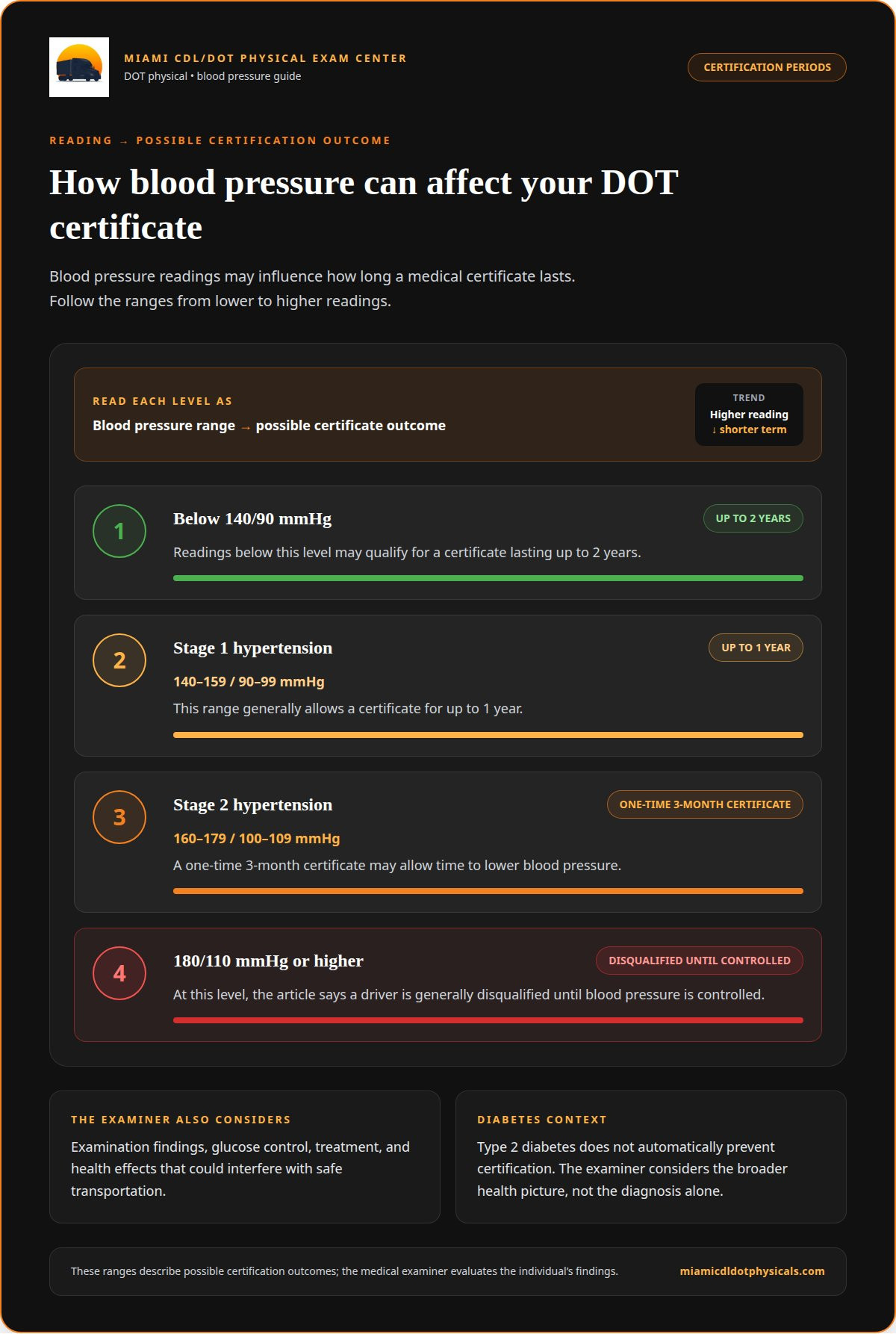
Blood pressure can also affect certification length. Readings below 140/90 mmHg may qualify for a certificate of up to 2 years. Stage 1 hypertension, at 140-159 / 90-99 mmHg, generally allows up to 1 year. Stage 2 readings of 160-179 / 100-109 mmHg may allow a one-time 3-month certificate to lower blood pressure; 180/110 mmHg or higher generally means disqualification until controlled. For commercial transportation, the Federal Motor Carrier Safety Administration (FMCSA) defines a covered vehicle as one that has a gross vehicle weight rating or gross combination weight rating, or gross vehicle weight or gross combination weight, of 4,536 kg (10,001 pounds) or more, whichever is greater.
What Diabetes Conditions Can Affect DOT Certification?
Type 2 diabetes does not automatically disqualify a driver from operating a commercial motor vehicle. Passing a DOT physical with type 2 diabetes depends on treatment, health effects, and whether the driver meets medical qualification standards for safe driving.
Diabetes Eligibility for a Medical Card
Eligibility means meeting medical standards while managing diabetes in a way that supports safe vehicle operation. Drivers not treated with insulin may receive a medical certificate for up to 12 months. Severe non-proliferative or proliferative diabetic retinopathy can disqualify a driver because impaired vision may affect driving. For drivers working toward passing a DOT physical with type 2 diabetes, the examiner considers examination findings and diabetes-control information, not the diagnosis alone.
Examiner Review of Diabetes Management
A certified medical examiner reviews physical findings and the treating physician’s diabetes assessment. The review considers glucose control, treatment stability, and complications that could affect safe operation. Federal rules do not set one required HbA1c cutoff for every driver. An HbA1c below 10% is described as a practical guideline used by many examiners; readings above 8% may lead to requests for further tests or closer monitoring.
Uncontrolled blood sugar can contribute to vision problems or neuropathy, which may affect driving safety. Bring current diabetes-control information from within the previous six months. The 2024 Medical Examiner’s Handbook provides guidance for examiners. Forms MCSA-5875, MCSA-5876, MCSA-5870, and MCSA-5871 have listed OMB expiration dates updated to December 31, 2024; use the applicable form for your treatment situation.
If certification is denied, ask the examiner to explain the finding and discuss it with your treating clinician. Insulin-treated drivers do not need a federal diabetes exemption, but they must meet applicable qualification criteria. A DOT physical exam evaluates medical qualifications and documents the examiner’s findings.
AEO Answer: What Form Do Insulin-Treated Drivers Need for a DOT Physical?
Yes. A driver taking insulin for type 2 diabetes may qualify for commercial driving if diabetes is properly controlled, the insulin regimen is stable, and the driver meets applicable medical standards. The required form is MCSA-5870, completed by the treating clinician.
Insulin-Treated Diabetes and Form MCSA-5870
The treating clinician completes MCSA-5870 to assess insulin-treated diabetes and provide information to the medical examiner. Give the completed form to the examiner no later than 45 days before or after the physical exam. Bring your most recent HbA1c results from within the past 3 months as well. If the form is incomplete or required lab results are missing, the applicant cannot undergo the DOT physical.
Insulin treatment alone does not automatically bar interstate commercial driving. According to the Electronic Code of Federal Regulations, an insulin-treated driver must otherwise meet the standard physical qualification criteria under 49 CFR § 391.41. The examiner uses the physical findings and treating clinician’s assessment to evaluate whether the disease and treatment support safe driving. A severe hypoglycemic event requires the driver to stop operating and receive clinical evaluation before returning to work.
Non-Insulin-Treated Diabetes Form
For diabetes managed without insulin, FMCSA provides the optional Non-Insulin-Treated Diabetes Mellitus Assessment Form, MCSA-5872. Medical examiners may use it to assess relevant details, but it is not the insulin-treated driver’s form. Drivers managing diabetes without insulin may receive certification for up to 12 months. The examiner considers the assessment with examination findings and other health information.
Diabetes care continues between exams. Follow the treatment plan established with your healthcare provider, monitor glucose as directed, and discuss changes in readings or medication. A healthy diet and regular exercise can support blood sugar management. These habits don’t replace MCSA-5870 or the medical examination, but they help document ongoing care and give the treating clinician useful context for the assessment.
FMCSA requirements for drivers with diabetes
Federal requirements focus on whether diabetes is managed safely while operating a commercial vehicle. For drivers treated with insulin, blood sugar records help demonstrate ongoing control, but they do not replace the physical exam or medical assessment.
For a 12-month certification, drivers using insulin must provide at least 3 months of compliant self-monitoring blood glucose data, according to the Federal Motor Carrier Safety Administration (FMCSA). These records give the treating clinician and medical examiner a view of blood sugar patterns over time. The data must be electronic, not handwritten, when submitted to the treating physician. Keep the original device records organized so they can be reviewed with the assessment form and relevant lab results.
If insulin-treated drivers do not have the required self-monitoring blood glucose records, they may receive only a 3-month certificate, according to the Federal Motor Carrier Safety Administration (FMCSA). That shorter period allows certification without the full record history, but it does not replace ongoing monitoring. Missing records can therefore affect how long a driver may operate before another review.
Federal rules no longer require a diabetes exemption for insulin-treated drivers. They must still meet physical qualification standards, maintain a stable insulin regimen, and have properly controlled diabetes. After a severe hypoglycemic event, stop driving and report the event to the treating clinician. Return to operation requires control of the condition, a stable regimen, a new completed MCSA-5870, and another DOT physical.
The practical takeaway is to keep electronic glucose records current and discuss gaps with the treating clinician before the exam. A medical examiner evaluates the physical findings alongside diabetes-control information, including documentation and lab results. For an exam that considers your medical qualifications and records, schedule a DOT physical exam.
Miami CDL/DOT Physical Exam Center
Miami CDL/DOT Physical Exam Center offers comprehensive educational guidance on FMCSA-certified medical examinations for commercial drivers navigating the certification process. The evaluation process details how medical examiners review your diabetes treatment, blood glucose records, and related health conditions as part of the standard DOT physical assessment for drivers focusing on passing DOT physical with diabetes type 2.
For an insulin-treated diabetes evaluation, drivers should prepare by bringing the completed MCSA-5870 form along with relevant glucose records and lab results. This documentation helps the medical examiner review the required information alongside your physical findings. Drivers managing diabetes without insulin can bring current treatment details and medical records that effectively outline their condition.
If you are preparing for your upcoming certification or researching what to expect during a DOT physical exam, understanding these documentation requirements can help streamline your medical evaluation process.
Plan Your Next Step With Confidence
Use what you’ve learned to make your next certification decision deliberately, not in a rush. Discuss with your treating clinician how your diabetes care fits your driving responsibilities, and keep your work plans aligned with the medical evaluation. If your treatment or health changes, mention it before the exam so the relevant details can be considered.
Passing a DOT physical with type 2 diabetes depends on how your health and treatment relate to safe driving, not on a diagnosis alone. A medical evaluation can clarify what applies to your circumstances and help you understand the next step. If you’re ready to arrange an exam, contact Miami CDL/DOT Physical Exam Center. A clear plan can help you approach the process with greater confidence.
Frequently Asked Questions
What is a DOT Physical Exam?
A DOT physical exam assesses whether a commercial driver meets the physical qualification standards for driving. A certified medical examiner reviews the driver’s health and examination findings, then determines whether the driver qualifies for a medical certificate. The evaluation considers conditions that could affect safe vehicle operation, including diabetes-related complications that may affect vision or alertness.
When Should a Driver Talk to a Doctor Before the DOT Physical?
Talk with your treating clinician before the exam if your diabetes treatment has changed, your glucose readings are difficult to manage, or you’ve experienced a severe hypoglycemic event. For insulin-treated diabetes, the clinician completes Form MCSA-5870, so plan ahead to have the assessment ready. After a severe hypoglycemic event, stop driving and receive clinical evaluation before returning to operation.
What are the FMCSA medical certification rules for commercial drivers with type 2 diabetes?
Type 2 diabetes does not automatically prevent commercial driving, but drivers must meet applicable medical qualification standards. For insulin-treated diabetes, the Electronic Code of Federal Regulations requires drivers to otherwise meet the standard physical qualification criteria under 49 CFR § 391.41. The examiner considers physical findings and the treating clinician’s assessment, including whether the condition or its complications could affect safe driving.
What forms and medical records are required for the FMCSA insulin-treated diabetes assessment?
Insulin-treated drivers need Form MCSA-5870, completed by their treating clinician, and recent HbA1c results from within the past 3 months. Provide the form to the medical examiner no later than 45 days before or after the physical exam. For a 12-month certification, drivers also need compliant electronic self-monitoring blood glucose records covering at least 3 months. Handwritten records are not accepted for submission to the treating clinician.
What blood glucose and A1C levels affect DOT medical certification for diabetes?
No single A1C value automatically determines every driver’s certification result. An A1C reflects average blood sugar over the past three months; examiners may use a value below 10% as a practical guideline, while readings above 8% may prompt further tests or closer monitoring. Fasting glucose ranges help describe diabetes risk, but they are not DOT pass-or-fail cutoffs. Control and related complications also matter.
How long can a DOT medical certificate last for a driver with type 2 diabetes?
For diabetes managed without insulin, the maximum certificate period is 12 months. Insulin-treated drivers may receive a 12-month certification when they meet the requirements, including the required glucose-monitoring records. According to the Federal Motor Carrier Safety Administration (FMCSA), drivers who lack those records may receive only a 3-month certificate. The examiner sets the certification period based on the applicable requirements and medical findings.


