

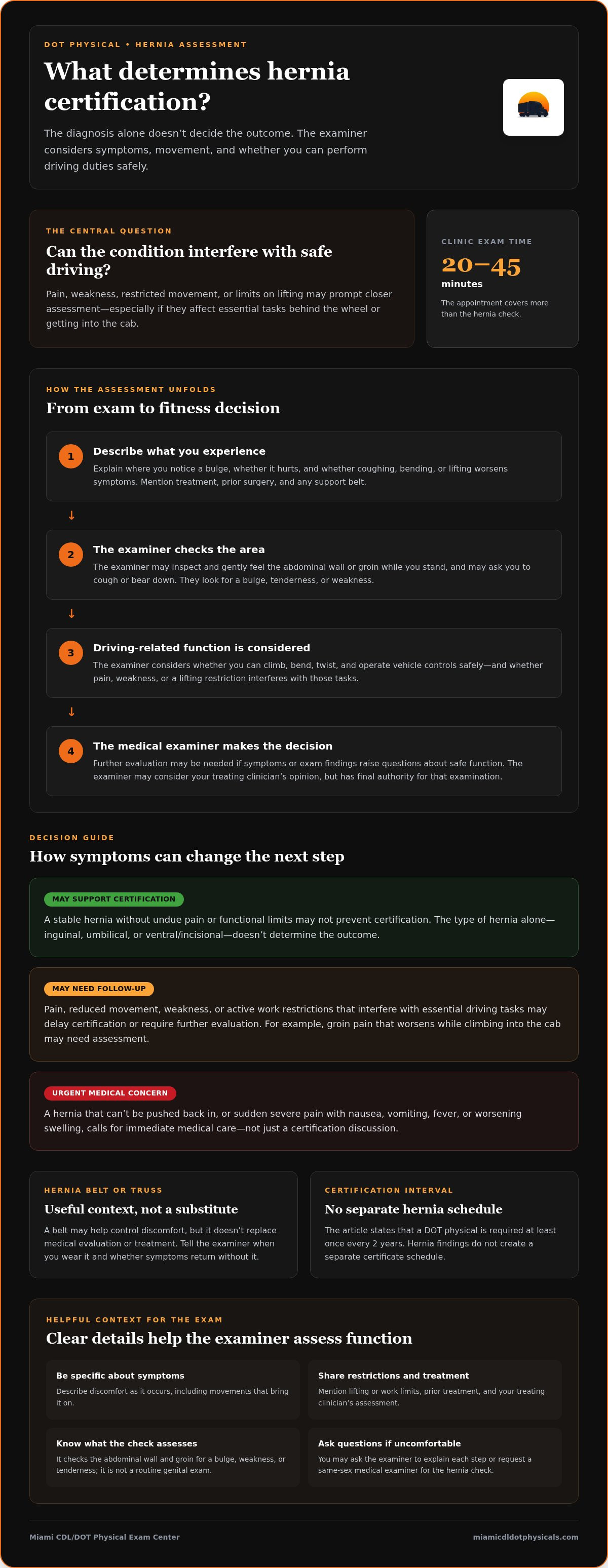
A hernia doesn’t automatically disqualify you from passing a DOT physical. During a DOT physical hernia check, the examiner may inspect and feel the area, sometimes asking you to cough or bear down. Certification depends on whether the condition causes undue pain or limits safe driving duties. Refusing the exam won’t let you pass.
It’s understandable to worry that a hernia or recent operation could keep you off the road. The diagnosis alone doesn’t determine the outcome. The examiner considers how symptoms affect movement and vehicle operation, and whether you’re recovering safely after surgery.
This article explains what to expect during the check, which symptoms or restrictions may affect certification, and what the examiner considers when you return after hernia surgery. You’ll also learn how to prepare and which recovery details can help clarify your fitness for commercial driving.
Key Takeaways
- Expect the examiner to inspect the relevant area and possibly ask you to cough or bear down.
- A hernia’s effect on movement, comfort, and safe vehicle operation matters when certification is assessed.
- Be ready to discuss symptoms, treatment, and any lifting or work restrictions that could affect driving duties.
- After surgery, use your surgeon’s clearance and recovery guidance to plan your return to commercial driving.
- Bring relevant medical notes and an up-to-date medication list to help explain your condition and recovery.
What Happens During a Hernia Check?
A DOT physical includes a hernia assessment along with other health and fitness checks. The examiner considers whether a condition could affect your ability to operate a commercial vehicle safely.
Hernia Screening and Genital Exams
A hernia screening checks the abdominal wall and groin for a bulge, weakness, or tenderness; it is not a routine genital exam. The distinction matters because the examiner is assessing a possible condition that could affect movement or driving, not conducting a general genital examination. The exam may include an inguinal hernia check for male drivers. Routine pelvic exams are not standard DOT certification steps for female drivers.
The DOT physical form lists hernias under both the abdomen and viscera and the genito-urinary system. These categories identify areas assessed; they don’t mean the hernia check is a broader genital examination.
Preparing for a Hernia Exam
Prepare to describe the hernia and its effects clearly. Tell the examiner where you notice a bulge, whether it hurts, and whether coughing, bending, or lifting worsens symptoms. Mention prior hernia surgery or treatment and whether you use a support belt. These details help the examiner understand how the condition affects daily movement and commercial driving tasks.
Bring relevant medical information if available, and describe your symptoms plainly. You may request a same-sex medical examiner for the hernia check. Don’t conceal a known hernia because it seems small or painless; accurate details help the examiner assess it in context.
What the Hernia Exam Involves
During the DOT physical hernia check, the examiner may inspect and gently feel the area while you stand. They may ask you to cough or bear down, which can make a bulge easier to see or feel. The examiner looks for signs such as tenderness, weakness, or a protrusion. Describe any discomfort as it occurs, including movements that bring it on.
The physical exam also covers other functions needed for safe driving. According to the Federal Motor Carrier Safety Administration, drivers must have visual acuity of at least 20/40 in each eye, with or without correction, and at least 70” of peripheral vision in the horizontal meridian, measured in each eye. Drivers must perceive a forced whisper at 5ft or less, with or without a hearing aid; according to the Federal Motor Carrier Safety Administration, that standard equates to average hearing loss in the better ear of less than 40 dB.
Exam Duration
A DOT physical examination at the clinic normally takes 20-45 minutes. The time covers more than the hernia check, so the examiner also reviews health information and assesses other physical functions. A straightforward exam may move efficiently; a finding that needs closer assessment can take additional attention within the appointment.
Refusing the hernia exam won’t allow you to pass the DOT physical. The examiner must complete the assessment, and declining a required part leaves the examination incomplete. If you’re uncomfortable, explain your concern before the exam and ask the examiner to describe each step. Clear communication helps you know what to expect without skipping the assessment.
What can affect certification, disqualify a driver, or require follow-up?
Certification depends on whether the hernia causes pain, limits movement, or interferes with safe driving. You can seek a second opinion from an FMCSA-certified medical examiner and provide your treating clinician’s assessment. The medical examiner making the decision has final authority for that examination.
Reasons for Delayed or Limited Certification
Certification may be delayed if pain, weakness, or a lifting restriction prevents essential driving duties. The medical examiner considers whether you can climb, bend, twist, and operate vehicle controls safely. Active restrictions matter when they interfere with those tasks. A DOT fitness-for-duty examination doesn’t allow work restrictions as a substitute for meeting its safety standard.
Further evaluation may be needed if symptoms or examination findings raise questions about safe function. For example, a driver whose groin pain worsens while climbing into the cab may need the condition assessed before certification. Tell the examiner about symptoms and restrictions, and share your primary doctor’s opinion. The examiner considers that opinion but makes the final decision.
Hernia Types and Certification
Inguinal, umbilical, and ventral or incisional hernias differ by location, but the type alone doesn’t determine certification. The examiner focuses on effects on your abdomen, movement, comfort, and ability to drive safely. A stable hernia without undue pain or functional limits may not prevent certification; pain or reduced movement can prompt follow-up.
Some complications require urgent medical care, not a certification discussion. A hernia that can’t be pushed back in, or sudden severe pain with nausea, vomiting, fever, or worsening swelling, requires immediate medical care. Describe changes in symptoms rather than relying only on the diagnosis.
Hernia belts: A belt or truss may help control discomfort, but it doesn’t replace medical evaluation or treatment. A driver using a belt may still pass if the hernia causes no pain when the belt is off and doesn’t impair safe driving. Tell the examiner when you wear it and whether symptoms return without it.
Certificate duration: Hernia findings don’t create a separate certificate schedule. According to the Federal Motor Carrier Safety Administration, a DOT physical is required at least once every 2 years. The examiner assesses the whole medical picture, including hearing, symptoms, and any follow-up needs, rather than treating the hernia label as the sole factor.
Possible outcomes: The examination may support certification, require more evaluation, or result in no certification when the condition prevents safe driving. A belt doesn’t guarantee approval, and an untreated hernia doesn’t automatically mean failure. For an updated assessment, a DOT physical exam can document your current medical status.
Return to commercial driving after hernia surgery
Returning to commercial driving after hernia surgery depends on healing, the surgeon’s plan, and your ability to perform required duties safely. There’s no specified waiting period before another DOT physical. You can pursue another exam once your surgeon clears you, but that clearance and a completed physical address different parts of the return-to-work decision.
Recovery timing varies with the procedure and your surgeon’s instructions. Some drivers may be out of work for 1-2 weeks after surgery, while heavy lifting is generally avoided for 4-6 weeks. Those periods aren’t a personal clearance date. Follow your own restrictions, especially if your job involves loading cargo, handling equipment, or climbing into a vehicle.
Before resuming commercial driving, you need to be stable, healed, and able to perform required duties. That includes moving safely around the cab and operating vehicle controls without limiting pain. A surgeon’s clearance supports your next DOT physical, but the medical examiner still assesses your current fitness. Don’t treat a calendar date alone as proof that you can safely return.
Explain any lingering scar discomfort clearly during the exam. Describe where you feel it and which movements bring it on, such as bending, twisting, or climbing. Say whether it affects getting in and out of the vehicle or sitting through a route. A scar may have healed while movement still feels limited, so report the actual effect rather than just saying the incision is closed.
Bring records that help the examiner understand the operation and your current recovery. Useful documents include:
- A clinician’s clearance note confirming your recovery status.
- Your current restrictions, including any lifting limits.
- A current medication list.
- Relevant follow-up notes from your surgeon or treating doctor.
For example, if follow-up notes still show a lifting restriction, explain how it applies to your work duties. The examiner needs to assess whether it prevents essential tasks, not simply whether you can steer. If your surgeon changes the plan after a follow-up, bring the updated instructions rather than relying on an older note.
Also report other health conditions and current treatment during the physical. If you have diabetes, bring relevant medical information and explain any treatment that affects your daily routine. Surgery recovery, discomfort, lifting limits, and other medical conditions all form part of the overall assessment. A complete account helps the examiner compare your current abilities with the demands of commercial driving.
Commercial driver medical exam requirements
A DOT medical exam evaluates whether a commercial driver can perform required duties safely. According to the Federal Motor Carrier Safety Administration, a DOT physical is required at least once every 2 years. A hernia is one part of the assessment, not a stand-alone diagnosis that determines the result.
The medical examiner reviews your health history and considers how current conditions affect safe driving. Tell the examiner about a hernia, even if it doesn’t hurt, and describe any changes since your last evaluation. The examiner may consider your primary doctor’s opinion but makes the final certification decision. Your description helps connect your medical history with everyday function.
Include prior hernia surgery in your medical history. Explain when it occurred, how recovery went, and whether the repair affects daily activities or driving. If discomfort affects bending, twisting, climbing, or operating controls, describe which movements cause trouble. Bring relevant follow-up information when available. For example, if the repair healed but still causes pain while climbing into the cab, report that specific limitation.
Hernia type gives the examiner useful context, but location alone doesn’t establish fitness for duty. Inguinal hernias occur in the groin; umbilical hernias appear near the navel; ventral or incisional hernias involve the abdominal wall. The examiner considers symptoms, stability, and effects on movement. A hernia that creates no safety risk may be compatible with certification, while pain or functional limits can prompt further evaluation.
The examination also records medical findings beyond the abdomen. The FMCSA Medical Examination Report Form is identified as MCSA-5875. Its findings support the examiner’s assessment of the driver’s overall fitness, rather than treating one diagnosis as the entire evaluation. Share relevant conditions and treatment accurately, including a past repair that no longer causes symptoms.
Certification is based on findings from the complete exam. A stable condition without pain or limits may allow certification; symptoms that interfere with commercial driving can require follow-up before a decision. Work restrictions matter too: active lifting restrictions may delay certification if they prevent essential duties. Explain how a restriction applies to specific tasks, such as handling equipment or climbing, so the examiner can assess its effect on safe performance.
Hernia checks during a DOT physical
The hernia check is a focused part of the DOT physical, not a separate pass-or-fail test. It helps identify findings that could affect a driver’s ability to operate safely.
The 2024 FMCSA Medical Examiner’s Handbook says the exam should include an inguinal hernia check for all male drivers. The DOT Medical Examination Report records hernias and significant abdominal wall muscle weakness under abdomen and viscera, and lists hernias under the genito-urinary system. These form entries document findings; they don’t automatically decide certification.
During the assessment, the examiner may inspect and palpate the relevant area while you stand, cough, or bear down. These actions can make a bulge or weakness easier to identify. The examiner may note tenderness or ask about symptoms, such as discomfort when bending. Describe what you experience rather than giving only the hernia’s name.
The medical examiner evaluates function, not just appearance. A visible bulge without pain may have a different practical effect from a tender hernia that makes climbing into the cab difficult. The examiner considers whether symptoms could interfere with bending, twisting, using controls, or completing other driving duties safely.
FMCSA requirements don’t assign the same outcome to every hernia. The examiner decides whether the finding needs further evaluation or treatment based on its effect on safe operation. A primary clinician’s opinion can help explain stability, symptoms, or treatment, but the medical examiner makes the certification decision. Share relevant records and current restrictions clearly.
Hernia findings are only one part of the federal examination. The Federal Motor Carrier Safety Administration sets other medical standards, including vision, hearing, and blood pressure assessment. Consider a hernia finding alongside the rest of the evaluation, rather than treating it as the only issue that can affect certification.
For a more useful assessment, explain when symptoms occur, which movements trigger them, and whether they affect work tasks. If the examiner identifies a concern, ask what needs clarification and what information would address it. A specific description, such as pain when climbing into the vehicle, gives clearer context than simply saying the hernia bothers you.
Arrange a DOT physical exam to complete your commercial-driver medical evaluation and discuss hernia findings during the examination.
Miami CDL/DOT Physical Exam Center: DOT Physical Exam
Miami CDL/DOT Physical Exam Center provides DOT physical exams for commercial drivers who need a medical examination or have questions about a hernia finding. Bring relevant medical records, current restrictions, and any post-surgery clearance so the examiner can review your health information during the exam.
For additional compliance support, the FMCSA Clearinghouse Consortium serves owner-operators and fleet companies. The DOT physical exam addresses medical fitness; the consortium supports Clearinghouse compliance needs.
Contact Miami CDL/DOT Physical Exam Center or visit miamicdldotphysicals.com to take the next step.
Move Forward With a Clear Plan
Prepare for the medical conversation by noting which activities cause discomfort, how your condition affects work, and what questions you want answered. This can help you explain your situation clearly during a DOT physical hernia check and understand what information the examiner needs to assess your fitness.
When you’re ready for an exam, Miami CDL/DOT Physical Exam Center offers DOT Physical Exams, along with DOT and Non-DOT Drug Tests. Choose the service that matches your current requirement, and bring relevant medical information to support the visit.
Contact Miami CDL/DOT Physical Exam Center to take the next step. A clear account of your health and work demands can help you approach the exam with greater confidence.
Frequently Asked Questions
DOT Physicals: Can You Pass with a Hernia?
Yes, a hernia doesn’t automatically prevent certification. The examiner considers whether it causes pain or limits safe vehicle operation. Difficulty bending to reach controls or climbing into the cab, for example, could affect the assessment. A stable hernia without symptoms that interfere with driving may be compatible with certification. Explain how it affects your work rather than relying on the diagnosis alone.
Do They Check Your Private Parts During a DOT Physical?
The exam may include an inguinal hernia assessment, but that isn’t the same as a routine genital examination. The examiner checks the relevant area for signs of a hernia as part of the medical assessment. You can ask the examiner to explain the procedure beforehand. You may also request a same-sex examiner for the hernia check, which can help you feel prepared.
Do you have to pull your pants down for a DOT physical?
The examiner needs to assess the relevant area for an inguinal hernia, so you may need to adjust your clothing. That doesn’t mean a full undressing is automatically required. Ask what adjustment is needed beforehand, and tell the examiner if you have a concern. The goal is to examine the area relevant to the hernia assessment.
Should I tell the examiner about my hernia even if it doesn’t hurt?
Yes, tell the examiner about a known hernia, even if it’s painless. A bulge can still be relevant to the medical evaluation, and accurate information helps the examiner interpret the findings. Mention when you first noticed it, whether it has changed, and whether movement affects it. For example, explain if it appears only while standing or during exertion.
What Does a DOT Medical Exam Include?
A DOT medical exam reviews your health history and checks physical functions relevant to commercial driving. It includes vision and hearing assessments, blood pressure measurement, and a urinalysis that records findings such as protein, blood, sugar, and specific gravity. The urinalysis isn’t itself a drug test. The examiner also reviews conditions or medications that could affect your ability to drive safely.
What Does a DOT Physical Consist Of?
A DOT physical combines a medical history review with checks of key health measures and systems. Expect questions about past conditions, treatment, and medication, along with vision, hearing, blood pressure, and urinalysis checks. The examiner records the results on the medical examination report. Bring an accurate medication list and be ready to explain how ongoing treatment affects your daily activities.
Does a DOT physical include a hernia check?
Yes, hernia assessment is included in the examination. The 2024 FMCSA Medical Examiner’s Handbook says the exam should include an inguinal hernia check for all male drivers. The report also records hernias under abdomen and viscera and the genito-urinary system. If you have a known hernia, disclose it so the examiner can interpret the finding alongside your symptoms and medical history.
How do DOT medical examiners check for a hernia?
The examiner may look at and gently feel the relevant area while you stand, cough, or bear down. These positions and actions can make a bulge or weakness easier to detect. The examiner may also ask whether the area feels tender or symptoms appear during movement. Describe what you notice clearly, including whether the finding changes with position or activity.


