

Your CDL isn't just a piece of plastic; it's your livelihood, and a single blood pressure reading shouldn't stand in the way of your career. Most drivers feel a surge of anxiety when they step into a clinic, worrying that a minor health hiccup might ground them indefinitely. You've worked hard to keep the supply chain moving, and the last thing you need is a stressful medical exam or hours spent in a crowded waiting room. This guide ensures you can approach your DOT physical Hialeah with complete confidence.
We understand that regulatory compliance can feel like a hurdle. We promise to provide a clear path toward securing your medical card through a professional and efficient process. This guide previews the updated 2026 FMCSA health standards, including new vision protocols and preparation tips to help you avoid disqualification. You'll learn how a streamlined exam can lead to same-day issuance, keeping you compliant and on the road without the typical headaches. By the end, you'll have the knowledge to navigate your next exam without the stress, ensuring you stay behind the wheel where you belong.
Key Takeaways
- Learn the updated 2026 FMCSA health standards to verify your fitness for commercial driving.
- Identify the specific vision and musculoskeletal benchmarks required to successfully secure your CDL medical card.
- Use our preparation checklist to gather the necessary documentation and medication lists for your DOT physical Hialeah.
- Gain strategies for managing common disqualifiers like high blood pressure.
- Understand how integrated services combine medical exams with DOT drug testing for more efficient compliance.
Understanding the DOT Physical Exam Standards for 2026
A DOT physical is a mandatory health assessment required by the Federal Motor Carrier Safety Administration (FMCSA) for all commercial drivers. It's a comprehensive checkup designed to verify that you're physically and mentally fit to handle the rigors of the road. The primary goal of this requirement is public safety. By identifying potential medical issues before they lead to accidents, the exam protects you, your cargo, and everyone sharing the highway. Completing your DOT physical Hialeah with a certified professional ensures you meet these rigorous federal standards without unnecessary stress.
Not every driver needs this specific exam, but it's essential for those operating in certain categories. You must maintain a valid medical card if you operate a vehicle that fits any of the following descriptions:
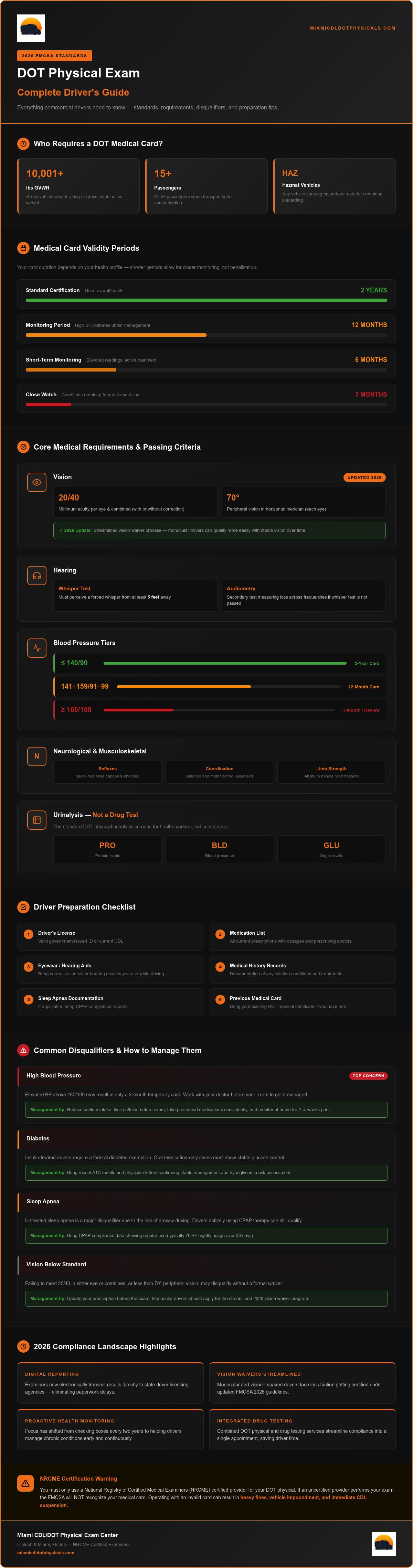
- A gross vehicle weight rating or gross combination weight of 10,001 lbs or more.
- A vehicle designed to transport more than 15 passengers (or more than 8 passengers for compensation).
- Any vehicle used to transport hazardous materials that require placarding.
Once you pass, your medical card's validity period depends on your overall health. While a standard certification lasts two years, drivers with manageable conditions like high blood pressure or diabetes might receive a card limited to 3, 6, or 12 months. This shortened window isn't a penalty; it's a safety measure that allows for closer monitoring of your health to keep you legally on the road.
Federal Regulatory Oversight and the NRCME
The National Registry of Certified Medical Examiners (NRCME) maintains a database of healthcare providers who've completed specialized training in FMCSA regulations. You must only use a certified professional for your examination. If an uncertified provider performs the exam, the FMCSA won't recognize your medical card. Operating with an expired or fraudulent card carries severe legal implications. You could face heavy fines, vehicle impoundment, or the immediate suspension of your CDL. Relying on a registry-certified expert for your DOT physical Hialeah is the only way to guarantee your documentation is legitimate and compliant.
The 2026 Compliance Landscape for Commercial Drivers
The 2026 compliance landscape is defined by increased efficiency and digital integration. Recent updates to FMCSA medical guidelines have streamlined the process for vision waivers, making it easier for qualified drivers to stay active. Digital reporting is now faster than ever. Examiners often transmit results to the state driver licensing agency electronically, which reduces paperwork delays. We're also seeing a shift toward proactive health monitoring. Instead of just checking boxes every two years, the focus is now on helping long-haul operators manage chronic conditions early. This approach reduces driver anxiety and helps prevent sudden medical disqualifications that could end a career.
Core Medical Requirements and Passing Criteria
Passing your DOT physical Hialeah requires meeting specific clinical benchmarks designed to ensure you can safely operate a heavy vehicle. The exam isn't a general wellness check; it's a targeted assessment of your neurological and musculoskeletal health. The examiner will check your reflexes, coordination, and limb strength to confirm your body can respond quickly to road hazards. These physical standards are the foundation of commercial driving safety.
Vision standards are a primary focus during the exam. You must have at least 20/40 acuity in each eye and both eyes combined, with or without corrective lenses. Your peripheral vision must also meet the 70-degree standard in the horizontal meridian. Under the 2026 updated guidelines, the process for vision waivers has become more streamlined. This allows drivers with monocular vision to qualify more easily if they meet specific safety criteria and demonstrate stable vision over time.
Hearing is equally critical for maintaining awareness on the road. You'll undergo a forced whisper test where you must perceive a communication from at least five feet away. If you don't pass this initial screening, an audiometry test will measure your hearing loss across different frequencies to ensure you can hear sirens, horns, and engine changes.
Blood pressure thresholds often cause the most stress for drivers. A reading of 140/90 or lower is ideal for a standard two-year medical card. If your pressure is higher, you might receive a temporary card lasting three to twelve months while you work with a doctor to manage the condition. Working with certified DOT examiners helps you understand these tiers clearly so you aren't caught off guard by a temporary certification.
Urinalysis and Kidney Function Screening
It's vital to clarify that the urinalysis performed during a standard DOT physical is not a drug test. Instead, the examiner checks for protein, blood, and sugar levels in your sample. These markers help identify underlying issues like kidney disease or uncontrolled diabetes. If sugar is detected, it may signal that your glucose levels aren't managed well enough for safe driving. This screening is about your long-term health and preventing sudden medical emergencies while you're behind the wheel.
Cardiovascular and Respiratory Health Metrics
Your heart and lungs are the engine of your body. The examiner evaluates your heart rate and rhythm while listening for any irregularities in your breathing. If you have a history of heart surgery or use a pacemaker, you'll need to provide documentation from your cardiologist to prove your stability. Sleep apnea is another major factor in 2026 compliance. If you show signs of severe fatigue or have a high Body Mass Index (BMI), a sleep study might be required. Managing these conditions ensures you stay alert during long hauls and reduces the risk of fatigue-related accidents.
Preparing for Your Appointment: A Driver’s Checklist
Preparation is the most effective way to ensure your exam goes smoothly. Arriving for your DOT physical Hialeah without the right paperwork can turn a simple appointment into a frustrating delay. Your livelihood depends on this certification, so treat the preparation process with the same professional attention you give to your pre-trip inspections. Start by gathering your current commercial driver's license and your most recent medical card. These documents establish your identity and your previous medical history for the examiner.
- Medication Lists: Write down the names and dosages of every medication you take. Include the contact information for the prescribing doctor.
- Corrective Devices: Bring your glasses, contact lenses, or hearing aids. You'll be tested with these devices to ensure you meet the FMCSA safety benchmarks.
- Medical Waivers: If you operate under a Skill Performance Evaluation (SPE) certificate, bring a physical copy for the examiner to review.
Having these items ready allows the examiner to focus on your health rather than hunting for missing information. It speeds up the data entry process and helps guarantee that your results are reported to the FMCSA without clerical errors.
Health Preparation Tips for Exam Day
Your habits in the 24 hours leading up to the exam can significantly impact your results. Avoid caffeine, energy drinks, and nicotine, as these substances can artificially inflate your blood pressure and heart rate. Drink plenty of water throughout the day to ensure you're well-hydrated for the urinalysis sample. Proper hydration also helps stabilize your pulse. Make sure you get at least seven to eight hours of sleep the night before. Fatigue can slow your reaction times during neurological testing and cause temporary vision strain. If you use a CPAP machine for sleep apnea, you must provide a compliance report showing your usage data for the last 90 days to prove the treatment is effective.
Documentation for Chronic Conditions
If you manage a chronic condition like diabetes or heart disease, you need to prove it's under control. Bring a recent clearance letter from your specialist that explicitly states you're fit to operate a commercial vehicle. This letter should include your most recent lab results, such as an A1C level for diabetics. Providing this documentation upfront prevents the examiner from placing your certification on hold. For a deeper look at specific prep strategies, read our how to pass DOT physical guide. Being proactive with your records ensures a non-stressful experience during your DOT physical Hialeah and keeps your career moving forward.
Common Disqualifiers and How to Manage Them
Facing a potential disqualification is stressful, but it doesn't always mean the end of your career. Most medical issues identified during a DOT physical Hialeah are manageable with the right approach. Uncontrolled hypertension remains the top reason for temporary or denied certification. If your blood pressure exceeds 140/90, you may only receive a short-term card while you seek treatment. Vision impairment also frequently stops drivers, specifically failing the 20/40 standard or struggling with color blindness. However, updated 2026 guidelines provide more flexibility for corrective measures than in previous years.
Epilepsy and seizure disorders have some of the strictest FMCSA rules. Generally, a history of seizures requires a significant period of stability without medication before a driver can be cleared. Psychological conditions are also scrutinized. Examiners look at whether the condition or the medications used to treat it might interfere with safe driving. Depression or anxiety isn't an automatic disqualifier, but the stability of the driver is always the priority. Maintaining open communication with your examiner is the best way to handle these concerns.
Navigating Medication Restrictions
Certain prescriptions act as red flags during an exam. Narcotics, some anti-seizure meds, and specific stimulants often cause immediate concern for FMCSA examiners. There's a clear difference between a flat disqualification and a fitness for duty determination. In many cases, you can work with your primary care physician to find FMCSA-compliant alternatives that treat your condition without compromising road safety. Always bring a letter from your doctor explaining why a specific medication is necessary and confirming that it doesn't impair your ability to operate a heavy vehicle.
The Path to Re-Certification After a Failure
Receiving a temporary disqualification isn't a permanent roadblock. If you're denied, the first step is addressing the specific medical concern. This might involve starting blood pressure medication, managing blood sugar, or getting a new prescription for glasses. You can seek a second opinion from a specialist, such as a cardiologist or neurologist, to provide additional evidence of your fitness. The FMCSA also offers waiver programs for specific physical impairments, like limb loss or certain vision issues. If you're concerned about a specific health condition, book your appointment with an examiner who understands how to help you navigate these hurdles and stay on the road.
Clearinghouse Compliance and Integrated Testing
Maintaining your CDL requires more than just a passing medical grade; it involves staying active and "green" in the FMCSA Clearinghouse. While your DOT physical Hialeah confirms you're physically fit to drive, the Clearinghouse tracks drug and alcohol violations to ensure you're legally eligible to work. These two systems work together to create a complete safety profile for every commercial driver. Many professionals choose to combine their medical examination with a DOT drug test Miami to handle all their regulatory needs in a single visit. This proactive approach prevents gaps in your certification and ensures your status is updated in real-time for current or potential employers. Digital reporting has removed the lag time that once plagued the industry. Results are now often visible to carriers almost immediately after the test is processed.
The integration of these services means that an examiner can update your medical certificate and verify your testing status simultaneously. When your medical and drug testing records are aligned, you face fewer hurdles during roadside inspections or when applying for new contracts. Real-time digital updates are essential in 2026, as the FMCSA has increased its focus on removing prohibited drivers from the road quickly. Staying ahead of these requirements protects your livelihood and demonstrates your commitment to professional safety standards.
FMCSA Clearinghouse Consortium Benefits
For owner-operators and small fleets, managing compliance is often an administrative nightmare. Joining a drug testing consortium automates the random selection process, which is a strict federal requirement. The consortium handles the complicated task of ensuring you meet the annual testing percentages required by the FMCSA. If a violation occurs, the consortium manages the return-to-duty process, guiding you through the necessary steps to regain your eligibility. This service reduces the administrative burden on independent drivers, allowing them to focus on the road rather than paperwork. It's a pragmatic solution for staying compliant without the need for a dedicated safety department.
Streamlining Your Compliance at a Single Center
The efficiency of "one-stop" compliance can't be overstated. When you visit a center that offers both physicals and drug screenings, you centralize your records. This makes it much easier to access documentation during a DOT audit or when switching employers. You don't have to track down files from multiple clinics across different systems. Instead, everything is organized and ready for verification. Centralized records also reduce the risk of clerical errors that could lead to a "Prohibited" status in the Clearinghouse database. You can secure your professional standing with a certified DOT physical and compliance plan to ensure every aspect of your certification is handled with expert care. This integrated approach is the most reliable way to navigate the evolving 2026 standards and keep your career moving forward.
Stay Compliant and Keep Your Career Moving
Securing your medical card doesn't have to be a source of stress. By understanding the 2026 FMCSA standards and arriving prepared with your documentation, you've already cleared the biggest hurdles to compliance. Managing chronic conditions like hypertension or diabetes is a partnership between you and your examiner. When you combine your physical with integrated drug testing and Clearinghouse management, you create a seamless record of professional reliability that employers value. It's about protecting your livelihood through efficiency and expert guidance.
Our center focuses on fast, professional exams that respect your schedule. We provide same-day medical cards and offer expert FMCSA regulatory knowledge to reduce driver anxiety. Don't let a looming expiration date slow you down. Schedule your FMCSA-certified DOT physical today and complete your DOT physical Hialeah with confidence. You've done the hard work on the road; let us handle the paperwork to keep you there.
Frequently Asked Questions
How long does a DOT physical exam take from start to finish?
A standard examination typically takes between 30 and 45 minutes to complete from start to finish. This timeframe includes the review of your medical history, the physical assessment, and the completion of the required federal paperwork. We prioritize efficiency to respect your busy schedule as a commercial professional. Arriving with your documentation ready helps ensure the process stays within this window, allowing you to receive your medical card and return to the road quickly.
Can I pass a DOT physical if I have high blood pressure?
You can pass the exam with high blood pressure, but the length of your certification depends on the reading. A reading of 140/90 or lower qualifies for a two-year card. If your blood pressure is higher, the examiner may issue a temporary card lasting three, six, or twelve months. This allows you to work with your primary doctor to manage the condition while staying compliant with federal safety regulations during your DOT physical Hialeah.
What medications are prohibited for CDL drivers in 2026?
Prohibited medications include Schedule I controlled substances and habit-forming drugs that may impair your ability to operate a vehicle safely. Certain anti-seizure medications and methadone are generally disqualifying. However, many prescriptions require a fitness for duty letter from your treating physician rather than a flat denial. Your examiner will review your medication list against current FMCSA guidelines to ensure your treatment plan doesn't compromise public safety or your professional standing.
Do I need to take a drug test as part of my DOT physical?
A standard physical includes a urinalysis to check for protein, blood, and sugar, but this is not a drug test. While the physical assesses your health, many employers or owner-operators choose to combine the exam with a separate DOT drug test for streamlined compliance. It's common to handle both requirements in one visit to ensure your status in the FMCSA Clearinghouse remains active and your medical card is issued without delay.
What happens if the medical examiner only gives me a 3-month card?
Receiving a three-month card means the examiner has identified a health condition, like elevated blood pressure, that requires monitoring. This isn't a failure; it's a temporary certification that keeps you on the road while you address the specific medical issue. You'll need to return for a follow-up exam before the three months expire. If the condition is under control at that time, the examiner can then issue a longer-term medical certification.
Can I use my own doctor for a DOT physical exam?
You can only use a doctor who is listed on the National Registry of Certified Medical Examiners (NRCME). While your primary care physician knows your history, they cannot perform a DOT physical Hialeah unless they've completed the required federal training and certification. Using a registry-certified examiner ensures that your results are legally valid and properly reported to the FMCSA. Most drivers find it easier to visit a specialized center that focuses on these regulatory standards.
Is a sleep apnea test required for every DOT physical?
Sleep apnea testing isn't mandatory for every driver. The examiner will look for specific risk factors, such as a high Body Mass Index (BMI), large neck circumference, or reports of chronic daytime fatigue. If these indicators suggest a high risk for obstructive sleep apnea, the examiner may require a sleep study before issuing a long-term medical card. Drivers who already use a CPAP machine should bring a 90-day compliance report to their appointment.
How do I renew my CDL medical card before it expires?
To renew your card, you must schedule an appointment with a certified medical examiner before your current certificate expires. It's best to book your exam at least two weeks in advance to allow for any necessary follow-up documentation or testing. Once you pass, the examiner will issue a new medical card. You should then ensure your state's licensing agency receives a copy of the new certificate to maintain your commercial driving privileges without interruption.


