

A blood pressure reading of 180/110 mmHg or higher disqualifies a U.S. commercial motor vehicle driver until it falls to 140/90 mmHg. For high blood pressure management for CDL drivers, the key is knowing how readings affect certification and managing them with medical guidance. A first-time reading of 160-179/100-109 may qualify for a one-time 3-month certificate.
It’s understandable to worry that a hypertension diagnosis or prescribed medication could put your CDL at risk. Taking blood pressure medication does not automatically make you ineligible. Drivers may maintain a CDL if their readings meet the applicable thresholds and they follow DOT requirements. This guide explains the certification cutoffs, how medication factors into eligibility, and how to prepare for a DOT physical, including how to track your blood pressure beforehand.
Key Takeaways
- Understand how blood pressure readings can affect the length of a medical certificate and when follow-up exams may be needed.
- Learn why prescribed treatment does not automatically end CDL eligibility, and why medication changes should be made with a doctor.
- Prepare for a more useful physical by taking readings correctly and knowing what can temporarily affect them.
- Recognize which readings can stop certification and what blood pressure level drivers need to reach to qualify again.
Why the Focus on High Blood Pressure?
Blood pressure readings affect both commercial driver certification and how soon a driver must return for reassessment. Good high blood pressure management for CDL drivers starts with understanding the thresholds and the medical-card periods tied to them.
Blood Pressure Certification Thresholds
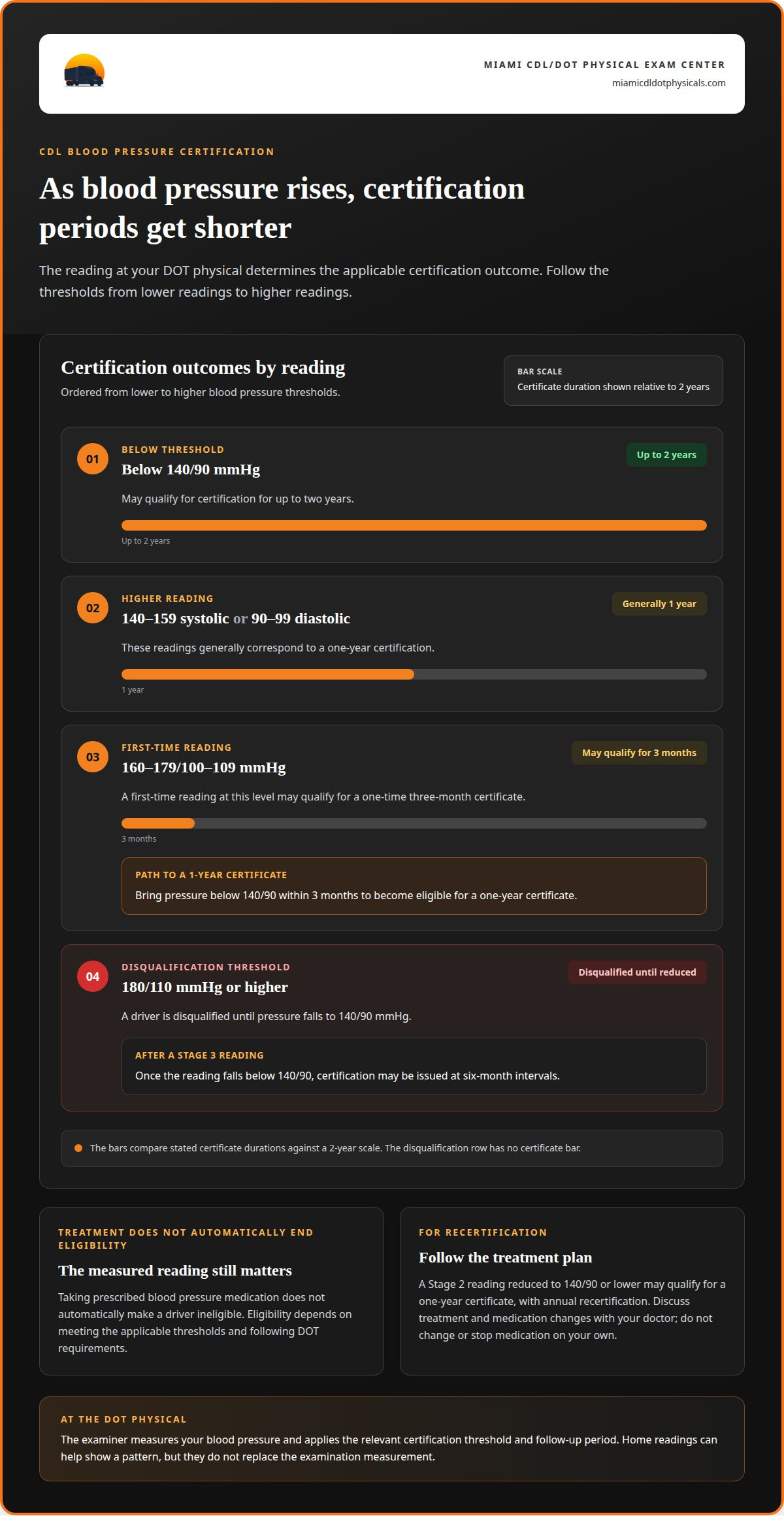
DOT certification guidance uses systolic and diastolic readings to determine whether a commercial driver qualifies and for how long. A reading below 140/90 mmHg may qualify for certification for up to two years. Readings of 140-159 systolic or 90-99 diastolic generally correspond to a shorter, one-year certification. These cutoffs matter because hypertension can increase the risk of heart attack or stroke, and a high reading may shorten the time before another physical.
Certification Periods by Blood Pressure Stage
Certification periods become shorter as blood pressure rises. At 140-159/90-99 mmHg, a driver may receive a one-year certificate. A first-time reading of 160-179/100-109 mmHg may qualify for a one-time three-month certificate. To become eligible for a one-year certificate at that level, the driver must bring pressure below 140/90 within three months. At 180/110 mmHg or higher, the driver is disqualified until pressure falls to 140/90 mmHg. After a Stage 3 reading falls below 140/90, certification may be issued at six-month intervals.
Recertification After Hypertension Treatment
Recertification after hypertension treatment depends on the driver’s current reading and whether it meets the applicable threshold. If a Stage 2 reading is reduced to 140/90 or lower, the driver may receive a one-year certificate and face annual recertification. A driver treated for hypertension may remain eligible when readings qualify and treatment follows DOT guidelines. Medication itself does not automatically end certification; the measured pressure and required follow-up period remain central to the decision.
General adult blood-pressure categories can differ from DOT certification cutoffs, so a hypertension diagnosis alone does not determine the length of a commercial driver’s medical certificate. Track your readings and discuss treatment with your doctor, especially if your medication changes or your pressure remains elevated. During a DOT physical, the examiner measures your blood pressure and applies the relevant certification period.
CDL eligibility while taking blood pressure medication
Prescribed blood-pressure medication does not automatically prevent a commercial driver from holding a CDL. Eligibility depends on meeting the applicable blood-pressure thresholds and following DOT requirements during treatment.
Medication and Driving Fitness
Medication can support driving fitness when it helps control blood pressure without causing effects that interfere with safe driving. A commercial driver taking a prescription may remain eligible if their readings qualify and they meet DOT requirements. Tell your prescribing doctor about your driving duties and any symptoms or treatment effects that could affect alertness. This helps align blood-pressure management with the demands of driving.
Medication Review and Care Planning
A medication review brings current readings, treatment, and day-to-day habits into one care plan. Monitor blood pressure regularly and share the pattern with the doctor, rather than relying on one result. Discuss exercise and lifestyle changes alongside medication; treatment may control hypertension with or without a prescription. If readings remain above the desired range, schedule a medical appointment to review the plan. Don’t change or stop medication on your own.
Medication Documentation and Medical Treatment
Clear medication information helps put the readings from a DOT physical in context. Keep an up-to-date list of your prescribed blood-pressure medicines, doses, and recent changes, and bring it to the examination. Include recent readings if available. This helps the examiner understand your treatment and any planned follow-up. A treatment record does not replace the blood-pressure measurement or guarantee a particular certification period.
Medication is one part of managing hypertension and reducing risks associated with high blood pressure, including heart attack. Keep appointments, follow the prescribed plan, and track readings through the certification period. For an exam that assesses your current medical fitness, schedule a DOT Physical Exam.
Measuring blood pressure before a DOT physical
Your blood pressure is measured during each required DOT physical. To prepare, take readings at home at different times instead of relying on one result. Record them and share the log with your doctor, especially if your readings vary or you’re managing hypertension. The record shows the pattern alongside the measurement taken during your examination.
For a more useful home reading, avoid eating, drinking, smoking, or exercising during the 30 minutes beforehand. These activities can temporarily raise the result. Avoid coffee and other caffeine sources in the hours before your physical, since caffeine can raise blood pressure. Sit quietly, follow your monitor’s instructions, and note the time and result. Consistent conditions make readings easier to compare.
The federal physical qualification standard, 49 CFR §391.41(b)(6), addresses a current clinical diagnosis of high blood pressure likely to interfere with safe operation. Blood pressure is one part of the DOT examination, and the examiner considers the reading in the context of the applicable certification thresholds. A normal reading at home is useful information, but it doesn’t replace the examination measurement.
Regular monitoring can help you and your doctor identify a pattern before your examination. Keep a simple log of readings and medication changes. If a result is elevated, discuss it with your doctor instead of adjusting medication yourself. You can also review lifestyle factors, including sodium intake, meal choices, exercise, and weight. These steps support your health but do not guarantee a particular examination result.
Movement can fit into a driving schedule. A fact in the current guidance says routine physical activity for 30 minutes daily can lower blood pressure by about 5 to 8 mmHg. Choose practical activity during breaks and track readings over time. A single result is a snapshot; the examination assesses your blood pressure alongside the broader physical qualification process.
Blood pressure readings that may disqualify drivers
A blood pressure reading of 180/110 mmHg or higher disqualifies a U.S. commercial motor vehicle driver until it falls to 140/90 mmHg. This threshold matters because either the systolic or diastolic number can signal elevated pressure. Truck drivers with a reading at this level aren’t qualified to drive under the stated certification rule until their pressure is lowered. A high reading calls for attention, not guesswork about the next step.
Blood pressure that falls below the disqualifying threshold may still affect certification. For example, readings in the 160-179 systolic or 100-109 diastolic range can require a shorter certification period and follow-up. The DOT physical evaluates the measured pressure, while a doctor manages hypertension as a disease. These roles are related but different: the examination determines medical certification, and treatment aims to control pressure and protect health.
A reading of 180/110 mmHg or higher requires medical treatment to lower blood pressure before the driver can qualify again. If high pressure occurs with urgent symptoms such as dizziness or fainting, seek urgent medical care. High blood pressure can raise the risk of heart attack or stroke, so don’t ignore a severe reading or make medication changes without medical guidance.
For truck drivers, one blood-pressure reading is not a treatment plan. Record the result, follow up with your doctor, and continue monitoring as treatment proceeds. Bring recent readings and medication information to your next DOT physical so the examiner can assess your current result. Meeting the applicable blood-pressure threshold is key to certification eligibility; the DOT assessment considers the reading, not just a hypertension diagnosis.
If you need a DOT physical to assess your certification, book a DOT physical exam.
Miami CDL/DOT Physical Exam Center
Miami CDL/DOT Physical Exam Center provides DOT physical exams nationwide for commercial drivers seeking certification or recertification. If hypertension affects your readings or medical-card timeline, the exam assesses your current blood pressure as part of the evaluation. Bring your medication information and recent readings to provide the examiner with useful context.
Drivers who need federal Clearinghouse compliance can use the FMCSA Clearinghouse Consortium. These services address different requirements: a DOT physical evaluates medical qualification, while the consortium supports Clearinghouse compliance. Neither replaces ongoing hypertension treatment from your doctor.
Contact Miami CDL/DOT Physical Exam Center to arrange the next step for your nationwide DOT physical or Clearinghouse needs.
Make Your Next Exam a Clear Checkpoint
Make high blood pressure management for CDL drivers part of your regular work routine, not just something to consider before a physical. Continue working with your doctor on treatment, and bring relevant updates to your next examination. This gives the examiner useful context for assessing your current medical status. Your blood-pressure treatment is a matter to manage with your doctor; the DOT physical addresses medical certification.
Miami CDL/DOT Physical Exam Center provides DOT physical exams, DOT drug tests, and non-DOT drug tests. If your next step is an examination, arrange your DOT physical with Miami CDL/DOT Physical Exam Center.
Stay consistent with your care, then take the next certification step with confidence.
Frequently Asked Questions
What can you do to help control hypertension?
Work with your doctor on a plan that combines prescribed treatment with manageable daily habits. Take medication as directed, and don’t change it without medical advice. Track readings over time so your doctor can assess patterns rather than just one result. Regular activity, lower-sodium food choices, and fewer processed meals can support blood-pressure control alongside medical care.
What blood pressure limits apply to CDL medical certification under FMCSA rules?
The listed certification thresholds are < 140/90 for a 2-year certification, 140-159 / 90-99 for a 1-year certification, and 160-179 / 100-109 for a 3-month certification. A reading of ≥ 180/109 is listed as disqualified. Systolic is the upper number; diastolic is the lower number. Both figures matter when interpreting a reading.
How long is a DOT medical certificate valid with high blood pressure?
The certificate period depends on the blood-pressure band recorded during the examination. The listed terms range from a 2-year certification for readings below 140/90 to a 1-year certification at 140-159 / 90-99, and a 3-month certification at 160-179 / 100-109. A reading of ≥ 180/109 is listed as disqualified, rather than assigned a certificate term.
What are the FMCSA certification rules for blood pressure medication and side effects?
Taking prescribed blood-pressure medication does not automatically disqualify a driver; qualifying readings and compliance with DOT guidelines matter. Tell the prescribing doctor about any symptoms or medication effects that could affect alertness or safe driving. Don’t stop or adjust treatment independently. The federal physical qualification standard addresses a current diagnosis likely to interfere with safe operation, so discuss treatment concerns with your doctor.
What should CDL drivers do before a DOT physical to manage high blood pressure?
For a cleaner reading, avoid eating, drinking, smoking, or exercising during the 30 minutes before measurement. Avoid coffee and other caffeine sources in the hours before the physical, since caffeine can raise blood pressure. Bring a log of home readings and an up-to-date medication list. These records give the examiner helpful context alongside the examination measurement.
How can truck drivers monitor and lower blood pressure safely while on the road?
Use a portable monitor and record readings at different times, noting when you took each measurement. Add movement during breaks, such as a brisk walk at a rest area, and choose lower-sodium meals when possible. Keep taking medication as prescribed, and discuss persistently high readings with your doctor. Don’t try to lower your blood pressure by changing medication without medical guidance.


