

A single blood pressure reading can be the difference between a two-year medical card and a sudden halt to your career. If you've ever felt your heart race the moment the cuff tightens, you're not alone. Many drivers worry that "White Coat Syndrome" or a stressful morning will lead to a disqualification or a restrictive three-month temporary certificate. Understanding the current DOT physical blood pressure requirements is the best way to walk into your exam with confidence. You deserve to know exactly where you stand before the examiner even enters the room.
This guide helps you master the latest 2026 FMCSA standards so you can secure your two-year medical card without the stress. We'll break down the specific BP stages, from the ideal 140/90 mmHg limit to the disqualification thresholds. You'll also find actionable tips to lower your blood pressure before your appointment. From managing Stage 1 hypertension to avoiding the common traps of temporary cards, we've got the clear answers you need to keep your livelihood on track. Let's ensure your next certification is a smooth, efficient process that respects your time and your profession.
Key Takeaways
- Learn why 140/90 mmHg is the critical threshold for maintaining your commercial driving status and career longevity.
- Understand how your reading dictates your certification length, including the specific DOT physical blood pressure requirements for the coveted two-year medical card.
- Discover the strict "one-time" rule for three-month temporary certificates and how to avoid the risk of immediate disqualification.
- Follow a proven 48-hour preparation protocol to manage sodium, hydration, and caffeine intake before your appointment.
- Find out how choosing an FMCSA-certified examiner can reduce exam-day anxiety and help you navigate the certification process with ease.
Understanding FMCSA Blood Pressure Standards for 2026
The FMCSA treats blood pressure as a safety-critical metric for one simple reason: your health directly impacts everyone on the road. High blood pressure isn't just a personal health concern; it's a risk factor for sudden incapacitation, stroke, or heart attack. When you're behind the wheel of a heavy commercial vehicle, your situational awareness and reaction time must be at their peak. Chronic high blood pressure can lead to subtle cognitive declines that slow your ability to respond to a sudden hazard. This is why the DOT physical blood pressure requirements are strictly enforced during every certification exam.
The core threshold for a commercial driver is 140/90 mmHg. This number is the dividing line between a standard two-year certification and a more frequent monitoring schedule. Medical examiners use this metric to assess your overall cardiovascular risk. They aren't just looking to disqualify you. Instead, they act as a safety filter to ensure you're physically capable of handling the long hours and physical demands of the industry. If your numbers are high, it's a signal that your body is under stress that could lead to a medical emergency while you're in transit.
The 2026 Focus on Long-Term Stability
In 2026, the FMCSA has shifted its focus toward long-term stability rather than a single "lucky" reading on exam day. Examiners now look closely at your medical history and treatment patterns to ensure consistency. If you're managing your condition with medication, it's a sign of responsibility, not a reason for failure. Understanding Hypertension and how it develops over years helps you realize why a single low reading isn't enough to prove you're fit for the road. If you have a documented diagnosis of hypertension, your certification cycle will likely shift to an annual basis. This ensures your levels stay controlled and your health remains a priority throughout your career.
Systolic vs. Diastolic: Which Number Matters More?
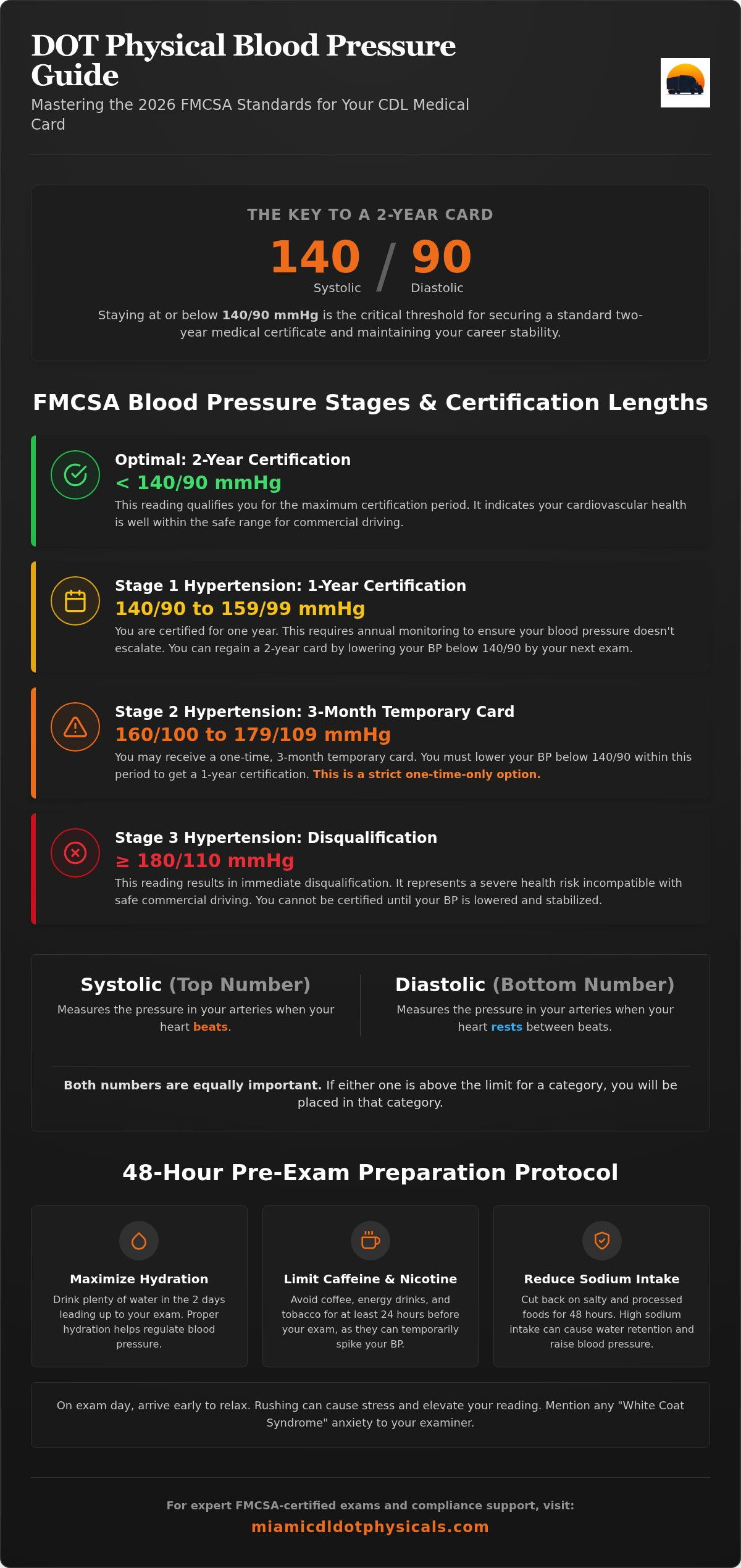
Your blood pressure reading consists of two numbers: systolic and diastolic. The systolic (top) number measures the pressure in your arteries when your heart beats. The diastolic (bottom) number measures the pressure when your heart rests between beats. Both numbers are equally important under the DOT physical blood pressure requirements. If either number exceeds the 140/90 limit, you'll trigger a shorter medical card. Common reasons for isolated high readings include anxiety, excessive caffeine, or poor sleep. However, the examiner must record the numbers as they appear during the exam. Even if one number is perfect, a high reading in the other can lead to a Stage 1 or Stage 2 classification.
DOT Blood Pressure Categories and Certification Lengths
The FMCSA categorizes blood pressure readings into four distinct tiers. Each tier determines how long you can drive before needing another exam. If your reading is below 140/90 mmHg, you qualify for the standard two-year medical certificate. This is the goal for every driver. It provides the most stability and reduces the frequency of office visits. Meeting the DOT physical blood pressure requirements for a two-year card is the best way to protect your livelihood and minimize administrative hurdles. However, if your numbers climb even slightly above this mark, the certification window narrows significantly.
The new Medical Examiner Handbook provides updated guidance on how these categories should be applied consistently across the country. It's not just about a single number; it's about your overall health profile. Examiners use these tiers to balance your career needs with public safety. Understanding where you fall on this scale allows you to take proactive steps before you sit down for your exam.
Stage 1 Hypertension (140-159 / 90-99)
A reading between 140/90 and 159/99 mmHg places you in Stage 1 Hypertension. In this category, the examiner will issue a one-year medical card instead of the standard two-year version. This shift requires you to return annually for monitoring. The goal is to ensure your blood pressure doesn't continue to rise over time. To move back into the "Normal" category and regain your two-year card, you must lower your blood pressure to below 140/90 mmHg by your next annual appointment. Many drivers achieve this through targeted lifestyle changes or by working with their doctor to adjust medications. Staying in this range isn't a career-ender, but it does mean more frequent trips to the clinic.
Stage 2 and Stage 3: Temporary and Disqualification Levels
Readings that fall into Stage 2 (160/100 to 179/109 mmHg) carry much higher stakes. If you test in this range, you'll receive a one-time, three-month temporary certificate. This is essentially a grace period. It gives you 90 days to seek medical treatment and get your numbers under control. You cannot receive consecutive three-month cards. If you don't meet the DOT physical blood pressure requirements within that window, you'll be disqualified until you do.
Stage 3 Hypertension is any reading of 180/110 mmHg or higher. This results in an immediate disqualification. You cannot operate a commercial vehicle until your blood pressure drops below 140/90 mmHg. Once you reach that target, you may be eligible for a six-month certificate. This strict protocol ensures that high-risk drivers are managed closely. If you're feeling anxious about these levels, choosing a professional DOT physical exam center can help you navigate the process calmly and efficiently.
The 3-Month Temporary Medical Card: Rules and Risks
The three-month medical card is often misunderstood as a repeatable safety net. It is not. Under the current DOT physical blood pressure requirements, a Stage 2 reading triggers a one-time temporary certificate. You have exactly 90 days to bring your numbers down to a stable level below 140/90 mmHg. If you return at the end of that window and your blood pressure remains high, the examiner cannot grant another extension. You will be disqualified immediately. This "one-time" limitation is a hard rule designed to prevent drivers from operating with chronic, uncontrolled hypertension. It is a period for action, not a period for waiting.
The financial and career impact of this cycle is significant. Beyond the cost of multiple office visits and exam fees, you face the risk of being benched by your carrier. Many companies have strict internal policies regarding temporary cards. They may limit your long-haul routes or require more frequent health check-ins. This can lead to a direct reduction in your earning potential. Use this 90-day window to demonstrate active medical compliance. Showing that you are taking your health seriously is the best way to reassure both the examiner and your employer that you are a safe, professional driver.
Navigating White Coat Hypertension
White coat syndrome is a common hurdle for many professional drivers. The stress of the exam room can spike your numbers even if you're perfectly healthy at home. To manage this effectively, bring a detailed log of your home blood pressure readings from the last two weeks. This data provides the examiner with a clearer picture of your long-term health trends. If your first reading is high, stay calm. You have the right to request a re-check during your appointment. Sit quietly, keep both feet flat on the floor, and breathe deeply for 10 minutes before the second attempt. A calm environment often results in a more accurate reading.
The Pathway from a 3-Month to a 1-Year Card
Moving from a temporary card to a one-year certificate requires more than just a single lower number. You must provide documentation from your primary care physician that confirms your treatment plan. This includes medication adherence records and a clear statement that your condition is under control. Examiners look for stability, not just a lucky day at the clinic. Last-minute fixes like extreme dieting or skipping caffeine for 24 hours rarely survive a thorough medical review. Adopting a consistent treatment plan is the only reliable way to meet the DOT physical blood pressure requirements and secure your long-term future on the road.
How to Prepare for Your DOT Physical Blood Pressure Test
Preparing for your appointment is a 48-hour process. The "Clean Lean" protocol is your best tool for success. You should reduce sodium intake to under 1,500mg per day for the two days leading up to the test. Excess salt forces your body to hold onto water. This increases the pressure against your artery walls and can lead to a higher reading. Drink plenty of water to flush your system. Dehydration can actually cause a spike in pressure as your body tries to compensate for the lack of fluid.
Stimulants are immediate triggers that can ruin your results. Caffeine and nicotine constrict your blood vessels and force your heart to work harder. Avoid coffee, energy drinks, and cigarettes for at least four hours before you check in. Even a single cup of coffee can raise your systolic pressure by several points. This small increase might be the difference between a one-year and a two-year certificate under the DOT physical blood pressure requirements.
Sleep and stress management are equally vital. Prioritize a full eight hours of sleep before your exam. A tired driver is a high-BP driver because fatigue causes your body to release cortisol. When you arrive, use the waiting room time to practice box breathing. Inhale for four seconds, hold for four, and exhale for four. This simple technique can lower your heart rate and help you meet the DOT physical blood pressure requirements on the first try.
Exam-Day Best Practices
Eat a light breakfast like oatmeal or fresh fruit. Avoid the high-sodium "breakfast bombs" found at most truck stops. Arrive at least 15 minutes early to let your heart rate settle after walking from your rig. If you're nervous, let the examiner know. FMCSA-certified examiners understand the pressure you're under. Clear communication about your medications and history helps build a partnership rather than a confrontation. To experience a streamlined process, you can schedule your DOT physical exam with experts who value your time.
Long-Term Management for Commercial Drivers
Long-term success relies on consistency behind the wheel and at home. Incorporate "cab-friendly" exercises like using resistance bands or taking a 15-minute walk during your mandatory breaks. Focus on the DASH diet by swapping processed snacks for unsalted nuts or seeds. If you require medication, work with your doctor to ensure you're on DOT-approved treatments. Meeting the requirements isn't just about passing a test; it's about extending your career and staying healthy for your family.
Expert DOT Physicals and Compliance Support
Choosing an examiner who understands the trucking industry is vital for your career longevity. At the Miami CDL/DOT Physical Exam Center, we focus on a streamlined process that respects your time and reduces the stress often associated with high-stakes certifications. When you walk into a center that specializes in commercial driver compliance, you're working with professionals who know the DOT physical blood pressure requirements inside and out. Our goal is to move you through the exam efficiently while ensuring all federal safety standards are met. This partnership helps you maintain your health and your livelihood without unnecessary delays.
Efficiency isn't just about speed; it's about accuracy and peace of mind. We ensure that your results are electronically submitted to the FMCSA National Registry, which helps eliminate paperwork errors and potential delays at the DMV. For fleets and independent drivers, we also integrate our services with the FMCSA Clearinghouse Consortium to ensure your compliance status is always up to date. Managing your medical card and drug testing in one place simplifies your administrative burden and keeps you focused on your primary job: driving.
Support for Owner-Operators and Fleets
Maintaining compliance for a fleet or as an owner-operator requires more than just a single exam. We offer custom compliance solutions for South Florida transportation companies that need reliable medical certifications and consistent monitoring. Since professional drug testing and DOT physicals often go hand-in-hand, we provide a central location for both services. Joining an FMCSA Clearinghouse Consortium through our center ensures that you stay compliant with federal drug and alcohol testing rules. This comprehensive approach is just as important as meeting the DOT physical blood pressure requirements for your medical card.
Final Checklist Before You Visit the Clinic
Success at the clinic starts with solid preparation. Before you arrive for your appointment, gather the following items to ensure a smooth certification process. Having these ready prevents the need for follow-up visits and helps the examiner validate your health status quickly.
- A complete list of your current medications, including dosages and the prescribing doctor's name.
- Your most recent CPAP compliance reports if you've been diagnosed with sleep apnea.
- Detailed logs of your home blood pressure readings to show long-term stability.
- Any clearance letters from specialists regarding heart conditions or other major health events.
Don't wait until the last minute to renew your certification. Proactive planning ensures you have time to manage any unexpected readings without risking your driving status. Schedule your professional DOT physical today and secure your two-year medical card with confidence.
Secure Your Career with Professional Certification
Meeting the DOT physical blood pressure requirements is about more than just passing a test; it's about protecting your career and your long-term health. You now know that staying under the 140/90 mmHg threshold is the key to securing a full two-year medical card. By using a 48-hour preparation protocol and managing stress, you can approach your exam with total confidence. These small adjustments ensure that your blood pressure reflects your true health rather than just exam-day nerves.
Our FMCSA-certified medical examiners specialize in helping drivers navigate these standards efficiently. We provide same-day medical card processing and comprehensive drug and alcohol testing to keep your operation moving forward. Don't wait until your current card expires to take action. Book Your FMCSA-Certified DOT Physical Exam Now to ensure your status remains active and compliant. We're here to support your success and keep you on the road for years to come.
Frequently Asked Questions
What is the highest blood pressure allowed for a DOT physical?
The highest reading allowed to receive any form of medical certification is 179/109 mmHg. This level qualifies you for a one-time, three-month temporary card. If your blood pressure reaches 180/110 mmHg or higher, you'll be disqualified immediately. For the standard two-year medical certificate, your reading must be lower than 140/90 mmHg.
Can I pass a DOT physical if I am taking blood pressure medication?
Yes, you can pass the exam while using blood pressure medication as long as your levels are controlled. Drivers who use medication to meet the standards are typically issued a one-year medical certificate. You should bring your current prescription list and your doctor's contact information to the appointment to ensure the examiner can verify your treatment plan.
Will I be disqualified if my blood pressure is over 140/90?
No, a reading over 140/90 mmHg doesn't result in immediate disqualification. Instead, it usually leads to a shorter certification period. A reading in the Stage 1 range (up to 159/99) results in a one-year card, while a Stage 2 reading (up to 179/109) results in a three-month card. Disqualification only happens when you hit Stage 3 levels.
How many times will the examiner check my blood pressure?
Examiners will usually perform a second or third check if your first reading is high. They want to ensure your numbers aren't artificially inflated by stress or rushing into the office. You can request a few minutes of quiet sitting before the re-check. This helps your heart rate settle and often leads to a more accurate, lower reading.
Can I get a 2-year medical card if I have Stage 1 hypertension?
You aren't eligible for a two-year card if your blood pressure falls within the Stage 1 range of 140/90 to 159/99 mmHg. Under the DOT physical blood pressure requirements, this range requires an annual certification. To get back to a two-year card, you must lower your blood pressure below 140/90 mmHg and maintain that level by your next exam.
What should I avoid drinking before my DOT physical?
Avoid energy drinks, coffee, and caffeinated sodas for at least four to six hours before your appointment. These beverages act as stimulants that can cause a temporary spike in your blood pressure. It's best to drink plenty of plain water instead. Proper hydration helps your vascular system function correctly and keeps your readings stable during the test.
Is a 3-month DOT medical card renewable?
No, the three-month medical card is a one-time issuance and isn't renewable. It's designed as a grace period to give you time to seek treatment and lower your numbers. If you return after 90 days and your blood pressure is still high, the examiner can't grant another extension. You'll be disqualified until your levels meet the federal standards.
What happens if I fail the blood pressure portion of the DOT physical?
If you fail due to a Stage 3 reading, you're disqualified from driving until your blood pressure drops below 140/90 mmHg. After you've stabilized your condition through medication or lifestyle changes, you can be re-examined. You'll then be eligible for a six-month certificate. It's essential to follow your treatment plan to meet the DOT physical blood pressure requirements and resume your career.


