

Your paper medical certificate is officially becoming a relic of the past as the FMCSA completes its transition to the National Registry II digital system. You've worked hard to build your career on the road, and the thought of a single health metric or a new digital filing rule sidelining you is genuinely stressful. It's frustrating when federal standards feel like a moving target, especially when your paycheck depends on a successful CDL medical exam. At Miami CDL/DOT Physical Exam Center, we understand that your medical card isn't just a piece of paper; it's your license to earn and your family's security.
This guide will simplify the 2026 standards, from vision benchmarks to the new oral fluid drug testing options, so you can walk into your appointment with total confidence. You'll learn exactly how to maintain your eligibility under the latest 49 CFR §391.41 requirements. We'll break down the specific health benchmarks you must meet, how to leverage the temporary 60-day paper waiver during the NRII rollout, and what the 50% random drug testing rate means for your long-term compliance strategy. This approach ensures you stay behind the wheel with a clear path to certification.
Key Takeaways
- Understand that while you search for a CDL medical exam South Florida, your certification is governed by strict, uniform federal FMCSA standards.
- Master the specific health benchmarks for vision and hearing, including the 20/40 acuity requirement, to ensure you meet the 49 CFR §391.41 criteria.
- Identify the essential medical records and documentation you must bring to your appointment to facilitate a same-day medical card issuance.
- Familiarize yourself with the clinical examination steps, from the initial intake history to physical screenings, to eliminate stress during the process.
- Develop a long-term compliance strategy that includes navigating the FMCSA Clearinghouse and meeting the 2026 random drug testing rates.
Understanding the CDL Medical Exam and FMCSA Compliance
A CDL medical exam is more than a simple check-up; it's a federal safety requirement designed to protect everyone on the highway. While you might be searching for a CDL medical exam South Florida, it's vital to remember that these standards don't change based on your zip code. The Federal Motor Carrier Safety Administration (FMCSA) sets these rules to ensure that every driver behind the wheel of a heavy vehicle is physically capable of handling the job's demands. This governing body oversees road safety by establishing strict health benchmarks that every commercial driver must meet to remain certified. Compliance isn't just about keeping your license; it's about ensuring you can safely manage the physical stress of long-haul routes and heavy traffic.
To secure your medical card, you must visit a provider listed on the National Registry of Certified Medical Examiners (NRCME). This registry ensures that your examiner has the specific training required to evaluate you against federal standards. Choosing an uncertified provider means your certificate won't be valid, which can lead to immediate licensing issues and potential fines for your employer. It's a partnership between you and the examiner to keep your career moving forward legally and safely. The FMCSA relies on these certified professionals to act as gatekeepers for road safety, ensuring that only those who meet the physical qualifications are permitted to operate commercial motor vehicles.
What is a DOT Physical Exam?
A DOT physical is a specialized Physical Examination that focuses on the specific physical and mental rigors of commercial driving. It's different from a standard visit to your family doctor. While a primary care physician focuses on your general wellness, a certified medical examiner looks for specific conditions that could interfere with your ability to operate a vehicle safely. This assessment is a regulatory hurdle you must clear to maintain DOT physical Miami standards. The exam evaluates several key areas to confirm you're fit for duty:
- Cardiovascular health and blood pressure stability.
- Vision and hearing acuity necessary for situational awareness.
- Neurological function and limb flexibility for vehicle control.
- Respiratory health and chronic condition management.
The Role of the FMCSA in 2026
The FMCSA continues to update its standards to reflect the latest medical research and road safety data. In 2026, the shift toward digitalization through the National Registry II system highlights the agency's focus on accuracy and real-time compliance. You have a legal obligation to report any significant changes in your health status between exams. If you develop a condition like sleep apnea or high blood pressure, you can't wait for your next renewal to address it. Staying proactive about your health isn't just about passing a test; it's about public safety. These regulations prevent accidents caused by medical emergencies, ensuring that both you and the general public get home safely every day. Reliable compliance protects your livelihood and keeps the supply chain moving without interruption.
Federal Health Standards for Commercial Driver Certification
Maintaining your commercial driver certification requires meeting a set of rigorous physical qualifications. These benchmarks aren't arbitrary; they're designed to ensure you can perform safety-sensitive functions without risk to yourself or the public. When you prepare for your CDL medical exam South Florida, you're being evaluated against the FMCSA medical standards that define fitness for duty in 2026. These standards prioritize sensory awareness and cardiovascular stability, which are the foundations of safe driving. Understanding these thresholds helps you manage your health proactively rather than reacting to a failed exam.
Vision and Hearing Benchmarks
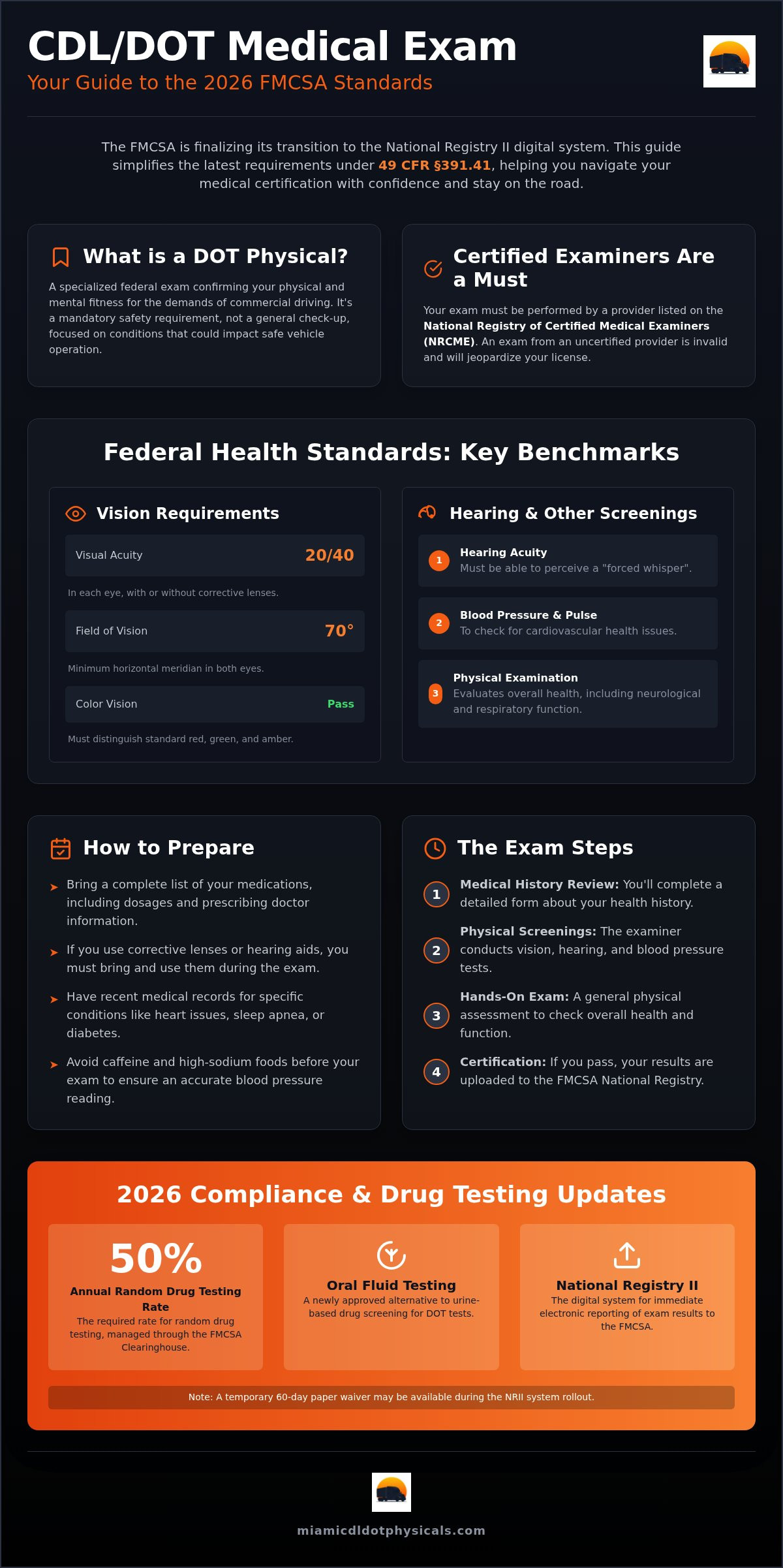
Visual clarity is non-negotiable for road safety. To meet the 2026 compliance standards, a driver must have distant visual acuity of at least 20/40 in each eye, with or without corrective lenses. Your field of vision must also be at least 70 degrees in the horizontal meridian for both eyes. Beyond simple clarity, you must be able to recognize the colors of traffic signals and devices showing standard red, green, and amber. Hearing is equally critical for situational awareness. You must be able to perceive a forced whispered voice in your better ear from at least five feet away. If you use a hearing aid, you can wear it during this test, provided it helps you meet the standard. If the whisper test is inconclusive, an audiometric test is required, where hearing loss cannot exceed 40 decibels on average in the better ear across 500, 1,000, and 2,000 Hz.
Cardiovascular and Respiratory Health
Your heart health directly impacts the duration of your medical certificate. For a full two-year card, your blood pressure must generally sit below 140/90. If your readings are higher, the medical examiner may issue a shorter certificate, such as a one-year or even a three-month temporary card, to monitor your progress. Respiratory health is another major focus, particularly regarding Obstructive Sleep Apnea (OSA). If you have a diagnosis of OSA, you must provide CPAP compliance data showing consistent use. This data proves you're getting the restorative sleep necessary to avoid daytime fatigue, which is a leading cause of accidents. Chronic conditions like diabetes are also manageable under current rules. Drivers with insulin-treated diabetes can often maintain certification by providing three months of electronic glucose logs, proving their condition is stable and well-controlled.
Staying ahead of these requirements prevents the stress of a last-minute scramble. If you have concerns about your current health benchmarks, you can consult with a certified medical examiner to build a plan for successful certification. Proactive management of your blood pressure and glucose levels ensures that your next exam is a routine update rather than a career hurdle.
Preparation Strategies: How to Pass Your DOT Physical Exam
Passing your CDL medical exam South Florida starts long before you step into the clinic. Most drivers make the mistake of treating the exam as a passive event. In reality, your preparation should begin weeks in advance, especially if you manage chronic conditions like high blood pressure or diabetes. Being proactive ensures that your medical examiner has all the information they need to certify you on the spot rather than putting your card on hold. It's about walking in with the confidence that your health data is organized and your body is ready for the assessment.
When you prepare early, you eliminate the risk of administrative delays. If a medical examiner needs to track down a clearance letter from your cardiologist or a glucose log from your endocrinologist, it can sideline your career for days or weeks. By gathering these documents ahead of time, you demonstrate that your health is under control and that you're a responsible professional. This preparation aligns with the standards outlined in the FMCSA Medical Examiner's Handbook, which serves as the guide for how examiners evaluate your fitness for duty.
Required Documentation Checklist
Organization is key to a fast and successful appointment. If you're missing paperwork, the examiner cannot legally complete the certification. Use this checklist to gather your materials before your visit:
- A valid commercial driver's license (CDL) or government-issued ID.
- Your current medical examiner's certificate (medical card).
- A complete list of medications, including dosages and the prescribing doctor's name.
- Corrective lenses or hearing aids if you use them for driving.
- Clearance letters from specialists for any recent surgeries or heart conditions.
Don't forget to bring your glasses or hearing aids. Forgetting these simple items can result in an immediate failure, even if your health is otherwise perfect. If you have a complex medical history, having these items ready shows you're prepared to meet federal safety expectations.
Health Management Tips for the Big Day
The 24 hours leading up to your exam are critical for stabilizing your vitals. Many drivers experience a temporary spike in blood pressure due to the stress of the exam. To counter this, avoid caffeine and nicotine for at least two hours before your appointment. These stimulants can artificially inflate your heart rate and blood pressure readings, potentially shortening the duration of your medical card. Hydration is equally important. You'll need to provide a urine sample for a kidney function screening, so drinking plenty of water ensures you're ready for this step. Finally, prioritize a full night's sleep. Fatigue can dull your reflexes and negatively impact your performance on vision and hearing tests. For a deeper look at these tactics, review our specialized guide on how to pass DOT physical assessments in 2026.
Navigating the DOT Physical Examination Process
The actual appointment moves quickly when you're prepared. It begins with the health history section of the MCSA-5875 form, where you'll self-report previous diagnoses, surgeries, and current medications. Honesty is vital here; the examiner uses this history as a roadmap for the physical assessment. During your CDL medical exam South Florida, the examiner follows a methodical sequence to validate your physical readiness for the road. This isn't just a series of checkboxes; it's a professional evaluation of your ability to handle the physical demands of commercial driving safely and reliably.
Physical Examination Components
The physical assessment covers every major body system to ensure no underlying issues could cause a sudden medical emergency. The examiner will perform a neurological check to evaluate your reflexes, coordination, and equilibrium. They'll also conduct a musculoskeletal exam to confirm you have the strength and range of motion necessary to operate controls and secure cargo. For the abdominal and hernia check, the examiner will perform a manual palpation of the abdominal and inguinal areas to check for protrusions or muscle wall weaknesses that could be aggravated by heavy lifting or prolonged sitting. This comprehensive approach ensures you have the physical stability required for long hours behind the wheel.
Urinalysis and Screening Procedures
Every DOT physical includes a mandatory urinalysis, but it's important to distinguish this from a drug test. The medical urine sample is screened for specific markers: protein, blood, and sugar. High levels of sugar (glycosuria) can indicate undiagnosed diabetes, while protein (proteinuria) or blood may suggest kidney issues. If these markers are present, it doesn't mean an automatic failure, but it will require further investigation before a certificate can be issued. While this medical screening is standard, your employer may also require a DOT drug test during the same visit. Having both services handled in one location saves you time and keeps your compliance files up to date without multiple trips to different clinics.
Once the exam is complete, the examiner will determine your certification status. A driver in excellent health typically receives a 2-year medical card. If you have a condition that requires monitoring, like high blood pressure, you might receive a 1-year or 3-month certificate. In some cases, a temporary disqualification occurs if the examiner needs more data from your primary doctor. This outcome is often reversible once the necessary documentation is provided. If you're ready to complete your certification, you can schedule your DOT physical exam today for a fast, professional experience that respects your schedule.
Ensuring Long-Term Compliance with DOT Physicals and Drug Testing
Securing your medical certificate is a major milestone, but long-term compliance requires consistent attention to federal data systems. Once you complete your CDL medical exam South Florida, your focus shifts to maintaining your standing within the FMCSA Clearinghouse and managing your renewal timeline. Staying compliant ensures you avoid the "out of service" orders that can disrupt your income and damage your professional reputation. It's about building a sustainable strategy that keeps you legally eligible to drive every single day. Federal authorities have increased their digital oversight, meaning manual errors or missed deadlines are flagged faster than ever before.
The 2026 landscape for commercial drivers is increasingly digital, especially with the full implementation of the National Registry II system. This transition aims to create a seamless link between medical examiners, the FMCSA, and state licensing agencies. However, the responsibility for verifying that your records are accurate still rests on your shoulders. Proactive drivers don't just wait for an expiration date; they treat their medical and drug testing compliance as an essential part of their professional toolkit. This mindset protects your livelihood and ensures you're always ready for the next haul without administrative interference.
Managing the CDL Medical Card
Your responsibility doesn't end when you leave the clinic with your medical card. You must submit your new certificate to the State Driver Licensing Agency (SDLA) to update your commercial driving record. If you fail to do this, the state will eventually downgrade your CDL to a standard Class E license. This downgrade can happen quickly, often leaving drivers stranded without a valid commercial license during a roadside inspection. To avoid this, set a renewal reminder at least 30 days before your current card expires. This window gives you enough time to handle any unexpected medical follow-ups or paperwork delays that might arise during the 2026 National Registry II rollout.
The FMCSA Clearinghouse and Consortiums
The FMCSA Clearinghouse is a secure digital database that tracks drug and alcohol program violations in real time. For owner-operators and small fleets, managing these requirements can be complex and time-consuming. Joining an FMCSA Clearinghouse Consortium simplifies this process by handling the random testing pool for you. For 2026, the minimum annual random drug testing rate remains at 50%, while the alcohol testing rate is 10%. These high percentages mean you're likely to be called for a test at some point during the year. Using a consortium ensures you meet these federal requirements without the administrative burden of managing the selection process yourself. Additionally, employers must perform mandatory annual queries for every driver in the Clearinghouse to ensure no new violations have been recorded elsewhere. Staying active in a consortium ensures these queries and tests are handled professionally and on time.
Secure Your Professional Future on the Road
You've now mastered the 2026 federal requirements and learned how proactive health management protects your livelihood. By organizing your documentation and understanding the vision and cardiovascular benchmarks, you eliminate the stress of the examination process. Maintaining your standing in the FMCSA Clearinghouse and renewing your certificate early ensures you never face a CDL downgrade. Getting your CDL medical exam South Florida should be a smooth, efficient step in your career rather than a source of anxiety.
Our center acts as a dedicated compliance partner for drivers who value their time. We provide FMCSA-certified examiners on-site and offer full drug testing and Clearinghouse support to keep you and your fleet compliant. With same-day medical cards available, you can get back to work without missing a beat. Schedule your FMCSA-certified CDL medical exam today to lock in your certification with a team that understands the transportation industry. Your career is built on reliability; your medical certification should be too. Stay healthy and keep the wheels turning.
Frequently Asked Questions
How long is a CDL medical card typically valid?
A CDL medical card is typically valid for up to 24 months from the date of your examination. However, your medical examiner may issue a certificate for a shorter duration, such as one year or six months, if you have a condition that requires more frequent monitoring. This is common for drivers managing high blood pressure or diabetes. Once your certificate expires, you must complete a new physical to remain legally eligible to drive.
Can I pass the DOT physical if I have high blood pressure?
You can certainly pass your examination with high blood pressure, provided the condition is well-managed. For a standard two-year certification, your blood pressure should generally be below 140/90. If your readings are higher, you may still receive a temporary medical card for one year or three months while you work with your doctor to stabilize your levels. Proactive management ensures you pass your CDL medical exam South Florida without unnecessary stress.
What medications will disqualify me from getting a CDL medical card?
Medications that cause impairment or are classified as habit-forming, such as methadone or certain narcotics, will generally disqualify you. The FMCSA also restricts the use of anti-seizure medications and some stimulants unless a specific waiver is granted. Your examiner will review your medication list against federal safety guidelines to ensure your treatment doesn't interfere with your ability to operate a heavy vehicle safely. Always bring your current prescriptions to your appointment.
What happens if I fail my CDL medical examination?
If you fail the examination, the examiner will not issue a medical certificate, and you cannot legally operate a commercial vehicle. You may be given a "pending" status if you simply need to provide more documentation from a specialist. However, if a disqualifying condition is found, you'll need to resolve the health issue before reapplying. A failure to maintain a valid card often results in your state licensing agency downgrading your CDL to a standard license.
Is a drug test always included in a DOT physical exam?
A drug test is not a standard part of the DOT physical, but a medical urinalysis is always required. The medical urine test checks for sugar, protein, and blood to identify underlying health issues like kidney disease. While the physical itself doesn't include a drug screen, many employers require a DOT drug test to be performed during the same visit. This combined approach is an efficient way to handle all your compliance needs in one stop.
How do I find a certified medical examiner for my CDL physical?
You must use the official FMCSA National Registry of Certified Medical Examiners to find a qualified provider. Only examiners listed on this registry have the specific training required to perform a valid CDL medical exam South Florida. Using an uncertified doctor will result in your medical card being rejected by the state. Our center features FMCSA-certified examiners who are fully registered and experienced in federal compliance standards.
Do I need to bring my medical records if I have a chronic condition?
You should always bring detailed medical records if you manage a chronic condition like sleep apnea or heart disease. Providing recent specialist clearance letters and CPAP compliance data helps the examiner make a fast, informed decision. Without these records, your certification may be delayed while the clinic waits for information from your primary doctor. Being prepared with your history is the best way to ensure a same-day medical card.
What is the difference between a DOT physical and a non-DOT physical?
A DOT physical is a federally mandated exam that follows strict FMCSA standards for commercial drivers, while a non-DOT physical is a general health screen required by specific employers. DOT exams use the official MCSA-5876 form and are tracked in a national database. Non-DOT exams are more flexible and are typically used for non-commercial roles. If you're driving a vehicle over 10,001 pounds, you specifically need the federal DOT version to stay legal.


