

You're sitting in the exam room, and as the blood pressure cuff starts to tighten, it feels like your entire career is on the line. At Miami CDL/DOT Physical Exam Center, we understand the stress that comes with the DOT physical requirements 2024 updates, especially when your livelihood depends on a single medical certificate. Many drivers worry that high blood pressure, sleep apnea concerns, or new handbook rules will lead to an automatic disqualification. It's frustrating to feel like the goalposts are constantly moving while you're just trying to do your job.
This guide will help you master the latest FMCSA medical standards and learn exactly what you need to pass your DOT physical exam with confidence. We provide a clear breakdown of vision, hearing, and blood pressure limits, alongside a checklist of what to bring to ensure a smooth visit. You will also learn how the 2026 transition to electronic records affects your medical card and why most health conditions are manageable for long-term compliance. We are here to simplify the process so you can stay focused on the road ahead.
Key Takeaways
- Learn how to navigate the updated DOT physical requirements 2024 standards to ensure your medical certificate remains valid under the latest FMCSA Handbook rules.
- Understand the specific passing benchmarks for the "Big Four" assessments, including vision acuity, hearing, blood pressure, and urinalysis.
- Identify which medical conditions lead to automatic disqualification and how to manage chronic issues like sleep apnea or hypertension for successful certification.
- Discover the essential documentation you need to bring, such as CPAP compliance data and specialist clearance letters, to avoid unnecessary delays during your appointment.
- Ensure your exam is legally recognized by selecting an FMCSA-certified medical examiner listed on the National Registry.
Understanding the FMCSA Medical Standards and 2024 Handbook Updates
The DOT physical is a mandatory health assessment designed to ensure that every commercial driver can safely handle the demands of operating heavy vehicles. It isn't just a bureaucratic hurdle; it's a vital safety check that protects everyone on the road. The DOT physical requirements 2024 standards rely heavily on the Medical Examiner’s Handbook, which remains the gold standard for certifications through 2026. This handbook provides the framework that certified medical examiners use to make fair, consistent decisions about your health.
A major shift in the 2024 updates is the move toward standardized clinical judgment. In the past, different examiners might interpret rules in slightly different ways. The new guidelines aim to reduce this variability. This means your exam experience should be more predictable regardless of which certified clinic you visit. By following these clear benchmarks, the FMCSA ensures that regulations protect public safety while keeping healthy, qualified drivers behind the wheel. It's about finding a balance between rigorous safety and the practical reality of a driver's livelihood.
The Core Purpose of the DOT Physical
The primary goal of this exam is to verify your physical, mental, and emotional fitness for duty. Examiners look for potential medical risks that could lead to sudden incapacitation while you are on the road. For example, uncontrolled heart conditions or neurological issues can pose a significant risk to you and others. Beyond safety, there's a strong link between your health and Commercial Driver's License Medical Certification requirements. Many commercial insurance policies require proof of a valid medical card to maintain coverage for the fleet. Staying compliant keeps you eligible for work and helps keep the company's insurance premiums stable.
Key Changes in the 2024 Regulatory Landscape
The 2024 updates brought several specific shifts in how examiners evaluate drivers. There is now more detailed guidance on cardiovascular health and seizure disorders. These rules emphasize long-term stability rather than just the absence of symptoms. If you have monocular vision, the process for the Vision Evaluation Report is now more streamlined, but it requires specific documentation from your eye doctor.
Another major focus is the accuracy of your self-reported health history. The FMCSA now places more weight on the honesty of your initial intake form. If you omit a known condition, it can lead to immediate disqualification or even legal trouble later. It's always better to be transparent. Your examiner is often a partner who can help you manage your condition to stay compliant with DOT physical requirements 2024 protocols. Honesty ensures that your certification is built on a solid foundation of health and safety.
Comprehensive Breakdown of Physical Health Requirements for CDL Drivers
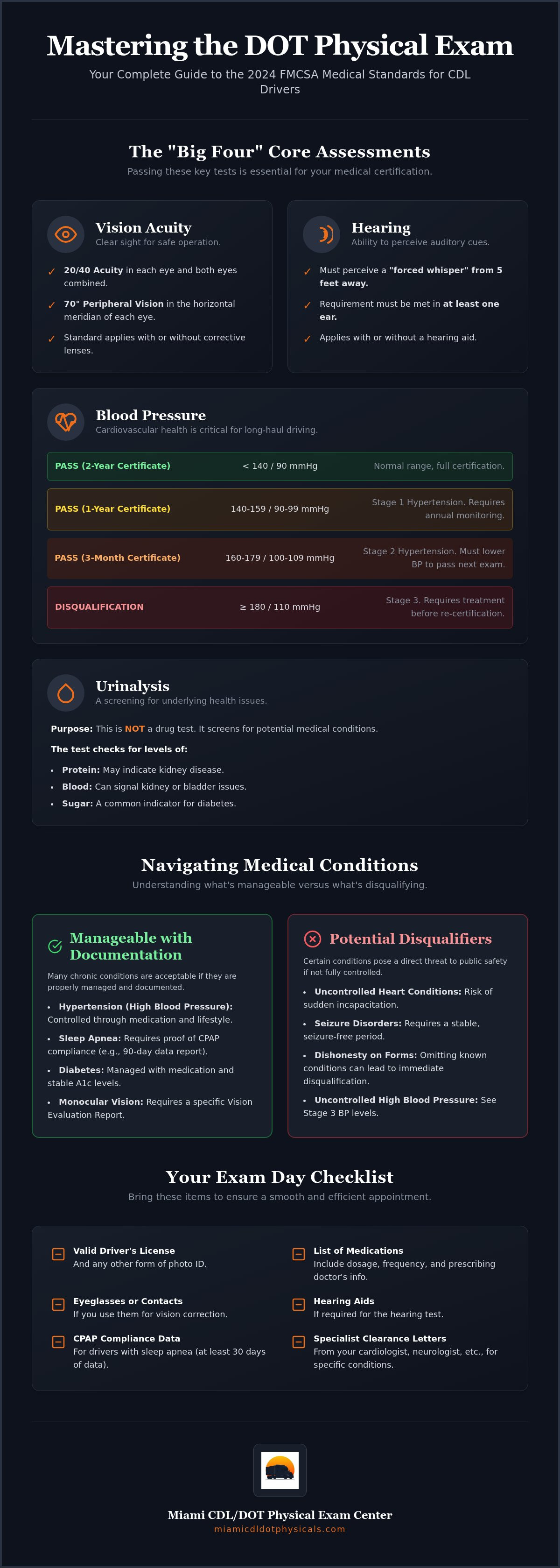
Meeting the DOT physical requirements 2024 standards involves passing four primary health assessments, often called the "Big Four." These include vision, hearing, blood pressure, and a urinalysis. Each test is designed to ensure you can handle the physical rigors of long-haul driving without risking your safety or the safety of others. The examiner uses these results to determine if you qualify for a full two-year medical certificate or if a shorter duration is necessary to monitor a specific condition.
The vision test is often the first hurdle. You must have at least 20/40 acuity in each eye, as well as in both eyes combined. This standard applies whether you use corrective lenses or not. Additionally, you must demonstrate a peripheral field of vision of at least 70 degrees in the horizontal meridian of each eye. If you struggle with these benchmarks, it's often a good idea to book your appointment with our certified examiners early to discuss potential vision waivers or solutions.
Hearing and kidney function are equally important. You must be able to perceive a "forced whisper" from a distance of five feet in at least one ear. For the urinalysis, the examiner isn't looking for drugs; instead, they are checking for protein, blood, and sugar levels. These markers can indicate underlying issues like diabetes or kidney disease that might otherwise go unnoticed. Understanding these FMCSA Medical Standards helps you prepare mentally and physically for the day of your exam.
Vision and Hearing: The Senses of Safety
If you wear glasses, contacts, or hearing aids, you must bring them to your appointment. You'll be tested while using them, and your medical card will note that they are required for driving. Color blindness is also assessed, specifically your ability to distinguish between red, green, and amber traffic signals. If you fail the initial whisper test, don't panic. You can still pass by undergoing an audiometric test, which measures your ability to hear specific frequencies using specialized equipment. This ensures that drivers with partial hearing loss can still remain on the road if they meet the decibel thresholds.
Blood Pressure and Pulse Rate Standards
Blood pressure is a major focus of the DOT physical requirements 2024 updates because commercial drivers have a higher tendency to develop hypertension. The certification lengths are strictly tied to your readings:
- Below 140/90: You can be certified for the full two years.
- 140/90 to 159/99 (Stage 1): Certification is limited to one year.
- 160/100 to 179/109 (Stage 2): You may receive a one-time, three-month certificate to get your pressure under control.
- 180/110 or higher (Stage 3): This is a disqualifying condition until the pressure is lowered.
To avoid "white coat syndrome," which is a temporary spike in blood pressure due to stress, try to arrive early and practice deep breathing before the cuff is applied. Your pulse rate serves as a key indicator of cardiovascular health, and while the FMCSA doesn't set a hard disqualification number, an abnormal rhythm often requires further clinical investigation.
Navigating Disqualifying Medical Conditions and Regulatory Changes
Understanding the distinction between a disqualifying condition and a manageable one is critical for your career. Some health issues, like active epilepsy or certain inner ear disorders, are typically grounds for automatic disqualification. However, many other conditions only require a specific waiver or proof of stability. The 2024 Medical Examiner's Handbook outlines these nuances in detail. It serves as the primary tool for examiners to assess whether a driver meets the DOT physical requirements 2024 standards without compromising road safety. Recent updates emphasize that medication compliance is just as important as the diagnosis itself.
Sleep apnea is a frequent point of anxiety for drivers. Examiners use screening tools like Body Mass Index (BMI) and neck circumference to identify at-risk individuals. If you're diagnosed with obstructive sleep apnea, you must provide a CPAP compliance report. This report should show that you've used the device for at least four hours per night on 70% of the nights over the last 30 to 90 days. Mental health is another area of focus. While depression or anxiety doesn't mean you can't drive, the use of sedating medications or a history of severe episodes will require a deeper look into your fitness for duty. You'll need to demonstrate that your treatment plan is consistent and effective.
Managing Chronic Conditions: Diabetes and Heart Disease
Drivers with insulin-treated diabetes can now stay on the road more easily thanks to the MCSA-5870 form. This form allows your treating physician to certify that your condition is well-controlled. Heart disease also has specific pathways for compliance. If you've had a cardiac event, such as a heart attack or stent placement, you'll need to complete a waiting period and pass a stress test before returning to work. For those still asking what is a dot physical exam and how it handles these specifics, the answer lies in proactive documentation from your specialists. Clear communication between your doctor and the examiner is the fastest way to get your medical card.
The FMCSA Clearinghouse and Drug Testing Integration
A common point of confusion is the difference between the medical exam and drug testing. The urinalysis performed during your physical is only a screen for kidney function and glucose; it isn't a drug test. However, your status in the FMCSA Clearinghouse directly impacts your medical certification. If your record shows a "Prohibited" status due to a drug or alcohol violation, a medical examiner cannot issue a valid certificate. This integration ensures that only safe, compliant drivers are on the road. Owner-operators face additional scrutiny and must belong to a drug testing consortium to remain fully compliant with federal law. Staying updated on DOT physical requirements 2024 means keeping these different regulatory systems in sync.
Preparation and Documentation: How to Ensure a Smooth Examination
Preparing for your appointment starts long before you walk into the clinic. To meet the DOT physical requirements 2024 standards without a hitch, start your preparation at least 48 hours in advance. This timeline gives your body a chance to stabilize and ensures you have all your paperwork in order. Avoid excessive caffeine and high-sodium foods during this window. These substances can temporarily spike your blood pressure, potentially pushing you into a shorter certification period or causing a delay. Drink plenty of water and get adequate sleep to help your body perform its best during the assessment.
The physical examination itself is a straightforward process. It begins with a detailed review of your health history followed by a hands-on exam where the examiner checks your reflexes, heart sounds, and general physical condition. Being prepared means you won't be caught off guard by these routine checks. If you want a deeper dive into the specific steps to take before your visit, read our guide on how to pass DOT physical exams. For a fast and efficient experience, schedule your DOT physical today at our certified center.
The Driver’s Checklist: What to Bring
Arriving with the right documentation is the easiest way to prevent multiple trips to the clinic. Make sure you have the following items ready for your examiner:
- Medication List: Include the name of every current medication, the dosage, and the name of the prescribing doctor.
- Vision and Hearing Aids: Bring your glasses, contacts, or hearing aids, and ensure they are in good working order.
- Specialist Clearance: If you have chronic conditions, bring recent lab results, such as your A1C for diabetes or a clearance letter from your cardiologist.
- CPAP Data: Drivers with sleep apnea must bring a compliance report covering the last 30 to 90 days.
Passing the Exam: Expert Tips and Best Practices
When you fill out the MCSA-5875 Health History section, take your time. This form is a legal document, and your signature certifies that every answer is true. Honesty is absolutely essential during this process. Withholding medical history isn't just a mistake; it's a federal offense that can lead to the permanent loss of your CDL. If you're unsure about a specific health event, it's better to discuss it openly with the examiner. They are trained to help you navigate the DOT physical requirements 2024 rules and find a path toward compliance. Most health issues won't stop you from driving as long as they are properly managed and documented.
Choosing an FMCSA-Certified Examiner for National Compliance
Finding the right medical examiner is just as important as the health assessment itself. You must use a provider listed on the FMCSA National Registry of Certified Medical Examiners to ensure your certificate is legally valid. These professionals have undergone specific training to understand the nuances of the DOT physical requirements 2024 updates. Selecting an unauthorized examiner means your medical card won't be recognized by the state, which can lead to immediate CDL suspension. A certified examiner acts as your guide, ensuring that every part of the federal protocol is followed correctly.
Experienced examiners do more than just check your vitals. They provide essential support if you need to work through the complex exemption or waiver processes. Whether you're dealing with monocular vision or insulin-treated diabetes, a specialized examiner knows exactly which forms you need and how to document your stability. This expertise prevents common filing errors that often delay a driver's return to the road. Once the exam is complete and you meet all standards, you'll receive your Medical Examiner’s Certificate, also known as Form MCSA-5876.
The Value of an Integrated Compliance Partner
Efficiency is key when your income depends on being behind the wheel. Centers that offer both medical exams and DOT drug testing provide a significant advantage. Instead of driving to multiple locations, you can handle all your regulatory needs in one visit. These specialized centers often provide same-day certifications and electronic filing, which reduces the stress of looming expiration dates. For owner-operators, a partner that also manages an FMCSA Clearinghouse Consortium is invaluable. This integrated approach ensures that your drug testing results and medical status remain in sync, maintaining your long-term eligibility without the paperwork headache.
Your Path to a Valid Medical Card
Always verify your examiner's credentials on the official National Registry website before you book your appointment. This step protects you from fraudulent providers and ensures your data is transmitted correctly to the FMCSA. Remember that your medical certificate has a strict expiration date; waiting until the last minute can put your career at risk. Plan your renewal at least 30 days in advance to account for any follow-up testing your examiner might require based on the DOT physical requirements 2024 guidelines. Taking these final steps seriously keeps you compliant and ready for the road. Schedule your professional DOT physical exam today to secure your medical certification with a team that understands your profession.
Secure Your Commercial Driving Future Today
Mastering the DOT physical requirements 2024 standards is about more than just checking a box. It's about protecting your health and your livelihood. By arriving prepared with your medication lists, specialist letters, and CPAP data, you eliminate the stress of the unknown. Knowing the benchmarks for blood pressure and vision allows you to take control of your certification process before you even enter the exam room. We have explored how the latest handbook rules prioritize standardized clinical judgment to keep you on the road safely.
Our team of FMCSA-Certified Medical Examiners is here to simplify your compliance journey. We offer same-day CDL medical cards along with integrated DOT drug testing and Clearinghouse services to get you back on the road quickly. Don't let regulatory changes slow you down or cause unnecessary anxiety about your next renewal. We understand the high stakes of your profession and are committed to your success.
Book Your FMCSA-Certified DOT Physical Exam Now and drive with the peace of mind that you're fully compliant. We're proud to be your partner in professional safety and success.
Frequently Asked Questions
What are the new DOT physical requirements for 2024 and 2026?
The DOT physical requirements 2024 standards focus on the updated Medical Examiner’s Handbook, which standardizes how doctors assess chronic conditions like heart disease and diabetes. Looking toward 2026, the FMCSA is rolling out the National Registry II (NRII). This system requires examiners to transmit results electronically, making your Motor Vehicle Record (MVR) the official proof of certification rather than just a paper card.
Can I pass a DOT physical with high blood pressure?
Yes, you can pass, but your certification period will likely be shorter than the standard two years. If your reading is between 140/90 and 159/99, you'll receive a one year certificate. Readings up to 179/109 may result in a one time, three month certificate to allow time for treatment. Anything 180/110 or higher is disqualifying until your pressure is managed below the threshold.
What medications will disqualify me from getting a CDL medical card?
Medications that cause significant drowsiness or impair your ability to operate a vehicle safely are typically disqualifying. This includes methadone, certain anti-seizure medications, and high-dose narcotics. If you use a scheduled substance, you must provide a letter from your prescribing doctor stating the medication doesn't interfere with safe driving. Examiners always check these against the latest safety guidelines to ensure road safety.
How long is a DOT medical card valid under the 2024 rules?
A standard medical certificate is valid for 24 months if you have no significant health issues. however, if you have conditions like hypertension, heart disease, or diabetes, your examiner may issue a certificate for one year or even three months. This shorter duration ensures that your condition is monitored closely to maintain road safety and compliance with federal standards.
What happens if I fail my DOT physical exam?
If you fail, the examiner will explain the specific disqualifying condition and whether it can be corrected. You have the right to seek a second opinion from another certified examiner, but you must be honest about your previous results. Many drivers successfully return to the road after obtaining a federal waiver or starting a new treatment plan for their condition that meets federal benchmarks.
Do I need a sleep apnea test for my DOT physical?
You only need a sleep apnea test if the examiner identifies specific risk factors during your screening. These include a Body Mass Index (BMI) of 35 or higher, a large neck circumference, or a history of loud snoring and daytime fatigue. If you are already diagnosed, you must bring at least 30 days of CPAP compliance data to your appointment to prove you are managing the condition effectively.
Is a drug test part of the standard DOT physical requirements?
No, a standard DOT physical does not include a drug test. The urinalysis performed during the exam only checks for sugar, protein, and blood to screen for diabetes or kidney issues. However, many employers require a separate DOT drug test at the same time as the physical. It's best to confirm with your company if both tests are needed during your scheduled visit.
Can I use a regular doctor for my DOT physical?
You can only use a doctor who is officially listed on the FMCSA National Registry of Certified Medical Examiners. While your primary care physician might be on the list, most regular doctors are not certified to perform these specific exams. Using a specialized center ensures that your results are filed correctly and that the examiner understands the unique lifestyle and requirements of a commercial driver.


