

An expired medical card is more than a minor oversight; it is an immediate out-of-service order that can trigger fines exceeding $1,000 and stall your career. You likely feel the constant pressure of staying compliant while managing a demanding schedule that leaves little room for error. It’s exhausting to worry about whether a dot physical examiner will be overly strict or if a clinic will waste your afternoon with disorganized paperwork. We understand that your medical certificate is your ticket to a paycheck, and the process should be as efficient as possible.
You can take control of your certification by learning how to properly vet your provider and prepare for the appointment. This article promises to show you exactly how to verify FMCSA credentials and what to expect during the exam in 2026. We’ll walk through the transition to the National Registry II system, explain the latest blood pressure evaluation trends, and provide a checklist to help you find a professional who truly understands the trucking industry lifestyle. By the end of this guide, you will have a clear path to keeping your commercial driving career on track without the stress of the unknown.
Key Takeaways
- Understand why FMCSA certification is a non-negotiable requirement for a valid commercial driver medical card.
- Learn how to use the National Registry to verify your dot physical examiner is currently authorized to perform exams.
- Discover the specific criteria for choosing a provider who values your time and provides same-day certifications.
- Identify the essential documents and medical history records you must bring to prevent appointment delays.
- Find out how to navigate the four possible exam outcomes and what to do if you receive a short-term certification.
What is a DOT Physical Examiner and Why is Their Certification Critical?
A dot physical examiner is a federally authorized medical professional listed on the National Registry of Certified Medical Examiners (NRCME). This individual is more than a standard healthcare provider; they act as a vital compliance partner for the Federal Motor Carrier Safety Administration (FMCSA). Their primary job is to ensure that every driver behind the wheel of a commercial motor vehicle (CMV) meets strict physical and mental health standards. Without this specific certification, a provider cannot legally issue a medical card that keeps your CDL active.
Choosing an examiner who isn't officially certified can derail your career instantly. The FMCSA maintains a National Registry to verify that examiners understand the specific stressors and physical demands of long-haul driving. If you receive an exam from an unlisted provider, your medical card is legally voided. This often leads to immediate license suspension and potentially thousands of dollars in fines for both you and your motor carrier. It's a risk that simply isn't worth taking when your livelihood is on the line.
The Legal Roles and Responsibilities of a CME
Certified Medical Examiners (CMEs) carry a dual responsibility. First, they protect public safety by confirming you can handle the rigors of the road without endangering others. Second, they have a duty to the driver to perform a fair, unbiased assessment based on federal standards. Unlike a primary care physician who focuses on your general wellness, a dot physical examiner looks specifically at disqualifying conditions that could lead to an accident. They aren't there to judge your lifestyle; they are there to validate your ability to work safely while following federal law.
The Types of Medical Professionals Who Can Become Examiners
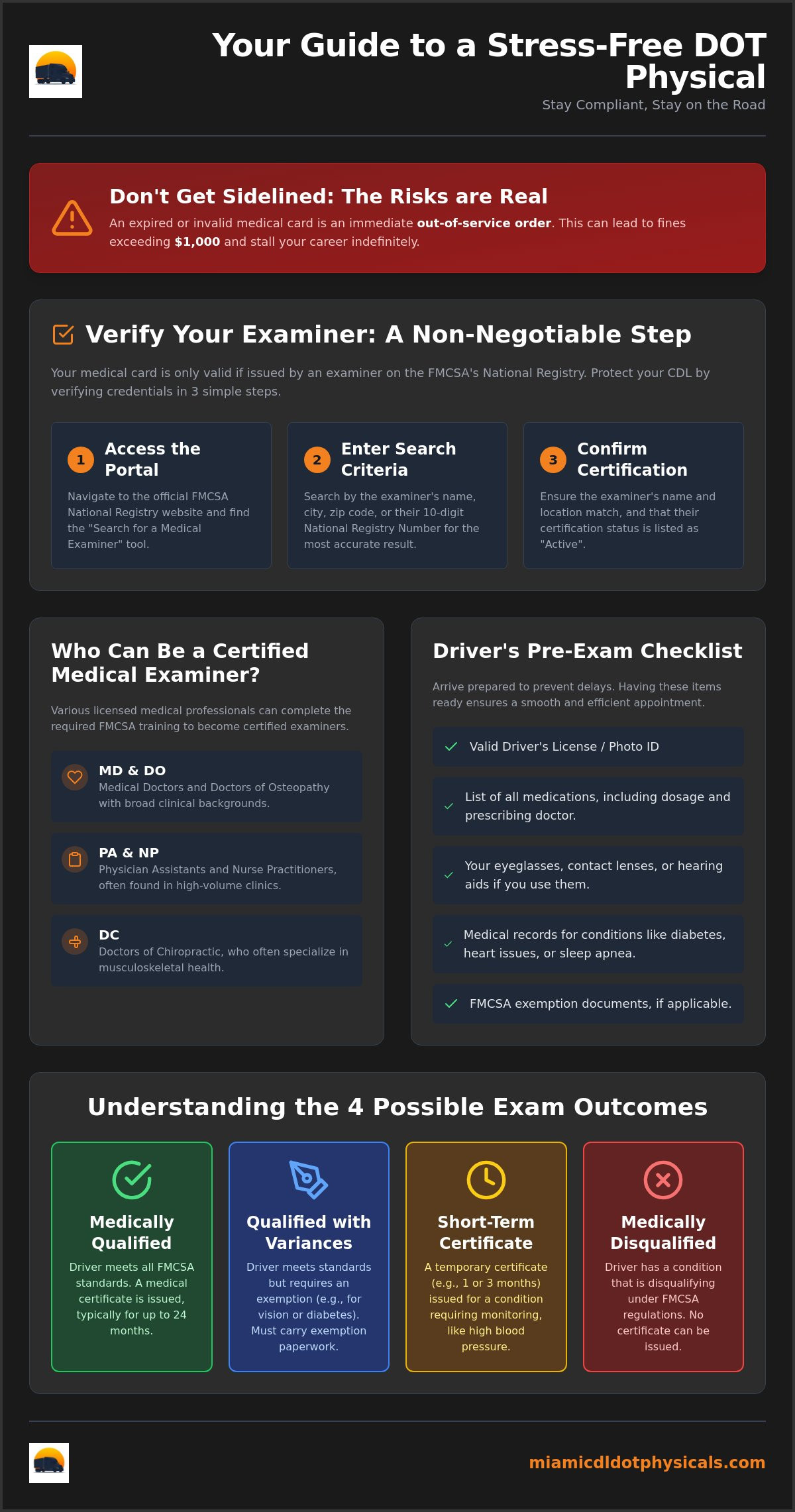
You will see various initials after an examiner's name, including MD, DO, PA, NP, or DC. All of these professionals are eligible to become certified examiners, provided they hold a valid state license and complete the rigorous FMCSA training. These professionals must pass a comprehensive exam and undergo recertification every 10 years to stay on the registry. This ensures they remain up to date on evolving regulations, such as the 2026 shift toward digital record-keeping. The specific degree type matters less than the examiner's specialized knowledge of the trucking industry and their commitment to the certification process.
- Medical Doctors (MD) and Doctors of Osteopathy (DO): Physicians with broad clinical backgrounds.
- Physician Assistants (PA) and Nurse Practitioners (NP): Advanced practice providers who often handle high-volume clinical settings.
- Doctors of Chiropractic (DC): Specialists in musculoskeletal health who are frequently well-versed in the physical strain drivers face.
Verifying Your Examiner: The National Registry Checklist
Verifying your examiner is the single most important step in protecting your CDL. You shouldn't take a clinic's word for it when your livelihood is on the line. The official National Registry of Certified Medical Examiners is the only database you should trust to confirm a provider's credentials. This registry is a real-time list of healthcare professionals who have completed the required federal training and passed the certification exam. Before you even drive to the clinic, spend five minutes ensuring your chosen dot physical examiner is in good standing.
For those operating in South Florida, understanding DOT physical Miami requirements can help you stay ahead of local enforcement trends. Whether you are a local driver or just passing through, the verification process remains the same across all states. Accessing this data prevents the nightmare of having your medical certificate rejected by the DMV weeks after your appointment.
How to Search the National Registry in 3 Steps
Finding a qualified dot physical examiner is simple if you follow these steps. The interface is designed for quick access, even from a smartphone at a truck stop.
- Access the Portal: Navigate to the official FMCSA National Registry website and select the "Find a Medical Examiner" tool.
- Enter Search Criteria: You can search by city and state, zip code, or the examiner’s last name. If you have it, searching by the 10-digit National Registry ID is the most accurate method.
- Confirm Active Status: Look for the "Active" label next to the examiner's name. If the status says "Suspended" or "Removed," do not proceed with the exam at that location.
Red Flags to Watch for During Verification
Red flags are often subtle, but they can lead to major compliance headaches. If a clinic claims their examiner is certified but they don't appear in the database, stop immediately. Mismatched addresses are another concern. If the registry lists an examiner at one office but the clinic you called is across town, ask for clarification. Sometimes examiners move, but the registry must be updated to reflect their current practice location.
Be wary of clinics that refuse to provide their examiner’s National Registry ID over the phone. A professional, transparent office will have this information ready for you. If they seem hesitant or confused by the request, it's a sign they may not prioritize federal compliance. You deserve a partner who values your time, so feel free to book your appointment with a certified professional who is fully vetted and ready to help you succeed.
The Essential Checklist for Choosing the Best DOT Physical Examiner
Finding a name on the National Registry of Certified Medical Examiners is only your first step. While the registry confirms a provider is legally authorized, it doesn't tell you if they're efficient or driver-friendly. You need a dot physical examiner who understands that a day spent in a waiting room is a day of lost wages. Look for clinics that prioritize same-day certifications and have a reputation for moving drivers through the process without unnecessary delays. Efficiency is a hallmark of a professional who respects your schedule and the demands of the trucking industry.
A top-tier examiner acts as an advocate for your health and your career. Instead of looking for reasons to disqualify you, a good professional works with you to manage chronic conditions like hypertension or diabetes. This partnership ensures you meet federal standards while staying on the road. It's also highly beneficial to choose a facility that offers DOT drug test Miami services in the same building. Handling your physical and drug screen in one stop saves hours of travel and eliminates extra administrative headaches.
Evaluating Clinic Professionalism and Industry Knowledge
Don't be afraid to interview the clinic before you book your appointment. Ask the front desk how many DOT physicals they perform each week. A high-volume clinic usually has a more streamlined process and a deeper understanding of the latest FMCSA updates. Verify they have specialized equipment on-site, such as dedicated vision testers and quiet areas for whisper tests. A dot physical examiner who knows the nuances of how to pass DOT physical requirements can guide you through the documentation needed for any pre-existing conditions, preventing a "Pending Determination" status.
Facility Standards and Support Services
Practicality matters when you're driving a commercial vehicle. Check if the facility offers accessible parking for large rigs or commercial vans. This is especially critical for those seeking an owner operator DOT physical Miami, where you might be managing your own schedule and equipment. Finally, ensure the clinic uses digital filing. In 2026, a modern examiner should be able to upload your results directly to the state driver licensing agency. This digital connection reduces the risk of paperwork getting lost and ensures your CDL status remains "certified" in the federal system.
Preparing for Your Appointment: A Driver’s Pre-Exam Checklist
Arriving unprepared is a common mistake that leads to unnecessary delays. Your dot physical examiner needs specific data to clear you for duty, and missing paperwork often results in a "pending" status that keeps you off the road. You should treat the exam as a partnership where your preparation facilitates a smooth, fast certification. Start by gathering your current driver's license and your existing medical card. You also need a comprehensive list of every medication you take, including the exact dosages and the names of your prescribing doctors.
Your physical state on the morning of the exam is just as important as your paperwork. Avoid caffeine and nicotine for at least two hours before your appointment. These stimulants can artificially inflate your blood pressure, potentially leading to a shorter certification period or a temporary disqualification. Drink plenty of water so you're ready for the urinalysis, which is a standard part of the health screening. Drivers with heart conditions must provide a recent clearance letter from their cardiologist, while those with sleep apnea are required to bring a 90-day CPAP compliance report to the appointment.
Managing Chronic Conditions for the Examiner
If you manage chronic health issues, you must prove they're under control. For diabetes, bring your A1C results from the last 90 days and blood sugar logs if your doctor requires them. If you have high blood pressure, take your prescribed medication exactly as directed on the day of the exam. Don't skip a dose thinking it will "reset" your system; the examiner needs to see that your treatment plan is effective. For sleep apnea, your CPAP compliance report must show you use the machine at least four hours per night for 70% of the days in the last three months.
What to Expect During the Physical Examination
The exam follows a methodical process designed to assess your overall fitness for duty. It begins with four main components: vision screening, a hearing "whisper" test, blood pressure measurement, and a urinalysis. It's important to remember that this urinalysis is a kidney function screen, not a drug test. The dot physical examiner will also perform a hands-on physical to check your heart, lungs, and spine for any abnormalities that could interfere with safe driving.
Finally, the examiner uses your medical history and the exam results to determine your certification length. While a healthy profile earns a two-year card, conditions like hypertension might result in a one-year or three-month certificate to allow for closer monitoring. If you're ready to get started, you can schedule your DOT physical exam today with a team that knows exactly what documentation you need to succeed.
Navigating the Outcome: Understanding the Examiner’s Determination
Once the physical assessment is complete, your dot physical examiner will issue one of four standard determinations. Understanding these outcomes helps you manage your expectations and react quickly if the result isn't an immediate two-year certification. Most drivers walk away with a "Certified" status, which means you meet all federal standards. However, if a health issue requires closer monitoring, you might receive a short-term card valid for one year, six months, or even three months. Don't view a short-term card as a setback; it's a tool that allows you to continue working while managing a specific health condition like hypertension.
The other two outcomes are more serious but often manageable. A "Temporarily Disqualified" status means you cannot drive until a specific medical issue is resolved, such as getting a new prescription for glasses or starting treatment for sleep apnea. "Permanently Disqualified" is rare and reserved for conditions that fundamentally conflict with FMCSA safety standards. It's important to know that the FMCSA has the authority to review any examiner’s decision. If you believe a determination was made in error, there are administrative paths to seek a second opinion or a federal waiver. For a deeper look at staying compliant after your appointment, refer to our CDL medical exam South Florida guide.
The "Pending Determination" Status Explained
Sometimes an examiner cannot make a final call during your visit. They may place your certification in "Pending Determination" if they need more information from your primary care doctor or a specialist. This isn't a denial. You have a 45-day window to provide the requested documentation. If you miss this deadline, the exam expires, and you'll have to pay for a completely new physical. Work closely with your regular physician to get the required clearance letters or test results submitted to the clinic as fast as possible.
Building a Long-Term Partnership with Your Examiner
Consistency is your best friend when it comes to medical compliance. Returning to the same dot physical examiner for every renewal creates a stable medical history that speeds up future appointments. When a provider already has your baseline data and past clearance letters on file, they can verify your health status much faster. This relationship reduces the stress of "starting over" with someone who doesn't know your history.
To ensure your career stays on track, follow this final checklist for every renewal:
- Verify: Always check the National Registry for "Active" status before booking.
- Prepare: Bring every required document, log, and clearance letter.
- Manage: Follow your doctor’s treatment plan for any chronic conditions.
- Document: Keep a digital copy of your Medical Examiner’s Certificate (MEC) at all times.
Secure Your Commercial Future with a Verified Certification
Staying compliant in 2026 requires a proactive approach to your medical certification. You now have the tools to navigate the National Registry and prepare your medical history to avoid the "Pending Determination" trap. Choosing the right dot physical examiner isn't just about passing a test; it's about finding a professional who understands the unique stresses of your lifestyle and respects your time. By walking into your appointment with the right documentation and a clear understanding of the process, you remove the stress that often accompanies regulatory requirements.
We specialize in transportation compliance and provide the efficiency you need to stay on the road. Our facility features FMCSA-certified examiners on-site who are dedicated to delivering fast, same-day medical cards. Don't leave your livelihood to chance or waste time at unorganized clinics. Book your exam with an FMCSA-certified professional today and experience a streamlined process tailored for commercial drivers. We're here to help you succeed and keep your career moving in the right direction.
Frequently Asked Questions
How do I know if a DOT physical examiner is legit?
You can verify an examiner's legitimacy by searching the FMCSA National Registry of Certified Medical Examiners. Every authorized professional is assigned a unique 10-digit National Registry ID that you can cross-reference on the official government website. A legitimate provider will have an "Active" status and a listed office address that matches the clinic where you book your appointment.
Can any doctor perform a DOT physical exam?
No, only healthcare professionals who have completed specialized FMCSA training and passed a certification exam can perform these physicals. While MDs, DOs, PAs, NPs, and DCs are all eligible to become examiners, they must be listed on the National Registry to issue a valid medical card. Your regular primary care physician cannot sign your medical certificate unless they have specifically obtained this federal certification.
What happens if I go to an examiner who is not on the National Registry?
Your medical certificate will be legally void if it's signed by an uncertified provider. This mistake can lead to immediate out-of-service orders during a roadside inspection and fines exceeding $1,000. You will also be required to pay for a new exam with a certified dot physical examiner to regain your compliant status, resulting in wasted time and money.
How much does a DOT physical exam typically cost in 2026?
Costs for the exam vary depending on your geographic location and the specific clinic's service fees. Because health insurance considers these exams a requirement for employment rather than a medical necessity, they are almost never covered by standard plans. You should expect to pay out-of-pocket at the time of your visit, and it's a good idea to ask if the fee includes the required urinalysis.
Can a DOT physical examiner disqualify me for taking certain medications?
Yes, an examiner may disqualify you if a medication interferes with your ability to safely operate a commercial vehicle. This typically applies to habit-forming drugs, certain anti-seizure medications, or drugs that cause significant drowsiness. Always bring a letter from your prescribing doctor explaining the condition being treated and stating that the medication does not impair your driving performance.
How long is the medical examiner’s certificate valid?
A standard medical certificate is valid for a maximum of 24 months. However, your dot physical examiner may issue a shorter certificate for three months, six months, or one year if you have conditions like high blood pressure or sleep apnea that need frequent monitoring. Remember that there is no grace period for an expired card; you cannot drive once the expiration date passes.
What should I do if I disagree with the examiner’s decision?
If you disagree with a determination, you have the right to seek a second opinion from another certified medical examiner. You must provide the second examiner with the same honest health history you gave the first. You can also contact the FMCSA Medical Programs office if you believe the examiner did not follow federal guidelines or if you wish to apply for a specific medical variance or waiver.
Do I need a new DOT physical if I change employers?
Usually, your current medical certificate remains valid even if you switch companies, as the card is tied to your CDL and not a specific employer. However, many motor carriers require a new "pre-employment" physical as part of their own safety and insurance policies. It's common for drivers to undergo a new exam during the hiring process to ensure their records align with the new company's standards.


