
Did you know that marijuana remains the only substance that causes an automatic, universal failure during a DOT physical, even in states where it's legal? While many drivers worry that a single pill for anxiety or chronic pain will end their career, the reality is much more nuanced. Understanding the specific medications that disqualify CDL medical card status is essential for protecting your livelihood and staying compliant with 2026 FMCSA standards. Most prescriptions aren't an automatic "no" if you have the right documentation and a safety letter from your treating physician.
We know how stressful it is to feel like your health management is at odds with your job. It's common to feel caught between what your personal doctor prescribes and what a medical examiner requires for safety. This guide clears up the confusion by providing a definitive list of "no-go" substances and explaining how to handle legal prescriptions for conditions like hypertension or sleep disorders. You'll get a practical checklist for your prescribing physician and the facts you need to walk into your next exam with total confidence and a clear path forward.
Key Takeaways
- Learn the difference between habit-forming substances and daily prescriptions to identify medications that disqualify CDL medical card status.
- Identify the five major categories of prohibited drugs, including how stimulants for ADHD are handled during the exam.
- Discover the "8-hour rule" for sleep aids and learn when SSRIs are permitted for commercial drivers.
- Find out why a specific safety letter from your prescribing doctor is the most critical document you can bring to your appointment.
- Understand why a temporary medical card isn't a failure and how it helps you stay on the road while managing health conditions.
What Medications Disqualify a CDL Medical Card? FMCSA Standards for 2026
The Federal Motor Carrier Safety Administration (FMCSA) prioritizes road safety by ensuring every commercial driver is fit for duty. When reviewing medications that disqualify CDL medical card status, the focus isn't strictly on illegal substances. The agency examines how any drug, prescribed or otherwise, impacts your ability to control a heavy vehicle. Their primary goal is to prevent habit-forming dependencies and sudden impairment that could lead to a catastrophic accident. Safety is the standard, and it's a high one.
Under 49 CFR Section 391.41(b)(12), Commercial Driver's License requirements specify that a driver isn't qualified if they use Schedule I controlled substances. For other medications, the rule hinges on whether the drug interferes with safe operation. Don't assume a prescription from a primary doctor overrides DOT safety regulations. Your private physician focuses on your personal health treatment, but the DOT examiner focuses on the safety of the motoring public. This distinction is where many drivers face unexpected challenges during their physical.
The difference between scheduled controlled substances and non-controlled prescriptions is a major part of the 2026 standards. Non-controlled medications, like many blood pressure or cholesterol drugs, rarely cause issues for drivers. However, controlled substances are tracked more closely because they often affect the central nervous system. If you take a controlled substance, the burden of proof is on you and your prescribing physician to show it won't cause a safety lapse. Clear communication between your medical team and the examiner is the only way to stay compliant.
The Core FMCSA Rule on Drug Use
A disqualifying drug is any substance that creates a safety risk while you're behind the wheel. Medical Examiners (MEs) interpret your health through the lens of safety-sensitive duties. They look beyond your medical diagnosis to see how the treatment affects your performance during a long haul. If a medication causes drowsiness, dizziness, or slowed reaction times, it's a red flag. Certification depends on proving the medication doesn't compromise your alertness or physical control.
Understanding the 21 CFR 1308.11 Reference
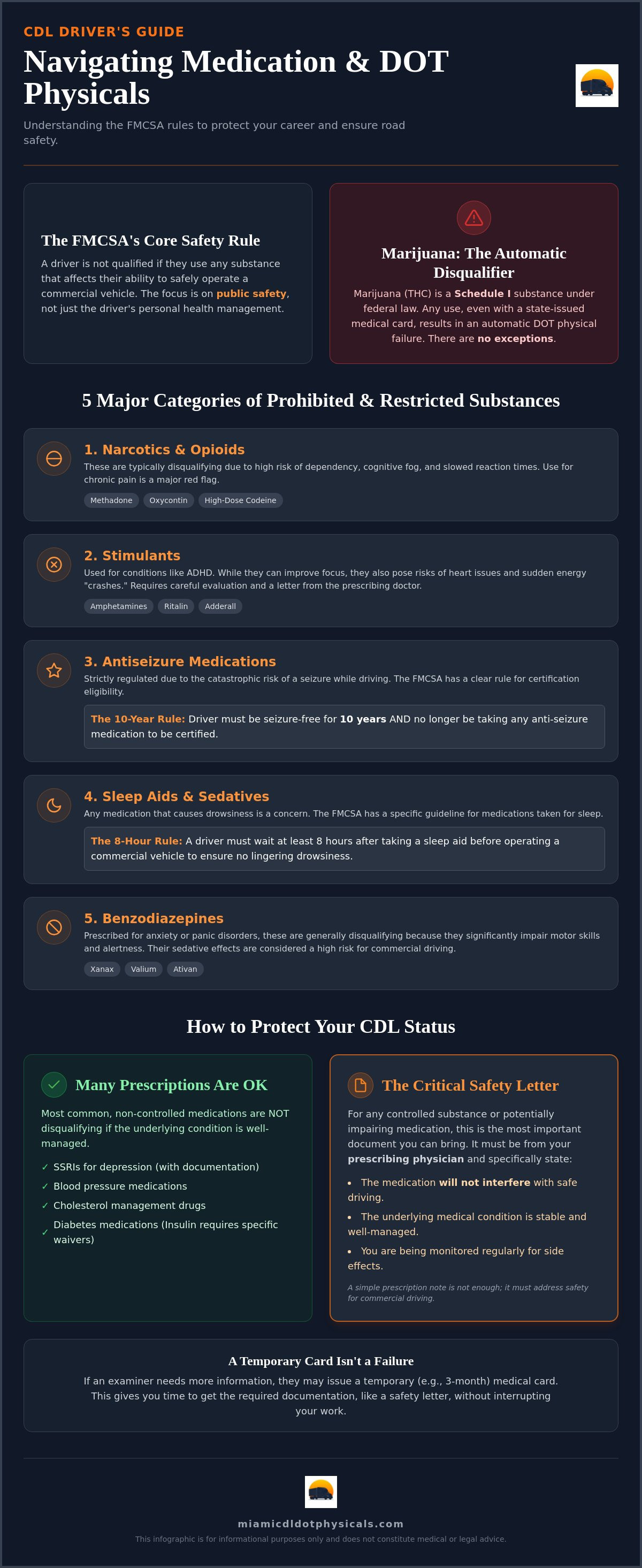
Federal law categorizes drugs into schedules based on their potential for abuse and medical utility. Schedule I drugs, such as marijuana or heroin, are automatic disqualifiers with no exceptions for medical use. Schedule II substances cover many narcotics and high-strength stimulants. While some are permissible with strict documentation, most high-potency opioids are prohibited because they cause unpredictable impairment. Safety-sensitive standards require that a driver remains fully alert and reactive without any substance-induced cognitive decline.
The 5 Major Categories of Prohibited Substances in Commercial Driving
While the FMCSA doesn't maintain an exhaustive list of every brand name, there are five major groups that frequently trigger a denial. Narcotics and opioids are at the top of this list. Even if your doctor prescribed Oxycontin for back pain, it often acts as one of the medications that disqualify CDL medical card status. These drugs cause cognitive fog and slow reaction times. Using them "as needed" (PRN) doesn't make them safer in the eyes of an examiner. You can learn more about the broader DOT physical requirements 2024 to see how these substances fit into your overall health assessment.
Stimulants like amphetamines used for ADHD treatment create a complex situation. While they can improve focus, they can also cause heart issues or sudden "crashes" in energy levels. Antiseizure medications are also strictly regulated because a seizure behind the wheel is a major hazard. According to the FMCSA Medical Examiner Handbook, drivers with a history of epilepsy can only be certified if they have been seizure-free for 10 years and are no longer taking anti-seizure medication. Marijuana remains a significant hurdle as well. Even if your state allows it for medical use, federal law still prohibits it for CDL holders. The DOT doesn't recognize state-level legalization, so any positive test for THC results in an immediate failure.
Narcotics and Pain Management
Examiners are particularly wary of drugs like Methadone and high-dose Codeine. These substances are often habit-forming and can lead to dependency. If you rely on these for chronic pain, you'll likely need to discuss alternative treatments with your physician before your exam. It's often helpful to schedule a DOT physical exam with a specialist who understands these nuances and can guide you through the documentation process.
The Hidden Danger of Over-the-Counter (OTC) Meds
Many drivers don't realize that over-the-counter (OTC) products can be just as dangerous as prescriptions. Antihistamines like Benadryl are notorious for a 12-hour "hangover" effect. They stay in your system and cause drowsiness long after you've taken them. Cough syrups containing alcohol or codeine derivatives are also risky. Always check the FMCSA medication guidelines before taking anything new. Even OTC sleep aids can impact your physical if they leave you groggy the next morning. These small choices can unknowingly become medications that disqualify CDL medical card eligibility during your screening.
Prescription Medications That Require Medical Examiner Discretion
While some drugs lead to an immediate denial, many others fall into a discretionary zone where the examiner makes the final call. These are medications that disqualify CDL medical card status only if they cause active impairment or are poorly managed. The examiner's job is to look at your specific health history and determine if your treatment plan is compatible with the rigors of long-haul driving. This often requires a collaborative approach between your personal doctor and the medical examiner to ensure your symptoms are controlled without compromising safety.
Blood pressure management is a perfect example of this discretion. If your medication causes side effects like dizziness or extreme fatigue, it could prevent you from meeting the DOT physical blood pressure requirements effectively. Similarly, diabetes management has changed significantly. Insulin use is no longer an automatic disqualifier. Under current rules, drivers with insulin-treated diabetes can be certified as long as they provide the required evaluation form from their treating clinician and show a history of stable blood sugar levels without severe hypoglycemic episodes.
Psychiatric Medications and Driver Safety
Benzodiazepines like Xanax or Valium are almost always a red flag during an exam. These drugs act as central nervous system depressants and can significantly slow your reaction time. In contrast, SSRIs used for depression or anxiety are generally permitted. Your treating physician must provide documentation showing you've been stable on the medication for at least 30 to 90 days. This stability period proves that you don't suffer from side effects that would compromise your focus or cognitive function while on duty.
Sleep Aids and the 8-Hour Rule
Sleep medications like Ambien or Lunesta require careful timing and strict adherence to the "8-hour rule." The primary concern for examiners is the risk of "sleep-driving" or lingering morning grogginess that mimics intoxication. You cannot operate a commercial vehicle within eight hours of taking a dose. The examiner will often require a waiting period after you start a new prescription to ensure you don't have an adverse reaction. Always be honest about your use of sleep aids; hiding them is a violation that carries much higher stakes than a temporary certification delay.
How to Protect Your CDL Status While Managing Health Conditions
Protecting your career starts with proactive communication long before you sit in the examiner's chair. While searching for medications that disqualify CDL medical card status, many drivers feel tempted to omit certain prescriptions. This is a mistake. Hiding a medication is an automatic DOT physical fail reason because it compromises the integrity of the safety evaluation. Instead, work with your treating physician to document your stability and safety on any necessary treatment plans. A well-prepared driver is a compliant driver.
Consulting with an FMCSA-certified examiner before your current card expires is a smart move. They can review your list and tell you exactly what documentation you'll need. This prevents last-minute surprises that could take you off the road. If you're unsure about a specific prescription, you can always book a DOT physical exam early to discuss your options and ensure your paperwork is in order before your livelihood is on the line.
What Your Doctor's Letter Must Contain
The "Prescribing Physician Letter" is your most powerful tool during the exam. It acts as a bridge between your medical treatment and the DOT's safety standards. This letter must be specific and professional. Your doctor needs to provide a clear picture of your health management that satisfies the examiner's safety concerns. Ensure the letter includes the following details:
- The exact medication name, dosage, and frequency of use.
- A clear statement that the doctor is aware of your "safety-sensitive commercial driving" duties.
- A professional opinion that the medication does not cause impairment or interfere with safe vehicle operation.
Without these specific points, the Medical Examiner may be forced to delay your certification while they wait for more information. Get it right the first time to avoid downtime.
Timing is also critical. Avoid starting new medications the week of your appointment. Most examiners want to see that you've been on a stable dose for a minimum of 30 days without adverse reactions. This trial period proves that you don't suffer from side effects like sudden dizziness or extreme fatigue that could strike while you're behind the wheel.
The Disclosure Strategy
When you fill out the MCSA-5875 form, be thorough and precise. List every medication you take, including the reasons for them. Bringing your actual pill bottles to the exam is a great strategy. It builds trust with the examiner and ensures they have the exact brand and dosage information. Honesty during the exam is the only way to avoid Clearinghouse issues and maintain your professional standing. Being transparent about medications that disqualify CDL medical card status allows the examiner to help you find a compliant path forward rather than simply issuing a denial.
Ensuring Compliance at Your Next DOT Physical Exam
The final step in protecting your career is choosing the right professional to conduct your exam. Not all medical providers understand the specific pressures and regulatory nuances of the trucking industry. Working with a specialist examiner who is deeply familiar with driver health is vital. They know how to interpret the latest 2026 FMCSA guidelines and can help you navigate the complexities of your treatment plan. This expertise often makes the difference between a smooth certification and a frustrating delay.
If you are currently taking medications that disqualify CDL medical card status, don't wait until the day of your appointment to address it. If a substance is truly prohibited, such as a high-potency narcotic or medical marijuana, you'll need to work with your treating physician to find a safe, compliant alternative. If you face a denial or a request for more information, don't view it as a permanent roadblock. Ask the examiner for the specific regulatory citation so you can provide exactly what is needed for a successful follow-up. Most issues are resolved through better documentation or minor adjustments to your health management.
Temporary vs. Full Certification
It's important to understand that certification isn't always an "all or nothing" outcome. Many drivers managing chronic conditions receive a temporary medical card, typically valid for three months or one year, rather than the standard two-year certificate. This shorter duration allows the examiner to monitor your stability and ensure your medication continues to work without causing impairment. This tiered system is common for various health markers, including blood pressure and DOT physical vision requirements. Once you've demonstrated long-term stability, you can often move back to a longer certification period.
Preparing for the Appointment
Success at the clinic depends on your level of preparation. Arriving with a complete pre-exam checklist reduces stress and speeds up the process. Ensure you have your current medication bottles, a clear list of dosages, and the safety letter from your prescribing doctor. If you've recently started a new prescription and aren't sure how it will be viewed, call the clinic for a consultation before your card expires. This proactive step shows the examiner that you take your safety-sensitive duties seriously. When you're ready to move forward, schedule your professional DOT physical exam today to ensure you stay compliant and on the road.
Secure Your Career with Proactive Health Management
Navigating the complex rules around medications that disqualify CDL medical card status doesn't have to be a source of anxiety. You now understand that while certain substances like marijuana or high-potency narcotics remain prohibited, many other health conditions are manageable with proper documentation. Success at the clinic depends on your honesty, the quality of your prescribing physician's safety letter, and your willingness to work with a specialist who understands the 2026 standards. Don't let a simple lack of clarity keep you off the road or jeopardize your livelihood.
Our FMCSA-certified medical examiners provide the expert guidance you need to navigate medication compliance with ease. We prioritize your time and professional standing by offering same-day medical card processing to keep your schedule moving. Book Your FMCSA-Certified DOT Physical Exam Now and walk into your appointment with total confidence. Your professional future is valuable, so take these proactive steps today to ensure you stay compliant and ready for the miles ahead.
Frequently Asked Questions
Can I drive a commercial vehicle while taking Xanax or Valium?
You generally cannot operate a commercial vehicle while taking benzodiazepines like Xanax or Valium. These medications act as central nervous system depressants that significantly impair your reaction times and cognitive function. Because road safety is the priority, examiners view these as a high risk for accidents. If you require these for an underlying condition, discuss alternative treatments with your physician that won't interfere with your medical certification.
Does medical marijuana disqualify me from having a CDL even if it's legal in my state?
Yes, marijuana remains an automatic disqualifier for all CDL holders under federal law. The DOT does not recognize state-level legalization for either medical or recreational use. A positive drug test for THC results in an immediate failure and requires a formal return-to-duty process through the FMCSA Clearinghouse. This is currently the only substance that causes a universal failure regardless of a doctor's recommendation.
What happens if I don't disclose a medication during my DOT physical?
Failing to disclose a medication is considered medical fraud and is an automatic reason for a failed exam. If the omission is discovered later through a drug test or medical records, your medical card will be revoked immediately. Honesty is the only way to stay compliant and protect your career. Examiners are often willing to work with you on documentation for legal prescriptions, but they cannot help if you hide the truth.
Can a DOT examiner fail me for taking Benadryl or other OTC meds?
An examiner can disqualify you if an over-the-counter medication causes active impairment during your duties. Benadryl is a common example because it often leads to significant drowsiness that lasts for up to 12 hours. While these aren't always medications that disqualify CDL medical card status permanently, they can lead to a temporary denial if you use them during your work shifts or right before an exam.
Are there any blood pressure medications that are prohibited by the FMCSA?
There are no specific blood pressure medications that are universally prohibited by the FMCSA. The examiner's primary concern is how the medication affects you personally. If a drug causes side effects like dizziness, fainting, or extreme fatigue, it could prevent you from being certified for duty. Most standard blood pressure treatments are perfectly acceptable as long as your readings stay within the required limits and you remain stable on the dose.
How do I get a waiver for a medication that is normally disqualifying?
The FMCSA does not typically issue waivers for prohibited medications in the same way they do for physical limb impairments. Instead, you must prove through a safety letter from your prescribing physician that the medication is necessary and does not cause impairment. This letter must explicitly state that the doctor knows your safety-sensitive duties. For very specific chronic conditions, you may need to apply for a formal exemption through the FMCSA's specific medical programs.
Can I pass a DOT physical if I am on insulin for diabetes?
You can pass your physical while on insulin provided you follow the 2018 FMCSA insulin-treated diabetes mellitus rule. You must have your treating clinician complete the MCSA-5870 form before your appointment. This form confirms that your condition is stable and that you haven't had any severe hypoglycemic episodes recently. As long as you provide this documentation to your examiner, insulin is no longer an automatic disqualifier for commercial drivers.
What should I do if my doctor prescribes a medication that might be disqualifying?
Consult your FMCSA-certified medical examiner before you start taking any new medication that might be disqualifying. They can review the drug class and tell you if it will impact your commercial driving status. If the medication is problematic, your doctor may be able to switch you to a safer alternative that meets DOT standards. Proactive communication is the best way to avoid a surprise lapse in your medical certification.


