

The best way to prepare for a DOT blood pressure check isn’t to chase a quick fix. It’s to support an accurate reading. If you’re searching for how to lower blood pressure for DOT physical, focus on safe steps such as arriving early, resting before the measurement, and avoiding caffeine or nicotine beforehand if that’s appropriate for you. Don’t stop or change prescribed medication to try to influence the result.
It’s understandable to worry that one high reading could delay your certification, especially when stress, caffeine, and conflicting online tips make it hard to know what matters. Stress can affect a reading, but the exam is a professional assessment, not a pass-or-fail trick. Be honest about your health and treatment so the examiner can assess your information in context and document the examination.
This guide covers practical ways to prepare for a calmer, more accurate measurement, last-minute blood pressure claims to avoid, and how to discuss an elevated reading or medication with the examiner. You’ll have a clear plan for exam day and know what to do next if your result is higher than expected.
Key Takeaways
- Learn how to lower blood pressure for DOT physical safely by preparing for an accurate measurement, not chasing a quick fix.
- Manage blood pressure consistently before exam day, and take prescribed medication exactly as directed.
- Rest quietly and follow proper measurement instructions to support a reliable reading. Breathing may ease stress but can’t guarantee a lower result.
- If a reading is elevated, stay calm and follow the examiner’s instructions. You can ask whether another measurement is appropriate.
- A DOT physical is a professional assessment of your health under applicable FMCSA standards, not a trick to outsmart.
Why blood pressure matters during a DOT physical
A blood pressure reading is one part of a DOT physical, not the sole measure of whether a driver is medically fit. The examiner considers it because blood pressure can indicate cardiovascular strain, which may matter for safe commercial driving. An elevated result may need context and further assessment, but it does not automatically determine the outcome.
What the two blood pressure numbers mean
A blood pressure reading has two numbers. Systolic pressure, the top number, measures the force of blood against artery walls as the heart beats. Diastolic pressure, the bottom number, measures that pressure between beats, while the heart rests. Together, they describe blood pressure at the time of measurement. For a foundational explanation, see this overview of understanding blood pressure.
One reading is a measurement, not a complete diagnosis. Temporary factors, measurement conditions, and a person’s health can all affect it, so it shouldn’t be treated as the whole story. An elevated result may call for attention and further assessment, but only a qualified medical professional can interpret it in context. Don’t rely on an online chart or a single number to diagnose yourself or predict a certification decision.
How blood pressure fits into the DOT medical exam
During a DOT medical examination, the medical examiner assesses whether a driver meets applicable FMCSA medical standards. Blood pressure is considered alongside the rest of the examination because cardiovascular health can affect a driver’s ability to perform safety-sensitive duties. The examiner may also consider relevant medical history and current treatment, including medication and how the condition is being managed.
Current FMCSA guidance informs the assessment, but a measurement is not a diagnosis or an automatic certification decision. The guidance, examination findings, and your individual circumstances all matter. Blood pressure thresholds can inform the examiner’s decision, but a threshold alone leaves out important context. The examiner evaluates the full medical picture and documents the examination.
An elevated blood pressure reading is a finding to assess, not an automatic certification outcome. If you’re concerned about a past reading or an ongoing condition, be prepared to explain your history and treatment accurately. That helps the examiner understand the result rather than interpret it in isolation. For broader preparation steps, the DOT physical preparation guide can help you get organized before your appointment.
Knowing what the numbers represent also puts the search for how to lower blood pressure for DOT physical into perspective. The goal is not to manipulate a monitor or conceal a health concern. It’s to support an accurate measurement and give the examiner the information needed to assess your fitness under current standards. The following sections explain practical preparation and quick-fix claims to avoid.
How to support a healthy blood pressure before exam day
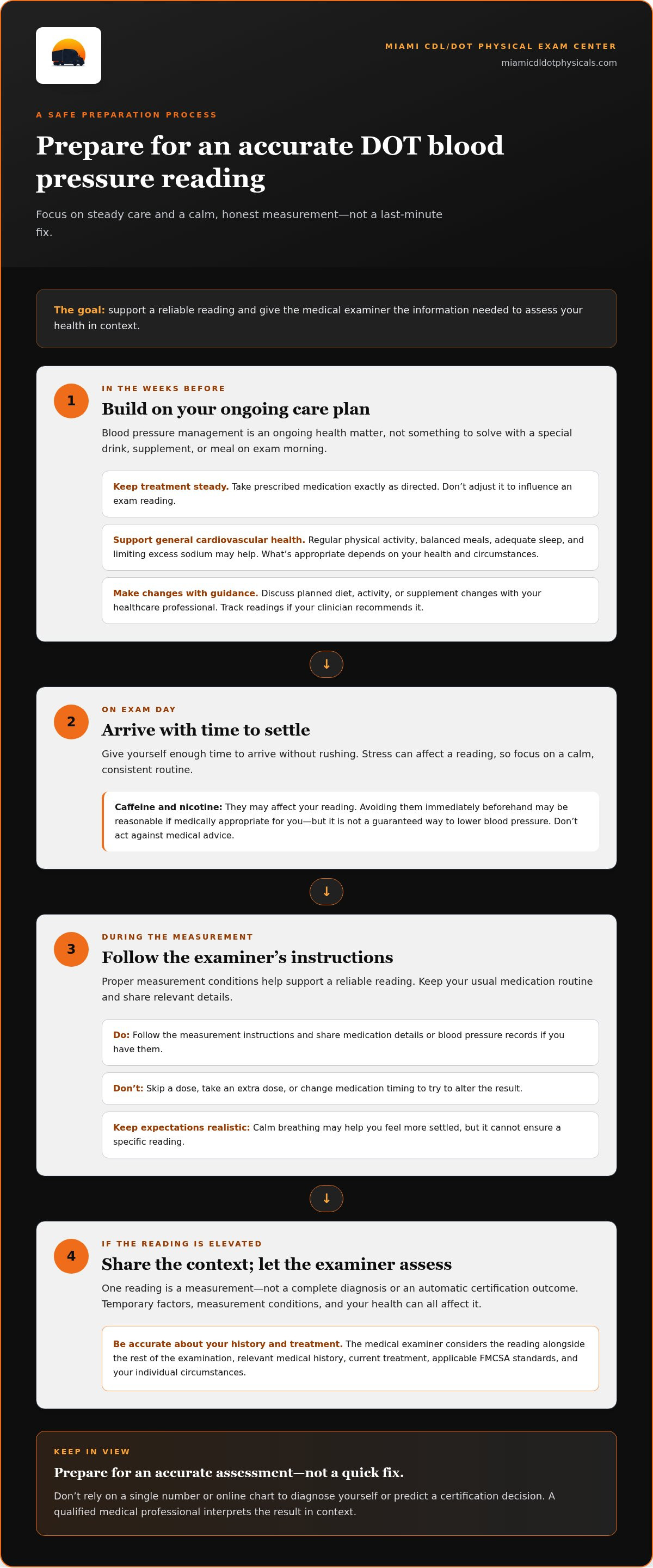
The most reliable preparation starts well before the appointment. Blood pressure management is an ongoing health matter, not something to solve with a special drink, supplement, or meal on exam morning. If you’re researching how to lower blood pressure for DOT physical, focus on habits and treatment that support your health over time, then prepare for an accurate measurement.
Build sustainable habits instead of relying on last-minute fixes
In the weeks before your exam, follow the care plan you’ve discussed with your healthcare professional. Regular physical activity, balanced meals, adequate sleep, and limiting excess sodium can support general cardiovascular health. What’s appropriate depends on your health and circumstances, so get personalized guidance rather than making abrupt changes based on online claims.
- Keep taking prescribed medication as directed.
- Discuss planned diet, activity, or supplement changes with your healthcare professional.
- Track readings if your clinician recommends it, and bring relevant records to the exam.
These habits aren’t a substitute for prescribed care, and they can’t guarantee a particular DOT physical result. A sudden switch to a restrictive diet or an unfamiliar supplement may not be appropriate for you. Manage prescribed blood-pressure treatment with the clinician who prescribed it, and don’t adjust it to influence an exam reading.
Prepare calmly on the day of the DOT physical
Give yourself enough time to arrive without rushing. Follow the examiner’s instructions for the measurement, and share relevant medication details or blood pressure records if you have them. Caffeine or nicotine may affect your reading. Avoiding them immediately beforehand may be reasonable if it’s medically appropriate for you, but it isn’t a guaranteed way to lower blood pressure. Don’t make a change that conflicts with medical advice.
Keep your routine steady. Take your usual medication according to your prescriber’s instructions. Never skip a dose, take an extra dose, or change the timing to try to alter the result. Don’t count on a particular food, beverage, supplement, or breathing exercise to produce a rapid, predictable change. Calm breathing may help you feel more settled, but it can’t ensure a specific reading.
If you’re unsure whether a routine or medication instruction applies on exam day, ask the clinician who manages your care before the appointment. That keeps preparation grounded in your individual health needs instead of last-minute experimentation. Accurate information helps the examiner assess your health appropriately.
When you’re ready to complete your examination, you can schedule a DOT physical exam and arrive prepared with your medication details and any relevant records.
Blood pressure quick fixes: what may help and what to avoid
Searches for how to lower blood pressure for DOT physical often lead to promises about a drink, supplement, breathing routine, or last-minute food change. Treat claims of guaranteed, immediate results with caution. The safer goal is an accurate measurement, not a temporarily altered number. Quiet rest and following the examiner’s instructions can support a reliable reading, while untested interventions may create new risks or fail to help.
Which exam-day actions support an accurate reading?
Follow the examiner’s directions and sit quietly if asked before the measurement. Stay still and relaxed rather than talking or rushing through the check. Stress, recent physical activity, caffeine, or nicotine can affect a reading for some people, but the effect varies. If one of these factors may be relevant, tell the examiner instead of trying to hide it.
Slow, comfortable breathing may help you feel calmer if the appointment makes you anxious. It can’t guarantee a lower reading or replace an accurate measurement. Follow the examiner’s process rather than trying to control the result yourself.
Why not to experiment with supplements or medication
A supplement that seems harmless may interact with medication or affect your health unpredictably. Don’t start a supplement, sharply change your diet, or drink excessive amounts of water to chase a lower number. Online claims that a particular food or product will reliably reduce blood pressure within hours aren’t a dependable basis for exam-day decisions. Ask a healthcare professional about changes that could affect your care.
Never skip, double, or change a prescribed dose to influence the result. Only the clinician managing your treatment can advise you about medication adjustments. If you’ve already changed a dose or taken a new product, be honest about what you used and when. Accurate information helps the examiner assess your health and treatment in context.
Keep the difference clear:
- Helpful preparation: follow the examiner’s instructions, sit quietly when asked, and mention relevant circumstances such as recent activity or stimulant use.
- Risky experimentation: take extra medication, try an unfamiliar supplement, overhydrate, or make a drastic diet change for a fast result.
Trying to misrepresent your health doesn’t support safe driving or a valid medical assessment. The DOT examination is a professional evaluation, not a test to beat. If the reading is higher than expected, share relevant details and follow the examiner’s guidance. Honest information gives the examination a sound basis and helps clarify what, if anything, needs follow-up.
What to do if your blood pressure reads high at the exam
An elevated reading can feel stressful, especially when your certification is important to your work. Pause, stay calm, and follow the examiner’s instructions. Don’t try to force a different result with extra medication, supplements, or other last-minute measures. The examiner will assess the reading as part of the DOT medical examination and determine what steps are appropriate under current FMCSA guidance.
You can ask whether another measurement may be appropriate. The examiner decides how to proceed within the examination process, so a repeat reading isn’t something to demand or assume. Certification decisions depend on applicable standards and the examiner’s assessment of your circumstances. An elevated result by itself doesn’t tell you the final outcome.
How to discuss an elevated reading with the examiner
Give clear, accurate information. Tell the examiner if you’ve been diagnosed with hypertension, describe your treatment, and share relevant recent readings if you have them. Provide medication names and dosages as accurately as possible. If you don’t know a detail, say so rather than guessing. This context helps the examiner assess the full picture and explain what happens next.
Be straightforward about factors that may have affected the measurement, such as recent activity, caffeine, nicotine, or feeling anxious. Don’t conceal a diagnosis or change your answers to influence the assessment. The examiner can clarify whether the examination can proceed, whether more information is needed, or what follow-up steps apply to your situation.
When to follow up with a healthcare professional
If readings remain elevated outside the exam, or you’re concerned that treatment isn’t working as expected, arrange follow-up with a healthcare professional who can evaluate your individual health needs. Keep a record of readings if they recommend it, and discuss medication concerns with the prescribing clinician. Don’t adjust treatment based on an exam result or online advice alone.
Some symptoms call for prompt medical attention rather than routine follow-up. Seek urgent help for concerning symptoms such as chest pain, difficulty breathing, sudden weakness, or sudden changes in vision or speech. This article can’t diagnose a condition or replace personalized medical care. If you’re unsure how urgently to act, contact a qualified medical professional or local emergency services.
Looking up how to lower blood pressure for DOT physical can lead to advice that promises a quick result, but an elevated reading is best handled with honest communication and appropriate follow-up. A DOT physical is a professional assessment, not a trick to pass. For your examination, schedule a DOT physical exam and be ready to share relevant health and medication details with the examiner.
Complete your DOT physical with clear, professional guidance
Good preparation is practical: manage blood pressure consistently, take medication as prescribed, and arrive ready for an accurate measurement. If you’ve been searching for how to lower blood pressure for DOT physical, remember that the goal is not to force a particular number. It’s to support your health and give the examiner clear, accurate information.
A DOT medical examination assesses your health under applicable FMCSA standards. The examiner considers the examination findings and relevant health information when evaluating medical fitness. The center provides FMCSA-certified medical examinations for commercial drivers, but no article or preparation tip can promise a specific certification decision. The examiner makes that assessment based on applicable standards and your circumstances.
What to bring and share at your appointment
Prepare a few useful details before you arrive. Bring identification and any medication or medical information relevant to the examination, following the appointment instructions. If you have a history of high blood pressure, be ready to describe your treatment and share recent readings if available. Give medication names and dosages accurately, and don’t guess if you’re unsure.
- Bring identification and relevant medical or medication details.
- Share your hypertension history and current treatment honestly.
- Bring recent blood pressure records if you have them.
- Follow the examiner’s instructions during the measurement and examination.
Clear information helps the examiner assess the full medical picture rather than interpret a single result without context. If you’re renewing your medical card, the CDL medical card renewal guide can help you understand the renewal process and plan ahead.
Schedule a DOT medical examination
Keep managing your health with guidance from the clinician who oversees your care, and take prescribed medication according to their instructions. Don’t skip a dose or try an unproven quick fix to influence the measurement. At the examination, answer questions honestly and ask the examiner to explain any next steps you don’t understand.
A high reading may be concerning, but the examination is a professional assessment, not a trick to pass. The examiner evaluates your health under applicable FMCSA standards and determines the outcome; certification can’t be guaranteed in advance. Preparing reliable information and following the examination process gives you a clear way to move forward.
If you’re ready to complete your DOT medical examination, you can schedule your DOT physical examination. Arrive prepared, share relevant health details, and let the examiner assess your medical fitness based on the examination.
Take the next step with confidence
Preparing for a DOT physical is a chance to approach the appointment with clear information, not a reason to put your health under pressure with last-minute experiments. If you’re still wondering how to lower blood pressure for DOT physical, focus on safe, consistent care and an accurate medical assessment. Your health plan should support you beyond exam day, too.
The center specializes in DOT physical exams and drug testing, and provides FMCSA-certified medical examinations for commercial drivers. The examiner evaluates your health under applicable standards; no preparation tip can guarantee a certification decision. Come ready to share relevant information and follow the examination process.
When you’re ready to take that step, schedule your DOT physical examination. A clear plan and professional assessment can help you move forward with greater confidence in your medical compliance.
Frequently Asked Questions
Can I pass a DOT physical with high blood pressure?
Possibly, because an elevated reading alone doesn’t determine the outcome. Current FMCSA guidance and the medical examiner’s assessment of your health and circumstances both matter. Be candid about a hypertension diagnosis, medication, and recent readings, even if you’re worried they could affect certification. An online threshold can’t predict your examination decision by itself.
What blood pressure reading is allowed for a DOT physical?
Current guidance generally associates a reading at or below 140/90 mmHg with eligibility for a certificate of up to two years, though medication may limit the certification period. Readings from 140/90 to 159/99 may qualify for a one-year certificate; higher ranges can involve additional restrictions or prevent certification until controlled. These are guidelines, not guarantees. The examiner applies current FMCSA standards and considers your individual medical information.
How can I lower my blood pressure quickly before a DOT physical?
There’s no dependable quick method that guarantees a lower medical reading. To address how to lower blood pressure for DOT physical safely, arrive with enough time to settle and follow the examiner’s instructions. Sitting quietly when asked may help reduce the effect of rushing or nervousness, but it isn’t treatment. Don’t take extra medication, try a new supplement, or rely on an online promise of an instant result.
Should I take my blood pressure medication before a DOT physical?
Follow the instructions from the clinician who prescribed your medication. Don’t skip a dose, take extra medication, or change the timing to influence your DOT examination reading. If your appointment falls near a dose time and you’re uncertain what to do, contact the prescribing clinician before exam day. Bring a current medication list, including each drug’s name and prescribed dose, so you can report your treatment accurately.
Can stress raise blood pressure during a DOT physical?
Stress may affect blood pressure readings for some people, though the response varies. Give yourself time to arrive without rushing, then follow the examiner’s directions for the measurement. If anxiety or a recent stressful event may be relevant, mention it plainly rather than trying to conceal it. The medical examiner determines whether another measurement or any other step is appropriate during the examination.
What happens if my blood pressure is high during a DOT physical?
The examiner evaluates the result under current FMCSA standards and considers your medical information before determining the next step. Be prepared to describe any diagnosis, medication, and recent readings. The examiner may explain whether further assessment or clinical follow-up is needed, but a repeat measurement, certification period, or outcome isn’t guaranteed. If elevated readings continue outside the exam, arrange follow-up with a healthcare professional who can assess your situation.
Can beet juice or potassium help lower blood pressure before a DOT exam?
Neither beet juice nor potassium is a guaranteed immediate way to lower a DOT exam reading. Individual responses vary, and potassium intake or supplements may be inappropriate for some health conditions or may interact with medication. Don’t make a sudden dietary change or start a supplement just before your appointment without medical guidance. Ask your healthcare professional whether a change is safe for your health and current treatment plan.


