

What if your next medical exam wasn't a source of stress, but a simple, routine step toward another two years on the road? Most commercial drivers view the DOT physical as a high-stakes hurdle that could ground their career in an instant. It's natural to feel anxious about a sudden blood pressure spike or wonder if your medications meet the 2026 FMCSA standards. Understanding exactly what to expect during a DOT physical is the most effective way to replace that uncertainty with total confidence.
We know that your CDL isn't just a license; it's your livelihood. You deserve a clear path to compliance that doesn't involve navigating dense legal jargon or worrying about disqualifications. By following expert guidance and preparing your documentation in advance, you can walk into your appointment ready to succeed. Our goal is to help you secure that 2-year medical card while ensuring your certification is handled with speed and accuracy.
This 2026 guide simplifies the federal requirements for your medical certification. We'll walk you through the essential preparation steps, explain the latest vision and hearing benchmarks, and show you how to find a reliable FMCSA-certified examiner. You'll gain a complete understanding of the process so you can stay focused on the road ahead.
Key Takeaways
- Learn exactly what to expect during a DOT physical to remove the stress of the exam and ensure you're prepared for every health screening.
- Understand the 2026 blood pressure benchmarks, including how maintaining a reading below 140/90 can secure your two-year medical certification.
- Discover the streamlined process for drivers with insulin-treated diabetes using the ITDM assessment form to maintain federal compliance.
- Identify the specific documentation and corrective aids you must bring to your appointment to prevent avoidable delays or license issues.
- Clarify the relationship between your physical exam and FMCSA Clearinghouse requirements to keep your professional standing in good order.
What is a DOT Physical and Why is it Mandatory?
A DOT physical is a specialized medical evaluation required by the Federal Motor Carrier Safety Administration (FMCSA). It ensures that every operator behind the wheel of a heavy commercial vehicle is physically and mentally fit for the job. This assessment is a core part of broader Commercial Driver's License (CDL) requirements, acting as a safeguard for everyone on the road. Knowing what to expect during a DOT physical helps you approach the process as a partner in safety rather than a passive participant.
Only examiners listed on the National Registry of Certified Medical Examiners (NRCME) can perform these tests. You'll need this exam if you drive vehicles weighing over 10,001 lbs, transport hazardous materials, or carry more than eight to fifteen passengers for compensation. The ultimate goal is to secure your Medical Examiner’s Certificate (Form MCSA-5876), which serves as your official proof of medical fitness and keeps your CDL valid.
Federal Safety Standards for 2026
In 2026, federal safety standards emphasize proactive health monitoring to reduce fatigue-related accidents and medical emergencies on highways. You're legally required to keep your medical card valid and on your person at all times while driving. If your certificate expires, your CDL is often downgraded to a non-commercial status by your state licensing agency immediately. This doesn't just stop you from working; it also voids your commercial insurance coverage, leaving you and your employer legally and financially vulnerable.
Validity Periods: 2-Year vs. Short-Term Cards
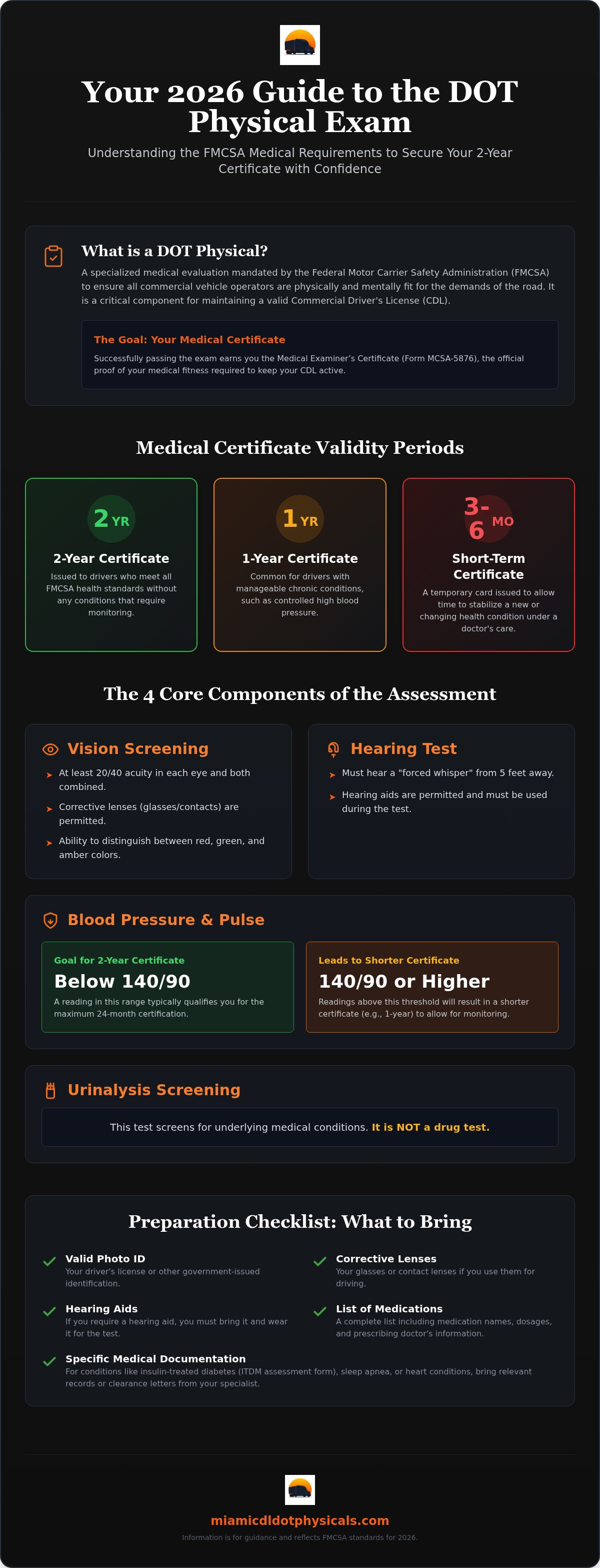
Most drivers with no significant health concerns receive a standard 24-month certification. However, if you manage chronic conditions like hypertension or sleep apnea, the examiner might issue a shorter certificate. These monitored cards typically follow a specific schedule:
- 2-Year Card: Issued to drivers meeting all health standards without needing regular monitoring.
- 1-Year Card: Common for drivers with controlled high blood pressure or other manageable conditions.
- 3 or 6-Month Card: Often a one-time issuance to allow a driver time to stabilize a condition, such as starting a new blood pressure medication.
Understanding these timelines is a big part of knowing what to expect during a DOT physical if you have a history of chronic health issues. Frequent renewals ensure that you stay safe on the road while receiving the medical attention necessary to keep your career moving forward.
The Four Core Components of the FMCSA Medical Assessment
The medical assessment is a systematic check designed to confirm you can safely handle the physical demands of long-haul driving. While every examiner has a slightly different workflow, the FMCSA medical requirements mandate four specific areas of evaluation. These pillars ensure that your vision, hearing, cardiovascular health, and organ function meet federal safety standards. Knowing these details helps you understand what to expect during a DOT physical and reduces the anxiety of the unknown.
Vision and Hearing Requirements
Your ability to perceive the environment is the first line of defense on the road. You must have at least 20/40 distant visual acuity in each eye, as well as both eyes combined. If you wear glasses or contacts, bring them to the appointment; you can qualify using corrective lenses. Additionally, you must be able to recognize standard traffic signal colors, including red, green, and amber. Hearing is equally vital. The examiner typically performs a forced whisper test, where you must hear a whisper from a distance of five feet in your better ear. If you use a hearing aid, it must be worn and functional during the screening.
Blood pressure and pulse rate are also checked immediately to identify potential hypertension. To secure a full two-year certification in 2026, your blood pressure should ideally be below 140/90. Readings above this threshold may lead to a shorter certification period while you work with a physician to manage the condition. If you're concerned about your readings, scheduling a DOT physical exam with a provider who understands the stress of the job can make the process much smoother.
The Urinalysis Explained
The urinalysis is a standard part of the medical assessment, but it's often a source of confusion for drivers. This specific test is not a drug screen. Instead, the examiner looks for markers of underlying systemic issues, specifically checking for the presence of sugar, protein, or blood. High sugar levels can indicate undiagnosed or poorly managed diabetes, while protein or blood might suggest kidney issues. The medical urinalysis screens for health indicators, whereas a DOT drug test is a separate procedure designed to detect controlled substances.
The final component is a comprehensive physical examination. The medical examiner performs a head-to-toe review of your neurological, muscular, and respiratory health. They'll check for abnormalities in your heart rhythm, lung sounds, and joint flexibility. This isn't just a "check the box" exercise; it's a professional validation that you're prepared for the rigors of the transportation industry.
Managing Chronic Conditions: Blood Pressure and Diabetes
Managing a long term health condition doesn't have to end your career. Many drivers fear that a diagnosis like hypertension or diabetes will lead to an immediate license suspension. In reality, the 2026 FMCSA standards provide clear pathways for drivers to stay on the road while managing these issues. Understanding what to expect during a DOT physical when you have a chronic condition allows you to gather the right paperwork and stabilize your health before the exam. Proactive management is the difference between a two year certification and a stressful follow up appointment.
Passing with High Blood Pressure
Blood pressure is one of the most common reasons drivers receive short term medical cards. To secure a full two year certification in 2026, your reading must be below 140/90. If your blood pressure falls between 140/159 and 90/99, you'll likely receive a one year certificate. Readings higher than this may result in a one time, three month certificate to allow time for medication adjustments. To avoid spikes caused by "white coat syndrome," arrive early to your appointment and practice deep breathing before the cuff is applied. Always bring a complete list of your current blood pressure medications, including dosages and the prescribing doctor's contact information.
Diabetes and the ITDM Assessment
The shift in how the FMCSA handles insulin dependent drivers has made the process much more efficient. In 2026, drivers with insulin treated diabetes mellitus (ITDM) no longer need to apply for a federal waiver. Instead, you must have your treating clinician complete the Insulin Treated Diabetes Mellitus Assessment Form (MCSA-5870). This form confirms that your condition is stable and that you're managing your blood sugar effectively. When you know what to expect during a DOT physical as an ITDM driver, you'll remember to bring this completed form and your recent glucose logs to ensure same day processing of your medical card.
Other conditions like obstructive sleep apnea and cardiovascular history require similar documentation. If you use a CPAP machine, bring a compliance report covering the last 30 to 90 days to show you're using the device as prescribed. Drivers with a history of heart surgery, stents, or pacemakers should provide a recent clearance letter from their cardiologist. These documents prove to the medical examiner that your condition is under control and that you're safe to operate a commercial vehicle. Being prepared with these records demonstrates professional responsibility and speeds up the entire certification process.
Preparation Checklist: What to Expect and What to Bring
Arriving prepared is the best way to ensure a fast, successful certification. The most basic requirement is a valid government-issued photo ID, typically your commercial driver's license. If you use corrective lenses or hearing aids while driving, you must bring them to the appointment. The examiner needs to verify that these aids allow you to meet federal vision and hearing standards. Additionally, organize your medical history into a clear format to avoid delays. Having your paperwork ready shows the examiner that you're a professional who takes your health and compliance seriously.
To keep the process moving efficiently, ensure you have the following items ready:
- A complete list of current medications, including dosages and prescribing physician names.
- Glasses, contact lenses, or hearing aids used for driving.
- Specialist clearance letters for conditions like heart disease, stroke, or sleep apnea.
- A record of any recent surgeries or hospitalizations.
Required Medical Documentation
If you manage complex health issues, you'll need specific documentation from your specialists. For cardiac patients, providing recent stress test results or echocardiograms is essential for the examiner to clear you for duty. Drivers with a history of stroke or seizures must bring a clearance letter from their neurologist. If you use a CPAP machine for sleep apnea, bring a data report showing at least 30 to 90 days of consistent usage. Reviewing a detailed guide on how to pass DOT physical requirements can help you cross-reference your specific needs before you arrive.
Day-of-Exam Best Practices
Your habits on the morning of the test can significantly impact your results. Avoid caffeine and nicotine for at least two hours before your appointment. These stimulants can cause temporary spikes in your blood pressure and pulse rate, potentially leading to a shorter certification period. Drink plenty of water throughout the morning. Proper hydration makes it much easier to provide the required urinalysis sample without delay. Arriving 15 minutes early gives you time to complete the necessary paperwork and settle in, which helps keep your heart rate stable.
When you know what to expect during a DOT physical, you can take control of the process. Having your documents organized prevents the need for follow-up visits or temporary certificates. If you're ready to get back on the road quickly, you can schedule your DOT physical exam today with a certified examiner who values your time. Proper preparation doesn't just help you pass; it ensures your 2026 medical certification is handled with the efficiency your schedule demands.
Comprehensive Compliance: Drug Testing and Consortium Services
Staying compliant in 2026 requires more than just a medical checkup. Many drivers assume the urinalysis performed during their medical exam is a drug screen, but these are two distinct requirements. While you now know what to expect during a DOT physical regarding health markers like glucose and protein, a DOT drug test is a separate forensic procedure. Federal law mandates drug testing for pre-employment, post-accident, and random selections. Managing these requirements separately can be a logistical headache. Choosing a facility that offers both services ensures your paperwork is handled correctly and your records stay synchronized.
The FMCSA Clearinghouse is a central pillar of road safety. By 2026, the National Registry II (NRII) has fully digitalized the reporting process. Medical examiners must now submit exam results to the federal system by midnight of the next calendar day. This electronic record then flows directly to State Driver Licensing Agencies (SDLAs). This speed leaves no room for error or delay. If you aren't registered in the Clearinghouse, you risk losing your eligibility to operate commercial vehicles. Integrated services allow for faster reporting, ensuring your status remains active without administrative gaps.
The FMCSA Clearinghouse Consortium
Owner-operators and small fleets face unique challenges with random drug testing. Federal law requires you to be part of a random testing pool, which you cannot manage yourself. Joining an FMCSA clearinghouse consortium compliance guide automates this process. The consortium handles the random selection and ensures you meet mandatory testing windows. This protection is vital because missing a random test carries the same penalties as a failed one. It removes the guesswork from compliance and lets you focus on the road.
Professional Certification Services
Selecting a facility that specializes in transportation medicine offers a significant advantage. These centers understand the specific pressure of maintaining a CDL. They don't just perform exams; they act as compliance partners. This expertise ensures your results are reported accurately and quickly to the SDLA, preventing any gap in your driving status. When you prepare by knowing what to expect during a DOT physical and a drug test, you minimize the risk of technical delays. Specialized providers often have the infrastructure to handle both requirements in a single visit, saving you valuable time.
Regulatory compliance shouldn't be a source of stress for professional drivers. Efficiency and accuracy are the keys to staying on the road and protecting your livelihood. Schedule your professional DOT physical today to ensure your 2026 medical certification and drug testing requirements are handled by certified experts. Taking this step ensures you meet all federal standards with total confidence.
Stay Road-Ready with 2026 FMCSA Compliance
Navigating federal regulations doesn't have to be a burden on your busy schedule. By organizing your medical records and understanding the latest 2026 FMCSA standards, you'll move through your certification with total confidence. Managing chronic conditions like hypertension or diabetes is entirely possible with proactive documentation and the proper assessment forms. Knowing exactly what to expect during a DOT physical ensures you stay in the driver's seat of your professional life without unnecessary delays or stress.
Our team acts as your dedicated compliance partner. We provide access to Certified FMCSA Medical Examiners who prioritize your time and livelihood. With Same-Day Medical Card Processing and Integrated Drug Testing & Clearinghouse Support, we offer a streamlined path back to the road. Don't let paperwork or health anxiety slow you down. Book Your FMCSA-Certified DOT Physical Exam Today and experience a faster, more efficient way to stay compliant. Your next two years on the road start with a successful exam.
Frequently Asked Questions
How long is a DOT physical exam valid for in 2026?
A standard certification is valid for 24 months if you meet all federal health requirements. If you manage chronic conditions like hypertension or sleep apnea, the examiner may issue a certificate for one year or less to ensure regular monitoring. Understanding what to expect during a DOT physical helps you prepare for these possibilities. Your results are electronically submitted to the FMCSA by midnight of the next calendar day to maintain your CDL status.
What medications will disqualify me from getting a CDL medical card?
Disqualifying medications include Schedule I controlled substances, methadone, and certain anti-seizure drugs. High-dosage sedatives or medications that cause significant impairment also pose a risk to your certification. Even if a drug is legal at the state level, such as medical marijuana, it remains disqualifying under federal FMCSA regulations in 2026. Always bring a complete list of your current prescriptions and dosages to your appointment for the examiner to review.
Can I pass a DOT physical if I have high blood pressure?
Yes, you can pass with high blood pressure, but the reading dictates the length of your medical card. A reading below 140/90 typically results in a full two-year certification. If your pressure is between 140/159 and 90/99, you'll likely receive a one-year card. Higher readings may result in a one-time three-month certificate to allow for medication adjustments. Controlled hypertension doesn't stop your career; it just requires more frequent medical checkups.
Is a drug test included in the standard DOT physical exam?
A standard DOT physical includes a urinalysis, but this is not a drug test. The medical urinalysis screens for sugar, protein, and blood to identify underlying health issues like diabetes or kidney disease. A DOT drug test is a separate forensic procedure designed to detect controlled substances. While many facilities offer both services during a single visit, they are distinct requirements for maintaining your professional compliance and clearinghouse status.
What happens if I fail my DOT physical exam?
If you don't meet the standards, the examiner may defer the certification until you provide more information or disqualify you for a specific condition. You can often return for a follow-up once you've addressed the issue or obtained a specialist's clearance. Because results are uploaded to the FMCSA National Registry by the next calendar day, it's vital to address any health concerns before your current medical card expires to avoid a CDL downgrade.
Do I need a new DOT physical if I change employers?
In most cases, your current medical card remains valid even if you switch companies. The certificate is tied to you as a driver rather than a specific employer. However, some motor carriers have internal policies requiring a new physical from their preferred provider before you start. It's best to keep a paper copy of your MCSA-5876 certificate handy to show new employers during the hiring process.
How do I find an FMCSA-certified medical examiner?
You must use the official FMCSA National Registry of Certified Medical Examiners website to find an authorized provider. Only examiners who have passed the federal certification test and are listed on this registry can perform the exam. Using an uncertified provider makes your medical card invalid and can lead to the suspension of your CDL. Knowing what to expect during a DOT physical includes verifying your examiner's credentials before you arrive.
Can I use a primary care physician for my DOT physical?
You can only use your primary care physician if they're listed on the FMCSA National Registry. Most primary care doctors don't have this specialized certification. Even if your doctor knows your health history, they cannot issue a valid Medical Examiner’s Certificate unless they've completed the required federal training. It's often more efficient to visit a specialized occupational health center that focuses on transportation medicine and fast-track compliance.


