

A sleep apnea diagnosis isn't a career-ender, but walking into your exam without the right data definitely can be. You've likely heard the rumors at truck stops about drivers losing their livelihoods over a neck measurement or a high BMI. It's stressful to feel like your career depends on a machine's data log, especially when regulatory guidance feels like a moving target. We understand that your medical card is your ticket to a paycheck, and the anxiety surrounding DOT physical sleep apnea requirements is real. Our goal is to replace that stress with a clear, actionable plan for compliance.
This guide breaks down exactly how the FMCSA evaluates these conditions in 2026. You'll learn which BMI thresholds trigger a mandatory sleep study and why a diagnosis doesn't mean you're disqualified. We'll also explain the specific CPAP usage data you need to show your examiner to secure your certification and avoid a pending status. By the end of this article, you'll know exactly how to manage your health and your paperwork to stay on the road without interruption.
Key Takeaways
- Understand how BMI thresholds of 40 or higher impact DOT physical sleep apnea requirements and when a mandatory sleep study is triggered.
- Learn the specific "4-hour, 70%" rule for CPAP compliance to ensure your treatment data meets FMCSA safety standards.
- Discover why a new sleep apnea diagnosis results in a 3-month temporary card and how to upgrade to a full 1-year certification.
- Identify exactly which documents, including your 90-day compliance report, you must bring to your appointment for immediate medical card issuance.
- Shift your perspective from sleep apnea being a disqualifying condition to a manageable one that keeps you safely behind the wheel.
Understanding Sleep Apnea and FMCSA Safety Standards
Sleep apnea is a serious respiratory disorder where breathing stops and starts repeatedly throughout the night. For commercial drivers, the most common form is Obstructive Sleep Apnea (OSA). In 2026, the FMCSA views this condition as a manageable safety factor rather than a career roadblock. The primary concern isn't the diagnosis itself, but the resulting daytime sleepiness. This fatigue leads to "micro-sleeps," which are brief, involuntary moments of sleep that can happen behind the wheel. Because of these safety risks, certified medical examiners must evaluate every driver for OSA during the exam to ensure they meet the DOT physical sleep apnea requirements. The 2026 regulatory focus has shifted to ensuring drivers are treated and alert, keeping you behind the wheel safely.
The Risks of Untreated Sleep Apnea
Driving with untreated OSA is dangerous. Research shows that the impairment caused by severe sleep deprivation is often comparable to driving under the influence of alcohol. Reaction times slow down significantly. You might not notice a hazard until it's too late to brake. Beyond the immediate crash risk, untreated apnea puts immense strain on your heart. It's linked to hypertension, stroke, and sudden cardiovascular events. Untreated apnea causes oxygen levels to drop repeatedly during the night. This triggers a "fight or flight" response that spikes your blood pressure. Managing the condition doesn't just protect your CDL; it extends your career longevity by keeping your heart and brain healthy for the long haul.
Screening vs. Disqualification
Many drivers fear that mentioning snoring or fatigue will lead to an immediate fail. This isn't the case. A referral for a sleep study is a screening step, not a disqualification. Examiners look for high-risk markers to determine if you need further testing. The condition is generally categorized into three levels:
- Mild: Minimal impact on daily alertness; usually requires monitoring.
- Moderate: Requires intervention to ensure safety.
- Severe: Immediate treatment is necessary to maintain a medical card.
The goal is to identify drivers at high risk for falling asleep while driving. If you're referred for a study, it means the examiner is acting as a partner in your safety. By following the DOT physical sleep apnea requirements, you ensure that you remain a safe, compliant professional. They want to ensure you're treated and alert so you can keep your medical card and stay on the road safely. We focus on getting you through the process efficiently so you can get back to work.
The Physical Markers: BMI and Neck Width Requirements
During your exam, the medical examiner isn't diagnosing you with a condition. They're screening for risk factors to determine if further testing is necessary. This is a critical distinction many drivers miss. A referral for a sleep study is based on objective physical markers that suggest a high probability of airway obstruction. These markers are used alongside FMCSA regulations to ensure that every driver on the road is alert and safe. Understanding these "red flags" can help you prepare for what the examiner will look for during the DOT physical sleep apnea requirements screening process.
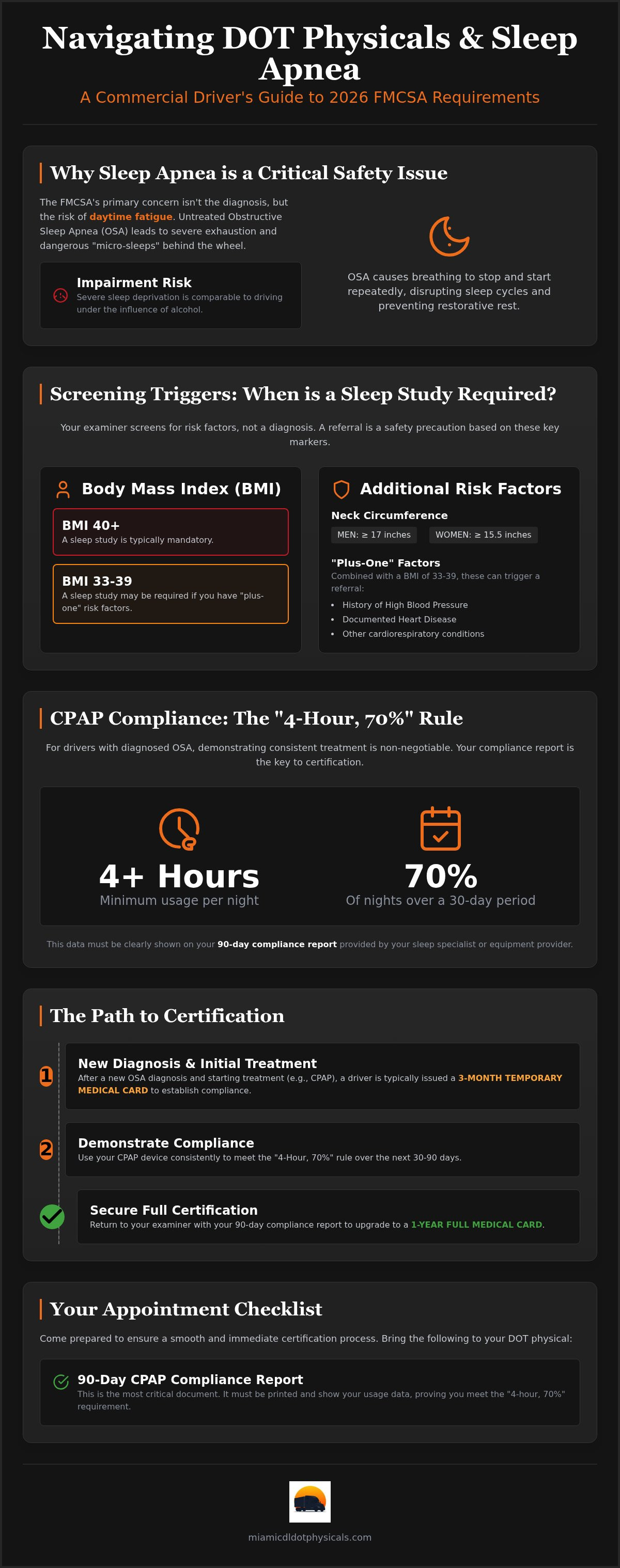
Body Mass Index (BMI) is the most common screening tool used today. If your BMI is 40 or higher, most examiners will require a sleep study as a standard precaution. If your BMI falls between 33 and 39, the examiner will look for "plus-one" factors like high blood pressure or a history of heart disease before deciding on a referral. They also evaluate your neck circumference. For men, a neck size of 17 inches or larger is a benchmark for screening. For women, the threshold is 15.5 inches. Finally, the examiner will check your Mallampati score, which is a simple visual check of how much space is visible in the back of your throat when you open your mouth.
Why Weight and Neck Size Matter
Your physical anatomy directly impacts how well you breathe while asleep. Excess fatty tissue around the neck and upper airway can cause the throat to collapse when muscles relax during deep sleep. This obstruction stops the flow of oxygen, forcing your brain to wake you up just enough to gasp for air. This cycle repeats hundreds of times a night, leading to the severe daytime exhaustion that concerns safety officials. If you're concerned about how your measurements might impact your certification, you can consult with a certified examiner to discuss your specific situation before your card expires.
Other Risk Factors Evaluated
Physical measurements are only part of the story. Examiners also consider your age and gender; men and drivers over the age of 42 are statistically at a higher risk for OSA. They'll ask about your sleep history, specifically looking for reports of loud snoring, gasping, or witnessed episodes where you stopped breathing. Co-existing health issues like Type 2 diabetes or heart disease also play a role in the decision. The goal isn't to find a reason to sideline you. It's to identify high-risk conditions that could lead to a dangerous situation on the highway if left untreated.
CPAP Compliance Rules for DOT Physicals in 2026
Meeting the DOT physical sleep apnea requirements in 2026 relies almost entirely on your ability to prove treatment compliance. Once you're diagnosed with Obstructive Sleep Apnea, the medical examiner’s focus shifts from screening physical markers to reviewing your actual usage data. The FMCSA doesn't just want to know you have a machine; they need to see that you're using it effectively to stay alert on the road. For most drivers, this means maintaining a consistent record of use that proves the treatment is working. Generally, compliant drivers with a sleep apnea diagnosis are limited to a one year medical card rather than the standard two year certification.
The standard for compliance is known as the "4-hour and 70% rule." To pass your exam, your data must show that you've used your CPAP machine for at least four hours per night for at least 70% of the nights in a given period. This typically equates to at least 21 out of 30 days. Most examiners require a 30 day report for initial certifications and a 90 day report for annual renewals. If you don't meet these specific thresholds, you risk a shorter certification or a "pending" status while you work to improve your usage numbers.
Proving Your Compliance to the Examiner
Modern CPAP machines make data collection simple. You can usually download a usage report via an SD card or a manufacturer’s smartphone app. When you bring this computer generated report to your appointment, the examiner looks at more than just the hours. They check your "leakage" rate to ensure the mask fits properly and your Apnea-Hypopnea Index (AHI). An AHI under five typically indicates that your therapy is successful. Following the FMCSA Sleep Apnea Guidelines ensures that your treatment meets federal safety expectations for commercial motor vehicle operation.
What Happens if You Fall Out of Compliance?
Life on the road is unpredictable, and equipment can fail. If your usage drops below the 70% threshold, don't panic, but do take immediate action. You might be issued a 35 day temporary card to allow you time to gather more data. If a machine failure caused the gap, bring documentation from your equipment provider to show the examiner you're actively fixing the issue. Preparation is key to avoiding these delays. For a broader look at getting ready for your exam, check out our guide on How to Pass Your DOT Physical in 2026: The Ultimate Driver’s Preparation Guide. Staying ahead of your data ensures your DOT physical sleep apnea requirements are met without a hitch.
The 3-Month Temporary Card vs. Full Certification
A new diagnosis of Obstructive Sleep Apnea (OSA) doesn't stop your career, but it does change the rhythm of your certification. Under current 2026 DOT physical sleep apnea requirements, drivers newly identified as high-risk are often issued a 3-month temporary medical card. This short-term certificate is designed to give you enough time to complete a sleep study and begin CPAP therapy without losing your livelihood. It acts as a bridge, ensuring you can keep working while you adjust to treatment. Once you've successfully managed the condition for a set period, you can return to the examiner for a longer certification.
You should understand that a 2-year medical card is no longer an option once you have a sleep apnea diagnosis. The FMCSA requires annual monitoring for this condition to ensure treatment remains effective and your daytime alertness is maintained. If you have severe OSA, your examiner might also require a brief waiting period before you return to duty. This period allows the therapy to resolve the acute fatigue that poses a safety risk. It's a partnership between you and the examiner to keep everyone on the highway safe while protecting your professional status.
The Timeline for New Diagnoses
Navigating a new diagnosis involves a specific three-step process. First, your initial exam identifies risk factors, leading to a referral for a sleep study. Second, you receive a 3-month temporary certificate. This allows you to purchase equipment and start treatment. Third, you must return to the clinic with 30 to 90 days of compliance data. If your report shows you've met the usage thresholds, the examiner will typically upgrade you to a 1-year medical card. Following this timeline keeps your paperwork in order and prevents gaps in your employment.
Renewing Your CDL Medical Card with OSA
Renewing your card requires proactive planning. We recommend scheduling your appointment at least 30 days before your current card expires. This buffer provides time to resolve any data issues or equipment malfunctions. You must ensure your machine's data log is current and reflects the most recent 90 days of use. For more details on choosing the right compliance options, see our CDL Medical Card: The 2026 Buying Guide for Commercial Drivers. If you need to secure your certificate today, you can schedule your DOT physical with our certified team to ensure you meet all DOT physical sleep apnea requirements.
Preparing for Your Appointment: A Driver’s Checklist
Walking into the exam room prepared saves time and prevents unnecessary stress. To meet the DOT physical sleep apnea requirements, you must bring specific documentation that proves your condition is under control. If you're a long-term CPAP user, bring a computer-generated usage report covering the last 90 days. New users should have at least 30 days of data ready for review. You also need a copy of your most recent sleep study, known as a polysomnogram, for the examiner to keep in your file. This data proves that your treatment is effective and that you're safe to operate a commercial vehicle.
Check your equipment thoroughly before you arrive. Ensure your machine functions correctly and your mask fit is optimal to prevent high "leakage" rates on your report. During the exam, be honest with your examiner about any symptoms you're experiencing, such as morning headaches, daytime sleepiness, or persistent fatigue. These symptoms don't automatically mean you'll fail. They help the examiner understand if your current treatment needs adjustment to keep you alert and safe. Honesty builds a better partnership with your medical provider and ensures your long-term health is the priority.
Tips for a Smooth Exam Process
Contact your sleep specialist at least two weeks before your DOT exam to pull your compliance data and prepare a summary letter. This proactive step ensures you aren't scrambling for paperwork at the last minute. Many drivers experience a spike in blood pressure during the exam due to anxiety, often called "white coat syndrome." To manage this, arrive early, avoid caffeine for at least two hours before the test, and take a few minutes to practice deep breathing in the waiting room. Using an FMCSA-certified medical examiner who understands the unique challenges of the driver lifestyle makes a significant difference. They act as a partner in your career rather than a gatekeeper, helping you navigate the process with efficiency and respect for your time.
Your Road to Compliance Starts Here
The 2026 sleep apnea requirements focus on safety through effective treatment. A diagnosis isn't a dead end for your career; it's a manageable health condition that actually improves your quality of life on and off the road. By staying on top of your CPAP usage and bringing the right data to your physical, you protect your livelihood and your health. Take control of your compliance today to stay on the road for years to come. Schedule your professional DOT physical today to ensure your medical card stays current.
Secure Your Career with Proactive Compliance
Navigating the 2026 DOT physical sleep apnea requirements doesn't have to be a source of stress. By understanding that physical markers like BMI are simply screening tools, you can approach your exam with confidence. The real power lies in your data. Consistently meeting usage thresholds proves you're safe, alert, and ready for the road. Bringing your compliance reports and sleep study results directly to your appointment is the fastest way to secure your certification without unnecessary delays.
Our FMCSA-certified examiners are here to act as your partners in safety. We provide expert sleep apnea guidance and fast, professional certification to keep your livelihood secure. Schedule Your Professional DOT Physical and Stay Compliant today to ensure your medical card remains current. You've worked hard for your CDL; we're here to help you stay behind the wheel with ease and peace of mind.
Frequently Asked Questions
Is a sleep apnea test mandatory for all DOT physicals?
A sleep apnea test is not a mandatory requirement for every driver. Medical examiners use specific screening criteria to determine if a referral is necessary. These screening tools include your Body Mass Index (BMI), neck circumference, and overall health history. If you don't meet the high-risk thresholds, you won't need a sleep study to pass your exam. The goal is to identify drivers who may suffer from excessive daytime sleepiness.
Can I get a DOT medical card if I have sleep apnea but don't use a CPAP?
You can obtain a medical card without a CPAP only if your sleep apnea is classified as mild and your specialist confirms treatment isn't required for safety. For those with moderate to severe Obstructive Sleep Apnea, the FMCSA generally requires an effective treatment plan. While CPAP is the most common, alternative treatments like oral appliances may be accepted if they effectively control the condition and you can provide documented compliance data to your examiner.
What is the maximum BMI for a DOT physical without a sleep study?
There is no single maximum BMI that automatically disqualifies you, but thresholds exist for mandatory screening. A BMI of 40 or higher almost always triggers a requirement for a sleep study. If your BMI is between 33 and 39, your examiner will look for secondary risk factors like hypertension or a neck size over 17 inches. Understanding these DOT physical sleep apnea requirements helps you prepare for the screening process before your appointment begins.
How many hours of CPAP use do I need to be compliant?
To remain compliant, you must use your CPAP machine for at least four hours per night. This usage must occur on at least 70% of the nights during the monitored period, which usually covers the most recent 30 to 90 days. For a standard 30-day window, this means you need at least 21 nights of compliant use. Providing a computer-generated report that proves these numbers is essential for securing your one-year medical certification.
Will I lose my CDL if I am diagnosed with sleep apnea?
A sleep apnea diagnosis will not cause you to lose your CDL. It is a manageable medical condition, not an automatic disqualification. As long as you follow your prescribed treatment plan and maintain the required CPAP compliance, you can continue driving. The FMCSA focus is on ensuring you are alert and well-rested behind the wheel. Many professional drivers successfully manage sleep apnea while maintaining a long and safe career on the road.
How often do I need a DOT physical if I have sleep apnea?
Drivers with a sleep apnea diagnosis generally require a DOT physical every 12 months. While a standard medical card can last for two years, the risk associated with sleep disorders requires more frequent monitoring to ensure treatment remains effective. You must bring a fresh compliance report to every annual exam. Staying ahead of this schedule prevents your medical card from expiring and ensures you remain in good standing with federal safety regulations.
Can I do a home sleep apnea test for my DOT physical?
Yes, home sleep apnea tests are often acceptable for meeting DOT physical sleep apnea requirements. These tests are more convenient and cost-effective than overnight lab stays. However, you must ensure the home test is ordered by a healthcare professional and uses equipment capable of providing the specific data your medical examiner needs. Always check with your DOT examiner first to confirm that the specific type of home test you plan to take meets their standards.
What happens if my CPAP compliance report shows I missed a few days?
Missing a few days will not automatically disqualify you if your overall usage remains above the 70% threshold. The examiner looks at your average compliance over a 30 or 90-day period. If equipment failure or illness caused you to fall below the requirement, bring documentation from your doctor or machine technician. In these cases, the examiner may issue a short-term temporary card to allow you time to get your usage numbers back on track.


