

Choosing a clinic based solely on the lowest advertised price often leads to the highest total expense once you factor in missed shifts and surprise fees. While it's tempting to hunt for the cheapest option, a low upfront rate can quickly balloon if the provider lacks efficiency or fails to handle your certification correctly the first time. You want to stay compliant and keep your livelihood secure without being blindsided by unexpected costs during your appointment.
Understanding the dot medical card cost shouldn't feel like a gamble when your career is on the line. This 2026 guide explains typical price averages for a physical and outlines the specific factors that influence these fees across the industry. You'll learn what a standard base fee should cover, how to identify potential hidden charges for drug screenings or follow-up tests, and how to find a provider that prioritizes same-day results. We'll also cover the transition to electronic medical certificates and how this modern system impacts your certification process. This overview provides a clear roadmap to getting certified quickly and professionally without unnecessary financial surprises.
Key Takeaways
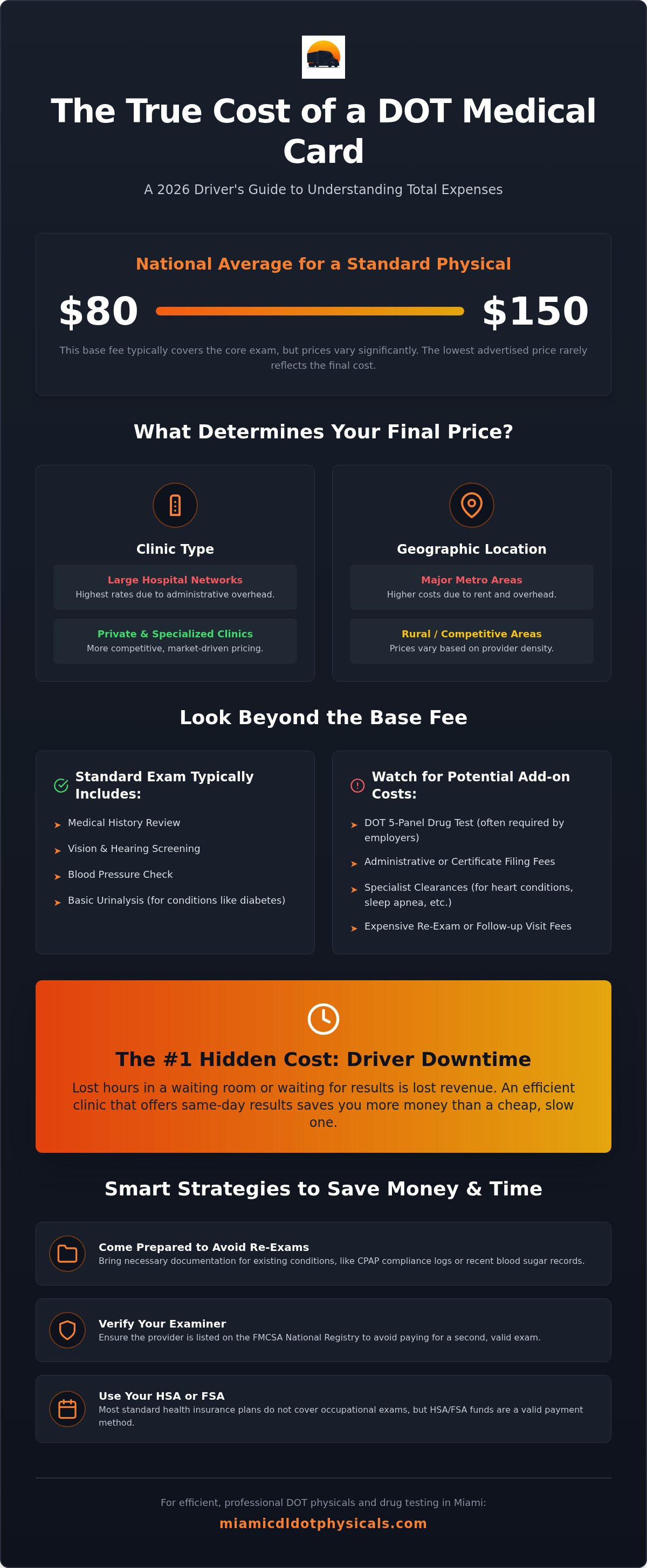
- Expect a national price range of $80 to $150 for a standard physical, though rates vary between private clinics and large hospital networks.
- Identify how bundled services like DOT drug testing and FMCSA Clearinghouse reporting impact the total dot medical card cost.
- Use HSA or FSA funds to pay for your exam, as most standard health insurance plans classify these as occupational rather than preventive care.
- Avoid expensive re-exam fees by bringing necessary documentation for existing conditions, such as CPAP logs or blood sugar records.
- Focus on providers that offer same-day results and immediate certificate issuance to reduce the high cost of driver downtime.
What is the Average DOT Medical Card Cost in 2026?
Every commercial driver knows that staying on the road requires a valid medical certificate. However, the dot medical card cost isn't a fixed government fee. Instead, it's a professional service fee set by individual providers. When you pay for this exam, you aren't just buying a piece of paper; you're paying for a comprehensive physical evaluation by a professional who is authorized to verify your fitness for duty. To meet CDL medical certification requirements, you must ensure your examiner is currently listed on the FMCSA National Registry. If they aren't on that list, your certificate won't be recognized by the state, and you'll have to pay for a second exam elsewhere.
The total price you'll pay depends heavily on the type of facility you choose. Large hospital networks often have the highest rates because they carry massive administrative overhead. Private clinics and specialized occupational health centers generally offer more competitive market rates. These specialized providers understand the specific needs of the transportation industry and often streamline their processes to keep prices fair for self-paying drivers. It's also important to remember that the base cost typically covers the physical examination and the issuance of the Medical Examiner’s Certificate (MEC), but it may not include specialized testing if your medical history requires it.
Base Exam Fees vs. Total Out-of-Pocket Expenses
When you call to ask about the dot medical card cost, most clinics will quote you a base fee. This standard fee covers the core components of the FMCSA physical, including a review of your medical history, a vision and hearing screening, blood pressure checks, and a basic urinalysis to check for underlying conditions like diabetes. However, your total out-of-pocket expense can increase if the clinic adds administrative fees for filing your results or if you require additional documentation. Most drivers choose the self-pay route at the time of service, as this is the fastest way to get your certificate in hand. Always ask if the quoted price includes the processing of your MEC or if there are separate "office visit" charges that could surprise you at the front desk.
Regional Price Variations Across the United States
Geography plays a major role in how much you'll spend on your certification. In major metropolitan areas, the cost of living and high commercial rent prices often push clinic fees upward. Conversely, areas with a high density of DOT providers often see more aggressive pricing as clinics compete for your business. Drivers in rural areas might face higher costs simply because they have fewer options and must travel further to find a registry-certified examiner. Specialized transportation clinics often provide the most consistent value compared to general practitioners. These specialists focus on efficiency and compliance, which often results in a more predictable pricing structure and fewer delays. Choosing a provider that understands the urgency of your schedule is just as important as the price tag itself.
Factors That Influence the Total Price of Your CDL Physical
The base fee you see on a clinic’s website rarely tells the whole story. While we discussed national averages previously, your actual dot medical card cost depends on your medical history and specific job requirements. If you have chronic conditions like heart disease or sleep apnea, you might need to pay for additional specialist clearances or stress tests. These extra steps ensure you meet the strict FMCSA medical examiner requirements, but they also add to your total bill. Drivers who prepare their documentation in advance often avoid the extra fees associated with multiple follow-up visits.
One of the biggest variables is the inclusion of drug testing. A standard DOT physical does not include a drug screen. Many employers require a separate 5-panel DOT urine drug test as part of the hiring or renewal process. If you visit a general practitioner, you might have to travel to a second location for the lab work, which doubles your travel time and fees. Choosing a center that provides integrated DOT physicals and drug testing helps you avoid these logistical headaches and keeps your costs predictable.
Wait times represent a significant hidden cost that many drivers overlook. If a non-specialized clinic keeps you in the waiting room for three hours, you aren't just paying the exam fee; you're losing three hours of driving time. For a commercial driver, downtime is lost revenue. A clinic that prioritizes efficiency and offers same-day results provides much better value than a cheaper provider with a long wait list. When calculating your total dot medical card cost, always factor in the price of your time.
DOT Drug and Alcohol Testing Add-ons
Drivers often confuse the mandatory urinalysis during the physical with a drug test. The urinalysis included in the base fee only checks for glucose and protein to identify potential health issues like diabetes or kidney problems. A DOT drug test is a separate procedure with its own laboratory and medical review officer (MRO) fees. Bundling these services at a single occupational health center typically reduces the total price compared to paying for them separately. It also ensures that all your compliance data is managed in one place, reducing the risk of administrative errors.
Administrative and Reporting Fees
Administrative tasks also impact the final price. Most clinics include the upload of your results to the FMCSA National Registry in their base fee, but some may charge extra for this service. You should also check for fees related to duplicate medical cards or digital copies if you lose your original. Owner-operators often face additional charges for FMCSA Clearinghouse query assistance or consortium management. These reporting services are essential for federal compliance but usually come as separate line items on your invoice. Always ask for a breakdown of these fees before your appointment begins.
Comparing Payment Options: Self-Pay, Insurance, and Employer Coverage
Many drivers assume their standard health insurance will cover the expense of their certification. However, the dot medical card cost is typically treated as an out-of-pocket business expense rather than a medical necessity. Health insurance plans prioritize preventive care and treatment for illnesses or injuries. Because a DOT physical examination is a federal employment requirement, it falls into the category of occupational medicine. Most major carriers explicitly exclude these exams from their coverage, meaning you'll likely be responsible for the bill at the time of service.
While standard insurance might not foot the bill, you can often use your Health Savings Account (HSA) or Flexible Spending Account (FSA) to pay for the exam. These accounts allow you to use pre-tax dollars for health-related expenses, which effectively reduces the financial impact of the certification. For independent owner-operators, the self-pay model is often the most straightforward choice. It removes the administrative hurdle of insurance billing and ensures you get your medical card immediately upon passing the exam. Most specialized clinics prefer this direct payment method because it keeps their operations lean and their prices transparent.
The Reality of Insurance Coverage for Occupational Exams
A common misconception is that a free annual wellness visit can double as a DOT physical. This isn't the case. A wellness visit doesn't follow the strict FMCSA protocols required for commercial driving. If you attempt to use insurance at a general clinic, you might face unexpected co-pays or find that the claim is denied weeks later. Additionally, insurance-based clinics often have longer wait times because they prioritize sick patients over occupational screenings. It's always best to call your carrier beforehand, but most experienced drivers find that the transparency of a flat-fee specialist is worth the direct payment to avoid billing headaches.
Employer and Fleet Account Pricing
If you drive for a larger carrier, your company might cover the dot medical card cost directly. Many fleets establish accounts with specialized centers to streamline the process for their drivers. This centralized billing system means you don't have to worry about reimbursement forms or paying upfront. For fleet managers, these partnerships offer more than just financial convenience. Working with a dedicated occupational health center ensures consistency in how exams are performed. This consistency reduces the risk of compliance errors that can occur when drivers visit random clinics. If your company offers a list of approved providers, using them is usually the fastest path to renewal and keeps your out-of-pocket costs at zero.
How to Minimize Costs and Avoid Expensive Re-Exams
The most effective way to control your total dot medical card cost is to arrive at the clinic fully prepared. Many drivers face unexpected "re-exam" fees because they lack the necessary documentation to clear a medical condition. If an examiner cannot issue a certificate due to missing information, they may place your application in a "pending" status. This often requires a second office visit and an additional fee once you finally provide the records. By organizing your medical history in advance, you ensure the process remains a one-time expense.
Managing your vitals before the appointment is equally important. High blood pressure is a leading cause of temporary disqualification. If your pressure is too high on the day of the exam, you might only receive a short-term certificate or be told to return after seeing a primary care doctor. Both scenarios lead to more time off the road and higher cumulative costs. Choosing a provider that offers same-day certificates and immediate electronic filing is the best way to protect your schedule and your wallet.
A Pre-Exam Checklist for Drivers
Arriving with a complete "driver's kit" prevents administrative delays. Use this checklist to ensure you have everything required for a smooth certification:
- A current list of all prescription medications, including specific dosages and the names of the prescribing doctors.
- Your current glasses, contacts, or hearing aids if you use them for driving.
- A recent clearance letter from your specialist if you have a history of heart issues, surgeries, or other major health events.
- For drivers with diabetes, your most recent A1C results and blood sugar logs.
- If you use a CPAP machine, bring a compliance report showing at least 90 days of recent usage data.
Avoiding the "Short-Term" Card Trap
The real financial burden of certification often comes from the "short-term" card. While a standard medical certificate is valid for up to two years, examiners may issue cards for only 3, 6, or 12 months if a condition needs close monitoring. Every time your card expires, you have to pay the dot medical card cost all over again. Frequent renewals also increase the risk of administrative errors and missed deadlines.
Working closely with your examiner and providing thorough documentation can help you secure the longest possible certification period. Understanding the medical standards beforehand is your best defense against frequent, expensive renewals. For a deeper dive into the specific medical standards, check out our guide on How to pass your DOT physical in 2026. To save time and avoid return trips, schedule your DOT physical with a specialist who provides same-day results and understands the urgency of your professional requirements.
Why Efficiency is the Most Important Part of the Price Tag
When you calculate your total dot medical card cost, the number on the receipt is only half the story. The true expense includes the hours you spend away from the wheel. For a commercial driver, time is quite literally money. If you spend three hours in a crowded urgent care waiting room, you've lost a significant portion of your driving day. When you add your hourly earning potential to the clinic's fee, a "cheap" $75 exam can quickly become a $250 investment. Choosing a clinic that respects your schedule is the smartest financial move you can make.
Specialized DOT centers operate differently than general practices or hospital-affiliated clinics. General urgent care centers juggle everything from flu shots to broken bones, often leaving scheduled physicals at the bottom of the priority list. A dedicated center focuses almost exclusively on occupational health. This specialization means the staff is trained to move you through the vision, hearing, and physical screenings without unnecessary delays. You get the expertise of FMCSA-certified examiners who know exactly what documentation is required to get you back on the road immediately.
Same-Day Certification and Its Financial Impact
The value of leaving a clinic with your Medical Examiner’s Certificate (MEC) in hand cannot be overstated. Same-day certification ensures there's no gap in your driving status, which protects you from missed shifts and lost revenue. In the transportation industry, compliance isn't optional. Operating with an expired medical card can lead to heavy fines, being placed out of service, and negative marks on your driving record. These penalties far outweigh the cost of the exam itself.
Efficiency also means getting the paperwork right the first time. Professional examiners ensure your data is uploaded correctly to the National Registry, preventing the administrative headaches that often plague non-specialized clinics. To better understand how to choose the right provider for your needs, read The 2026 buying guide for CDL medical cards. This resource helps you weigh the benefits of specialized care against the risks of administrative delays.
Professional Service for Commercial Drivers
Working with a team that understands the trucking industry changes the entire experience. Professional DOT centers streamline the most time-consuming parts of the process, such as combining drug testing and physicals into a single visit. This "one-stop" approach eliminates the need for multiple appointments and separate travel costs. It's about more than just speed; it's about the peace of mind that comes from knowing your certification is handled by experts who value your livelihood. Don't let a slow clinic slow down your career. Schedule your professional DOT physical today and experience a process designed specifically for the busy schedules of commercial drivers.
Secure Your Career with Efficient Certification
Managing your dot medical card cost effectively requires looking beyond the initial clinic fee. The true value of your certification lies in the speed of the exam and the accuracy of the reporting. By preparing your medical documentation in advance and choosing a specialized center, you avoid the administrative delays and re-testing fees that often plague general health clinics. Your time off the road is a significant expense. A streamlined process is your best defense against lost revenue and unnecessary downtime.
Our team provides the professional support you need to stay compliant without the stress of long wait times. We offer expert services from certified FMCSA medical examiners and provide comprehensive DOT compliance, including drug testing, in one convenient location. Don't let regulatory requirements slow down your professional progress. Get Your Same-Day DOT Medical Card at Miami CDL/DOT Physical Exam Center through our no-wait appointments and experience the ease of same-day results. We are here to help you stay focused on the road ahead with confidence and peace of mind.
Frequently Asked Questions
How much does a DOT physical cost without insurance in 2026?
A standard physical typically ranges from $70 to $200 depending on the provider. Private clinics often sit in the $80 to $150 range, while specialized centers prioritize efficiency for self-paying drivers. Since June 2025, the FMCSA has shifted toward electronic transmission of certificates, which streamlines the process but doesn't eliminate the exam fee. Choosing a specialized provider ensures you get your results filed correctly without the administrative delays found in larger hospital systems.
Does health insurance usually cover the cost of a CDL medical card?
Most health insurance plans don't cover the dot medical card cost because it's classified as an occupational exam rather than preventive medical care. Insurance companies typically only pay for services related to the diagnosis or treatment of an illness. Because the DOT physical is a federal requirement for your livelihood, it's considered a business expense. You should check with your employer, as many trucking companies provide reimbursement or have corporate accounts for their drivers.
Is a DOT drug test included in the price of the physical exam?
A DOT drug test is almost always a separate fee and is not included in the base price of the physical exam. The urinalysis performed during the physical only checks for kidney function and underlying health issues like diabetes. If your employer requires a pre-employment or random drug screen, this involves a different collection process and laboratory analysis. Bundling both services at a single specialized center can save you time and reduce your total travel expenses.
Can I pay for my DOT medical card with an HSA or FSA card?
You can typically use your Health Savings Account (HSA) or Flexible Spending Account (FSA) to pay for your examination. These accounts are designed for health-related expenses, and most clinics accept them as a valid form of payment. Using pre-tax dollars through these accounts is a smart way to manage your dot medical card cost. Always keep your itemized receipt in case your account administrator requires proof that the service was a legitimate medical expense for your certification.
What happens if I fail my DOT physical-do I still have to pay?
You're paying for the medical examiner's time and professional evaluation, so the fee is due regardless of the outcome. If you don't meet the FMCSA standards, the examiner might place your application in a "pending" status rather than issuing a flat disqualification. This gives you time to resolve medical issues, such as getting a new eyeglass prescription or adjusting blood pressure medication. Preparing your medical history in advance is the best way to avoid paying for multiple office visits.
Are there extra fees for drivers with high blood pressure or diabetes?
While the base exam fee remains the same, you might face additional costs if your condition requires extra documentation or frequent renewals. Drivers with managed conditions like hypertension or diabetes often receive short-term medical cards valid for only three or six months. This means you'll have to pay the exam fee more frequently than a driver with a two-year certification. Bringing recent clearance letters from your specialist can help you secure the longest possible certification period and avoid extra visits.
How much do owner-operators typically pay for FMCSA Clearinghouse consortium fees?
Consortium fees vary based on the level of service provided, but they're a necessary expense for owner-operators to remain compliant with federal drug and alcohol testing rules. These fees generally cover the cost of random pool management and reporting to the FMCSA Clearinghouse. Some providers offer annual memberships that bundle these administrative tasks with your required testing. Joining a consortium ensures you meet the same regulatory standards as larger fleets while keeping your administrative costs predictable and manageable.
Why do some clinics charge more for a DOT physical than others?
Pricing differences usually reflect the provider's overhead and the level of service they offer. Large hospital networks often charge more due to complex administrative structures and billing systems. Specialized occupational health centers might have higher upfront fees than a general practitioner, but they provide better value through faster appointments and same-day results. When you factor in the cost of your downtime, a clinic that gets you back on the road in under an hour is often the most cost-effective choice.


