
Your livelihood depends on a single medical exam, yet many drivers walk into their appointment for a DOT physical Miami feeling unprepared and anxious about failing. It's a high-stakes moment where a spike in blood pressure or a new prescription can feel like a major roadblock to your career. You shouldn't have to face regulatory hurdles with uncertainty when your paycheck is on the line.
We understand that your time is your money. This guide helps you navigate the 2026 FMCSA requirements with total confidence so you can secure your certification quickly. You'll learn how to manage the new National Registry II electronic filing system and what to do during the current 60 day paper certificate waiver period. We also clarify the latest standards for disqualifying medications and blood pressure levels so you can pass on your first visit.
From understanding the shift toward oral fluid testing to managing your Clearinghouse status, we provide the essential steps to get your medical card today. You'll gain the clarity needed to avoid downtime and keep your CDL active. This is your roadmap to a stress-free certification process that respects your schedule and your profession.
Key Takeaways
- Understand the mandatory FMCSA standards that govern your medical certification and why they are essential for your driving career.
- Learn how to prepare for your DOT physical Miami by gathering necessary logs and avoiding triggers like caffeine that can impact your blood pressure results.
- Navigate the complexities of the Drug and Alcohol Clearinghouse and understand when a separate DOT drug test is required for compliance.
- Discover how to verify an examiner's NRCME credentials to ensure your certification is valid and filed correctly with the national registry.
- Gain insights into securing a same-day medical card to minimize downtime and keep your commercial vehicle on the road.
What is a DOT Physical Exam and Why Is It Mandatory?
A DOT physical is a specialized medical evaluation required by the Federal Motor Carrier Safety Administration (FMCSA). It's not a standard check-up. Instead, it's a highly regulated safety assessment designed to ensure that commercial drivers can safely operate heavy machinery and long-haul vehicles. If you're operating a commercial motor vehicle in South Florida, obtaining a DOT physical Miami is a critical step in maintaining your professional status. The FMCSA sets these stringent standards to reduce the risk of medical-related accidents on public highways.
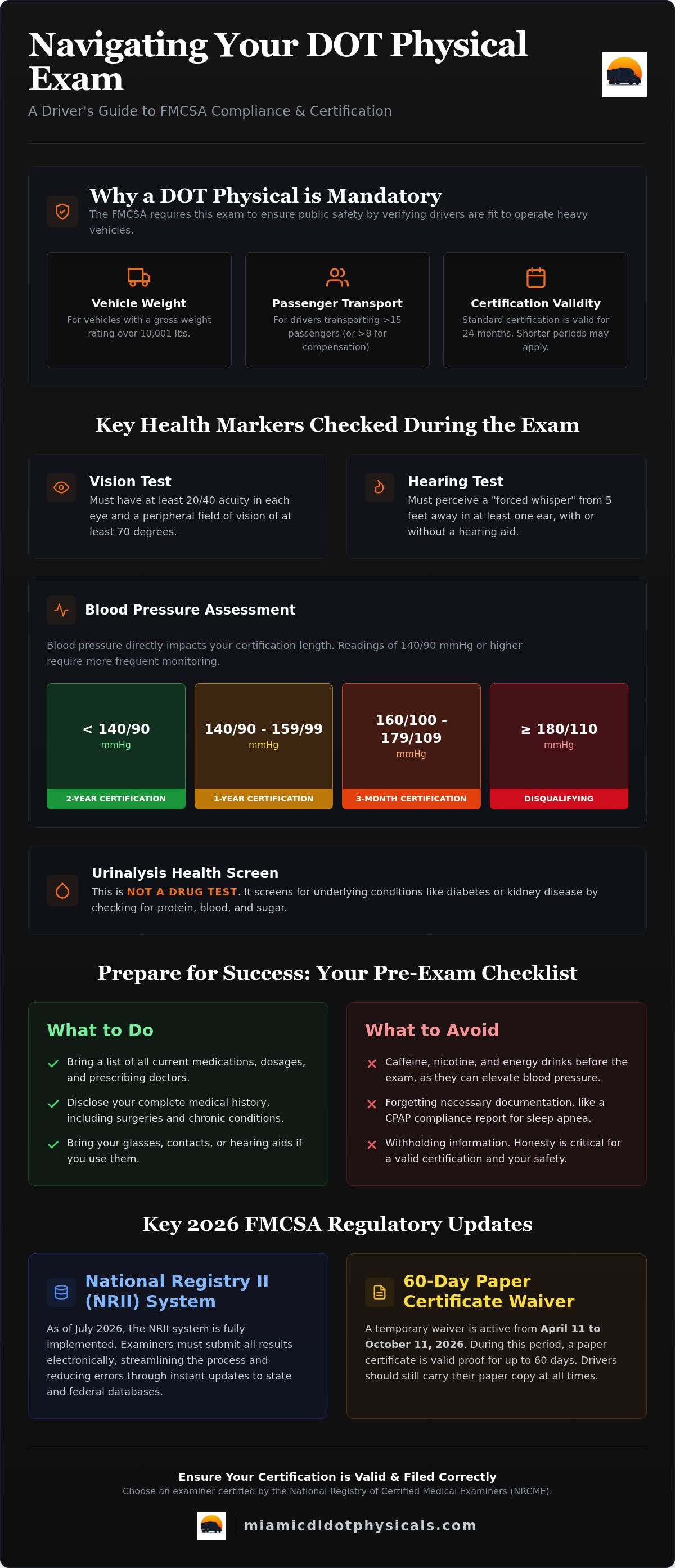
Federal law requires this exam for any driver operating a vehicle with a gross combination weight rating of over 10,001 pounds. It's also mandatory for those transporting more than 15 passengers, or more than 8 passengers when compensation is involved. This CDL medical certification acts as a seal of approval, proving you meet the physical and mental requirements of the job. While a standard medical card is typically valid for 24 months, examiners often issue shorter certifications for drivers with conditions like high blood pressure or diabetes to ensure frequent monitoring.
The Core Purpose of Medical Certification
The primary goal of this certification is public safety. By verifying a driver's physical fitness, the exam helps prevent dangerous situations caused by sudden medical emergencies. Examiners look for "hidden" health risks that could impair your ability to drive, such as untreated sleep apnea, cardiovascular issues, or vision degradation. Staying compliant isn't just about following the law; it's about protecting your health and your career. A failed or expired medical card can lead to the immediate suspension of your commercial driving privileges, which causes significant professional downtime.
2026 FMCSA Regulatory Updates
The regulatory landscape has shifted significantly as of July 2026. The most impactful change is the full implementation of the National Registry II (NRII) system. Medical examiners are now required to submit all exam results electronically to the FMCSA National Registry. This data then flows directly to state licensing agencies, creating a digital paper trail that reduces manual filing errors. For owner-operators and fleet drivers, this means your certification status is updated almost instantly in the federal database.
There's a specific temporary waiver currently in effect that drivers should know about. From April 11, 2026, through October 11, 2026, the FMCSA allows CDL holders to use a paper Medical Examiner's Certificate as proof of qualification for up to 60 days after issuance. This bridge exists while state systems fully integrate with the new federal digital standards. Even with this waiver, we recommend carrying your paper certificate at all times to avoid any confusion during roadside inspections or at the DMV.
What to Expect During the CDL Medical Exam Process
Walking into a clinic for a DOT physical Miami shouldn't feel like a mystery. The process is highly standardized to ensure every driver meets the same safety benchmarks across the country. Your appointment begins with a thorough medical history review. You'll need to disclose past surgeries, chronic conditions like sleep apnea or diabetes, and any current medications. Honesty is vital during this stage. The FMCSA requires a full health profile to determine your fitness for duty, and missing information can lead to delays in your certification.
A common misconception involves the mandatory urinalysis. This is not a drug test. Instead, it is a health screen used to detect underlying issues like kidney disease or undiagnosed diabetes by checking for protein, blood, and sugar levels. While the physical is comprehensive, it's designed to be efficient. Our goal is to get you through the process and back on the road with minimal stress. If you want to ensure your paperwork is handled correctly the first time, you can schedule your exam with a compliance partner who understands these federal nuances.
Standard Health Markers Tested
The exam prioritizes several critical health markers that directly impact driving safety. First, you'll undergo a vision test. You must have at least 20/40 acuity in each eye, with or without corrective lenses, and a field of vision of at least 70 degrees. Next is the hearing assessment. You need to perceive a "forced whisper" from a distance of five feet in at least one ear. Finally, the examiner checks your blood pressure. Understanding the stages of hypertension is key. If your reading is 140/90 or higher, you might receive a shorter certification period while you work with a physician to manage the condition.
The Physical Examination Components
During the hands-on portion, a Certified Medical Examiner will perform auscultation of your heart and lungs to listen for irregularities, murmurs, or congestion. They will also examine your abdomen for abnormalities, such as enlarged organs or hernias. The check includes a review of your spine and limbs to ensure you have the necessary range of motion to operate a vehicle safely. Finally, a neurological assessment checks your reflexes and coordination. These steps confirm you have the physical strength and mental alertness required for the rigors of long-haul or heavy-vehicle operation.
How to Prepare for Your Appointment and Pass
Preparation is the difference between a same-day medical card and a frustrating delay. Before you arrive for your DOT physical Miami, organize your documentation to ensure a smooth process. You must bring a valid government-issued photo ID, such as your driver's license. If you use corrective lenses or hearing aids, bring them to the appointment. Drivers with chronic conditions like sleep apnea should provide at least 90 days of CPAP compliance logs. Having these records ready shows the examiner that you're proactive about your health and regulatory requirements.
Your habits in the 24 hours leading up to the exam significantly impact your results. Avoid high-sodium foods and sugary drinks, as these can negatively affect your blood pressure and urinalysis. Drink plenty of water to stay hydrated, which helps ensure a clean urine sample for the kidney and sugar screen. On the morning of your exam, skip the extra cup of coffee and avoid nicotine. Both caffeine and nicotine are stimulants that can cause a temporary spike in your blood pressure, potentially leading to a shorter certification period or a temporary disqualification.
Managing Blood Pressure and Chronic Conditions
Many drivers experience "white coat syndrome," where anxiety about the exam causes blood pressure to rise. Arrive ten minutes early so you can sit quietly and relax before the reading. If you manage diabetes or a heart condition, bring a list of your medications and the dosages. For those using insulin, you'll need a specific FMCSA form completed by your treating physician. A doctor's clearance letter can prevent certification delays. This documentation provides the examiner with the necessary medical context to certify you safely and quickly.
Disqualifying Medications and Conditions
Certain medications can complicate your certification if they impair your ability to safely operate a commercial vehicle. This includes some narcotic pain relievers, benzodiazepines, and seizure medications. If you take these, you may need a federal waiver or an alternative prescription from your primary doctor. Conditions like untreated obstructive sleep apnea often result in a limited medical card, typically for one year, to ensure ongoing monitoring. To prepare for these specific challenges, read our guide on how to pass DOT physical exams with confidence. Being informed about these standards allows you to address potential issues before they impact your livelihood.
Comprehensive Compliance: Drug Testing and the Clearinghouse
Many drivers mistakenly believe that the urinalysis performed during a DOT physical Miami is a drug screen. It's not. That specific test only checks for underlying health markers like glucose or protein levels to identify kidney issues or diabetes. A DOT drug test is a separate, legally mandated procedure governed by 49 CFR Part 40. While you can often complete both during the same clinic visit, they serve different regulatory purposes. The physical verifies your body can handle the job, while the drug test ensures you are operating without prohibited substances in your system.
Drug testing is required at specific intervals throughout your career. A pre-employment test is mandatory before you perform any safety-sensitive functions for a new employer. Once hired, you're subject to random testing. For 2026, the FMCSA has set the random drug testing rate at 50% of covered employees and the random alcohol testing rate at 10%. You may also face post-accident testing if a crash involves a fatality or if you receive a citation following an accident that required a vehicle to be towed or medical treatment away from the scene.
The FMCSA Drug and Alcohol Clearinghouse acts as a central database to track these results. It prevents drivers with unresolved violations from moving between states or employers to hide their records. Employers must query this system before hiring you and at least once a year thereafter. If you have a violation, you must complete a specific return-to-duty process, which includes a minimum of six unannounced follow-up tests within the first 12 months. To keep your records clean and your truck moving, it's best to partner with a certified compliance center that handles both exams and testing data.
The FMCSA Clearinghouse Consortium
Owner-operators have a unique set of rules to follow. Federal regulations state that you cannot manage your own random drug testing pool. Instead, you're required to join a third-party administrator. Joining a FMCSA clearinghouse consortium Florida ensures that your random selections are handled by an unbiased party. This automated management is a major benefit for small fleets and independent drivers. It removes the administrative burden and ensures you never miss a compliance deadline, which is vital for maintaining your operating authority.
DOT vs. Non-DOT Testing Standards
It's important to recognize the difference between federal and private testing standards. A standard DOT drug test uses a 5-panel screen that looks for marijuana, cocaine, amphetamines, opiods, and PCP. While the DOT has authorized oral fluid testing as an alternative to urine collection, urine remains the current standard while labs finalize their certifications. Employers might also implement non-DOT testing programs for general workplace safety, which can include a wider variety of substances. You can find more details on these specific requirements in our guide to the DOT drug test Miami process.
Choosing a Certified Medical Examiner for Your Medical Card
Selecting the right clinic for your DOT physical Miami is the final step in securing your career. You need a provider that understands the urgency of your schedule and the specific health standards required by the FMCSA. A professional facility does more than just check your vitals. It acts as a compliance partner, ensuring every piece of paperwork is accurate and every digital filing is completed correctly. Evaluating a clinic's professionalism and wait times can save you hours of frustration and prevent unnecessary downtime.
Efficiency is a major factor when you're on a tight delivery schedule. Look for centers that offer integrated services. As we discussed in the previous section, the requirements for drug testing and physicals are distinct but often overlap in timing. Choosing a facility that provides both a DOT physical and a DOT drug test in a single visit simplifies your logistics. This "one-stop" approach ensures that your medical card and your drug testing compliance are handled simultaneously, getting you back on the road faster with a same-day medical card in hand.
Why NRCME Certification is Non-Negotiable
Every driver must verify that their examiner is listed on the National Registry of Certified Medical Examiners (NRCME). This isn't just a recommendation; it's a legal necessity. If you receive an exam from an unlisted provider, the FMCSA will not recognize your certification, and your medical card will be voided. This can lead to the immediate suspension of your CDL. Certified examiners undergo specific training to understand the unique stressors of the trucking industry, from long-haul fatigue to the physical demands of cargo handling. They ensure your data is uploaded correctly to the state DMV, which is critical during the current transition to the National Registry II electronic system.
The Value of a Driver-Focused Compliance Center
A driver-focused center understands that a commercial license is a livelihood. These facilities prioritize streamlined processes and clear communication. If you have a complex medical history, such as managed hypertension or a history of cardiovascular issues, you need an examiner who can guide you through the documentation process without judgment. They provide the necessary support to help you meet federal standards while respecting your time. Don't leave your certification to chance at a general clinic that doesn't specialize in transportation safety. To secure your medical card and stay compliant with 2026 regulations, Schedule your DOT physical today and partner with experts who value your career as much as you do.
Secure Your Professional Future with Confidence
Mastering federal regulations doesn't have to be a source of stress. By organizing your medical records and understanding the new digital filing standards, you can walk into your appointment with total clarity. Choosing an examiner on the national registry is the only way to ensure your license remains valid and your data is transmitted correctly to the state. Your career is built on compliance; staying ahead of 2026 standards protects your professional future.
Our team of FMCSA-Certified Medical Examiners specializes in keeping commercial drivers on the road without unnecessary delays. We provide a streamlined experience that includes Integrated Drug Consortium Management and Same-Day Medical Cards Issued directly at our facility. When you need a reliable DOT physical Miami, choose a partner that values your time and understands the rigors of your profession. We handle the paperwork so you can focus on the drive.
Book Your Same-Day DOT Physical Exam and Drug Test Now to clear your regulatory hurdles today. We look forward to seeing you in the clinic and supporting your success every mile of the way.
Frequently Asked Questions
How much does a DOT physical exam cost in 2026?
Prices for this medical evaluation vary across South Florida depending on the provider and the complexity of your health history. Most clinics maintain competitive rates to support the local trucking community, though additional fees may apply if you require integrated services like drug testing. It's best to confirm the total cost when you schedule your appointment to ensure it fits your budget.
What happens if I fail my DOT physical exam?
If you don't meet the federal standards, the examiner may issue a temporary disqualification rather than a permanent failure. This often occurs for manageable issues like uncorrected vision or high blood pressure. You can typically return for a follow up once you've addressed the specific health concern with a specialist or your primary care physician. Documentation of your treatment will be necessary for your next attempt.
Can I get my CDL medical card on the same day as my appointment?
Yes, you can receive your medical certificate immediately after successfully passing the examination. As long as you meet all FMCSA physical requirements and provide the necessary medical records for any chronic conditions, the examiner will issue your card before you leave. This efficiency is a standard feature of a professional DOT physical Miami service, helping you avoid professional downtime.
Do I need a drug test as part of my DOT physical?
A standard physical includes a urinalysis to check for sugar and protein levels, but this is not a drug screen. While the physical exam is a standalone requirement, many employers request a separate DOT drug test during the same visit for pre-employment or random compliance. You should check with your safety manager to see if you need both services performed during your appointment.
What medications will disqualify me from getting a medical card?
Medications that impair your alertness or physical coordination, such as certain narcotics, benzodiazepines, or anti-seizure drugs, can lead to disqualification. Some treatments require a federal waiver or a detailed clearance letter from your prescribing doctor stating the medication won't interfere with safe driving. Always bring a complete list of your current prescriptions to your appointment for the examiner to review.
How long is a DOT medical card valid for commercial drivers?
A medical certification is typically valid for a maximum of 24 months for drivers in good health. If you manage a condition that requires frequent monitoring, such as hypertension or heart disease, the examiner might issue a certificate for 3, 6, or 12 months. This ensures you remain compliant with federal safety standards while keeping a close eye on your physical fitness for duty.
What should I bring to my DOT physical appointment?
You must bring a valid government issued photo ID and any corrective devices you use, such as eyeglasses or hearing aids. Drivers with chronic conditions should also bring their medication lists, recent specialist clearances, or CPAP compliance logs for sleep apnea. Having these documents ready allows the examiner to process your certification quickly and accurately during your visit.
Can I pass a DOT physical with high blood pressure?
You can pass the exam with high blood pressure, but your reading will determine the length of your certification. A reading below 140/90 generally qualifies you for the full two year medical card. If your blood pressure is higher, the examiner may issue a shorter one year or three month certificate to allow you time to manage the condition with your doctor.


