

Your medical certificate is the single most important document protecting your right to earn a living on the road. When drivers ask, "what is a dot physical exam," they're usually looking for more than just a medical definition. They want to know if their health meets the strict standards required to keep their commercial driver's license active. It's completely normal to feel some anxiety about your blood pressure or confusion over the new 2026 digital filing requirements. We understand that your livelihood depends on this certification, and the last thing you need is a surprise during your checkup.
This guide will help you master the medical requirements and preparation steps so you can walk into your appointment with total confidence. We'll walk you through the entire process, from the initial urinalysis to the new National Registry II digital system. You'll get a clear checklist of what to bring and a breakdown of the 2026 FMCSA standards to ensure you stay compliant and behind the wheel.
Key Takeaways
- Understand the core purpose of what is a dot physical exam and how it protects your eligibility to operate commercial vehicles.
- Review the specific vision and hearing standards required by the FMCSA to ensure you're prepared for the clinical tests.
- Identify the essential documentation and health history forms needed to streamline your appointment and prevent certification gaps.
- Learn how medical examiners determine the length of your certification, from the standard 24-month card to shorter monitoring periods.
- Gain clarity on the 2026 digital filing updates and your responsibility for self-certifying with your state licensing agency.
What is a DOT Physical Exam? Understanding FMCSA Safety Standards
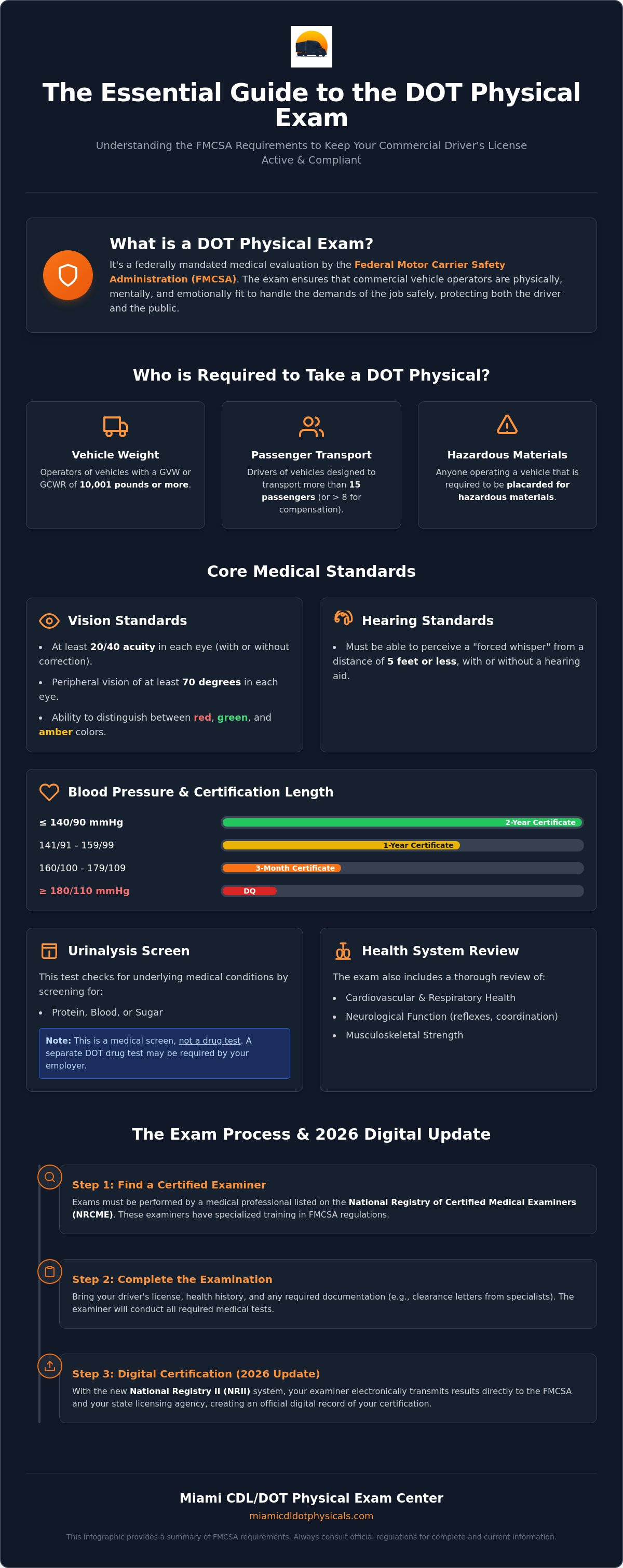
So, what is a dot physical exam exactly? It's a specialized medical evaluation mandated by the Federal Motor Carrier Safety Administration (FMCSA). This isn't your standard yearly checkup. It's a highly regulated safety assessment designed to confirm that you're physically, mentally, and emotionally capable of handling the demands of long hours on the road. The goal is simple: ensure every person behind the wheel of a heavy vehicle can operate it safely under all conditions. Understanding what is a dot physical exam helps you prepare for the specific clinical tests that determine your fitness for duty.
For any professional driver, this exam is a legal cornerstone. You cannot legally operate a commercial motor vehicle (CMV) in interstate commerce without a valid Medical Examiner’s Certificate (MEC). This certificate acts as a medical endorsement for your Commercial Driver's License (CDL). If your medical certification expires, your CDL status can be downgraded, effectively halting your career. Beyond the paperwork, these standards protect you by catching high-risk health issues before they become emergencies on the highway. Carriers also rely on these exams to ensure their fleet is compliant and to minimize liability risks.
Who is Required to Take a DOT Physical?
The FMCSA sets clear thresholds for who must maintain a current medical certificate. You need a DOT physical if you operate:
- Vehicles with a gross combination weight rating (GCWR) or gross vehicle weight (GVW) of 10,001 pounds or more.
- Vehicles designed to transport more than 15 passengers, or more than 8 passengers if you're being paid for the service.
- Any vehicle used to transport hazardous materials that require the vehicle to be placarded.
The Role of the National Registry of Certified Medical Examiners
You can't just go to any doctor for this exam. It must be performed by a professional listed on the National Registry of Certified Medical Examiners (NRCME). These examiners have specific training in FMCSA regulations and understand the unique stresses of the trucking industry. In 2026, the process has become even more streamlined with the full implementation of National Registry II (NRII). Now, your examiner transmits your results electronically directly to the FMCSA and your state licensing agency. This digital record serves as the official proof of your certification. While a temporary waiver allowed paper certificates as valid proof through early April 2026, the system is now predominantly digital to ensure accuracy and speed.
The Core Medical Requirements for Commercial Drivers
Passing the medical portion of your certification requires meeting specific benchmarks set by the FMCSA Medical Examination Requirements. These standards ensure you can handle the physical rigors of the job without endangering yourself or others. Vision is a top priority. You must have at least 20/40 acuity in each eye, with or without corrective lenses, and a field of vision of at least 70 degrees in each eye. You also need to distinguish between red, green, and amber colors to navigate traffic signals safely. Hearing is equally critical. Examiners use a "forced whisper" test to verify you can perceive sounds from a distance of five feet or less.
Blood pressure and urinalysis are often where drivers feel the most stress. To receive a full two-year certificate, your blood pressure must be 140/90 or lower. Readings higher than this don't necessarily mean failure, but they often result in shorter-term certificates to allow for closer monitoring. During the urinalysis, the examiner isn't looking for controlled substances. Instead, they're checking for protein, blood, or sugar, which can indicate underlying conditions like kidney disease or diabetes. If your employer requires a screening for substances, you can often schedule a DOT drug test at the same time as your physical to save time and stay compliant.
Cardiovascular and Respiratory Health
Your heart and lungs must be strong enough to withstand the sedentary nature and high stress of long-haul driving. Examiners screen for heart disease, chronic obstructive pulmonary disease (COPD), and other respiratory dysfunctions. If you have a history of heart surgery or use a pacemaker, you'll need to provide medical records showing you've been cleared by a specialist. Managing hypertension is vital because unmanaged high blood pressure is one of the most common reasons for limited certification periods. Consistency in your treatment plan is the best way to protect your livelihood.
Neurological and Musculoskeletal Function
The exam includes an assessment of your reflexes, coordination, and physical strength. You need to demonstrate that you can safely enter and exit a cab or secure a load. While most conditions are evaluated on an individual basis, the FMCSA maintains strict rules regarding epilepsy and seizure history. If you have a limb impairment, you may still be eligible for certification through a Skill Performance Evaluation (SPE) certificate. This process ensures that even with physical challenges, you can operate a commercial vehicle safely. Understanding exactly what is a dot physical exam requirement helps you address these health milestones before your appointment begins.
Step-by-Step: What to Expect During the Appointment
The appointment begins with a detailed review of your health history. You'll fill out the first section of the Medical Examination Report Form (MCSA-5875), where you disclose previous surgeries, chronic conditions, and any symptoms you've experienced recently. Accuracy is vital during this stage. The examiner uses this information to build a profile of your overall health before the physical tests begin. If you've wondered what is a dot physical exam like in a clinical sense, it's essentially a focused screening to ensure your medical history doesn't conflict with the safety demands of the road.
Once the paperwork is complete, the certified examiner performs a head-to-toe clinical assessment. They'll check your height, weight, and pulse, then move on to listening to your heart and lungs. They'll also evaluate your abdomen for abnormalities and check your neurological reflexes and coordination. This isn't a diagnostic exam meant to treat illnesses, but rather a functional assessment. The examiner will also review all medications you're currently taking. This includes prescriptions from your primary doctor and over-the-counter supplements, as some medications can cause drowsiness or other side effects that impact driving safety.
The visit concludes with a final consultation. The examiner discusses the findings of your vision, hearing, and blood pressure tests. If everything meets FMCSA standards, they'll issue your certification decision immediately. Thanks to the 2026 digital updates, they'll also begin the process of transmitting your results to the national registry, ensuring your record stays current and accessible for licensing agencies.
Essential Items to Bring to Your Exam
Arriving prepared helps the appointment move quickly and reduces the risk of a "pending" status. Make sure you have these items ready:
- A valid driver’s license and your most recent Medical Examiner’s Certificate.
- A complete list of medications, including exact dosages and the contact information for your prescribing physicians.
- Any corrective lenses, contact lenses, or hearing aids you use while operating a vehicle.
- Clearance letters from specialists if you manage conditions like diabetes, heart disease, or sleep apnea.
How to Prepare for the Best Results
Your habits in the 24 hours leading up to the exam can significantly impact your readings. Follow these steps to ensure your body is in the best possible state for testing:
- Avoid caffeine, nicotine, and high-sugar foods for at least 24 hours. These substances can cause temporary spikes in blood pressure and heart rate.
- Drink plenty of water. Proper hydration is necessary for a clear urinalysis sample and helps keep your system balanced.
- Prioritize a full night of sleep. Fatigue can lead to elevated blood pressure and slower reflex responses during the neurological check.
- Review our comprehensive guide on how to pass DOT physical for more specific tips on managing your health before the big day.
Interpreting Your Results: Medical Cards and Disqualifications
The outcome of your appointment is more nuanced than a simple pass or fail. Understanding the different types of certification is a key part of knowing what is a dot physical exam and how it impacts your career longevity. For drivers in excellent health with no managed medical conditions, the examiner typically issues the 2-Year Standard medical card. This is the maximum duration allowed by FMCSA regulations. If you receive this, your next step is simply ensuring your results are correctly reflected in the new 2026 digital registry before you head back to work.
Many drivers receive short-term certifications instead. These are not failures; they are monitoring tools. If you have high blood pressure that is currently being treated, you might receive a 1-year card. In cases where a condition requires closer observation, the examiner may issue a 3-month or 6-month certificate. This allows you to continue driving while you work with your primary doctor to stabilize your health. If a condition is currently unsafe, you may face a temporary disqualification. This status remains until you provide documentation that the issue is resolved. Permanent disqualification is rare and typically only applies to conditions that regulation deems automatically disqualifying, such as certain levels of hearing loss or a history of seizures.
If you're ready to secure your medical card and keep your career moving forward, you can book your DOT physical exam today with our certified team.
Managing Chronic Conditions (Diabetes & Sleep Apnea)
Managing a chronic condition doesn't have to end your driving career. For insulin-treated diabetes, the FMCSA requires you to maintain stable A1C levels and provide a report from your treating clinician. If you have been diagnosed with sleep apnea, compliance is the priority. You must bring a 90-day CPAP usage report to your exam. This data proves you're getting the restorative rest needed to operate a heavy vehicle safely. Regular monitoring through these shorter certification windows keeps you legally compliant while protecting your health on long hauls.
The Appeals and Waiver Process
If you don't meet a specific standard, you may still qualify through the federal waiver process. This is common for drivers seeking Vision, Hearing, or Seizure exemptions. You can also apply for a Skill Performance Evaluation (SPE) certificate if you have a limb impairment. During the exam, if the examiner can't make an immediate decision, they may use a "Determination Pending" status. This gives you up to 45 days to provide missing specialist letters or test results without having to start the entire what is a dot physical exam process over from the beginning.
Maintaining Compliance: Beyond the Physical Exam
Passing your medical evaluation is a major milestone, but true compliance is an ongoing habit. Your medical certificate is a living document that requires constant attention to stay valid. You must renew your certificate before the current one expires to avoid a CDL downgrade. Even a one-day lapse can trigger an automatic administrative suspension of your driving privileges. Once your examiner completes the 2026 digital filing, you should still verify that your State Driver Licensing Agency (SDLA) has updated your record. This process, known as self-certification, confirms your medical status matches your license type and keeps you legal in the eyes of state authorities.
Safety on the road involves more than just physical health. It also requires active participation in the FMCSA Clearinghouse. This centralized database tracks drug and alcohol violations to ensure that only qualified drivers are behind the wheel. While we have discussed what is a dot physical exam in terms of health benchmarks, remember that the urinalysis during the physical is not a drug test. Most carriers require a separate DOT drug test for pre-employment, post-accident, or random screening purposes. Keeping these two requirements distinct but synchronized is essential for maintaining your professional standing.
Choosing the Right Certified Professional
Selecting the right medical examiner is a strategic career move. You need a professional who understands the specific pressures of the trucking industry and the nuances of the 2026 FMCSA digital reporting system. An experienced examiner helps you manage the transition between appointments without stress. Review our dot physical examiner checklist for 2026 to ensure you're booking with a qualified expert. Choosing a facility that provides both physicals and drug testing saves you valuable time and ensures your compliance data is handled efficiently in one location.
Employer and Fleet Compliance Requirements
For fleet managers and owner-operators, the paperwork burden can be significant. Carriers must maintain detailed Driver Qualification Files that include the most recent medical certificates for every driver in their fleet. Working with a dedicated DOT physical Miami provider streamlines this process by delivering accurate, timely results that fit perfectly into your safety management system. If you are an owner-operator, you are also required to join a Clearinghouse Consortium. This group manages your random drug testing pool, ensuring you meet the same rigorous safety benchmarks as the nation's largest trucking companies. Understanding what is a dot physical exam is the first step, but staying integrated into these safety systems is what keeps your business moving forward.
Secure Your Career with a Stress-Free Certification
Navigating the 2026 medical standards doesn't have to be a source of anxiety. By understanding the vision and blood pressure thresholds, preparing your documentation in advance, and following a few simple health steps, you can walk into your appointment with total confidence. Knowing what is a dot physical exam and how the new digital filing system works is the best way to protect your livelihood and keep your commercial driver's license in good standing. Your health is your most valuable asset on the road, and staying ahead of these requirements ensures you never miss a day of work due to a medical paperwork lapse.
Our team is here to make the process as efficient as possible. We offer services from FMCSA Certified Medical Examiners, providing same-day medical cards and integrated drug testing alongside Clearinghouse Consortium management. Don't leave your certification to chance. Schedule Your Certified DOT Physical Exam Today and experience a streamlined, professional approach to compliance. We're committed to your career success and look forward to helping you stay safe and legal behind the wheel.
Frequently Asked Questions
How long is a DOT physical exam valid?
A DOT medical certificate is typically valid for up to 24 months. If you have a medical condition that requires regular monitoring, such as high blood pressure or heart disease, the examiner may issue a certificate for a shorter duration. These intervals are often one year, six months, or three months to ensure you remain fit for duty throughout your certification period.
Can I pass a DOT physical with high blood pressure?
Yes, you can pass, but your certification period will likely be shorter than the standard two years. To receive a full 24-month card, your blood pressure reading must be 140/90 or lower. Readings above this threshold often lead to a one-year or three-month certificate while you work with your doctor to manage the condition through medication or lifestyle changes.
Does a DOT physical include a drug test?
No, the standard physical does not include a drug test. The mandatory urinalysis is a medical screening used to detect protein, blood, or sugar, which can indicate underlying health issues like diabetes. While what is a dot physical exam focuses on medical fitness, many employers require a separate DOT drug test to be performed during the same appointment window.
What medical conditions disqualify you from a CDL?
The only two conditions that are automatically disqualifying by federal regulation are hearing loss and a history of seizures or epilepsy. Other conditions, such as vision impairment or limb loss, may require a federal waiver or a Skill Performance Evaluation (SPE) certificate. Most other health issues are evaluated on an individual basis by the certified medical examiner to determine if they impact safety.
What happens if my DOT medical card expires?
You are legally prohibited from operating a commercial motor vehicle the moment your medical card expires. If you don't renew your certificate and self-certify with your state licensing agency, your CDL will likely be downgraded to a non-commercial license. It's best to schedule your exam at least 30 days before expiration to avoid any administrative gaps in your driving eligibility.
Do I need a DOT physical if I only drive within my state?
Most states require intrastate drivers to meet the same medical standards as interstate drivers. While federal rules specifically target those crossing state lines, state agencies have largely adopted FMCSA guidelines for all commercial vehicle operators. You should check with your specific State Driver Licensing Agency to confirm their local requirements for medical certification and self-certification.
Can I go to my regular primary care doctor for a DOT physical?
You can only use your primary care doctor if they are a certified medical examiner listed on the FMCSA National Registry. Federal law requires that all DOT physicals be performed by a professional who has completed specific training and passed a certification exam. You can verify any provider's status by searching the official National Registry website before you book your appointment.
How much does a typical DOT physical exam cost?
The average out-of-pocket cost for a standard exam typically ranges from $75 to $150 depending on your region. This price varies based on the medical provider and the complexity of the filing required. Keep in mind that this fee generally covers the physical assessment and mandatory urinalysis but does not include additional employer-required services like a DOT drug test.


