

Did you know that approximately 14% of U.S. truck drivers currently manage diabetes? This rate is nearly 50% higher than the general adult population, yet many professionals still live in fear that a diagnosis means an immediate end to their career. If you're worried about how blood sugar fluctuations or the 49 CFR §391.46 regulations might affect your livelihood, you aren't alone. Successfully balancing your CDL medical card and diabetes management can feel like a high-stakes challenge, especially with the confusion surrounding the 2018 rule changes and the move toward electronic record-keeping.
The good news is that the old, cumbersome waiver system is a thing of the past. Today, the process focuses on clinical stability and clear communication between you and your medical team. This guide will teach you exactly how to navigate the FMCSA rules, manage the MCSA-5870 form, and secure your certification without unnecessary stress. We'll walk through the critical 45-day form validity rule, explain the current paper certificate waiver active until April 10, 2026, and provide practical tips to keep your blood sugar stable on the day of your exam.
Key Takeaways
- Understand how the 2018 FMCSA rule change replaced the old waiver system with a streamlined clinical assessment for insulin-treated drivers.
- Learn the critical timing of the MCSA-5870 form to ensure your CDL medical card and diabetes management documentation is valid on exam day.
- Identify the specific documentation required for Type 1 and Type 2 diabetes, including how to leverage Continuous Glucose Monitor (CGM) data.
- Follow a tactical 48-hour preparation plan to stabilize your blood sugar and avoid common pitfalls during your DOT physical.
- Discover why choosing an examiner with expertise in ITDM protocols can prevent unnecessary delays in your medical certification.
Understanding FMCSA Diabetes Standards in 2026
The FMCSA standards for drivers with diabetes have evolved significantly to favor career longevity. For years, a diagnosis of insulin-treated diabetes meant a mountain of paperwork and a lengthy wait for a federal waiver. That changed on September 19, 2018, when the FMCSA issued a final rule allowing certified medical examiners to qualify drivers without a formal exemption. This shift acknowledges that modern medicine allows for stable control. Maintaining a Commercial driver's license (CDL) is now a matter of clinical stability rather than a bureaucratic hurdle. Successfully balancing your CDL medical card and diabetes management is now a standardized process rather than a guessing game.
Insulin-Treated Diabetes Mellitus (ITDM) is the medical term for any driver who uses insulin to manage their blood sugar. Under the current 2026 standards, having ITDM is not an automatic disqualifier for your medical certificate. The core mission of these regulations is simple: the FMCSA wants to ensure you don't experience a sudden hypoglycemic event while operating a commercial motor vehicle. By focusing on stability, the agency keeps safe drivers on the road while protecting public safety.
The Shift from Waivers to Clinical Assessment
The old waiver system was notoriously slow. Drivers often sat on the sidelines for months waiting for the government to review their files. The current process is much faster because it puts the power back in the hands of medical professionals. Your Treating Clinician (TC) now serves as the primary gatekeeper of your health status. They evaluate your blood sugar logs and overall control before you ever step into a DOT physical exam. This partnership ensures that your CDL medical card and diabetes management plan are aligned with federal safety requirements before you reach the examiner's office.
Disqualifying Diabetic Conditions
While most drivers with diabetes can stay qualified, certain complications remain a concern for safety. Progressive conditions like diabetic retinopathy can affect the vision portion of your exam, making it difficult to meet the distance vision requirements. The most significant concern for any examiner is a history of severe hypoglycemic episodes. According to 2026 FMCSA standards, a severe hypoglycemic episode is defined as a blood sugar event that requires the assistance of another person or results in a loss of consciousness, seizure, or coma. If you have experienced such an event within the last 12 months, you may face temporary disqualification until you can demonstrate long-term stability to your treating physician.
The MCSA-5870 Form: Your Key to Compliance
To maintain your CDL medical card and diabetes management standards, you must master the paperwork. The Insulin-Treated Diabetes Mellitus Assessment Form (MCSA-5870) is the most critical document in your folder. It acts as a bridge between your personal doctor and the DOT medical examiner. Without a correctly completed version of this form, your physical cannot proceed. This document verifies that your condition is stable and that you are physically fit to operate a commercial vehicle safely.
The Treating Clinician’s Role
Your Treating Clinician (TC) is the healthcare professional who manages your diabetes. This can be a Medical Doctor (MD), Doctor of Osteopathy (DO), Nurse Practitioner (NP), or Physician Assistant (PA). Their job is to certify that your condition is well-controlled and that you've had no severe hypoglycemic episodes. You must bring at least three months of blood glucose records to this appointment. Whether you use a traditional log or a digital printout from a Continuous Glucose Monitor (CGM), the TC needs this data to confirm you are managing your levels effectively. They will also review your A1C levels to ensure they align with long-term stability goals.
The 45-Day Validity Window
To move beyond basic management and focus on long-term vitality, you can explore Metabolic Testing to gain a more comprehensive view of your metabolic health.
Timing is everything in the DOT world. The FMCSA dictates that the MCSA-5870 form is only valid for 45 days from the date your TC signs it. If you get the form signed in January but don't show up for your DOT physical until March, the examiner must reject it. This rule ensures that the medical examiner is looking at your most current health status while evaluating your CDL medical card and diabetes management plan. Always schedule your TC appointment about two weeks before your DOT exam. This gives you enough time to handle any follow-up questions while keeping the form well within its validity window. If you're unsure about the timeline, consulting with a certified medical examiner beforehand can help you stay on track.
Avoid common clerical errors that cause delays at the exam center. Ensure your clinician addresses every field on the form, especially these critical areas:
- The Signature Date: Double-check that the date is clearly legible to avoid validity window disputes.
- Log Review Confirmation: The TC must explicitly state they reviewed at least three months of glucose data.
- Form Version: Use the most current version of the form, typically showing the April 1, 2025 update on the official FMCSA portal.
Type 1 vs. Type 2 Diabetes: CDL Requirements Compared
The primary distinction in 2026 isn't just whether you have Type 1 or Type 2; it's how you treat the condition. For the purpose of your CDL medical card and diabetes management, the FMCSA categorizes drivers based on insulin use. If you manage your condition through diet or oral medications, your certification path is generally simpler. However, if you use insulin, you fall under the Insulin-Treated Diabetes Mellitus (ITDM) standards established by the FMCSA Final Rule on Diabetes. This distinction directly impacts how long your medical card remains valid. Drivers with well-controlled, non-insulin diabetes can often receive a full two-year certificate. In contrast, those using insulin are limited to a maximum of one year to ensure more frequent monitoring of their stability.
Non-Insulin Treated Diabetes Management
If you take oral medications like Metformin, you typically don't need the specialized MCSA-5870 form. A standard DOT physical is usually sufficient to maintain your status. The medical examiner will still check for secondary complications that could impair your driving safety. They'll look for signs of peripheral neuropathy, which can cause a loss of feeling in your feet, or vision changes that might suggest retinopathy. While your certification may last longer than an insulin user's, any sign of these complications could lead to a shorter clearance or a request for a specialist's evaluation. Even without insulin, a sudden change in your medication regimen can sometimes prompt a re-evaluation to ensure your blood sugar remains stable under the new treatment. For drivers interested in modern metabolic health solutions, you can explore GLP-1's with Dyvine Medical & Wellness to see how these options might support your long-term wellness goals.
Drivers using insulin face a more rigorous but predictable path. You must provide a valid MCSA-5870 form signed by your clinician at every annual exam. In 2026, many drivers prefer using a Continuous Glucose Monitor (CGM) because it provides the most accurate data for your required logs. Examiners value CGM reports because they show blood sugar trends and "time-in-range" rather than just single snapshots. This data is vital for proving you aren't at risk for a "loss of consciousness" event while behind the wheel. A stable A1C is also expected; while there isn't a single "passing" number, an A1C consistently above 10% often triggers a closer look at your long-term control. The goal is to prove that your CDL medical card and diabetes management routine is effective enough to keep you and others safe on the highway.
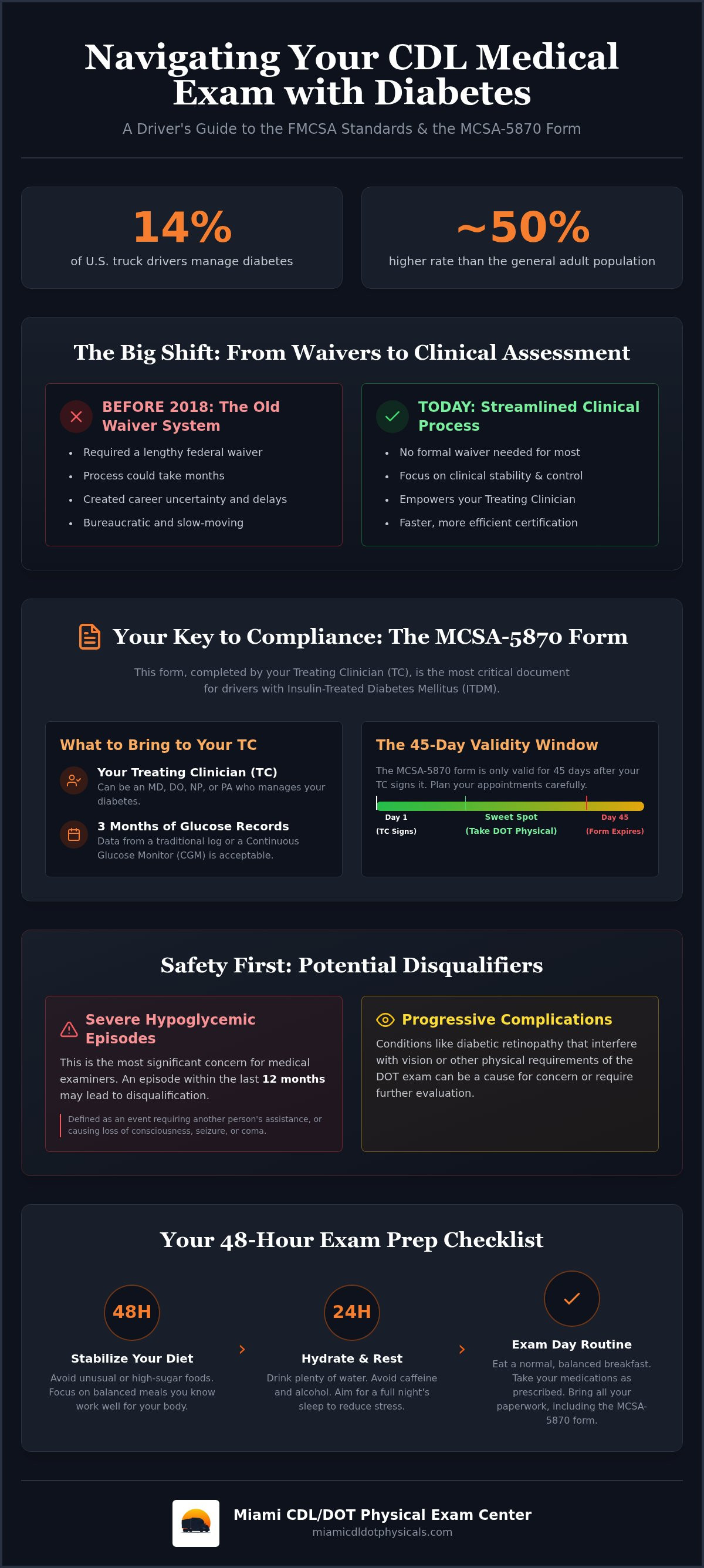
How to Prepare for Your DOT Physical with Diabetes
Preparation is the key to a stress-free certification. While your CDL medical card and diabetes management plan is a year-round commitment, the 48 hours before your exam require extra focus. Avoid high-sugar foods, heavy carbohydrates, and processed snacks that can cause a temporary spike in your glucose levels. These spikes can trigger additional questions during your mandatory urinalysis. Instead, focus on lean proteins like chicken or fish and plenty of leafy green vegetables to keep your levels stable. When you sit down with your examiner, be transparent about your routine. Explain how you monitor your levels on the road and what steps you take to prevent hypoglycemia during long hauls. This honesty builds trust and demonstrates that you're a responsible professional who prioritizes safety. For a broader look at general readiness, check out our guide on how to pass DOT physical exams.
The 24-Hour Preparation Strategy
Hydration is your best friend in the final 24 hours. Drinking plenty of water helps your kidneys process glucose more efficiently, which is vital for the mandatory urinalysis. This test checks for sugar and protein in your urine; it isn't a drug test, but it is a primary indicator of how well your diabetes is controlled. You should also limit caffeine and nicotine during this window. Both can artificially inflate your blood pressure and heart rate, potentially leading to a "wait-and-see" result rather than an immediate certification. It's a common misconception, but fasting is not required for a DOT physical unless your specific medical provider gives you different instructions. Keep your meals consistent to avoid blood sugar crashes or surges that could complicate your results.
Documentation Checklist
Showing up organized proves you take your health and your career seriously. Use this checklist to ensure you have everything needed for a smooth CDL medical card and diabetes management review:
- Signed MCSA-5870 Form: Verify the signature from your treating clinician is less than 45 days old.
- Medication List: Include the name, exact dosage, and frequency for every prescription and over-the-counter supplement you take.
- Glucose Data: Bring your CGM receiver, smartphone app, or paper logs showing at least the last three months of data.
- Treating Clinician Contact: Have your doctor's name and phone number ready in case the examiner needs a quick clarification.
Being prepared saves time and prevents the frustration of multiple trips to the clinic. If you're ready to get certified by experts who understand the ITDM process, schedule your DOT physical exam today.
Choosing a Certified FMCSA Examiner for Diabetes Management
Selecting the right medical examiner is more than just a box to check; it's a strategic decision for your career. You need a professional who truly understands the intersection of your CDL medical card and diabetes management. An examiner who isn't well-versed in ITDM protocols might inadvertently cause delays by requesting outdated waivers or misinterpreting your glucose logs. A seasoned expert knows exactly what the FMCSA requires in 2026 and focuses on your clinical stability. This expertise creates a supportive environment that reduces the anxiety often associated with these high-stakes exams. If you're navigating this process in a major transportation hub, our CDL medical card Miami guide provides a deep dive into choosing the best local compliance centers.
What to Look for in a DOT Physical Provider
Every examiner you consider must be listed on the National Registry of Certified Medical Examiners (NRCME). This is the bare minimum requirement. Beyond that, look for clinics that prioritize commercial driver compliance as their primary service. These specialized providers understand that for a driver, time is a limited resource. They offer streamlined workflows, same-day appointment availability, and efficient paperwork processing. A clinic that handles ITDM cases daily will be comfortable reviewing your MCSA-5870 and CGM data. This familiarity prevents the "wait-and-see" approach that less experienced clinics might take, ensuring you leave with your certificate in hand whenever possible.
Next Steps for Your CDL Medical Card
After your Treating Clinician completes the MCSA-5870, your next step is to book your DOT physical immediately. Don't let the 45-day validity window close. During the consultation, the examiner will discuss your daily management routine and review your long-term stability. This is your opportunity to show you're a proactive professional who prioritizes safety. They'll perform the standard physical checks, including vision, hearing, and blood pressure, while keeping your diabetic history in mind. Once they verify you meet all 2026 safety standards, your information is submitted electronically to the National Registry. To ensure a fast and professional experience, Schedule your DOT physical today and take the final step toward securing your medical card.
Secure Your Professional Future in 2026
Navigating the intersection of your CDL medical card and diabetes management doesn't have to be a source of stress. By understanding the shift from the old waiver system to the current clinical assessment model, you can take control of your career longevity. Remember that the MCSA-5870 form is your most powerful tool, provided you keep it within the strict 45-day validity window. Staying organized with your glucose logs and choosing an examiner who understands insulin-treated protocols will keep you on the road and in compliance.
Our team of FMCSA-Certified Medical Examiners specializes in complex medical compliance to ensure your exam is handled with expertise and efficiency. We offer same-day CDL medical card processing for drivers who meet the requirements, helping you avoid unnecessary downtime and get back to work quickly. You have the tools and the knowledge to succeed in this industry despite a diabetes diagnosis.
Drive with confidence knowing your health and certification are in expert hands. Book Your FMCSA-Certified Physical Exam Today and take the final step toward a worry-free certification process.
Frequently Asked Questions
Can I pass a DOT physical if I am on insulin?
Yes, you can pass. The 2018 FMCSA final rule removed the old waiver requirement that previously grounded many drivers. Now, insulin-treated drivers are certified by meeting specific clinical standards. You must work with your treating clinician to complete the MCSA-5870 form before your exam. This document confirms your condition is stable and well-controlled. As long as you don't have disqualifying complications like recent severe hypoglycemia, you can maintain your career.
What is the maximum A1C level allowed for a CDL medical card in 2026?
The FMCSA doesn't set a specific numerical A1C limit for certification. While a level below 7% is ideal for long-term health, examiners focus on your overall stability and history of hypoglycemic events. However, an A1C consistently above 10% suggests poor long-term control. In these cases, the examiner might issue a shorter certificate or require more frequent check-ins to ensure you can safely operate a commercial vehicle without sudden health risks.
How long is a CDL medical card valid for a driver with diabetes?
Insulin-treated drivers receive a medical certificate valid for a maximum of one year. This ensures regular monitoring of your CDL medical card and diabetes management routine. If you manage your diabetes with oral medications or diet alone, you might qualify for a two-year card. However, examiners often stick to a one-year limit if they see signs of progressive issues like vision changes or neuropathy that could impact your driving safety on the road.
Does the DOT medical examiner contact my primary care doctor?
Direct contact is rare but possible. The MCSA-5870 form is designed to provide the examiner with all the necessary information from your treating clinician. If the form is missing details or if your glucose logs show concerning patterns, the examiner may call your doctor for clarification. Clear documentation is the best way to avoid these delays. Ensuring your clinician fills out every section of the assessment form keeps the process moving efficiently.
What happens if I have sugar in my urine during the DOT physical?
Sugar in your urine, or glucosuria, isn't an automatic disqualification. It simply tells the examiner that your blood sugar was likely elevated recently. If this happens, the examiner will look closely at your A1C and glucose logs to see if this was a one-time spike or a pattern of poor control. You may be asked to provide additional clearance or updated lab work from your doctor before your medical card is processed and issued.
Do I need a new MCSA-5870 form every time I renew my medical card?
Yes, you must provide a new MCSA-5870 form at every annual renewal if you use insulin. Federal regulations require a fresh clinical assessment to verify your continued stability. Remember the 45-day rule: your treating clinician must sign the form within 45 days of your DOT physical appointment. Bringing an expired form will result in a delay, so sync your doctor's appointment closely with your medical exam date to stay compliant with federal rules.
Can a Continuous Glucose Monitor (CGM) replace finger-stick logs for the FMCSA?
Yes, the FMCSA accepts CGM data as a valid way to monitor your blood sugar. In 2026, many examiners prefer CGM reports because they show continuous trends and "time-in-range" rather than just isolated snapshots from finger-sticks. Ensure your reports cover at least the last three months of data. This information is essential for your CDL medical card and diabetes management review, proving you can maintain safe levels throughout your entire duty cycle.
What if my doctor refuses to sign the MCSA-5870 assessment form?
If your treating clinician refuses to sign the form, you cannot be certified for a CDL. This refusal usually indicates that your doctor has concerns about your blood sugar stability or a history of severe hypoglycemic episodes. Your best path forward is to follow their treatment plan to achieve better control. Once you demonstrate stability over a three-month period, you can ask your clinician to re-evaluate your status and sign the required assessment form.


