

A useful truck-driver workout doesn’t require a gym, perfect timing, or a long stretch off the road. Long hours behind the wheel can make regular movement hard to maintain, and changing schedules can derail even the best-laid plans. If you are preparing for your upcoming medical assessment at Miami CDL/DOT Physical Exam Center, remember that exercise can support general wellness, but it can’t guarantee certification or replace an individual medical evaluation. For everyday fitness, build a routine from small, repeatable actions that fit safe breaks and rest periods.
This guide covers practical exercises you can do with little or no equipment, ways to fit movement around driving hours, and how to ease into activity after sitting for a long time. It also explains when to seek individualized medical guidance. A DOT physical is a separate assessment of your medical fitness under applicable requirements.
Key Takeaways
- Choose movement that fits safe stops and available space instead of waiting for ideal workout conditions.
- Explore walking, mobility, strength, and balance exercises, with beginner-friendly ways to adapt each movement.
- Plan activity around your driving schedule and review what worked from week to week.
- Exercise can support general wellness, but it is separate from the individual evaluation in a DOT physical.
- Prepare for a DOT physical by bringing relevant health information and discussing personal concerns honestly with the examiner.
Why Truck Driver Exercises Must Work on the Road
Commercial driving can mean irregular schedules, long stretches of sitting, and little room for exercise equipment. A routine that depends on a gym or a fixed time every day may be difficult to maintain. A more practical plan uses repeatable movement that fits the time, space, and energy available, without interfering with safe driving or rest.
Long periods of inactivity are one reason it’s useful to build movement into daily life. The overview of the dangers of a sedentary lifestyle describes health concerns associated with inactivity, including obesity, heart disease, and diabetes. This is general context, not a prediction about any individual driver. The goal is to find sustainable ways to move, not to turn every break into a demanding workout.
What makes a fitness routine realistic for commercial drivers?
A fitness habit is a repeatable choice to move; a formal workout is a planned session with a specific structure or goal. For example, taking a short walk during a safe break can maintain a movement habit even when a full workout isn’t practical.
Keep the plan flexible. Choose manageable options that suit your ability and the conditions at the time, and adapt when driving hours or rest opportunities change. Move only when safely parked and off duty, in a suitable area with enough space. Don’t exercise in or around a moving vehicle, or let activity cut into the rest you need to drive safely.
What exercise can and cannot do for DOT physical readiness
Regular movement can be one part of general wellness, but it can’t guarantee that a health condition will be prevented or that you’ll receive medical certification. A clinician evaluates each driver’s health under the applicable medical standards. That individual assessment, not a workout routine, determines whether certification requirements are met.
If you’re preparing for a DOT physical, focus on accurate health information and an honest discussion of any concerns. Exercise is not a last-minute substitute for an examination, and it shouldn’t replace care or guidance tailored to your health. For practical steps to get ready, read the DOT physical preparation guide.
How movement supports a truck driver fitness routine
Movement doesn’t need to be intense to be useful as a daily habit. After a long stretch of sitting, a comfortable walk or gentle range-of-motion movements can offer a practical change of pace. Think of activity as several options, not one demanding workout: general movement gets you moving, flexibility work takes joints through comfortable motion, balance practice develops control, and strength movements challenge muscles.
Consistency and individual suitability matter more than intensity: a modest activity you can repeat safely is more realistic than an exhausting routine that doesn’t fit your ability or schedule. Start at a manageable level, move with control, and adapt or skip an activity if it doesn’t feel appropriate for you.
Movement breaks and mobility after long periods of sitting
When you’re safely parked and off duty, consider an easy walk in a suitable area or comfortable movements such as shoulder rolls and gentle ankle circles. Keep the range of motion easy; don’t force a stretch or push through pain. Choose a level, clear space, and follow workplace and vehicle-safety rules. These are general activity ideas, not treatment for a medical condition.
Strength and balance without a full gym
If they suit your ability, controlled bodyweight movements such as standing from a stable chair or doing wall push-ups can provide a simple strength option. For balance, practice a steady stance near a secure support, keeping the movement small. Resistance bands are optional, not essential; use them only if you know how to handle them safely and have a secure setup.
Not every exercise is right for every driver. If you have a health condition, an injury, or uncertainty about which movements are suitable, ask a qualified clinician for personalized advice before starting or changing your routine. Stop exercising if you experience concerning symptoms, such as chest discomfort, dizziness, or unusual shortness of breath, and seek appropriate medical guidance.
Everyday activity can support general wellness, but it doesn’t determine DOT medical certification. A clinician assesses your individual health under applicable standards, and exercise can’t promise a particular exam outcome. For drivers preparing for certification, a DOT physical examination provides an individual medical evaluation. Keep your movement choices comfortable, safe, and realistic for the day you’re having.
10 Practical exercises for truck drivers to stay active
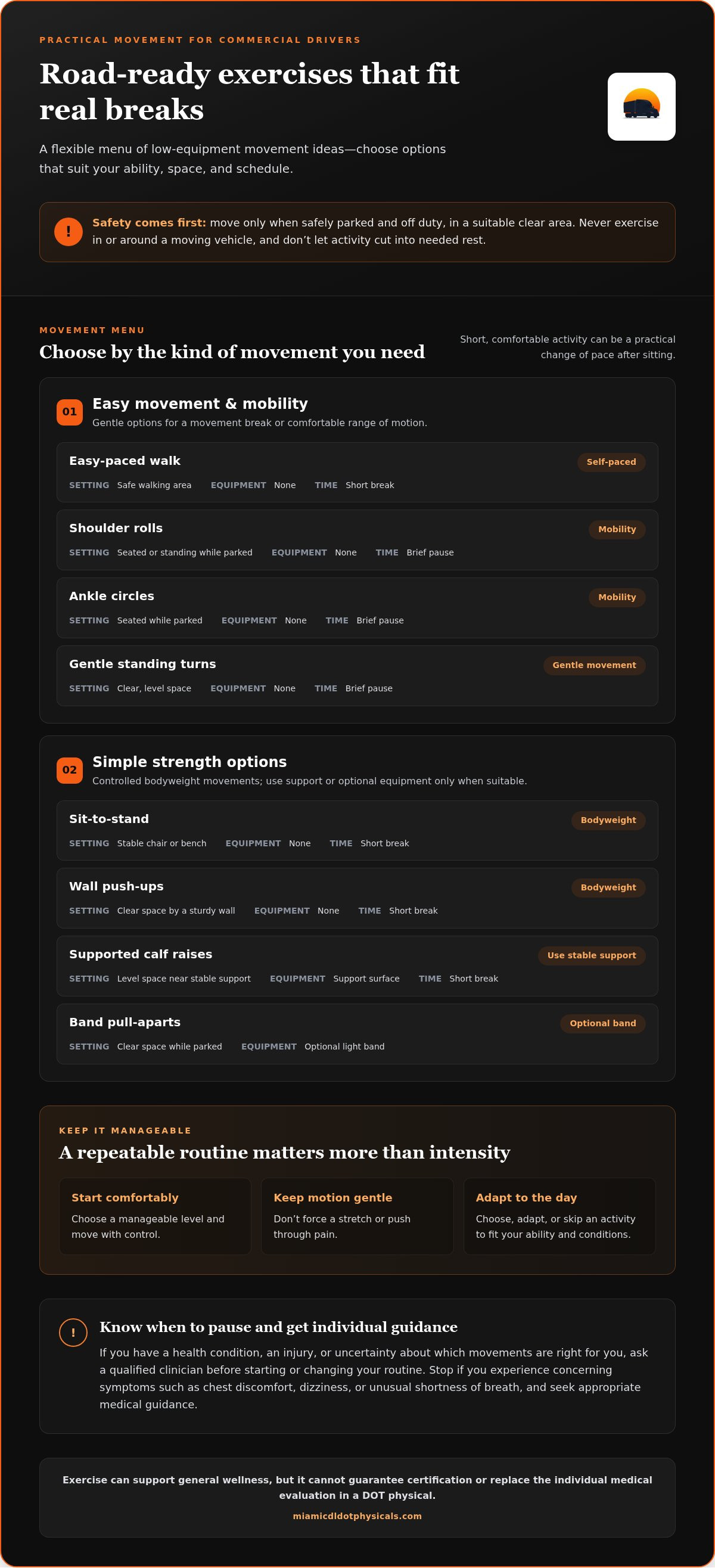
These options need little space and, apart from optional resistance bands, no special equipment. Choose only movements that suit your ability, and do them in a safe, stationary place while off duty, never while driving. The time descriptions are flexible examples, not targets.
| Exercise | Setting | Equipment | Approximate time |
|---|---|---|---|
| Easy-paced walk | Safe walking area | None | Short, self-paced break |
| Shoulder rolls | Seated or standing while parked | None | Brief pause |
| Ankle circles | Seated while parked | None | Brief pause |
| Gentle standing turns | Clear, level space | None | Brief pause |
| Sit-to-stand | Stable chair or bench | None | Short break |
| Wall push-ups | Clear space by a sturdy wall | None | Short break |
| Supported calf raises | Level space near stable support | Support surface | Short break |
| Band pull-aparts | Clear space while parked | Optional light band | Short break |
| Supported heel-to-toe stance | Level space near stable support | Support surface | Brief balance practice |
| Side-to-side weight shifts | Level space near stable support | Support surface | Brief balance practice |
Walking and mobility
- Easy-paced walk: Adds simple movement during a break. Start with a comfortable stroll on an even, clear path, and watch for traffic and surface hazards.
- Shoulder rolls: Move your shoulders gently through a comfortable range. Keep the motion small at first, stay upright, and stop if it hurts.
- Ankle circles: Slowly circle one foot, then the other, while seated and parked. Begin with small circles, keep your posture steady, and don’t do this while operating the vehicle.
- Gentle standing turns: Turn your upper body slightly from side to side. Keep your feet planted and the movement easy; avoid twisting sharply or forcing the range.
Strength and balance
- Sit-to-stand: Practice rising from a stable chair and sitting back down with control. Use your hands for support or skip it if the chair feels unstable; clear the area first.
- Wall push-ups: Press away from a sturdy wall. Stand closer to make the movement easier, keep your footing secure, and avoid slippery surfaces.
- Supported calf raises: Rise gently onto your toes while holding a stable support. Keep the movement small, and don’t use a movable object for balance.
- Band pull-aparts: If appropriate for you, gently draw a light resistance band apart. Use a band in good condition and keep it away from your face.
- Supported heel-to-toe stance: Place one foot slightly in front of the other near a stable support. Use a wider stance to make it easier, and don’t practice where losing your balance could cause a fall.
- Side-to-side weight shifts: Shift your weight gently between your feet while holding a stable support. Keep both feet grounded and make the movement smaller if needed.
Choose movements that match your ability, available space, equipment, and safe break time. Exercise is general wellness activity, not a substitute for an individual medical evaluation.
How to build a weekly exercise routine around driving hours
A useful plan starts with your actual work pattern, not an ideal calendar. Driving hours, rest opportunities, and energy can vary, so treat these examples as flexible frameworks rather than daily requirements. A short, safe movement break may fit one day; another day may leave room only for rest.
A flexible routine for driving days and days off
- Identify safe opportunities. Look for times when you’re off duty and fully parked, such as a suitable rest stop or a break at your destination. Keep job duties, workplace rules, safe parking, and adequate rest ahead of exercise. Never move around or exercise while driving.
- Choose manageable movements. Pick one or two options that match your space and current ability. For example, take an easy walk during a safe break, then do comfortable shoulder or ankle movements while parked. If your schedule shifts, move the activity to another safe opportunity rather than forcing a missed session.
- Review and adjust. At the end of the week, notice which opportunities worked and which didn’t. Keep the parts that felt practical, and simplify anything that competed with rest or work. Consistency means returning to a suitable routine when circumstances allow, not meeting a rigid quota.
One possible framework is brief, comfortable movement during selected driving-day breaks, with a longer walk or a few suitable strength movements on a day off. Another driver may prefer several short walks across the week and no planned session on days with demanding schedules. Neither pattern is a universal prescription; use only what fits your circumstances.
How to adjust movement to your needs
Scale each movement to your comfort and ability. Use a smaller range of motion, choose a supported variation, or leave an exercise out if it doesn’t feel suitable. Fatigue is a reason to protect rest, not push through a workout. Pause or skip activity when your schedule changes, you feel discomfort, or conditions aren’t safe.
Stop if you experience concerning symptoms, including chest discomfort, dizziness, or unusual shortness of breath, and seek appropriate medical guidance. If you have a health concern or have been given specific medical advice, follow that guidance and ask a qualified clinician how to adapt activity to your needs.
Exercise planning and exam preparation are separate tasks. Don’t treat a workout as a way to secure certification. For exam preparation, review this DOT physical requirements guide. To arrange a DOT physical examination, schedule your DOT physical.
Connect everyday fitness with responsible DOT physical preparation
A movement routine can support general wellness, but it isn’t a substitute for a DOT medical examination. Walking, mobility work, or other suitable activity doesn’t determine whether you meet certification requirements. Don’t stop medication, change treatment, or attempt an extreme workout to influence an exam. Follow the advice of the clinician who knows your health needs.
What to expect from a DOT medical examination
A DOT physical is an individual medical assessment conducted under applicable FMCSA standards. The medical examiner considers your health information as part of that evaluation. Be ready to discuss relevant medical history and current concerns openly. Bring health information that may help explain your situation, such as an up-to-date medication list or records relevant to a condition you’ve been asked to document. Don’t guess or leave out information because you’re worried about the outcome.
The examiner makes an assessment based on your individual circumstances and the applicable standards, not on whether you exercise. For a more detailed overview of exam and compliance topics, read the complete DOT physical compliance guide.
Choose a practical next step for your health and certification
Keep your fitness goal simple. Choose one movement habit that fits your schedule and ability, such as taking a comfortable walk when safely parked and off duty. You can build from there if it remains manageable. If you have a health condition or receive specific activity guidance from a clinician, follow that individualized advice rather than relying on general exercise suggestions.
Preparing for an exam is a separate step. Gather relevant health information, be candid about your concerns, and attend an individual evaluation with a qualified medical examiner. Exercise may be part of your wellness routine, but it can’t guarantee certification or replace the examination.
Our clinic provides FMCSA-certified DOT medical examinations. Schedule a DOT physical examination through our clinic for an individual medical evaluation under applicable FMCSA standards.
Build a Routine That Fits the Road
Truck-driver fitness doesn’t depend on a perfect schedule or a full gym. Choose a few simple movements that fit safe breaks, adapt them to your ability, and make consistency more important than intensity. A manageable habit can give you a practical way to add movement to your routine.
Keep wellness and certification in perspective. Exercise may support general well-being, but it can’t replace a medical examination or guarantee its outcome. Bring relevant health information to your DOT physical and discuss personal concerns honestly with the examiner.
Our clinic provides FMCSA-certified DOT medical examinations, DOT and non-DOT drug testing, and FMCSA Clearinghouse Consortium support. Take the next step in your certification preparation and schedule a DOT physical. Start with one safe, realistic movement habit, and build from there at a pace that works for you.
Frequently Asked Questions
Can truck drivers exercise during a rest break?
Light movement may fit a break if your vehicle is safely parked and you’re off duty or otherwise permitted to move. A comfortable walk or gentle mobility movement can be an option, but a break doesn’t require a workout. Put safety, fatigue, your personal ability, workplace rules, and vehicle policies first. Never exercise while operating a vehicle, and use a suitable area away from traffic and other hazards.
What are the best exercises for truck drivers with no equipment?
Comfortable walking, gentle shoulder rolls, ankle circles, and suitable bodyweight movements are equipment-free options. Depending on your ability and surroundings, you might try standing from a stable chair or doing wall push-ups in a clear space. There’s no single best choice for everyone. Move only when safely parked, keep movements comfortable, and stop if something feels wrong. These activities are general movement ideas, not treatment for a health condition.
How can truck drivers stay active on long-haul routes?
Plan for safe opportunities to move around your work schedule, then choose manageable activities that fit the space and time available. A short walk during one suitable stop may work, while another route or shift may offer different opportunities. Adapt the plan as conditions change. Protect adequate rest, follow workplace rules, and don’t exercise while driving. No single schedule fits every route or driver.
Do truck drivers need a gym to stay fit?
No, a gym isn’t necessary to start a general movement habit. Walking and suitable bodyweight options, such as a controlled sit-to-stand from a stable chair, can be done without specialized equipment. Choose movements that fit your current ability and the setting, and don’t expect a particular outcome. If you have a medical concern or aren’t sure what activity is appropriate, seek personalized advice from a qualified clinician.
Can exercise help me pass a DOT physical?
Exercise can’t guarantee a passing result or replace a DOT physical. The exam is an individual medical assessment under applicable requirements, and certification depends on the examiner’s evaluation. Exercise isn’t an exam workaround. Follow your clinician’s advice, share accurate health information, and treat activity as general wellness support, not a way to change certification requirements.
Is it safe to work out after sitting for hours in a truck?
Safety depends on your health, the movement, and the setting. If you choose to move, start gently in a safe, stationary place while off duty, and avoid forcing a stretch or pushing through discomfort. Stop if concerning symptoms occur, such as chest discomfort, dizziness, or unusual shortness of breath, and seek appropriate medical guidance. If you have a health condition or questions about activity, ask a qualified clinician for individualized advice.
How often should truck drivers exercise?
There isn’t one ideal frequency for every driver. Work schedules, health, ability, and current activity levels differ, so start with a manageable routine that fits your circumstances and adjust as needed. For general activity recommendations, consult current public-health guidance or ask a qualified clinician what’s suitable for you. The exercises in this article are educational examples, not an individualized medical prescription or a required schedule.


