

Some onsite DOT physical programs report pass rates as high as 98%, proving that success is largely a matter of proper preparation. Even so, the stress of wondering if your blood pressure is too high or if your medications are permitted can be overwhelming when your livelihood is on the line. If you're looking for how to prepare for a DOT physical exam Miami drivers rely on, you likely want a process that's fast, clear, and successful on the first attempt. Your CDL is your career, and walking into the exam room without a plan is an unnecessary risk.
We understand that regulatory compliance feels like a moving target, especially with the 2026 transition to the National Registry II system. This guide removes the guesswork so you can master the steps to secure your CDL medical card without delays. We'll walk you through updated FMCSA standards, essential documentation, and practical health tips to follow before your appointment. From vision requirements to rules on insulin-treated diabetes, you'll gain a clear understanding of the physical requirements to ensure a stress-free experience.
Key Takeaways
- Understand the 2026 FMCSA standards for vision, hearing, and blood pressure to avoid unexpected disqualification or certification delays.
- Identify the specific identification and medical records you must bring to ensure your medical card is issued during your appointment.
- Discover how managing your sodium and caffeine intake 48 hours before the test can positively influence your blood pressure readings.
- Learn the essential steps for how to prepare for a DOT physical exam Miami drivers use to navigate the new National Registry II digital system.
- Clarify which medications are permitted and which require a specialist’s waiver to keep you compliant and on the road.
Understanding the DOT Physical Exam Requirements for 2026
The DOT physical exam is a mandatory safety evaluation required by the Federal Motor Carrier Safety Administration (FMCSA). Its primary goal is to confirm that commercial drivers are physically capable of handling the rigorous demands of operating large vehicles. This assessment directly impacts your ability to meet Commercial Driver's License requirements and stay on the road. Knowing how to prepare for a DOT physical exam Miami drivers often find themselves searching for is the first step toward a successful certification. The examiner will evaluate several core health markers to determine if you're fit for duty, and your results will dictate the length of your medical card.
The Role of the Certified Medical Examiner
To receive a valid medical card, you must visit a provider listed on the National Registry of Certified Medical Examiners (NRCME). These professionals have completed specialized training to understand the unique stressors and physical demands of commercial driving. The examiner's responsibility is to protect public safety by ensuring every driver is fit for duty. They act as a supportive partner in your career, helping you manage health conditions so you can continue working safely. Seeing a certified professional ensures your exam results are legally recognized and uploaded correctly to the federal registry.
Vision and Hearing Thresholds
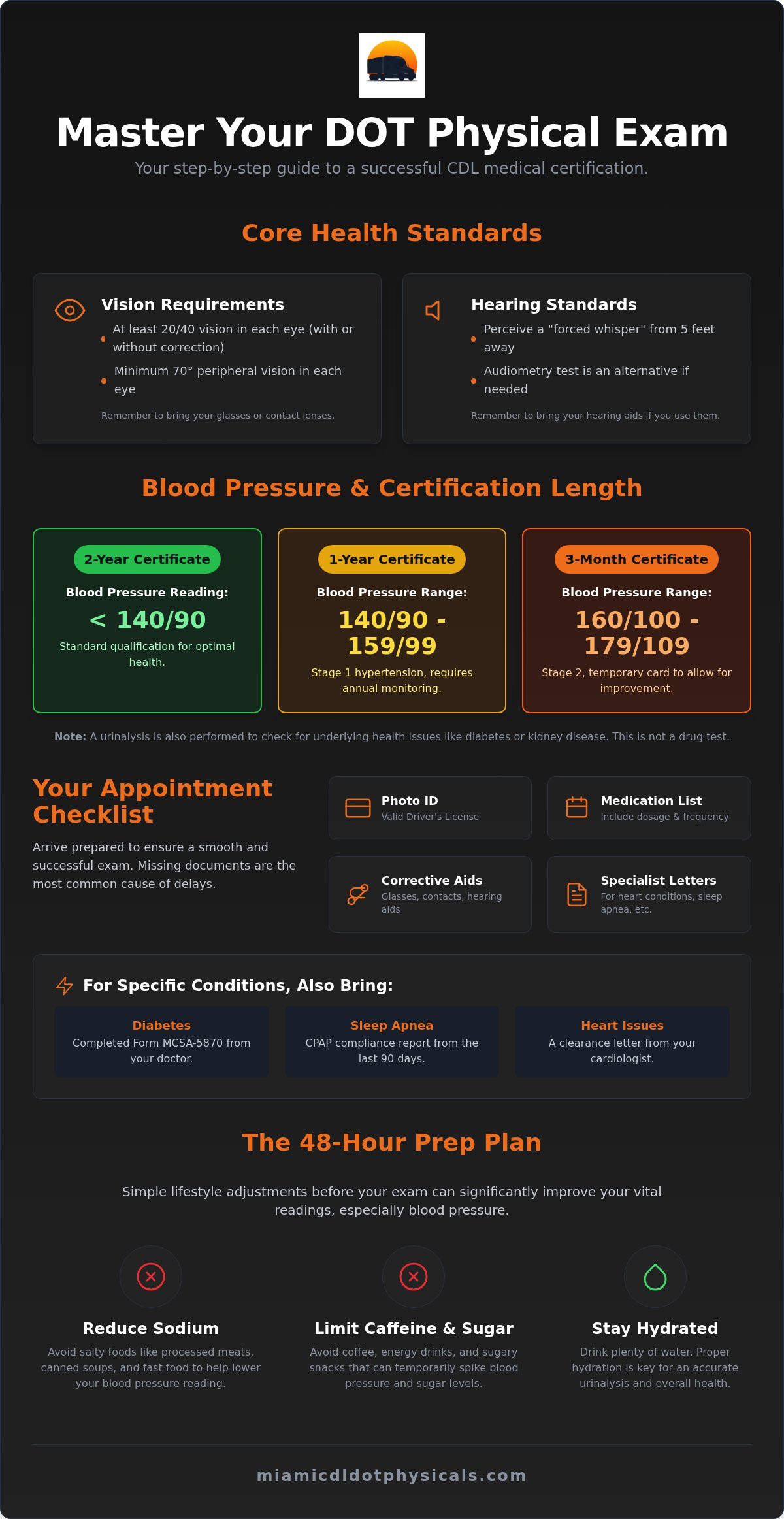
Vision and hearing are critical for safe driving. You must have at least 20/40 vision in each eye and both eyes combined, either with or without corrective lenses. Your peripheral vision must also be at least 70 degrees in each eye. For hearing, you must be able to perceive a "forced whisper" from five feet away in your better ear. If you use hearing aids or glasses, make sure to bring them to your appointment. If you cannot pass the whisper test, the examiner may use an audiometry test as an alternative to measure your hearing thresholds more precisely.
Blood pressure readings determine the length of your certification. A reading below 140/90 typically qualifies you for a two year medical certificate. If your pressure is between 140 and 159 over 90 to 99, you may receive a one year certificate. Readings between 160 and 179 over 100 to 109 might result in a temporary three month certificate to allow time for health improvements. Additionally, a urinalysis is performed to check for protein, blood, or sugar. This test looks for underlying issues like kidney disease or diabetes rather than being a drug screening.
Documentation Checklist: What to Bring to Your Appointment
Missing documentation is the most common reason for delays in receiving a CDL medical card. When you arrive at the clinic, your examiner needs specific items to verify your identity and medical history. Being organized not only speeds up the process but also reduces the stress of the evaluation. To stay compliant with the official DOT medical exam requirements, you must present a valid government-issued photo ID, such as your driver's license. If you're renewing an existing certification, bring your current CDL medical card as well.
Preparation also includes bringing any physical aids you use while on the road. If you wear glasses, contact lenses, or use a hearing aid, they must be present for the vision and hearing portions of the exam. The examiner will test your abilities while you're using these aids to ensure you meet safety thresholds. Having these items ready ensures your appointment moves forward without the need for a follow-up visit.
Specialist Clearance Letters for Chronic Conditions
If you manage a chronic health condition, you'll need to provide specific medical records. Drivers with insulin-treated diabetes must bring a completed Form MCSA-5870 from their treating clinician. If you have a history of heart disease or have undergone recent surgery, bring a clearance letter from your cardiologist or surgeon stating you're stable and fit for duty. For those with sleep apnea, a CPAP compliance report covering the last 90 days is mandatory. Providing these documents upfront shows the examiner that your condition is well-managed and meets federal safety standards.
Medication Lists and Prescribing Info
You must provide a comprehensive list of all current medications, including the exact dosage and frequency. It's helpful to include the name and contact information of the prescribing physician for each drug. This is especially important for medications that could potentially cause drowsiness or other side effects. If you're taking a medication for an "off-label" reason, a note from your doctor explaining the treatment can prevent confusion. Remember that certain substances, like marijuana, remain federally disqualifying regardless of state laws or medical cards. Knowing how to prepare for a DOT physical exam Miami drivers rely on means having this list finalized before you walk through the door. If your paperwork is in order, you can book your appointment now and expect a smooth, efficient experience.
The Driver’s Diet: Preparing Your Vitals for the Exam
What you consume in the 48 hours leading up to your appointment can significantly influence your vitals. Many drivers find that knowing how to prepare for a DOT physical exam Miami requires more than just gathering paperwork; it requires a strategic approach to nutrition. High sodium intake and excessive caffeine are the primary triggers for temporary spikes in blood pressure. By adjusting your diet shortly before the exam, you can ensure your readings reflect your true health status rather than a temporary reaction to a salty meal.
Managing Blood Pressure Through Nutrition
Avoiding high-sodium "road food" is essential in the two days preceding your test. Fast food and processed snacks cause your body to retain water, which elevates blood pressure readings. Instead, focus on potassium-rich foods like bananas, leafy greens, and potatoes, which help your body balance sodium levels and stabilize your vitals. It's also vital to skip energy drinks and heavy coffee on the morning of your exam. Stimulants cause a rapid heart rate and a sharp increase in blood pressure, potentially leading to a shorter certification period or a temporary disqualification.
Blood Sugar and Urinalysis Preparation
The required urinalysis checks for protein, blood, and sugar to identify potential underlying conditions like kidney disease or diabetes. It's important to remember that this is not a drug test, though the Official FMCSA Medical Examination Forms require this screening for all drivers. Consuming a high-sugar meal or several sodas just before your appointment can cause sugar to spill into your urine, triggering a "false" positive for glycosuria. This often leads to unnecessary follow-up testing or delays. Stick to a balanced meal of lean protein and complex carbohydrates on the day of your exam to keep your blood sugar levels steady.
Hydration is equally critical for a successful urinalysis. Drinking plenty of water ensures you can provide a sample easily and helps clear your system of excess minerals. Proper hydration also assists in managing "white coat syndrome," a common phenomenon where anxiety in a medical setting causes blood pressure to rise. Arriving well-hydrated and avoiding stimulants is a key part of how to prepare for a DOT physical exam Miami drivers use to stay on the road. By following these dietary steps, you give yourself the best chance of remaining calm and passing your vitals with flying colors.
Managing Medications and Health History Disclosures
Honesty is the foundation of a successful medical certification. When you fill out your health history form, you are signing a legal document that the FMCSA uses to verify your fitness for duty. Providing accurate information ensures your examiner can help you stay compliant rather than discovering discrepancies during a background check or audit. Part of knowing how to prepare for a DOT physical exam Miami professionals recommend is understanding that your medical history is a roadmap for your long-term career safety. Disclosing your history upfront prevents the stress of a suspended medical card later.
Disqualifying vs. Managed Medications
Many drivers worry that a single prescription will end their career. This is rarely the case. Common blood pressure medications are perfectly acceptable and actually show the examiner that you are managing your health responsibly. However, the rules surrounding Schedule I controlled substances are absolute. Medications like medical marijuana remain disqualifying at the federal level regardless of state law. If you take sleep aids or anti-anxiety medication, you must disclose them. These often require a specific note from your prescribing doctor confirming they will not interfere with your ability to operate a vehicle safely. For a detailed list, consult our guide on medications that disqualify CDL medical card status.
Some conditions that were once disqualifying now have clear pathways for certification through medical exceptions. For example, insulin-treated diabetes is manageable under the current FMCSA standards provided you have the correct documentation from your treating clinician. The examiner's goal is to ensure you can safely navigate the road, not to look for reasons to fail you. Clear communication about your managed conditions helps the examiner advocate for your certification and keep you behind the wheel.
For those who want to take a proactive approach to their long-term health and hormonal balance, check out Living Well Dallas to learn more about how functional medicine can support your career longevity.
Disclosing Surgeries and Recent Hospitalizations
You must list all surgeries and hospitalizations that occurred within the last five years. This includes everything from minor procedures to major cardiac events. To avoid delays, prepare by obtaining release forms from your surgeon or specialist before your appointment. These documents should state that you have no physical restrictions and are safe to return to commercial driving. Recent health events might temporarily affect your certification length. You might receive a one year or three month card instead of the standard two year card while your recovery is monitored. Ensuring you have these records ready is a critical part of how to prepare for a DOT physical exam Miami drivers use to stay on the road. If you are ready to move forward with your certification, book your DOT physical today to ensure a smooth process.
Pre-Exam Protocol: A Step-by-Step Preparation Guide
Finalizing your pre-exam protocol is the last hurdle before you secure your certification. When considering how to prepare for a DOT physical exam Miami drivers should first confirm their appointment with an FMCSA-certified medical examiner. This ensures your results are legally valid and properly uploaded to the National Registry. Arriving with a clear plan allows you to focus on the health requirements without the distraction of missing paperwork or logistical errors. The final day of preparation is about maintaining the progress you've made with your diet and documentation.
The 24-Hour Countdown
The 24 hours leading up to your exam are critical for stabilizing your vitals. Drink plenty of water and avoid sugary juices or sodas that could impact your urinalysis results. This is also the time to review your current CDL medical card expiration date. Driving on a lapsed certificate can lead to significant fines and immediate out-of-service orders. Double-check your "go-bag" for corrective lenses, hearing aids, and any specialist clearance letters discussed in earlier sections.
Getting at least seven to eight hours of sleep the night before is essential. Fatigue can cause your blood pressure to fluctuate and your heart rate to increase, which might lead to a shorter certification period. A well-rested driver is more likely to pass the vision and hearing portions of the exam on the first attempt. Avoid heavy meals or excessive caffeine during this window to ensure your body is in a baseline state for the examiner's assessment.
What Happens During the Physical Exam
Arriving at the clinic at least 15 minutes early is a simple way to keep your blood pressure low. Rushing into an appointment creates unnecessary stress that can spike your vitals. You'll start in the waiting room by completing the driver portion of the medical examination form. Be thorough and honest, as this form becomes part of your permanent record. Once you're called back, the examiner reviews your health history and medication list before starting the physical assessment.
The clinical portion of the exam follows a methodical flow. The examiner will check your pulse, blood pressure, vision, and hearing thresholds using the standards we've covered. They also perform a physical check of your lungs, heart, and neurological reflexes. This is a supportive process designed to ensure you can safely handle the physical demands of commercial driving. Don't hesitate to ask the examiner questions about managing your health markers for future renewals.
After the clinical assessment, the provider discusses your results and any health management tips. If you meet all FMCSA standards, you'll receive your Medical Examiner's Certificate (MEC) immediately. Under the 2026 National Registry II transition, your results are transmitted digitally to the FMCSA. However, keep your paper certificate in your vehicle for at least 60 days as proof of certification while the digital records sync with state licensing agencies. This final step ensures you stay compliant and ready to work without any administrative delays.
Secure Your Career with Proactive Preparation
Preparation is the foundation of a stress-free medical certification. By organizing your documentation, managing your diet for stable vitals, and understanding the 2026 FMCSA standards, you position yourself for a successful exam. This proactive approach ensures you meet all physical requirements and avoid the delays that often follow missing paperwork or temporary health spikes. Your medical card is more than just a requirement; it's the key to your professional livelihood, which is why many aspiring professionals explore CDL Entry Level Driver Training – Automatic Transmission Standard Beginner Course to ensure they have the training needed to succeed.
Staying compliant is simple when you have the right partner. Learning how to prepare for a DOT physical exam Miami drivers trust gives you the confidence to walk into your appointment ready for results. Our center offers expert compliance support and FMCSA-certified medical examiners to guide you through the updated 2026 process. We value your time and prioritize efficiency with same-day CDL medical card processing to keep you on the road.
Schedule your professional DOT physical exam today and take the final step toward your new certification. Your career depends on reliability, so start your next two years with a partner who shares that commitment.
Frequently Asked Questions
Can I pass a DOT physical with high blood pressure?
Yes, you can pass, but the length of your certification depends on your specific readings. A blood pressure below 140/90 typically qualifies you for a full two year certificate. If your reading is higher, you might receive a one year or three month temporary card while you work to control it. Managing your diet and hydration is a key part of how to prepare for a DOT physical exam Miami drivers use to ensure stable vitals.
What medications will disqualify me from getting a CDL medical card?
Disqualifying medications primarily include Schedule I controlled substances, such as marijuana, even if it's used for medical purposes. Other prohibited drugs include methadone and certain habit-forming narcotics or anti-seizure medications that can impair alertness. Many other prescriptions are perfectly acceptable if you provide a waiver or clearance letter from your doctor. Always bring your full medication list to your appointment so the examiner can verify your compliance with federal safety standards.
Do I need to take a drug test during my DOT physical?
A standard DOT physical does not include a drug test, although it does require a urinalysis. The urinalysis is used to check for sugar, protein, and blood, which can indicate underlying health issues like diabetes or kidney disease. It's important to remember that employers often request a separate DOT drug test at the same time as your physical. These are two different procedures with separate requirements, so check with your company to see if both are needed.
How long is a DOT physical exam valid for in 2026?
A DOT physical is generally valid for 24 months for drivers in good health. If you have managed conditions like high blood pressure or diabetes, your certificate might be limited to 12 months or less. This ensures that a medical professional monitors your condition more frequently for road safety. Understanding how to prepare for a DOT physical exam Miami professionals recommend can help you manage these health markers and maximize the length of your medical card certification.
What happens if I fail my DOT physical exam?
If you don't meet the FMCSA standards, the examiner may temporarily disqualify you or issue a short-term certificate. This gives you time to address specific health concerns, such as vision issues or uncontrolled hypertension. Once you resolve the problem or obtain the necessary specialist clearance, you can return for a re-examination. Failing isn't always a permanent career end; it's often a signal that you need to adjust your health management plan to stay safe behind the wheel.
Can I drive if my CDL medical card has expired?
No, you cannot legally operate a commercial vehicle once your medical card expires. Driving with an expired certificate can lead to immediate out-of-service orders and heavy fines. During the 2026 National Registry II transition, you may use a paper certificate as proof for up to 60 days after your exam, but this only applies after you've passed a new physical. You should always schedule your renewal at least two weeks before your current card lapses to avoid any downtime.
Do I need a new physical if I change employers?
Your current DOT medical certificate usually stays valid when you change employers as long as it hasn't reached its expiration date. However, many companies have their own internal safety policies and might require you to take a new exam with their preferred examiner. It's always best to check with your new employer's safety department during the onboarding process. If they don't require a new physical, you can continue using your existing card until it officially expires.
Is a sleep apnea test required for every DOT physical?
A sleep apnea test is not mandatory for every driver. The medical examiner will screen you for risk factors like a high body mass index, large neck size, or a history of chronic fatigue. If the examiner determines you're at high risk for obstructive sleep apnea, they may require a sleep study before issuing a long-term certificate. If you've already been diagnosed, you must bring 90 days of CPAP compliance data to your appointment to prove you're managing the condition effectively.


