

The sudden spike in your blood pressure the moment you see a white lab coat isn't a sign of poor health; it's a natural reaction to a high-stakes environment. For many commercial drivers, anxiety about passing DOT physical exams is the single biggest hurdle to staying on the road. You know that one bad reading could sideline your career and stop your paycheck, making it nearly impossible to stay calm when the cuff tightens around your arm.
It's completely normal to feel like the medical examiner is an obstacle between you and your livelihood. This guide changes that perspective by positioning the examiner as your ally in safety. You'll learn how to navigate FMCSA mental health standards, which medications are actually permitted, and how to lower your stress levels before you even walk through the clinic door. We'll break down the latest 2026 regulations and provide a clear roadmap to ensure your next exam is a routine success rather than a source of panic.
Key Takeaways
- Recognize that anxiety about passing DOT physical exams is a normal reaction to high-stakes career requirements rather than a medical disqualifier.
- Clarify FMCSA mental health standards to understand how your diagnosis and medications are evaluated for safe vehicle operation.
- Master the "Three-Minute Rule" to prevent situational stress from causing temporary blood pressure spikes during your examination.
- Treat your physical like a pre-trip inspection by gathering documentation early to eliminate the uncertainty that fuels test-day nerves.
- See your certified medical examiner as a partner in your career success by prioritizing honesty and transparency on your FMCSA forms.
Understanding the "Livelihood Anxiety" Behind the DOT Physical
For a commercial driver, a medical exam is never just a routine checkup. It is a high-stakes evaluation that determines your ability to earn a living. This creates a specific type of stress known as livelihood anxiety. Many professionals experience intense anxiety about passing DOT physical requirements because the consequences of a "fail" are so immediate. When your income depends on a medical certificate, the exam room feels less like a doctor's office and more like a courtroom.
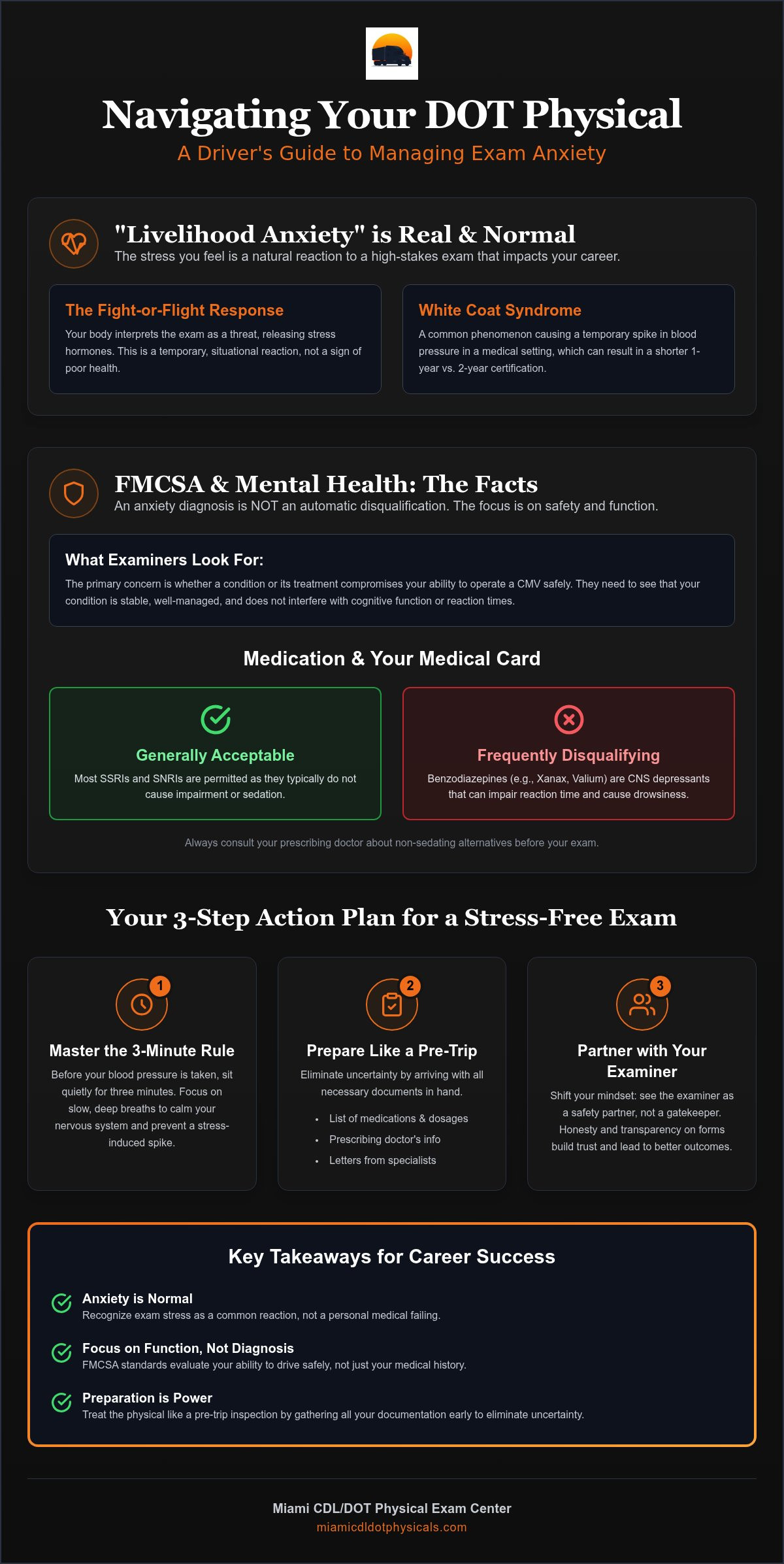
When you step into the clinic, your brain might interpret the exam as a threat to your survival. This triggers a fight-or-flight response. Your body releases adrenaline and cortisol, preparing you to face a physical challenge. While understanding anxiety disorders is helpful for long-term health, it's vital to recognize that situational anxiety is different. It is a temporary, intense reaction to a specific event. You aren't alone in this feeling. Veteran drivers with decades of experience still feel their heart race when they see the blood pressure cuff.
The Psychology of the Medical Examiner’s Office
The clinical environment can feel cold and judgmental. If you view the medical examiner as a gatekeeper looking for reasons to disqualify you, your body will react defensively. This fear often creates a self-fulfilling prophecy. You worry about your vitals, which causes your heart rate to climb. Shift your perspective to see the examiner as a safety partner. Their goal is to ensure you're healthy enough to operate safely, not to strip you of your CDL. Reframing this relationship can significantly lower your baseline stress level during the appointment.
Why "White Coat Syndrome" is Common in Trucking
White Coat Syndrome is a temporary physiological spike in blood pressure or heart rate caused by being in a medical environment. This phenomenon is incredibly common in the trucking industry. You might have perfect blood pressure at home, but the moment you sit on the exam table, the numbers jump. This situational spike can lead to several complications:
- Receiving a one-year certification instead of the standard two-year certificate.
- A "Determination Pending" status that requires extra doctor visits.
- Increased stress during future exams as you worry about repeating the high reading.
If you struggle with anxiety about passing DOT physical exams, remember that your body is simply reacting to the pressure of the situation. Recognizing this as a physical response to stress, rather than a permanent health condition, is the first step toward managing it. Understanding this mechanism allows you to take proactive steps to stay calm and pass your exam with confidence.
FMCSA Guidelines: Can You Pass a DOT Physical with Anxiety?
Many drivers fear that a history of mental health struggles will automatically end their career. This is a misconception. An anxiety diagnosis is not an automatic disqualification under current regulations. The primary concern for a certified medical examiner is whether your condition or the treatment for it compromises your ability to operate a commercial motor vehicle safely. If your symptoms are under control and do not interfere with your cognitive or physical functions, you can maintain your medical certificate.
According to the FMCSA Driver Safety Guidelines, the focus is on functional impairment. The examiner looks for evidence that your anxiety is stable and well-managed. Typically, this means you have been symptom-free or effectively treated for a consistent period, often at least 6 to 12 months. If you have a history of severe episodes, the examiner will want to see that you are under the regular care of a provider and that your condition does not interfere with your judgment or physical control of the vehicle.
Medications and the DOT Medical Card
The type of medication you take plays a massive role in your certification. Most Selective Serotonin Reuptake Inhibitors (SSRIs) and Serotonin-Norepinephrine Reuptake Inhibitors (SNRIs) are acceptable because they generally do not cause significant impairment. However, Benzodiazepines like Xanax, Valium, or Ativan are frequently disqualifying because they are central nervous system depressants. These drugs can cause drowsiness, slowed reaction times, and impaired coordination. The FMCSA evaluates medications based on their potential to cause drowsiness or impaired reaction times. If your treatment includes sedating drugs, talk to your prescribing doctor about non-sedating alternatives before your exam date.
Documentation You Need to Bring
Preparation is the best way to reduce anxiety about passing DOT physical exams. Arrive with a complete list of your current medications, including the dosages and the contact information for your prescribing physician. A clearance letter from your mental health provider is the most powerful tool you have. This letter should state that your condition is stable, you are compliant with treatment, and you are cleared to perform the demanding duties of a commercial driver.
If you have a history of hospitalizations or panic attacks, don't hide it. Transparency is vital. Providing clear documentation upfront prevents the examiner from placing you in a "Determination Pending" status, which can keep you off the road for weeks while you gather records. To ensure a smooth process, you can schedule your DOT physical with an examiner who understands the nuances of mental health compliance. By arriving prepared, you turn a potential hurdle into a routine check-in.
Combatting Stress Spikes and High Blood Pressure
High blood pressure is one of the most common reasons drivers receive a shortened medical certificate or a "Determination Pending" status. Often, these high readings aren't caused by chronic hypertension, but by the physiological spike of anxiety about passing DOT physical exams. When you're stressed, your heart pumps faster and your blood vessels constrict, which can push a healthy person's numbers into the disqualifying range. You can prevent these situational spikes by making specific choices in the 24 hours leading up to your appointment.
The most effective tool you have in the exam room is the "Three-Minute Rule." Don't let the technician rush you. Politely ask to sit quietly for three minutes before they take your blood pressure reading. This brief period of stillness allows your autonomic nervous system to reset and your heart rate to level out. Most examiners are happy to accommodate this request because they want an accurate reading of your resting state, not a measurement of your test-day nerves.
Your preparation should also include a "clean" 24-hour window before the exam. Avoid high-sodium foods like fast food, canned soups, or processed meats, as excess salt causes your body to retain water and increases arterial pressure. Prioritize sleep as well. Sleep deprivation puts your body in a state of high alert, making you more susceptible to stress-induced heart rate spikes. Aim for at least seven hours of rest to ensure your nervous system is calm when you walk into the clinic.
On-the-Spot Relaxation Techniques
If you feel panic rising while you're in the waiting room, use box breathing. Inhale deeply for four seconds, hold for four, exhale for four, and hold again for four. Repeat this cycle three times to physically force your heart rate to slow down. You can also try grounding exercises, such as identifying five blue objects in the room, to pull your focus away from your internal worries. Most importantly, be honest with your DOT physical examiner about your nerves. Telling them you're feeling a bit anxious often breaks the tension and helps them work with you to get the most accurate results.
The Impact of Caffeine and Nicotine
That extra cup of coffee you grab to stay alert for the drive can be your undoing. Caffeine is a powerful stimulant that constricts blood vessels and can raise your systolic pressure by several points. Nicotine is equally problematic; it mimics the physical symptoms of anxiety by increasing your pulse and blood pressure. On the morning of your exam, skip the stimulants entirely. Choose water or herbal tea instead. You can always have your caffeine fix after the medical certificate is in your hand.
A Step-by-Step Preparation Guide to Eliminate Uncertainty
Uncertainty is the primary fuel for anxiety about passing DOT physical exams. When you don't know what the examiner will ask or which documents they need, your brain fills that gap with worst-case scenarios. The most effective way to stay calm is to treat your medical certification like a pre-trip inspection. You wouldn't hit the road without checking your tires and lights; you shouldn't walk into a clinic without auditing your own medical history and paperwork first. Knowing exactly what is coming reduces the fear of the unknown.
Timing is your best defense against stress. Never wait until the final week of your current medical card to schedule your appointment. If you give yourself a 30-day buffer, you remove the "do or die" pressure from the exam. This cushion allows you to handle a "Determination Pending" status without the fear of your CDL immediately becoming invalid. Think of this status as a safety net rather than a failure. It simply means the examiner needs one more piece of the puzzle to confirm you are safe to drive. Having time on your side makes this a minor detour instead of a career-ending hurdle.
Creating Your DOT Documentation Folder
Organization creates confidence. When you have your records ready, you eliminate the fear of being caught off guard by a question about your health history. Review the DOT physical requirements early to identify exactly which records apply to you. Having your paperwork in order shows the examiner that you are proactive about your health and compliance. Your folder should include:
- CPAP Compliance: At least 90 days of usage data from your machine if you have a sleep apnea diagnosis.
- Diabetic Records: Your most recent A1C results and a clear list of all medications.
- Cardiac Clearance: A letter from your cardiologist if you have a history of heart issues, stents, or surgery.
- Vision/Hearing: Your current prescription and any backup glasses or hearing aid batteries you use.
Scheduling for Success
The time of day you choose for your appointment can impact your physiological readings. Morning appointments are generally better for maintaining lower blood pressure and heart rate. Your body hasn't yet been subjected to the stresses of traffic, deadlines, or heavy meals. When you book your slot, look for an FMCSA-certified examiner who has a reputation for efficiency and driver support. Finding a provider who understands the unique pressures of the trucking industry can make the entire process feel like a partnership. To take the first step toward a stress-free renewal, you can schedule your DOT physical today and get ahead of your expiration date.
Partnering with Your FMCSA Medical Examiner
The relationship you build with your medical examiner is the final piece of the puzzle. Instead of seeing them as an adversary, treat them as a specialist who helps you protect your most valuable asset: your health. Many drivers experience anxiety about passing DOT physical exams because they feel they need to hide their medical history to stay employed. In reality, transparency is your strongest legal and medical defense. When you're honest about your history, the examiner can work with you to ensure you meet FMCSA standards without putting your career at risk.
Omitting medical information on the FMCSA long form carries serious consequences. If the FMCSA discovers an undisclosed condition later, perhaps after an accident or during a random audit, it can lead to the immediate revocation of your medical certificate and potential legal penalties. It's far better to address a condition openly during the exam. Examiners often use conditional certifications, such as three-month or one-year cards, to give you time to manage a health issue while staying on the job. The Medical Examiner’s goal is to keep safe drivers on the road, not to find reasons for disqualification.
The Truth About Disclosure
Being upfront about your medical history allows the examiner to provide guidance on maintaining your eligibility. If you have a borderline blood pressure reading or a managed mental health condition, the examiner can suggest lifestyle changes or documentation that keeps you compliant. They understand the physical toll of the trucking lifestyle and want to see you succeed. By positioning the exam as a tool for a long, healthy career, you shift the focus from "passing a test" to "monitoring your longevity."
Next Steps if You Don’t Pass Immediately
It is vital to understand that not receiving a two-year card immediately isn't a permanent failure. Most delays are temporary "waits" rather than disqualifications. If you're placed in a "Determination Pending" status, use that time effectively to gather the missing records or consult with your primary doctor. This period is a window of opportunity to correct health issues before they become career-ending problems.
Success starts with choosing the right partner for your certification. When you approach your CDL medical card renewal with a prepared mindset and an honest approach, you eliminate the root causes of anxiety about passing DOT physical requirements. Take control of your health today to ensure you stay on the road for years to come. Your examiner is there to help you navigate the rules, so don't hesitate to ask questions and seek their professional advice during the process.
Taking Control of Your Career Longevity
You now have the tools to manage anxiety about passing DOT physical exams by shifting your focus from fear to preparation. By organizing your medical documentation early and using physiological techniques like the Three-Minute Rule, you can ensure your vitals reflect your true health rather than temporary stress. Remember that FMCSA standards are designed to keep you safe on the road, not to keep you off it. A successful exam is simply a matter of having the right information and a calm approach.
Experience a smoother certification process by working with experts who value your livelihood. Our FMCSA-certified medical examiners provide fast, efficient same-day service to ensure stress-free compliance for commercial drivers. Schedule your professional DOT physical exam today and walk into your next appointment with confidence. Your career is built on reliability; your medical certification should be no different. Stay proactive and keep moving forward.
Frequently Asked Questions
Can I pass a DOT physical if I am taking Lexapro or Zoloft?
Yes, you can pass while taking SSRIs like Lexapro or Zoloft. The FMCSA generally permits these medications because they don't cause significant sedation or impairment. Your medical examiner will check if your condition is stable and if you experience any side effects that could interfere with driving. Bring a list of your dosages and a note from your prescribing doctor to speed up the process.
What happens if my blood pressure is high because I am nervous?
If your blood pressure is high because of stress, the examiner will likely give you time to rest. They may perform the rest of the exam and re-test your vitals at the end. If the reading remains high, you might receive a short-term certificate, such as a three-month card, to allow time for monitoring. This helps separate temporary anxiety about passing DOT physical exams from chronic medical conditions.
Will the examiner fail me if I have a panic attack during the physical?
Having a panic attack during the exam is not an automatic failure. The examiner's priority is determining if your symptoms are manageable and if they pose a risk while driving. They may place your certification in a "Determination Pending" status until you can provide a clearance letter from your mental health provider. This ensures you are safe to operate a commercial vehicle before the final certificate is issued.
Do I have to tell the DOT examiner about my anxiety diagnosis?
You must disclose an anxiety diagnosis on the FMCSA Medical Examination Report Form. Honesty is required by federal law and protects your CDL in the long run. If the FMCSA finds an undisclosed condition later, your medical card could be revoked immediately. Being transparent allows the examiner to work with you on a compliance plan rather than treating the omission as a safety violation.
Can I take Xanax before my DOT physical to stay calm?
You should not take Xanax or other benzodiazepines before your exam. These medications are central nervous system depressants that cause drowsiness and slowed reaction times. Taking them can lead to a disqualification because they impair your ability to drive safely. If you struggle with anxiety about passing DOT physical requirements, use natural relaxation techniques like box breathing instead of sedating prescription drugs.
How long is a DOT medical card valid if you have anxiety?
A DOT medical card can be valid for up to 24 months. However, if you have a condition that requires monitoring, the examiner may issue a certificate for one year, six months, or even three months. The length depends on the stability of your symptoms and the medications you use. Frequent check-ins ensure that your condition remains well-managed while you continue your professional driving career.
What documentation should I bring if I have a history of mental health treatment?
Bring a clearance letter from your treating physician and a complete list of your medications. The letter should state that your condition is stable and that your medications don't cause impairment. If you have a history of hospitalizations, include those records as well. Having this paperwork ready prevents delays and shows the examiner that you are proactive about maintaining your health and safety standards.
Is a "Determination Pending" status the same as failing the exam?
No, a "Determination Pending" status is not a failure. It is a temporary pause that gives you up to 45 days to provide additional medical information. Use this time to gather missing documentation or visit your primary doctor for a follow-up. Once the examiner receives the required records, they can finalize your certification and issue your medical card without you having to start the process over.


