

Your prescription bottle shouldn't feel like a ticking time bomb for your career. Many drivers walk into their DOT physical with a knot in their stomach, worrying that a routine medication for blood pressure or a recent injury will result in a failed exam. It's a valid concern because the list of medications that disqualify CDL medical card status is more nuanced than a simple "yes" or "no" list. Even with the 2026 updates to the drug testing panel, including the addition of fentanyl, the rules can feel like a moving target for even the most experienced operators.
We understand that your livelihood depends on staying behind the wheel, and navigating the gap between your primary doctor's advice and FMCSA regulations is stressful. This guide provides the clarity you need to walk into your next appointment with total confidence. You'll find a definitive list of prohibited substances, a checklist to share with your prescribing physician, and a breakdown of how medical examiners evaluate everything from narcotics to over-the-counter sleep aids. We'll show you exactly how to document your health management so you can stay compliant and keep moving.
Key Takeaways
- Understand the five major categories of prohibited substances, including narcotics and anti-seizure drugs, to avoid surprises during your next exam.
- Learn which common medications that disqualify CDL medical card status are actually subject to medical examiner discretion when supported by the correct clinical documentation.
- Prepare for the 2026 regulatory shift by understanding the new fentanyl testing panels and the 50% random drug testing rate for commercial drivers.
- Identify the essential requirements for a Prescribing Physician Letter to help bridge the gap between your personal doctor's advice and DOT safety rules.
- Recognize why full disclosure of all prescriptions and over-the-counter aids is the most effective way to protect your livelihood and pass your physical.
What Medications Disqualify a CDL Medical Card? FMCSA Standards for 2026
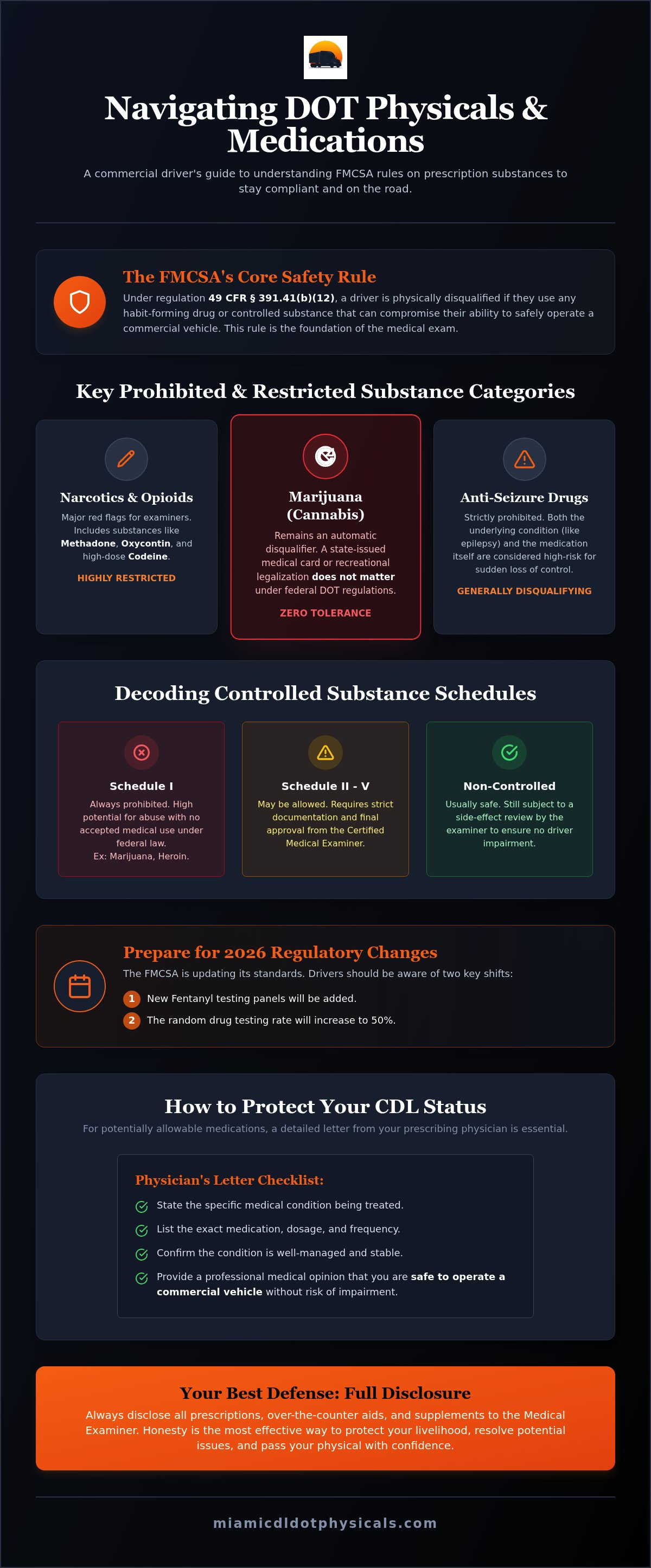
The FMCSA's primary mission is to keep the highways safe for everyone. This means the standards for your health and treatment plans are much higher than those for a standard passenger vehicle driver. Under 49 CFR Section 391.41(b)(12), a driver is physically disqualified if they use any habit-forming drug or controlled substance. This regulation is the backbone of the medical exam. It creates a clear line between what your primary care doctor might allow for your daily life and what the DOT permits for your career. Identifying medications that disqualify CDL medical card status is the first step in protecting your livelihood.
Your personal physician focuses on your comfort and long-term health. However, they don't always understand the rigors of your job. A prescription from a private doctor does not override federal safety regulations. If a medication is known to cause impairment, the Medical Examiner has the final word on whether you can keep your medical card. They aren't just looking at the name of the drug; they're looking at how it affects your ability to react on the road.
The Core FMCSA Rule on Drug Use
The FMCSA defines a disqualifying drug as any substance that can compromise your ability to perform safety-sensitive duties. This isn't limited to illicit drugs. It includes many legal prescriptions that cause side effects like extreme fatigue, slow reaction times, or dizziness. When you sit for your exam, the Medical Examiner (ME) evaluates how your body responds to these treatments. If a medication carries a warning against operating heavy machinery, it's a major red flag. The ME must ensure you are alert and capable during every hour of your shift, regardless of your medical history.
Understanding the 21 CFR 1308.11 Reference
This specific section of federal law lists Schedule I controlled substances. These are drugs the government deems to have no accepted medical use and a high potential for abuse. Marijuana is the most common example. Even with a state-issued medical card, marijuana remains a disqualifying substance for anyone holding a Commercial Driver's License (CDL). High-strength stimulants and narcotics often fall into this category or Schedule II, making them automatic "no-go" items for drivers.
- Schedule I: Always prohibited, including medical marijuana and heroin.
- Schedule II-V: May be allowed with strict documentation and ME approval.
- Non-Controlled: Usually safe, but still subject to side-effect reviews by the examiner.
The safety-sensitive standard requires that any medication used by a driver must not impair their physical or mental ability to safely operate a commercial motor vehicle. Knowing which medications that disqualify CDL medical card status are on your list allows you to find safer alternatives with your doctor before your exam date arrives.
The 5 Major Categories of Prohibited Substances in Commercial Driving
Federal safety standards focus on five primary drug classes that pose the highest risk to public safety. While some of these substances are legal for the general public, the DOT maintains a strict list of medications that disqualify CDL medical card status to prevent impairment on the job. The examiner's role is to ensure that no treatment you use creates a "habit-forming" dependency or physical instability. If you're concerned about how your current health plan fits into these categories, reviewing the DOT physical requirements 2024 guide will help you understand the broader framework of driver fitness.
Marijuana remains the most frequent cause of confusion. Despite state-level changes and the 2026 federal scheduling updates, the DOT's zero-tolerance policy stands firm. Marijuana is an automatic disqualifier for any safety-sensitive role. Similarly, anti-seizure medications are strictly prohibited. These drugs are used to manage epilepsy, a condition that the FMCSA identifies as a high-risk factor for sudden loss of control. Because both the condition and the medication can cause impairment, certification is usually not possible while using these treatments.
Narcotics and Pain Management
Narcotics and opioids like Methadone, Oxycontin, and high-dose Codeine are major red flags during an exam. These substances slow your central nervous system and significantly delay your reaction times. Many drivers mistakenly believe that "as needed" (PRN) use is acceptable if they don't take the pills while working. However, FMCSA regulations treat any recent use of habit-forming narcotics as a potential safety risk. Unless a very narrow set of clinical exceptions is met, these prescriptions will stop your certification process immediately.
The Hidden Danger of Over-the-Counter (OTC) Meds
Impairment doesn't always come from a prescription bottle. Common OTC antihistamines like Benadryl contain diphenhydramine, which has a 12-hour "hangover" effect that mimics the sluggishness of sleep deprivation. Cough syrups are another risk; many contain alcohol or codeine derivatives that can trigger a positive drug screen. Even OTC sleep aids can impact your exam if the examiner notes lingering morning grogginess. If you have questions about your specific health routine, it's best to consult with the experts at the Miami CDL/DOT Physical Exam Center before your appointment. Being proactive about your cough and cold remedies ensures you aren't blindsided by a simple allergy pill.
Prescription Medications That Require Medical Examiner Discretion
While some substances are strictly prohibited, many others fall into a "grey area" where your certification depends on the Medical Examiner's professional judgment. This discretion is vital because many drivers successfully manage chronic conditions like depression, anxiety, or hypertension without compromising road safety. The examiner's goal is to ensure your treatment plan is stable and doesn't introduce new risks such as sudden drowsiness or cognitive impairment. Understanding which medications that disqualify CDL medical card status are subject to review can help you prepare the necessary clinical evidence before your appointment.
Managing cardiovascular health is a primary focus during the exam. If you're taking blood pressure medication, the examiner will check for side effects like dizziness or fainting that could occur while driving. You must also demonstrate that your condition is under control according to the DOT physical blood pressure requirements for 2026. Similarly, the rules for diabetes have modernized. Drivers using insulin are no longer automatically disqualified, but they must provide specific monitoring logs and a report from their treating clinician to prove their blood sugar remains stable.
Psychiatric Medications and Driver Safety
The type of medication you use for mental health matters significantly. Benzodiazepines like Xanax or Valium are almost always a red flag because of their sedative properties and potential for dependency. However, many Selective Serotonin Reuptake Inhibitors (SSRIs) are permitted if you've been on a stable dose for at least 30 to 90 days. Your treating physician plays a critical role here; they must provide a letter stating that you're stable on the medication and that it doesn't interfere with your ability to operate a commercial vehicle. The examiner will look for any signs of relapse or side effects that could impact your focus during long hauls.
Sleep Aids and the 8-Hour Rule
Sleep management is a major safety concern for the DOT. Medications like Ambien or Lunesta carry risks of "sleep-driving" or lingering morning grogginess. To stay compliant with FMCSA medication guidelines, drivers must adhere to a strict waiting period. Generally, you cannot start a safety-sensitive shift until at least eight hours have passed since your last dose. The examiner will verify that you understand this timing requirement and that you aren't experiencing any daytime sleepiness. If your sleep aid has a long half-life, the examiner may require you to switch to a shorter-acting alternative to ensure you're fully alert when your clock starts. This case-by-case review ensures that medications that disqualify CDL medical card status for some don't unfairly penalize those who use them safely and responsibly.
How to Protect Your CDL Status While Managing Health Conditions
Managing a chronic health condition doesn't have to mean the end of your driving career. The key to staying compliant is proactive preparation and total transparency with your medical examiner. Many drivers wait until the day of their appointment to mention a new prescription, only to find out it's on the list of medications that disqualify CDL medical card status. You should consult with an FMCSA certified examiner weeks before your current card expires to discuss any changes in your health regimen. This gives you time to adjust treatments or gather the necessary paperwork without the pressure of a looming deadline.
Always disclose every medication you take, including those prescribed by a specialist. Hiding a medication is a major DOT physical fail reason that can lead to permanent disqualification or legal trouble. If you're starting a new medication, aim for a trial period of at least 30 days before your exam. This window allows you and your doctor to monitor for side effects like dizziness or fatigue that could impair your driving. Walking into an exam with a stable, well-documented history is the best way to secure your certification.
What Your Doctor's Letter Must Contain
A generic note from your primary doctor isn't enough for a federal medical examiner. To bridge the gap between clinical treatment and DOT safety, your prescribing physician must provide a detailed letter. This document is your most important piece of paperwork when dealing with medications that disqualify CDL medical card status. Ensure your doctor includes these specific points:
- Medication Details: The exact name, dosage, and frequency of the medication.
- Safety Awareness: A statement confirming the doctor is aware of your "safety-sensitive commercial driving" duties.
- Professional Opinion: A clear professional opinion that the medication does not cause impairment or interfere with your ability to operate a heavy vehicle.
- Condition Stability: Confirmation that the underlying condition is well-controlled and stable on the current dose.
The Disclosure Strategy
When you fill out the MCSA-5875 form, list every medication clearly. Don't rely on memory; bring your actual pill bottles to the exam so the examiner can verify the labels and dosages. This level of openness builds trust and speeds up the review process. Honesty during the exam is the only way to avoid Clearinghouse issues. If you have questions about your specific prescriptions, book your DOT physical exam with a specialist who understands the 2026 driver guidelines. Taking these steps ensures your health management remains a personal matter rather than a professional obstacle.
Ensuring Compliance at Your Next DOT Physical Exam
Choosing a specialist examiner who is deeply familiar with driver health is the most important decision you'll make for your certification. A provider who understands the specific demands of your job will help you navigate the complexities of medications that disqualify CDL medical card status without unnecessary delays. These experts act as your partners in compliance. They aren't looking for reasons to fail you; they're looking for a safe path forward that keeps you on the road while satisfying federal safety standards. If you walk into an exam with a provider who doesn't specialize in DOT physicals, you risk a denial simply because they don't know how to interpret the FMCSA's discretionary guidelines.
If you're currently taking a medication that is traditionally disqualifying, don't assume your career is over. Many drivers successfully work with their primary doctors to switch to non-disqualifying alternatives weeks before their exam. If you receive a denial or a request for more information (RFI), stay calm and follow the examiner's instructions. You often have the opportunity to provide additional clinical evidence or specialist reports to clear up any concerns. The goal is always to prove that your treatment plan is stable and your driving remains safe.
Temporary vs. Full Certification
Even when your health management is approved, the examiner might not issue a full two-year medical card. It's common for drivers on certain medications to receive a "temporary" or "monitoring" card valid for only 3, 6, or 12 months. This shorter duration allows the examiner to verify that you remain stable and don't develop new side effects over time. Don't view a one-year card as a setback. It's a standard tool used to ensure long-term safety behind the wheel. Just like meeting the DOT physical vision requirements, managing your prescriptions is a continuous part of maintaining your professional status.
Preparing for the Appointment
Success at the doctor's office starts with organization. Use this checklist to ensure you have everything ready for your appointment:
- Medication List: A complete list of all current prescriptions and over-the-counter aids.
- Pill Bottles: Bring the actual bottles so the examiner can verify the dosage and pharmacy labels.
- Specialist Reports: Any recent blood work, stress tests, or clearance letters from your treating physician.
- Physician Letter: The detailed letter from your doctor that we outlined in the previous section.
If you're unsure about a new prescription or how it might affect your status, schedule a consultation before your card actually expires. This proactive approach prevents a lapse in your medical certificate and gives you peace of mind. Schedule your professional DOT physical exam today to ensure your paperwork is in order and your career stays on track.
Protect Your Career and Stay on the Road
Navigating the rules for 2026 doesn't have to be a source of stress. By identifying the medications that disqualify CDL medical card status early and securing the proper documentation from your doctor, you take control of your professional future. Success at the medical examiner's office comes down to preparation and choosing a partner who understands the high stakes of your livelihood. Whether you're managing a chronic condition or just started a new prescription, the right guidance makes all the difference in maintaining your safety-sensitive certification.
Our team specializes in helping drivers stay road-ready. We offer expert guidance on medication compliance and feature FMCSA-certified medical examiners who know the regulations inside and out. With our same-day medical card processing, you can complete your physical and get back to work without unnecessary delays or paperwork headaches. Book Your FMCSA-Certified DOT Physical Exam Now to secure your status with a team that values your time and peace of mind. We're here to help you succeed in your professional requirements and keep your career moving forward.
Frequently Asked Questions
Can I drive a commercial vehicle while taking Xanax or Valium?
No, you typically cannot operate a commercial vehicle while taking benzodiazepines like Xanax or Valium. These drugs are central nervous system depressants that cause significant drowsiness and slow your reaction times. Because they are habit-forming and impair cognitive function, they are usually included in the list of medications that disqualify CDL medical card status. Always discuss non-sedating alternatives with your doctor to stay compliant and safe on the road.
Does medical marijuana disqualify me from having a CDL even if it's legal in my state?
Yes, medical marijuana is an automatic disqualifier for all CDL holders regardless of state laws. Even though some marijuana products moved to Schedule III in 2026, the DOT maintains a strict zero-tolerance policy for safety-sensitive employees. A state-issued medical card doesn't provide an exemption from federal safety rules. If you test positive for THC during a drug screen, you'll be marked as medically unqualified and reported to the FMCSA Clearinghouse.
What happens if I don't disclose a medication during my DOT physical?
Hiding your medical history is a serious violation that results in an automatic failure. If an examiner discovers you've omitted a prescription, they'll disqualify you for making a false statement on a federal form. This can lead to your medical certificate being revoked and potential reporting to the FMCSA Clearinghouse. It's always better to disclose your medications and provide the necessary physician letters to prove your condition is stable and well-managed.
Can a DOT examiner fail me for taking Benadryl or other OTC meds?
Yes, a DOT examiner can fail you if an over-the-counter medication causes impairment. Drugs like Benadryl contain diphenhydramine, which causes significant drowsiness for up to 12 hours. If you take these medications too close to your shift, you aren't safe to drive. Examiners look for any substance, including cough syrups with alcohol or codeine, that could compromise your alertness or physical ability to safely handle a heavy commercial vehicle.
Are there any blood pressure medications that are prohibited by the FMCSA?
No specific blood pressure medications are banned by name by the FMCSA. Most common treatments like ACE inhibitors or beta-blockers are perfectly acceptable for commercial drivers. However, the examiner will evaluate you for side effects like fainting, dizziness, or extreme fatigue. If a medication causes these issues, you may be disqualified until your doctor adjusts the dosage or switches you to a treatment that your body tolerates more effectively.
How do I get a waiver for a medication that is normally disqualifying?
The FMCSA provides formal waiver programs for specific physical impairments, but medication issues are usually handled through examiner discretion. You must work with your treating physician to prove the medication doesn't cause impairment. If a drug is an automatic disqualifier, your best path is to find a safer alternative. For certain conditions, you might apply for a specific exemption through the FMCSA's medical program, but these are rarely granted for sedating medications.
Can I pass a DOT physical if I am on insulin for diabetes?
Yes, you can pass your physical while using insulin for diabetes. The rules were modernized to allow insulin-treated drivers to bypass the old, lengthy waiver process. You must have your treating clinician complete the Insulin-Treated Diabetes Mellitus Assessment Form, MCSA-5870. This form proves your blood sugar is stable and you haven't had severe hypoglycemic episodes. Bringing this completed paperwork to your exam ensures a smooth certification process without unnecessary delays.
What should I do if my doctor prescribes a medication that might be disqualifying?
Consult with an FMCSA-certified Medical Examiner before you fill the prescription. Ask your prescribing doctor if there are non-sedating alternatives that aren't on the list of medications that disqualify CDL medical card status. If no alternative exists, ensure your doctor writes a detailed letter stating you are safe to drive while using the treatment. Being proactive prevents a surprise disqualification and allows you to maintain your livelihood while successfully managing your health.


